
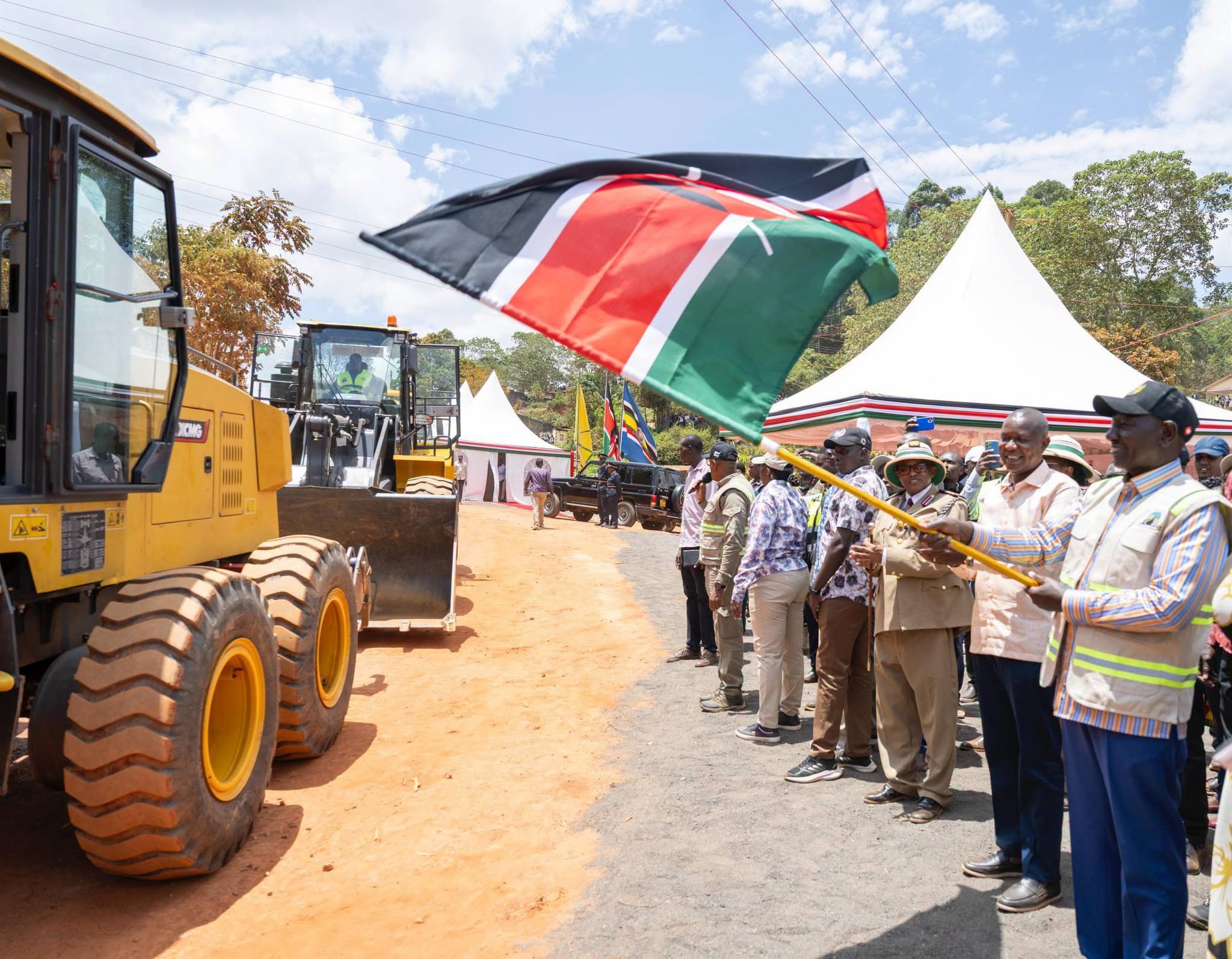
President William Ruto is advancing a substantial development program across Machakos, Makueni and Kitui, with his October 24 to 26 work tour focusing on investments that connect Ukambani’s agricultural production, enterprise and human capital with opportunities to generate income and sustain economic growth. Covering water, roads, electricity, housing, markets, healthcare and education, the tour advances the Bottom Up Economic Transformation Agenda with projects addressing household needs and the infrastructure required to support productive communities across the three counties.
Equitable regional development underpins this investment agenda, with public resources supporting the participation of rural settlements, farming communities and growing towns in our country’s economic transformation. Roads connect producers with trading centers, water and electricity support household welfare and business operations, while investment in housing and markets creates demand involving artisans, suppliers and transport operators. Education and healthcare infrastructure complement these investments, supporting the skills and well being citizens need to pursue employment, establish enterprises and sustain their livelihoods.
The tour opened in Mwala, Machakos County, on October 24, where President Ruto commissioned the KES 1.47 billion Mwala Cluster Water Supply Project, designed to supply 6.6 million liters daily to an estimated 137,400 people and 10 institutions across 10 towns. The President also announced a KES 500 million second phase targeting water access to an additional 120,000 residents, extending the investment’s focus to the connections needed to serve communities within the expanded supply area.
In Makueni, the opening day’s road engagements included commissioning the Tawa to Ngoluni to Itangini Road and launching the Wote to Kako to Ngoluni and Kyambeke to Kyuasini to Ukia roads, within an announced county program of KES 16 billion covering seven roads spanning 180 kilometers. The wider tour program extends into Kitui with university accommodation, affordable housing, markets, roads and public service projects, linking investment across the three counties with agricultural trade, construction activity, student welfare and access to essential services.
KES 1.47 Billion Mwala Water Project Targets Household Supply, Public Health and Business Growth
A KES 1.47 billion investment in Mwala’s water infrastructure is designed to supply 6.6 million liters of treated water daily to an estimated 137,400 residents and 10 institutions across 10 towns in Machakos County. Commissioned on October 24 during the opening engagements of the presidential tour, the Mwala Cluster Water Supply Project addresses a fundamental requirement of Ukambani’s development, connecting water provision with household welfare, public health and the operations of local enterprises.
The scheme incorporates water intake works on the Ndarugu River, treatment facilities at Kyeleni, a booster station at Syathani and storage tanks at Muthei in Masii Ward. These installations form successive stages of a supply system that collects raw water, treats it, pumps it across the network and holds it in storage before distribution. Its economic value depends on these components functioning together to deliver safe water consistently within the designated service area.
During the visit, President William Ruto announced a KES 500 million second phase targeting last mile connections to an additional 120,000 residents in Mwala Constituency. This planned extension focuses on carrying water into additional communities, linking the main infrastructure with the premises and collection points where residents obtain their supply. The beneficiary figures represent intended coverage, with delivery dependent on completed connections and reliable operation.
Within the Bottom Up Economic Transformation Agenda, the project directs public investment into an essential service that supports participation in the local economy. Its anticipated benefits span several connected areas.
- Household spending and productive time. Water provision influences family expenditure whenever residents purchase supplies, arrange deliveries or pay transport charges to collection points. A dependable piped service will support predictable household budgeting, with actual expenditure determined by tariffs, connection costs and consumption. Accessible supply also eases the demands of water collection, allowing residents to devote time to employment, businesses, education and family responsibilities.
- Public health and sanitation. Treated water supports drinking, cooking, handwashing, cleaning and personal hygiene, providing an essential foundation of healthy communities. These benefits depend on water quality throughout treatment, distribution and household storage, alongside appropriate sanitation practices. Reliable supply also supports hygiene in food premises and public facilities, where daily operations require adequate water.
- Business continuity and enterprise development. Food vendors, restaurants, salons, guesthouses and cleaning businesses require water throughout their working day. Dependable connections support food preparation, washing, workplace sanitation and customer service, enabling proprietors to organize activities around an established supply. Water availability also informs decisions concerning premises, equipment and the services an enterprise can offer within a trading center.
- Services delivered within public institutions. The project’s intended coverage includes 10 institutions, extending its reach into facilities serving the wider community. Water supports sanitation, cleaning and other operational requirements within these premises, helping administrators plan daily services. Consistent supply is especially important wherever many people share facilities and depend on functioning sanitation systems.
- Technical work and local service opportunities. The announced KES 500 million extension will require connection infrastructure involving pipe laying, plumbing, meter installation and related works, creating potential demand involving technical workers and suppliers. Operation of the completed system requires treatment personnel, pump maintenance, water quality testing, network repairs, billing and customer support. These activities connect infrastructure investment with the skills needed to sustain a functioning utility.
- Access within additional communities. Last mile distribution gives BETA’s regional equity objectives a practical application, extending essential services into the settlements where residents live and earn their livelihoods. The second phase’s target of an additional 120,000 residents places attention on the geographical reach of the network. Its implementation will determine which additional neighborhoods, institutions and business premises receive connections.
- Management of a lasting public asset. The scheme’s daily treatment capacity must be supported with functioning pumps, maintained storage, effective metering and timely repairs across the distribution network. Leak management, electricity supply, treatment inputs and revenue collection influence service continuity. These operating requirements determine how the investment translates into dependable water at household taps, institutional premises and business connections.
KES 37 Billion Road Programs Support Agricultural Trade and Regional Connectivity
Road development across Ukambani connects the presidential tour with the movement of farm produce, access to employment and the daily operations of businesses across Machakos, Makueni and Kitui. The Government’s investment programs include KES 21 billion covering 10 roads in Machakos and KES 16 billion covering seven roads spanning 180 kilometers in Makueni, alongside individual road and bridge engagements in Kitui. The combined KES 37 billion relates to the two county programs in Machakos and Makueni.
These investments support the Bottom Up Economic Transformation Agenda’s agricultural and enterprise objectives, with transport infrastructure linking production areas, collection points, trading centers and urban markets. A farmer’s ability to reach a buyer depends partly on the availability of transport when produce is ready, while traders require dependable deliveries to maintain stock. Roads also support milk collection, livestock movement, agricultural extension visits and access to machinery, connecting physical infrastructure with the practical requirements of a productive rural economy.
The tour covers projects at different stages of delivery, including completed roads entering service, construction launches and inspections of ongoing infrastructure.
- The KES 2.4 billion Tawa to Ngoluni road investment strengthens Mbooni’s agricultural and commercial connections. The commissioned project includes a reported 37 kilometer stretch, with the supplied tour program identifying the Tawa to Ngoluni to Itangini route. Its function extends across produce collection, farm input deliveries, passenger transport and movement between settlements and trading centers. Dependable access enables buyers to plan collection trips and farmers to coordinate harvesting with transport, while shops and service businesses rely on the same corridor to receive merchandise and reach customers.
- The Wote to Kako to Ngoluni Road links surrounding communities with Makueni’s county headquarters. Launched during the visit, the project connects agricultural and trading areas with Wote’s administrative, financial, education and healthcare services. These journeys carry an economic purpose, allowing residents to obtain business documentation, access banking, purchase supplies and attend appointments. The corridor also supports the exchange of produce and consumer goods between rural communities and the town, creating opportunities involving transport operators, wholesalers and roadside enterprises.
- The KES 1.4 billion Kyambeke to Kyuasini to Ukia Road and KES 1.5 billion Kyambeke to Kikoko Road support Kaiti’s transport network. The first project was launched during the tour, while the second was commissioned, placing new construction and completed infrastructure within the constituency’s development program. Together, their intended role encompasses access to agricultural markets, schools, healthcare facilities and trading centers. Businesses can organize deliveries and passenger operators can plan services around usable routes, while construction creates potential demand involving technical workers, materials and equipment services.
- The KES 40 million provision concerning the Katuaa to Nunguni Road addresses outstanding works on a stalled connection. The supplied program identifies this budgetary support within the Nunguni engagements, bringing attention to completion of infrastructure serving Kaiti communities. Its value lies in financing the work required to make the route serve its intended transport function, with implementation dependent on the approved scope and contractor delivery. Connections into Nunguni support trade, education, medical services and the movement of residents accessing institutions within the town.
- The Kangonde to Masinga to Kithyoko and Matuu to Kyasioni corridors connect Machakos’s road program with identifiable local economies. Listed within the tour itinerary, these projects serve communities whose activities depend on agricultural transport, merchandise distribution and passenger services. Matuu’s commercial activity generates journeys involving wholesale purchases, retail stock and farm produce, while connections serving Masinga support access between settlements and trading centers. Their economic contribution will depend on the completed sections, links with feeder roads and sustained maintenance across the network.
- Kitui Rural’s road engagements support university activity, settlement development and agricultural movement. The launched 10 kilometer Kwa Vonza to Kiusyani tarmacking project carries an 18 month completion target, serving a locality where students, staff, residents and businesses require daily transport. The supplied program also identifies the Kaliko to Kyusyani to Kanyangi to Kyandula corridor, extending the transport agenda toward surrounding communities. These connections support deliveries to enterprises, travel to public facilities and movement between residential areas and education institutions.
- The planned Twimia to Tseikuru to Usweni Road engagement extends the transport agenda into Mwingi North. The October 26 program identifies a launch serving a corridor whose development is intended to support movement between settlements and trading centers. Access is important to livestock businesses, agricultural suppliers, passenger operators and residents seeking public services. The same connection will support delivery of materials and goods needed within Tseikuru’s housing and institutional developments, linking transport with other investments in the locality.
- Enziu Bridge places safe passage and service continuity within the infrastructure review. Its scheduled inspection concerns a crossing where the ability to travel during periods of high river flow carries direct implications to community safety. A functioning bridge supports journeys involving schoolchildren, workers, traders and patients, while maintaining a connection used to distribute goods and provide public services. Approaches, drainage and the wider connecting road are integral to the crossing’s effective operation.
- The Syongila to Matinyani to Tulia Road connects transport planning with Kitui West’s market and housing investments. The supplied itinerary includes an engagement concerning this corridor alongside the Tulia market inspection and Kabati housing activities. Farmers and traders require access to bring goods into market premises, while construction sites depend on deliveries of materials and equipment. Coordination of these investments supports the movement needed to make markets, homes and institutions function within the surrounding economy.
- The New Machinery to Kyumani to Kyanginywa to Barrier Road supports Kibwezi East’s agricultural and trading activity. Its planned launch appears within the Machinery Market engagements, linking road development with a locality serving producers, traders and transport operators. The corridor’s intended role includes movement of produce, access to supplies and connections between settlements and commercial services. The program also raises the opening of an access road in Mtito Andei involving Kenya Wildlife Service, addressing local circulation within a town hosting hospital, education and accommodation investments.
8,000 Homes and Accommodation Supporting 6,000 Students Anchor Machakos’s Housing and Enterprise Program
The Government’s KES 28 billion development package in Machakos includes 8,000 affordable housing units, accommodation supporting 6,000 students and 18 markets, linking investment in residential infrastructure with education, employment and trade. The package forms part of the development commitments outlined during the presidential tour, directing resources into facilities that serve households, learners and small businesses across the county.
Housing and student accommodation also feature in the tour program across Kitui and Makueni, with projects identified at South Eastern Kenya University, Tseikuru, Mwingi, Kabati and Mtito Andei, alongside the Kambu Affordable Housing Programme. These investments advance the Bottom Up Economic Transformation Agenda’s objectives of expanding access to housing, supporting employment and distributing economic opportunities across regions.
Construction connects these objectives with local production and services, creating demand involving artisans, building materials, fabrication, transport and site support. Once occupied, residential developments and student hostels support recurring expenditure within surrounding communities, sustaining businesses that provide food, household supplies, transport and personal services.
- The planned 8,000 homes in Machakos establish a pipeline of construction work and residential investment. Building activity requires masons, carpenters, plumbers, electricians, steel fixers, painters and general workers, with employment dependent on project schedules and contractor procurement. Local enterprises can participate in materials supply, fabrication, deliveries and site services, linking housing expenditure with businesses operating within the county. Completed homes require reliable utilities, access roads and sanitation that support daily household activity.
- Accommodation supporting 6,000 students in Machakos addresses an essential requirement of tertiary education. The provision covers university, medical training and technical education institutions, connecting the housing agenda with professional and vocational skills development. Suitable hostels support study, security, sanitation and access to campus facilities, while occupancy sustains spending within food outlets, shops, printing businesses and transport services. Accommodation charges and management arrangements will influence access and student welfare.
- The SEKU housing and hostel projects connect university development with Kwa Vonza’s economy. The tour program includes the launch of student residences and affordable housing at South Eastern Kenya University in Kitui Rural, addressing accommodation needs within a growing institutional settlement. Construction supports demand involving workers and suppliers, while campus activity sustains local commerce throughout the academic year. Residential planning must integrate water, electricity, sanitation and access infrastructure serving the developments.
- The Tseikuru and Mwingi housing inspections focus on delivery within Kitui’s towns. Scheduled engagements on October 26 provide opportunities to review construction progress, workmanship and readiness of supporting infrastructure. The developments create potential employment during construction and demand involving suppliers, transporters and service businesses. Occupation will extend their economic contribution into neighborhood trading activity and household consumption.
- The Kabati project extends the housing program into Kitui West. The planned groundbreaking places residential construction alongside market and student accommodation engagements within the Tulia and Kabati itinerary. Its implementation is expected to support building trades and associated services, while completed units will require utilities, drainage and access infrastructure appropriate to the settlement. Student accommodation within the same itinerary addresses the residential needs of learners pursuing qualifications in the area.
- Mtito Andei’s hostel investment supports the development of higher education in Kibwezi East. The scheduled inspection of accommodation at the SEKU Mtito Andei Campus, identified in the program within Makueni University College, links student welfare with the institution’s development requirements. Campus residences support the practical needs of learners, while students and staff sustain local expenditure involving food, retail and transport. The Kambu Affordable Housing Programme also features in the Kibwezi East engagements, extending attention to residential investment within the constituency.
- Kilungu’s proposed campus and hostels require a suitable development site. During the October 24 engagement, President William Ruto directed the identification of a site accommodating the proposed medical training campus and student residences, following concerns involving space and the suitability of existing structures. Planning will need to accommodate teaching facilities, accommodation and recreation, with Kilungu Level 4 Hospital identified as a prospective partner supporting clinical instruction.
Market Investments Back Traders, Farm Incomes and Local Enterprise Across Ukambani
Small traders and agricultural producers feature prominently in the Ukambani development agenda, with investment in markets connecting public infrastructure to the businesses that sustain everyday commerce. The KES 70 million Tulia Modern Market in Kitui West, the Economic Stimulus Programme market in Mwingi town and 18 markets within Machakos’s development package place trading premises within the Government’s regional investment priorities. In Kibwezi East, market development forms part of engagements linking enterprise with roads, electricity and housing.
These investments advance the enterprise pillar of the Bottom Up Economic Transformation Agenda, recognizing the role of small businesses in employment, food distribution and household income. Market activity brings together farmers seeking buyers, vendors purchasing stock, transporters moving goods and consumers obtaining daily necessities. Investment in these trading locations supports an economic chain whose earnings reach households across the surrounding communities.
- The KES 70 million Tulia Modern Market finances premises and essential trading services in Kitui West. The project incorporates stalls, an ablution block and a water borehole, with the county government providing land and the national government financing construction. Its scope addresses the daily requirements of vendors receiving stock, displaying merchandise and serving customers, alongside sanitation and water needs. Farmers supplying the market, transport operators making deliveries and businesses serving traders participate in the commercial activity surrounding the facility.
- Mwingi’s ESP market supports trade between the town and its surrounding agricultural communities. The facility features in the presidential tour’s project review, connecting market infrastructure with a town serving residents, producers and businesses across its commercial catchment. Produce sales support payments involving farmers, vendors, transporters and goods handlers, while consumer purchases sustain retail activity. The market’s economic role also encompasses the orders, deliveries and service transactions that enable these enterprises to operate throughout the trading week.
- Machakos’s 18 markets establish enterprise infrastructure within a KES 28 billion development package. The same package includes 8,000 affordable housing units and accommodation targeting 6,000 students, bringing trading facilities into an investment program serving households and learning institutions. Residents and students generate demand involving food, groceries, household supplies and personal services. Market premises provide locations where local enterprises can participate in this spending and establish regular relationships with customers and suppliers.
- Market access supports the commercial stage of agricultural production. Harvested produce must move into distribution and sale to generate income, making trading facilities part of the infrastructure supporting farm livelihoods. Markets provide destinations where suppliers deliver goods, vendors assemble stock and consumers make purchases. Coordination with roads, water and sanitation supports this movement and the handling of food within trading premises.
- The Kibwezi East engagements connect trading infrastructure with the services enterprises use daily. Machinery Market sits within a development program covering road connections, electricity and housing, linking commercial premises with deliveries, customer access and utility services. Electricity supports lighting and business equipment, while transport connections carry merchandise and passengers into trading areas. These investments address practical operating needs within the constituency’s enterprise economy.
- The household value of market investment lies in the livelihoods supported throughout this trading chain. Sales revenue pays suppliers and workers, finances business stock and meets family expenses involving food, school needs, healthcare and housing. Market operations also sustain services involving cleaning, waste collection, maintenance and repairs. Transparent stall allocation, clear charges and accountable management connect public expenditure with traders’ continuing access to the facilities.
KES 750 Million School and Hospital Investments Support Education and Healthcare in Kibwezi East
Education and healthcare investments in Kibwezi East connect the Ukambani development tour with services that influence learning, household welfare and participation in the economy. Kathekani Senior Secondary School, listed at KES 250 million, and Mtito Andei Level 4 Hospital, listed at KES 500 million, account for KES 750 million in facilities included in the October 26 program. The engagements also cover student accommodation and budgetary support concerning Makueni University College, placing secondary education, higher learning and healthcare within the constituency’s development agenda.
These investments support the Bottom Up Economic Transformation Agenda’s human capital objectives, linking infrastructure with the education and health needs of communities. Schools provide the setting where learners acquire qualifications, university institutions develop professional skills, and hospitals deliver care that enables residents to sustain family and working lives. Their economic contribution includes employment within the institutions and demand involving supplies, maintenance, transport and surrounding businesses.
- Kathekani Senior Secondary School represents a KES 250 million investment in the learning environment. Its inclusion in the tour places attention on educational facilities serving learners in Kibwezi East, supporting the community’s need for accessible secondary education. The school provides a foundation where teaching, assessment and student development can take place, with its educational contribution dependent on staffing, learning materials and effective administration. School operations also generate demand involving food, stationery, transport, maintenance and other services supplied within the surrounding economy.
- Mtito Andei Level 4 Hospital brings a KES 500 million healthcare investment into the tour’s delivery agenda. The facility is included in the October 26 commissioning program, addressing hospital infrastructure within a town serving residents and travelers along a major transport corridor. Hospital services support diagnosis, treatment, maternal care and referral coordination according to the staffing, equipment and services available at the facility. Reliable water, electricity, medicines, clinical personnel and functioning equipment are essential to translating the buildings into patient care.
- Healthcare access supports household income and economic participation. Illness affects a family’s ability to work, attend school and manage daily responsibilities, while medical journeys involve time, transport and accommodation expenditure. A functioning hospital within the locality gives residents a point of access to available clinical services and follow up care. Its operations also sustain professional and support roles involving clinical work, administration, cleaning, security, maintenance and supply management.
- Makueni University College links institutional development with skills and local enterprise. The tour program includes budgetary support concerning the college and an inspection of hostels at the SEKU Mtito Andei Campus, identified within the college’s development agenda. Academic facilities and student accommodation support the practical requirements of higher learning, while students and staff generate demand involving food, retail, printing, communication and transport. Institutional growth requires coordination across teaching capacity, accommodation, utilities and student services.
- Kilungu’s proposed medical training campus connects education investment with health workforce development. During the October 24 visit, a presidential directive called for identification of a suitable site accommodating the proposed KMTC campus and student hostels, following concerns involving space and existing structures. The development requires planning that accommodates teaching, residence and recreation, with Kilungu Level 4 Hospital identified as a prospective clinical training partner. Clinical placements would connect academic instruction with supervised practical experience within the health system.
- The Kilungu TVET engagement places vocational training within Makueni’s development priorities. The tour program includes the institution’s development following the conversion of Kilungu Senior School, directing attention to access to practical qualifications. Training can connect young people with work involving construction, electrical installation, maintenance and other occupations supported within the regional economy, subject to the institution’s accredited courses. Workshops, equipment, instructors and industry placements will shape the skills learners acquire and apply in employment or enterprise.
6,800 Title Deeds Strengthen Land Ownership and Household Security in Kaiti
The issuance of 6,800 title deeds to residents of Kaiti Constituency at Kyambeke Trading Centre brought land ownership into the opening day of the Ukambani development tour, connecting the Government’s infrastructure investments with the property rights of individual households. The exercise gives beneficiaries formal documentation identifying their registered interests in land, supporting decisions concerning residence, cultivation, inheritance and investment.
Land ownership features across the tour’s regional agenda, with further issuance included in Mwingi and settlement schemes in Kibwezi East, including Thange and Muthingiini. These engagements connect the Bottom Up Economic Transformation Agenda with an asset that supports livelihoods throughout Ukambani, where land accommodates homes, agricultural production, businesses and community facilities.
The significance of the Kaiti exercise extends across several household, economic and social functions.
- The 6,800 title deeds provide registered documentation supporting ownership rights. A title records the proprietor’s interest in the identified parcel, giving beneficiaries documentation relevant to lawful occupation, transactions and dealings with public institutions. Ownership records also provide a reference point when addressing questions involving parcel identification and registered interests. This documentation supports families making decisions concerning the use and management of their property.
- Documented ownership supports investment in homes and agricultural assets. Households considering permanent buildings, fencing, soil conservation, water storage or farm infrastructure need clarity concerning their rights to the land. Registration supports the planning associated with these investments, linking ownership documentation with assets intended to serve families over time. In agricultural communities, such decisions shape the productive use of land and the resources committed to cultivation and livestock activities.
- Title deeds support lawful property transactions and succession planning. Registered interests provide documentation used in transfers, inheritance processes and other dealings involving land. Families can establish the records required to manage an estate, while buyers and professional advisers can undertake the searches and verification associated with transactions. Succession still requires the applicable legal process, making accurate registration an important part of maintaining property records across generations.
- Land documentation support applications involving enterprise and finance. Financial institutions may consider titled property within their lending assessments, subject to valuation, legal checks, repayment capacity and their own credit requirements. Registered premises also provide an identifiable location supporting business planning and investment decisions. Access to finance carries obligations attached to the loan and any security offered, making the borrower’s ability to service the facility essential.
- The Mwingi and Kibwezi East engagements extend attention to settlement documentation across Kitui and Makueni. The program includes title deed issuance in Mwingi and in Thange, Muthingiini and other settlement schemes in Kibwezi East. These exercises address the registration needs of residents within the respective areas, connecting land administration with communities included in the regional development agenda. Beneficiary verification, accurate parcel records and completion of registration processes determine the documentation issued within each scheme.
- The Thange engagement also brings environmental concerns into decisions affecting land and livelihoods. The tour includes attention to the oil spill, whose implications concern affected residents’ use of land and water. Environmental assessment, remediation and communication with affected households are relevant to the recovery of usable community resources. Land documentation and environmental restoration address distinct responsibilities that influence residents’ ability to occupy, cultivate and invest in their property.
Electricity Connections Support Enterprise, Public Services and Household Opportunity Across Ukambani
Electricity access forms a practical link between the Ukambani tour’s infrastructure investments and the activities those projects are intended to support. The regional program includes last mile connectivity initiatives and the Kitui–Wote power substation, alongside electrification engagements in Nunguni, Masinga, Yatta and Kibwezi East. These interventions address household connections and the network infrastructure serving businesses, institutions and growing settlements across Machakos, Makueni and Kitui.
The tour’s electrification agenda builds on an existing regional commitment of KES 6.7 billion targeting connections to 51,000 households across the three counties. That figure represents the regional program’s investment and intended coverage, with individual projects contributing to its implementation. Within the Bottom Up Economic Transformation Agenda, electricity supports productive activity involving small businesses, agricultural services, education, healthcare and digital access.
- The Kitui–Wote substation supports the electricity network serving Kitui and Makueni. Substations transform electricity to the voltage required within distribution networks and provide equipment that controls and protects supply. This infrastructure supports the delivery of power into connected localities, serving premises whose operations depend on electricity. Hospitals, learning institutions, water installations, homes and businesses all require a functioning distribution network alongside their individual connections.
- Last mile connections carry the electricity investment into households and commercial premises. Distribution lines, transformers, service cables and meters form the infrastructure linking users with the network. The regional target of 51,000 households places attention on access within communities, connecting investment in the power system with use at individual premises. Each completed connection establishes the means to operate lighting, communication devices and appropriate household or business equipment.
- Small enterprises will apply electricity directly to income generating activities. Welding workshops, salons, tailoring businesses, printing shops and repair enterprises use powered equipment to deliver their services. Retailers and food businesses can operate refrigeration where their premises, equipment and electricity supply support it. These activities create demand involving technicians, equipment suppliers and maintenance services, connecting electrification with practical enterprise opportunities.
- Agricultural services depend on power across several stages of production and distribution. Electricity can operate water pumps, milling equipment and refrigeration installations where those facilities are provided. Farmers and agricultural businesses require suitable machinery, water resources and commercial arrangements to apply these technologies successfully. Connections establish the energy access needed to develop such operations within productive rural areas.
- Healthcare and education facilities require electricity throughout their daily services. Clinical equipment, laboratory work, lighting and appropriate medical storage depend on power, while learning institutions use electricity in classrooms, workshops and computer facilities. The tour’s investments in hospitals, training institutions and student accommodation carry corresponding electricity requirements. Network development supports the operation of these facilities once their equipment and internal installations are ready.
- Household connections support learning, communication and access to digital services. Electric lighting supports evening study, while powered devices enable communication, electronic payments and access to online information. Residents can also use connected premises to pursue suitable home enterprises, subject to equipment, skills and customer demand. Safe wiring, metering, maintenance and manageable consumption are integral to sustained use of each connection.
KES 11 Billion Additional Funding Advances Thwake Dam and Ukambani’s Water Security Agenda
An additional KES 11 billion toward completion of Thwake Dam extends the Ukambani tour’s water agenda into infrastructure serving the region’s long term development needs. The allocation, outlined during the presidential engagements in Makueni, supports completion of a multipurpose project on the Makueni–Kitui border, with intended benefits involving domestic water, irrigation and economic activity across its service area.
Thwake connects water storage with the Government’s Bottom Up Economic Transformation Agenda, addressing a resource that influences agricultural production, settlement development and household welfare. Its development involves successive stages, including completion of the dam, reservoir filling and the infrastructure required to treat and distribute water. Each stage performs a specific function within the system intended to serve communities and productive activities.
- The additional KES 11 billion supports the completion phase of the dam investment. Financing outstanding works enables the project to proceed toward the operational stages required to store water and support its intended uses. The construction program includes technical works whose completion must meet engineering and safety requirements. Funding also sustains demand involving specialized personnel, construction services, equipment and materials during implementation.
- Water storage supports planning across seasons. A reservoir provides capacity to hold water that can be managed according to inflows, available storage and authorized demand. This function is relevant to households, institutions and productive activities whose water requirements continue throughout the year. Effective management requires monitoring of the catchment, reservoir conditions and abstraction, alongside the operating rules governing releases.
- Irrigation represents an agricultural opportunity linked to the wider project. Stored water can support cultivation where irrigation infrastructure, suitable land and the necessary distribution arrangements are developed. Farmers also require agronomic advice, inputs, equipment and market connections to establish commercially viable production. The dam’s agricultural contribution consequently involves a chain of investments connecting storage with delivery and productive use on farms.
- Domestic supply requires treatment and distribution infrastructure reaching users. Reservoir water must pass through appropriate treatment and conveyance systems before entering household and institutional supply networks. Pipelines, pumping facilities, storage tanks and connections determine the communities reached within the designated service area. These components connect the dam’s storage function with water used in homes, schools, healthcare facilities and businesses.
- Enterprise development depends on dependable water reaching commercial premises. Food businesses, accommodation facilities, processing operations and other enterprises require supply appropriate to their activities. Water infrastructure supports decisions involving premises, equipment and operating capacity, while creating demand involving plumbing, maintenance and technical services. Its economic contribution develops through the businesses and institutions able to use the supply productively.
- Catchment protection and water quality management support the asset’s operation. Soil conservation, management of sediment and control of pollution within contributing waterways influence reservoir conditions and treatment requirements. Coordination among water agencies, county authorities and communities supports these responsibilities. Environmental monitoring and maintenance are continuing functions required throughout the project’s operating life.
Sports Academy Projects Invest in Youth Talent and Community Development
Sports infrastructure features in the Ukambani development tour through the Ngamione academy project in Kitui Rural and the academy under construction in Mbiuni, Mwala Constituency. These investments place talent development within the regional agenda alongside education, housing and enterprise, recognizing sport as an avenue supporting skills, employment and community participation.
The academies connect with the Bottom Up Economic Transformation Agenda’s focus on opportunities involving young people, with their intended contribution extending across athlete development and the services associated with training and competition. Coaching, facility management, equipment supply, event organization and sports related businesses form part of this economic activity, linking investment in facilities with occupations within the sector.
- The Ngamione academy project extends the youth development agenda into Kitui Rural. Its inclusion in the tour directs attention to infrastructure supporting organized sporting activity within the locality. An academy’s role involves structured training and talent identification, with its practical contribution dependent on the disciplines offered, coaching personnel and arrangements governing access. These functions provide a framework within which young people can develop sporting ability and receive guidance.
- The Mbiuni academy brings sports infrastructure into Mwala’s development program. Construction creates potential demand involving building trades, materials, transport and site services, while operation requires personnel responsible for coaching, administration, maintenance and facility use. The investment provides a location around which sporting programs can be organized, connecting physical infrastructure with sustained activity involving athletes, schools and community organizations.
- Talent development requires coaching and pathways into organized competition. Facilities support training when accompanied by qualified instructors, appropriate equipment and regular programs. Links involving schools, clubs and sporting bodies can enable participants to take part in recognized competitions and receive assessment within their disciplines. Athlete welfare, safeguarding and medical support are essential components of responsible academy management.
- Sporting activity creates opportunities involving local enterprises and service providers. Training sessions and competitions generate demand involving transport, food, accommodation, uniforms and equipment, according to the scale and frequency of activity. Event organization also involves officiating, communication, security and grounds maintenance. These services connect academy operations with businesses and workers within the surrounding economy.
- Community access gives the facilities a public development function. Clear arrangements governing eligibility, training schedules and use of the grounds support participation involving local young people. Inclusive programming will accommodate girls, boys and participants with disabilities according to the facilities and disciplines available. Coordination with education supports young athletes pursuing academic qualifications alongside their sporting development.
Lower Yatta–Kiusyani Huduma Centre Supports Access to Government Services and Economic Opportunity
The Lower Yatta–Kiusyani Huduma Centre brings public service delivery into the Ukambani tour’s investment agenda, connecting residents of Kitui Rural with administrative services used in education, employment, enterprise and household affairs. Its inclusion alongside roads, housing and university infrastructure recognizes the role of accessible government services in enabling citizens to participate in development.
Official documentation supports important transactions throughout a citizen’s life, including applications involving learning institutions, employers, businesses and public programs. The centre provides a designated location to access participating agencies, obtain guidance and undertake available transactions, linking government administration with the practical needs of the surrounding community.
- Access to documentation supports participation in education and employment. Students and jobseekers use official records when submitting applications, verifying their details and completing institutional requirements. The centre assists residents with services available through its participating agencies, providing guidance on documentation, submission procedures and follow up. This support connects administrative services with the steps citizens take to pursue qualifications and employment opportunities.
- Business related services support enterprise activity and compliance. Entrepreneurs interact with public agencies throughout the establishment and operation of their businesses, undertaking transactions involving registration, records and statutory obligations. Access to relevant services and guidance helps business owners navigate these processes and maintain the documentation associated with their activities. This administrative function supports BETA’s commitment to small enterprise development and economic participation.
- Assisted digital services connect residents with online government transactions. Applications involving electronic forms, document uploads and digital payments require accurate information and completion of the prescribed steps. Assistance enables residents to navigate available services, submit eligible requests and understand how to track their applications. The facility also provides a point of contact where citizens can seek clarification concerning transactions handled within its service network.
- A designated service location supports community access and institutional coordination. Residents can identify the agencies represented, establish service requirements and obtain information concerning their requests within an organized public facility. Staff assistance and accessible service arrangements support citizens with different needs, including older residents and persons with disabilities. Follow up and feedback channels connect individual requests with the offices responsible for action.
Advancing Regional Development Through Investment in People and Productive Infrastructure
The development program across Machakos, Makueni and Kitui connects the Bottom Up Economic Transformation Agenda with the foundations of a productive regional economy. Water infrastructure serves households and enterprises, roads connect agricultural production with trade, electricity supports business equipment and public facilities, while housing and markets generate activity across construction and local commerce. Education, healthcare, land documentation and administrative services support citizens pursuing qualifications, employment, property ownership and enterprise.
The scale of investment gives this regional agenda a clear economic dimension, including KES 37 billion across the Machakos and Makueni road programs, the KES 1.47 billion Mwala water project and additional KES 11 billion funding toward Thwake Dam’s completion. Machakos’s KES 28 billion package covering housing, student accommodation and markets extends this investment into residential development, learning and small business infrastructure, while individual projects across Kitui and Makueni address identified community needs.
Equitable development takes practical form when national investment reaches the places where citizens live, work and produce. Across Ukambani, the tour brings these priorities into one regional program, linking infrastructure with the farmer’s route to market, the trader’s business premises, the learner’s training opportunities and the household’s access to essential services. The continuing task is to translate each project commitment into completed infrastructure, functioning services and sustained economic participation across the three counties.
