
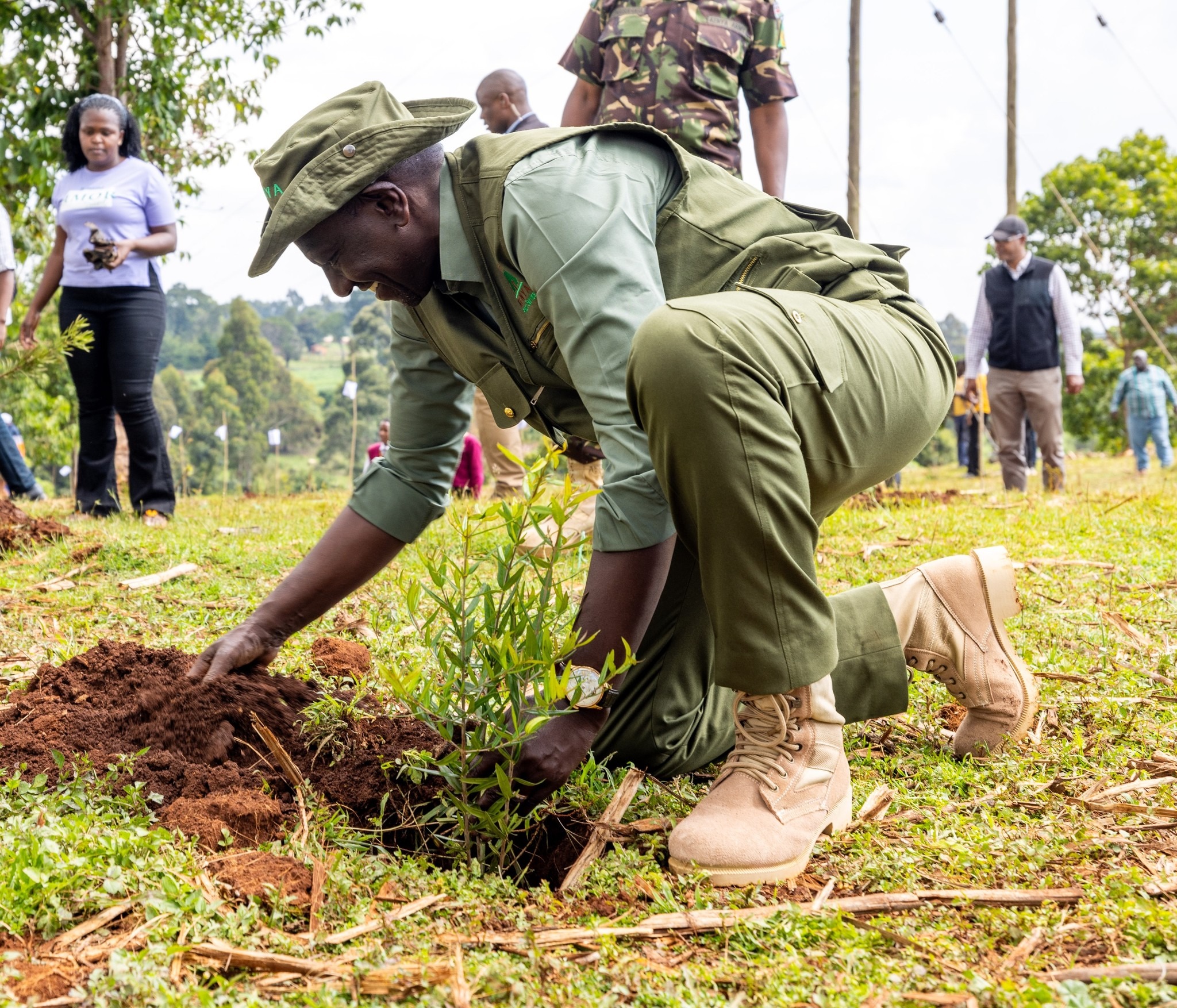
President William Ruto’s call to grow 15 billion trees by 2032 anchors the Kenya Kwanza Government’s commitment to restore degraded landscapes, protect water sources and sustain the natural resources supporting our country’s economy. The national mission targets the restoration of 10.6 million hectares and the attainment of 30% tree cover, connecting environmental stewardship with food security, employment and community livelihoods under the Bottom-Up Economic Transformation Agenda.
The KES 20.8 billion Thamani Asili conservation program complements this national restoration agenda through a ten-year investment in wildlife habitats, ecosystem management and community development. Launched on October 21, 2026, at Tsavo West National Park in Taita Taveta County, the initiative brings together the Government, Kenya Wildlife Service, The Nature Conservancy and Enduring Earth. Its financing framework combines KES 10.4 billion in government commitments over ten years with an equivalent contribution from philanthropic partners.
The connection between these initiatives lies in their shared focus on sustaining productive landscapes and the livelihoods dependent upon them. The tree-growing mission encompasses forests, water towers, rangelands, farmlands, wetlands and other ecosystems. Thamani Asili targets conservation support across 17.3 million hectares, with planned opportunities in ecotourism, sustainable grazing and enterprises linked to natural resources. These interventions connect the President’s environmental commitments with BETA’s priorities in agriculture, enterprise development and job creation.
Thamani Asili targets 7,800 direct jobs, 15,000 indirect jobs and direct benefits to 1.6 million people. These commitments give the conservation investment a practical economic purpose within participating communities, linking the protection of our country’s natural heritage with opportunities to earn income, develop businesses and sustain household livelihoods.
Expanding Community Enterprise And Livelihood Opportunities
Thamani Asili places community livelihoods within a ten-year conservation investment framework, with planned support reaching more than 130 community conservancies. Its relevance to the Bottom-Up Economic Transformation Agenda lies in the connection between natural resources and the activities that sustain households, including livestock production, tourism and small businesses. Community participation in land management, enterprise development and conservation decisions will be essential to translating the approximately KES 20.8 billion financing framework into economic opportunities within the participating landscapes.
- Community participation in managing land and natural resources. The program will support local governance and land-use planning, giving communities a role in decisions concerning the landscapes upon which their livelihoods depend. These decisions influence access to grazing, the protection of wildlife habitats and the location of economic activities. Supporting community institutions can help establish agreed responsibilities concerning resource use and conservation management, while providing a platform through which residents can articulate their priorities. This approach connects the Bottom-Up agenda with participation at the community level, where land and natural resources directly influence household economic security.
- Employment opportunities linked to conservation investment. Thamani Asili projects approximately 7,800 direct jobs and 15,000 indirect jobs through activities that include ecotourism, sustainable grazing, carbon initiatives and other enterprises linked to nature. These figures represent expected outcomes over the program’s implementation period. Their significance lies in the opportunity to connect conservation financing with productive work within participating communities. Implementation will need to translate these projections into identifiable activities, skills requirements and enterprise opportunities, enabling residents to understand how they can participate and how employment outcomes will be assessed.
- Sustainable grazing and the protection of livestock-based livelihoods. The inclusion of sustainable grazing provides a direct connection to BETA’s agricultural priorities, particularly within communities whose incomes depend on livestock. Grazing management influences the availability of pasture, the condition of land and the ability of households to sustain their herds. The program also includes practical measures addressing human-wildlife conflict, including livestock protection and land management. These interventions recognize livestock as productive household assets and acknowledge the economic consequences that arise when families lose animals or face disruption to grazing activities.
- Local enterprise development within the tourism economy. Planned support to ecotourism and businesses linked to natural resources creates a pathway connecting conservation with BETA’s micro, small and medium enterprise priorities. Potential areas of community participation include guiding, accommodation, cultural experiences, transport and the supply of goods and services to tourism establishments. The opportunities realized will depend on local demand, business capacity and the activities financed during implementation. Enterprise development should connect the conservation of wildlife and landscapes with viable businesses through which residents can earn income and participate in the tourism value chain.
- Participation of women and young people in conservation livelihoods. The initiative identifies women, young people and families living alongside wildlife among its intended beneficiaries. Giving practical effect to this commitment will require accessible information about opportunities, participation in community decisions and support suited to the activities being developed. Women and young people should be able to identify the skills, enterprise requirements and institutional channels relevant to their participation. These considerations provide a basis to assess whether conservation investment is reaching the groups identified within the program’s livelihood objectives.
The program estimates that around 1.6 million people will benefit directly, with a further 3.9 million potentially benefiting through land governance, natural resource management and associated economic opportunities. These are projected beneficiary groups whose outcomes will need to be tracked throughout implementation. Their connection to Bottom-Up transformation will be demonstrated through the livelihoods supported, enterprises established, employment delivered and community institutions equipped to manage the resources sustaining local economic activity.
Securing Conservation Financing And Accountable Delivery
Thamani Asili establishes a ten-year financing framework connecting government commitments, philanthropic support and a conservation implementation plan. The approximately KES 20.8 billion package provides a financial foundation to support wildlife habitats, community livelihoods and the institutions responsible for managing participating landscapes. Its contribution to Bottom-Up transformation will depend on the delivery of funded activities and the economic and environmental outcomes achieved throughout implementation.
- Government commitments anchor the ten-year investment framework. The Kenya Kwanza Government has committed approximately KES 10.4 billion over ten years, establishing a public financing obligation within the program. This commitment connects conservation with national development planning and recognizes the contribution of healthy ecosystems to tourism, agriculture, water security and household livelihoods. Implementation will require the government contribution to be reflected in the relevant budgeting and expenditure processes, with funding aligned to agreed activities and responsibilities across the implementation period.
- Philanthropic partnerships contribute approximately KES 10.4 billion. The Nature Conservancy and Enduring Earth are mobilizing philanthropic support equivalent to the government commitment. Together, these contributions constitute the approximately KES 20.8 billion financing framework announced at the launch. The partnership provides a means to bring international conservation resources into a nationally coordinated initiative. The announced package represents financing commitments covering the program period, with expenditure to follow the applicable implementation and disbursement arrangements.
- The financing model connects resources with conservation commitments. Thamani Asili uses the Project Finance for Permanence model, which brings public and philanthropic financing together around an agreed conservation plan and policy commitments. Under this approach, funding is linked to the institutional arrangements and actions required to sustain conservation outcomes. Its practical value lies in connecting financial resources with defined responsibilities concerning landscapes, community participation and conservation management. Implementation must give effect to these commitments through activities that can be tracked over time.
- An independent conservation trust fund will administer donor resources. The Thamani Asili Fund for Kenya has been established to manage and disburse donor funding and track progress under the initiative. This gives the program a dedicated institution responsible for administering the philanthropic component of the financing framework. Its role will connect the receipt and allocation of donor resources with the implementation plan, while supporting oversight of the activities financed. Effective administration will require clear records of disbursements, implementation progress and the results associated with supported interventions.
The financing structure gives the Kenya Kwanza Government and its partners a shared framework to pursue conservation and livelihood objectives over a defined period. Within BETA, the delivery priorities include support to productive landscapes, community enterprise and employment. Tracking expenditure alongside these outcomes will help establish how conservation financing contributes to the economic activities and natural resources sustaining participating communities.
Protecting Natural Heritage And Sustaining Productive Landscapes
Thamani Asili aims to support conservation across approximately 17.3 million hectares over ten years, connecting wildlife protection with the management of land and natural resources sustaining community livelihoods. Its landscape objectives contribute to Kenya’s goal of conserving at least 30% of its land, inland waters and near-shore ecosystems. Within the Bottom-Up Economic Transformation Agenda, this investment supports the ecological foundations of livestock production, tourism enterprises and other economic activities dependent on healthy landscapes.
- Establishing approximately 2.7 million hectares of conserved areas through community partnerships. The program plans to support the establishment of conserved areas in collaboration with communities and other stakeholders. Implementation will require participation in land-use planning, agreement on management responsibilities and recognition of the livelihoods associated with each landscape. These arrangements influence how conservation activities interact with grazing, settlements and local enterprises. Community involvement provides a foundation to connect habitat protection with the priorities of people whose incomes and productive assets depend on the land.
- Supporting effective management across approximately 11 million hectares of existing conservation areas. This objective directs attention to the continuing management needs of landscapes already under conservation. Wildlife habitats require sustained institutional capacity, ecological monitoring and attention to pressures affecting their condition. Investment in these responsibilities supports the natural attractions upon which tourism establishments, guides and associated businesses depend. The connection to BETA lies in sustaining the environmental resources that enable economic activity and employment within tourism destinations and neighboring communities.
- Enabling communities to manage approximately 6 million hectares of conserved land. Thamani Asili also seeks to establish the conditions needed to support community management of conserved landscapes. Local governance, land-use planning and participation in decisions concerning natural resources are essential components of this objective. In areas supporting livestock and wildlife, these decisions affect access to grazing and the management of shared resources. Supporting community institutions can help define responsibilities, coordinate resource use and provide a platform to address livelihood concerns within conservation planning.
- Supporting conservation within landscapes of national ecological and economic importance. The initiative’s geographic focus includes Tsavo and southern landscapes connected to the Maasai Mara and Serengeti ecosystem. These areas sustain wildlife populations and economic activities extending across conservation boundaries. Tsavo holds approximately 40% of Kenya’s elephants and 20% of its critically endangered black rhinos, according to the launch reporting. Protecting these habitats supports species conservation and the wildlife tourism activities that generate business opportunities within surrounding communities.
- Contributing to Kenya’s climate commitments through landscape conservation. The initiative is expected to help avoid approximately 7.5 million metric tons of carbon emissions by 2035. Delivering this projected outcome will require implementation, monitoring and verification of the relevant conservation activities. The program also identifies water security and climate resilience among its objectives, linking environmental management with resources essential to households, livestock and local businesses. These connections give conservation a practical role within the economic interests of participating communities.
The hectare figures describe separate management objectives within the program and may cover overlapping landscapes. They require tracking according to their respective boundaries and activities. Implementation reporting will need to show the areas conserved, the management interventions delivered and the participation of communities responsible for sustaining these natural assets.
Preserving cultural heritage and community knowledge
Thamani Asili recognizes the relationship between conservation, community livelihoods and the cultures of people living alongside wildlife. At the launch, Tourism and Wildlife Cabinet Secretary Rebecca Miano linked the initiative to safeguarding community heritage and ensuring that the value of natural resources translates into lasting benefits. This connection gives cultural identity and community knowledge a place within the program’s development objectives.
- Community knowledge can inform the management of shared landscapes. Communities living within conservation landscapes hold knowledge concerning seasonal grazing, water sources, vegetation and wildlife behavior. Their participation in land-use planning provides an opportunity to incorporate this knowledge into management decisions. Combining community experience with ecological assessments can help inform practical arrangements concerning resource use and habitat protection. The program’s support to local governance creates an avenue through which residents can contribute their understanding of the landscapes sustaining their livelihoods.
- Cultural tourism offers a pathway to community enterprise. The initiative’s planned support to ecotourism creates potential connections with community-led cultural experiences, crafts, storytelling and other locally developed products. These opportunities will depend on the activities selected during implementation, visitor demand and the capacity of participating enterprises. Within BETA’s enterprise priorities, cultural tourism can provide avenues through which local skills and knowledge generate income. Community leadership will be important in determining how cultural practices are presented and how the resulting economic benefits are shared.
- Community participation supports stewardship across generations. The program identifies women and young people among its intended beneficiaries and includes support to more than 130 community conservancies. These institutions provide potential platforms to connect conservation responsibilities with the transfer of local knowledge and participation in economic activities. Involving young people in landscape management and viable enterprises can help sustain the skills and institutions required throughout the program’s ten-year implementation period. The practical objective is to connect responsibility for natural heritage with opportunities to earn a livelihood within participating communities.
Protecting natural heritage also involves understanding the relationships people maintain with their surroundings. Giving communities a substantive role in conservation decisions can help preserve this connection while supporting economic activities rooted in local knowledge, identity and responsible resource management.
Turning Conservation Commitments Into Measurable Bottom-Up Outcomes
The Kenya Kwanza Government’s approximately KES 20.8 billion conservation framework establishes financial, environmental and livelihood commitments over ten years. Assessing its contribution to the Bottom-Up Economic Transformation Agenda will require evidence showing how resources are deployed, which activities are delivered and how participating households benefit. The program’s announced targets provide a foundation against which implementation can be tracked.
- Employment reporting should establish the opportunities delivered. Thamani Asili projects approximately 7,800 direct jobs and 15,000 indirect jobs. Tracking these outcomes should identify the activities generating employment, the locations receiving investment and the participation of women and young people. Information concerning the duration of employment and the skills involved would help explain the contribution to household livelihoods. This would give practical meaning to the employment projections and provide a basis to assess progress throughout implementation.
- Enterprise outcomes should show how communities participate in economic activity. Planned opportunities include ecotourism, sustainable grazing, carbon initiatives and other businesses linked to natural resources. Assessing their contribution to BETA should examine the enterprises supported, their commercial activities and the income opportunities reaching residents. Access to markets, business capacity and operating conditions will influence the results achieved. Tracking these factors would help establish how conservation investment supports viable community enterprises within participating landscapes.
- Beneficiary reporting should distinguish the different forms of support. The program expects to directly benefit around 1.6 million people, with a further 3.9 million potentially benefiting through land governance, natural resource management and associated opportunities. Reporting should define how each group benefits and account for people participating in several activities. This would help connect the headline projections with identifiable outcomes, including access to enterprise opportunities, participation in resource-management decisions and support to productive livelihoods.
- Financial and conservation reporting should connect expenditure with results. Government commitments, philanthropic contributions and donor disbursements require tracking alongside the conservation activities they finance. Reporting on land management, community participation and the projected avoidance of approximately 7.5 million metric tons of carbon emissions by 2035 would help establish progress against the program’s objectives. The Thamani Asili Fund for Kenya’s responsibility to administer donor resources and track progress provides an institutional foundation for this work.
Through Thamani Asili, the Kenya Kwanza Government has established a framework connecting conservation financing with community development and the productive landscapes supporting our country’s economy. Delivering its Bottom-Up objectives will require sustained implementation across government institutions, conservation partners and participating communities, with progress demonstrated through employment, enterprise activity, household benefits and the protection of Kenya’s natural heritage.
