
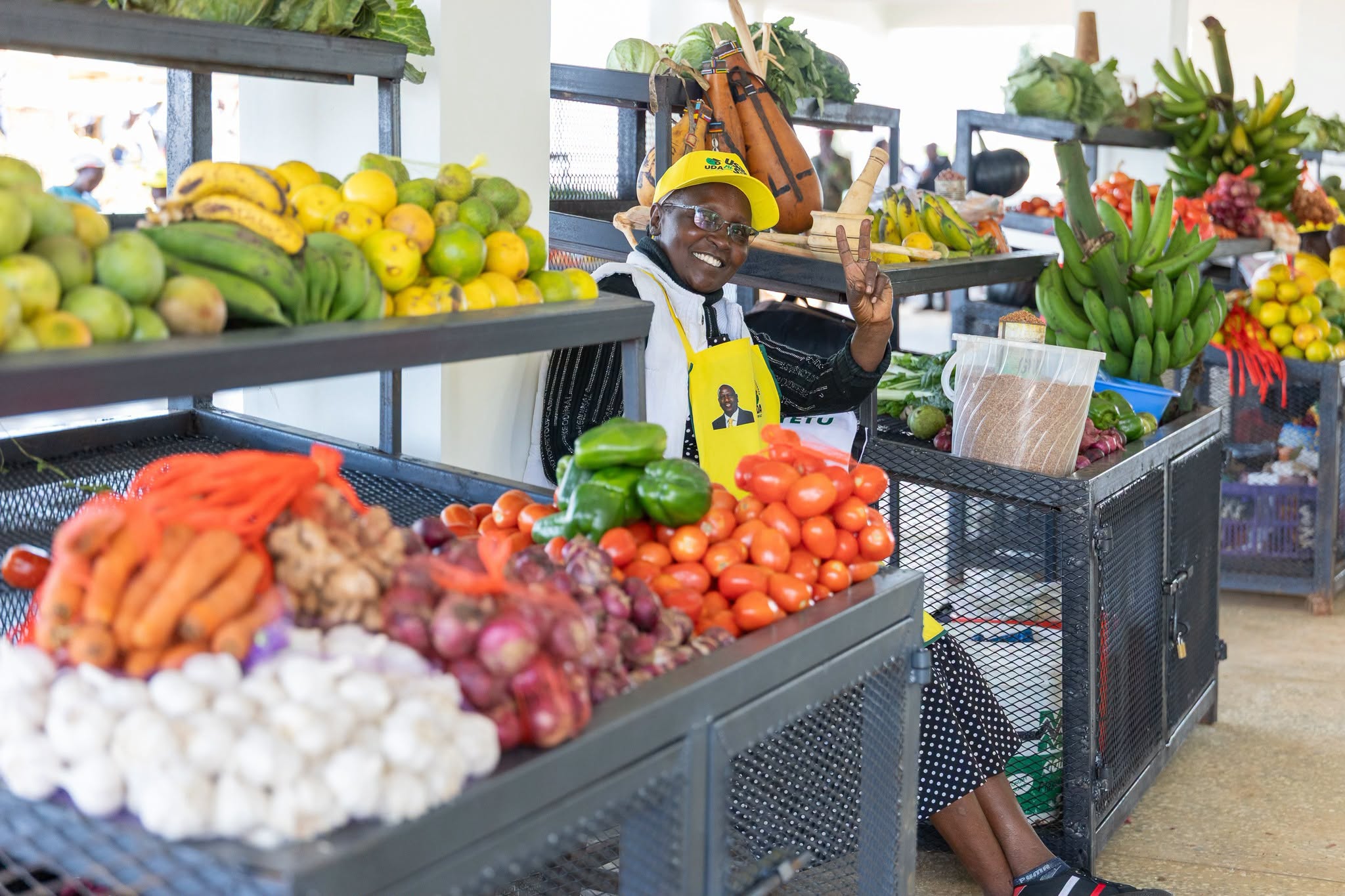
Kenya is making tangible economic progress under the Kenya Kwanza Government, registering 5.1% growth in the second quarter of 2026, with expansion across agriculture, construction, digital services and the industries sustaining trade and enterprise. Agriculture, forestry and fishing grew 3.5%, construction expanded 6.0%, and information and communication recorded 7.2% growth, placing productive sectors connected to the Bottom-Up Economic Transformation Agenda within our country’s growth story. These results give substance to the Government’s focus on expanding production, supporting businesses and developing opportunities through which Kenyans earn their livelihoods.
The progress is visible across farms, factories and construction supply chains, with tea production reaching 162,600 metric tons, coffee exports totaling 22,046.4 metric tons and sugar production standing at 211,800 metric tons. Cement production reached 2.73 million metric tons, supporting activity within the building economy, while transport and storage grew 4.4%, connecting producers, suppliers and markets. These outputs demonstrate the productive activity underpinning national growth and its connections to the livelihoods of farmers, artisans, traders and service providers.
The Government’s Bottom-Up plan places agricultural transformation, the MSME economy, housing and settlement, healthcare, and the Digital Superhighway and Creative Economy at the heart of development. The quarter’s results show expansion within several sectors serving these priorities, with measurable output across agricultural value chains, construction materials and commercial services.
- Agricultural transformation registered 3.5% growth, supported through production across key value chains. Tea output expanded 11.1% to 162,600 metric tons, while coffee exports grew 10.0% to 22,046.4 metric tons. Sugarcane deliveries reached 2.42 million metric tons, supporting sugar production of 211,800 metric tons. These results connect with BETA’s agricultural priority through the farm production, processing, transport and marketing activities sustaining rural economies. They demonstrate tangible activity within value chains through which farmers and associated businesses participate in national production and export markets.
- Construction expanded 6.0%, supporting the productive ecosystem connected to housing delivery. Cement production reached 2.73 million metric tons, while galvanized sheet production stood at 92,424 metric tons, serving demand within the building economy. These materials connect manufacturing with construction sites, distributors, transporters and skilled trades across our country. Under BETA’s housing and settlement pillar, this supply network provides avenues through which artisans, contractors and local enterprises participate in development. The registered output demonstrates activity across the industries supplying the construction sector.
- Information and communication grew 7.2%, advancing economic activity relevant to the Digital Superhighway priority. Digital services support communication, payments, business operations and access to markets, connecting enterprises with customers and enabling the delivery of commercial and public services. Expansion within this sector supports the economic infrastructure relevant to BETA’s digital objectives. Its practical significance extends through businesses using connectivity and digital systems to organize operations, conduct transactions and develop services, providing channels through which digital investment supports productive participation.
- Transport and storage recorded 4.4% growth, sustaining the movement of agricultural produce, manufactured goods and business supplies. These services connect farms with processors, factories with distributors and traders with customers across domestic and regional markets. Their contribution to Bottom-Up transformation lies in enabling the commercial relationships upon which producers and enterprises depend. Growth within the sector supports activity across agricultural, construction and retail supply chains, reinforcing the role of transport and logistics in connecting production with economic opportunity.
- Hospitality and financial services expanded within the networks supporting enterprise development. Accommodation and food services grew 7.4%, sustaining activity within an industry connected to food suppliers, transport operators and visitor services, while financial and insurance activities expanded 6.1%, supporting transactions and financial intermediation. These sectors serve businesses across the economy, including enterprises participating in BETA’s priority value chains. Their performance demonstrates activity within the markets and services that enable businesses to operate and pursue commercial opportunities.
The 5.1% growth outcome establishes measurable economic progress across productive sectors connected to the Bottom-Up plan. The Government’s delivery focus is to sustain this activity and develop participation through agricultural productivity, enterprise capacity, infrastructure, skills and digital access, with employment, business earnings and household incomes providing practical measures of how economic transformation reaches Kenyans.
Agricultural transformation delivers measurable production gains
The Kenya Kwanza Government is advancing agricultural transformation through investment in farm inputs, value-chain development, processing and market access, placing farmers at the foundation of the Bottom-Up Economic Transformation Agenda. Agriculture, forestry and fishing registered 3.5% growth in the second quarter of 2026, with tea, coffee, sugarcane and horticultural activity supporting production, trade and livelihoods across our country.
These results demonstrate the economic importance of BETA’s value-chain approach, which connects farming with processing, transport, distribution and export markets. The Government’s continuing investment in inputs and sector reforms supports the productive activities through which farmers, workers and enterprises participate in the agricultural economy.
- Subsidized fertilizer at KES 2,000 per 50-kilogram bag demonstrates direct government investment in agricultural production. Through the National Fertilizer Subsidy Programme, participating farmers can access an essential input at the government-supported price. On September 8, 2026, the Ministry of Agriculture and Livestock Development flagged off 99,000 metric tons of fertilizer at the Port of Mombasa and directed KTDA to expedite distribution. This intervention supports subsequent production cycles, giving practical effect to BETA’s commitment to address farm input expenses and sustain productive activity.
- Tea production reached 162,600 metric tons, registering 11.1% growth during April–June 2026. This output sustained activity across farms, collection centers, processing factories and transport networks, connecting growers with the businesses serving domestic and international markets. The Government’s continuing tea-sector interventions encompass factory modernization support, marketing initiatives, soil mapping and research. These measures address the production, processing and market requirements of a value chain whose performance is important to farming households and local economies.
- Coffee exports totaled 22,046.4 metric tons, registering 10.0% growth during the quarter. This volume demonstrates commercial activity across a value chain connecting growers, cooperatives, millers, traders and logistics providers with international buyers. Within BETA, developing these relationships supports the objective of translating agricultural production into income opportunities. Market access, product quality, production expenses and payment arrangements influence the earnings reaching farmers, making performance throughout the coffee value chain an important part of agricultural transformation.
- Sugarcane deliveries reached 2,419,700 metric tons, supporting sugar production of 211,800 metric tons. These volumes sustained activity linking cane-growing households with harvesting services, transport operators, mills and distribution businesses. The sugar industry connects agricultural production with processing and trade, supporting economic activity within participating communities. Under BETA, attention to productive farms, functioning mills and dependable commercial relationships is essential to sustaining this contribution, with farmer payments, employment and enterprise earnings determining its practical value to households.
- Vegetable and cut-flower exports supported agricultural participation in international markets. Vegetable exports totaled 16,025.9 metric tons, while cut-flower exports reached 33,105.8 metric tons during the second quarter of 2026. These volumes supported commercial networks encompassing production, grading, packaging, cold storage and freight. Their contribution to Bottom-Up transformation extends through the farmers, workers and enterprises participating in these activities, connecting agricultural output with services and business opportunities throughout the export supply chain.
The registered production and export volumes give substance to agricultural activity within BETA’s priority value chains. The Government’s continuing work on inputs, processing, research and market access supports the conditions required to sustain this production, with farmer earnings, viable enterprises and productive employment providing practical measures of its contribution to household prosperity.
Housing and construction support production, enterprise and skills development
The Kenya Kwanza Government’s housing and settlement agenda connects the delivery of homes with investment in construction, manufacturing and skilled work. Construction registered 6.0% growth in the second quarter of 2026, accompanied by measurable production across the industries supplying building materials. This performance demonstrates activity within the productive network supporting BETA’s housing priority, where construction projects generate demand through contractors, artisans, manufacturers, distributors and transport providers.
The Government is also developing professional capacity through the Affordable Housing Programme, with 6,000 internship opportunities announced in October 2026. These opportunities connect implementation with practical training, giving graduates a pathway to acquire experience in disciplines required to deliver housing projects across our country.
- Construction registered 6.0% growth, sustaining activity across building and associated services. The sector connects investment with work in site preparation, structural construction, roofing, plumbing, electrical installation and finishing. Within BETA’s housing and settlement pillar, these activities provide avenues through which technical skills and local enterprises participate in development. The sector’s expansion represents activity across public and private construction, with the Affordable Housing Programme forming part of the Government’s contribution to the building economy.
- Cement production reached 2,729,700 metric tons, registering 10.5% growth during April–June 2026. This output supported the material supply network serving building and infrastructure projects across our country. Cement production connects factories with raw-material suppliers, transport operators, distributors and construction sites, extending economic activity through several industries. Its relevance to Bottom-Up transformation lies in the productive relationships surrounding construction, where demand creates commercial opportunities across manufacturing, logistics and local distribution.
- Galvanized sheet production reached 92,424 metric tons, recording 19.7% growth during the quarter. These materials serve roofing and other building requirements, connecting industrial production with hardware businesses, fabricators, transporters and installation services. The output demonstrates activity within a manufacturing segment supplying the construction economy. Under BETA, developing domestic supply chains supports participation in the economic activities associated with housing and settlement, including the enterprises serving construction projects and individual homebuilders.
- The Government has announced 6,000 internship vacancies under the Affordable Housing Programme’s second cohort. The October 2026 announcement targets eligible degree and diploma graduates across professional fields supporting housing implementation. These are advertised training opportunities, with recruitment providing the route through which successful applicants will enter the program. Their significance lies in connecting housing delivery with practical experience, enabling young professionals to develop skills relevant to project implementation and future participation in the construction industry.
- The internship recruitment covers disciplines directly involved in delivering housing projects. Advertised opportunities include 500 positions in construction management, 475 in architecture and 350 in mechanical engineering, alongside other professional and technical fields. This distribution reflects the range of expertise required to plan, supervise and deliver housing developments. Within BETA, investment in these skills connects the construction program with workforce development, supporting the professional capacity required throughout project implementation.
The housing agenda’s economic contribution extends through the materials, skills and enterprises participating in delivery. Construction growth and building-material output demonstrate activity within this network, while the internship recruitment establishes a practical government intervention in professional development. Sustained implementation links the provision of homes with productive work, enterprise participation and the skills supporting our country’s construction economy.
Digital economy growth advances connectivity, enterprise and access to opportunity
The Kenya Kwanza Government is advancing BETA’s Digital Superhighway and Creative Economy pillar through investment in connectivity, digital skills and technology-enabled services. Information and communication registered 7.2% growth in the second quarter of 2026, demonstrating expansion within a sector supporting business operations, communication and commercial transactions. This performance connects with the Government’s commitment to develop a digitally enabled economy in which Kenyans can access services, build enterprises and participate in economic opportunities.
The delivery agenda extends into communities through digital hubs, skills development and partnerships supporting access to technology. The commissioning of three ICT hubs in Ol Kalou in October 2026 provides a practical example of government institutions working together to bring these facilities to constituency level.
- Information and communication recorded 7.2% growth, supporting the services underpinning digital transformation. Enterprises use communication networks and digital systems to reach customers, manage orders, receive payments and coordinate operations. Expansion within this sector supports the infrastructure and services relevant to BETA’s digital priorities, with applications extending across agriculture, trade, finance and public administration. The economic opportunity lies in enabling businesses and workers to use these services productively, connecting access to technology with commercial activity and service delivery.
- Three ICT hubs commissioned in Ol Kalou demonstrate delivery within local communities. The facilities at Passenga, Wiyumiririe and Mirangine were established through NG-CDF support, equipped through the Ministry of ICT and supported technically through Konza Technopolis. Reported on October 17, 2026, this partnership connects national digital priorities with facilities intended to serve residents through ICT skills development, online learning and access to digital services. The hubs provide practical spaces through which young people and other users can develop the capabilities required to participate in a digitally enabled economy.
- Kenya’s fixed internet market reached 2.84 million subscriptions in June 2026, demonstrating demand within the connectivity economy. These subscriptions cover connections serving households, businesses and institutions through technologies including fiber, terrestrial wireless and satellite. The figure measures subscriptions across the market, with public policy and private investment contributing to the environment in which providers operate. Within BETA, the development priority is to connect network availability with productive use, enabling enterprises, learning institutions and service providers to conduct activities requiring dependable internet access.
- The National Broadband Strategy 2025–2030 provides a framework connecting infrastructure with digital participation. Its priorities encompass broadband access, affordability, digital skills and connectivity in underserved communities, alongside the resilience and security of digital infrastructure. These areas address the conditions required to turn access into practical opportunity, including the ability to use devices, connect to services and apply technology in work and enterprise. The strategy supports BETA’s digital ambitions through coordinated responsibilities spanning government, industry, development partners and communities.
The sector’s registered growth and the delivery of community facilities demonstrate activity across the commercial and public-service dimensions of digital transformation. The Government’s implementation focus is to connect infrastructure, skills and services with the productive needs of Kenyans, supporting enterprises, professional development and participation in the digital economy.
Enterprise financing puts capital and business support into the Bottom-Up economy
The Kenya Kwanza Government is implementing BETA’s MSME pillar through financing, business training and savings programs that support participation in economic activity. The Hustler Fund and the National Youth Opportunities Towards Advancement project provide practical channels through which individuals and young entrepreneurs can access financial support, develop business capabilities and pursue income-generating opportunities.
These interventions give substance to the Bottom-Up commitment to support enterprise at community level. The Hustler Fund had recorded KES 90 billion in cumulative lending in the presidential progress briefing of July 29, 2026, while NYOTA reported KES 2.55 billion in first-cohort business start-up capital reaching 101,721 young beneficiaries across all 47 counties. These figures represent distinct forms of support, with lending delivered through the Hustler Fund and enterprise grants delivered through NYOTA.
- KES 90 billion in cumulative Hustler Fund lending demonstrates the scale of government-backed financial access. The July 2026 progress briefing recorded financing through the Personal Loan, Bridge Loan and Hustler Groups products. Cumulative disbursements include successive lending transactions as borrowers access and repay facilities, reflecting activity within the fund’s revolving financing model. Under BETA, this intervention addresses access to finance among individuals and enterprises seeking resources to support their economic activities, with repayment sustaining the availability of funds to subsequent borrowers.
- KES 7 billion in borrower savings connects financial access with household financial resilience. The same briefing recorded savings accumulated through the Hustler Fund, giving practical effect to its savings objective alongside lending. The program also reported 10 million repeat customers, with 4.5 million borrowers attaining A and B credit scores through their repayment records. These measures demonstrate participation in a financing system that combines access to credit, repayment discipline and savings, supporting the financial capabilities relevant to households and small enterprises.
- NYOTA’s first nationwide cohort received KES 2.55 billion in start-up capital across all 47 counties. The project reported reaching 101,721 young beneficiaries, placing enterprise resources within communities across our country. This disbursement connects BETA’s MSME priority with direct support to young people establishing or developing businesses. The economic purpose is to enable beneficiaries to apply capital within income-generating activities, supported through the training, mentorship and financial linkages included in the project’s enterprise approach.
- The NYOTA business-support package provides KES 50,000 in capital through two KES 25,000 installments. Successful beneficiaries must complete a four-day business training program before accessing start-up support. This structure connects financing with preparation to operate an enterprise, addressing the business capabilities required to use capital productively. Training and mentorship are intended to support decisions concerning stock, expenditure, customers and business management, giving the intervention a practical connection to the day-to-day requirements of small enterprises.
The Government’s enterprise agenda connects financial resources with the capabilities required to participate in business. Lending, savings, grants and training provide identifiable interventions under BETA, with sustained business activity, repayment performance and beneficiary earnings determining their contribution to economic transformation. Developing these outcomes connects national policy with the traders, young entrepreneurs and households building livelihoods within our country’s local economies.
Healthcare investment protects livelihoods and supports productive participation
The Kenya Kwanza Government’s universal health coverage agenda connects access to treatment with the protection of household livelihoods. Under BETA, healthcare is an economic priority because illness affects people’s ability to work, operate businesses and sustain their families. Government investment in community services, primary care and treatment financing addresses these risks through identifiable interventions reaching households and health facilities.
The President’s August 18, 2026, health-sector update documented progress across community outreach, treatment and facility financing, providing a delivery record against BETA’s healthcare commitments.
- A network of 107,800 Community Health Promoters supports care at household level. The August update recorded outreach to over nine million households and referrals involving over 750,000 people. Their work encompasses health education, screening and connecting families with facilities. Within BETA, community outreach supports early attention to health needs, helping people seek care while sustaining their participation in family and economic life.
- KES 23.3 billion in Primary Healthcare Fund disbursements supported outpatient services. The update recorded over 20 million outpatient visits benefiting over 15 million Kenyans. This financing supports eligible services at dispensaries and health centers, connecting public resources with care within communities. Access to primary care matters to households managing treatment needs alongside the expenses associated with food, education and business operations.
- Treatment financing demonstrates delivery through the social health system. Eight million people had received treatment, with support extending to over 1.2 million mothers during delivery and over 500,000 surgical procedures. These services connect BETA’s healthcare pillar with practical patient needs. Their economic relevance lies in supporting recovery, safeguarding family wellbeing and addressing treatment expenses that can disrupt livelihoods.
- Payments exceeding KES 178 billion supported contracted facilities across all 47 counties. The cumulative figure covered the period from October 2024 to the August 2026 update. Facility financing supports the institutions delivering treatment, linking patient access with the resources required to sustain services. Dependable care is essential to the workers, farmers and entrepreneurs whose productive activities contribute to our country’s economy.
Healthcare delivery gives BETA a direct connection to household security, with community outreach, treatment and facility financing supporting people’s wellbeing. Its contribution to economic transformation rests on accessible, dependable services that enable Kenyans to maintain their livelihoods and participate productively in the economy.
Energy, transport and hospitality sustain the productive economy
The Kenya Kwanza Government’s Bottom-Up Economic Transformation Agenda depends on the infrastructure and services that enable production, trade and investment across our country. Electricity powers factories and enterprises, transport connects producers with markets, and hospitality sustains demand across agriculture and visitor services. Growth within these sectors supports the operating networks through which BETA’s agricultural, housing, enterprise and digital priorities reach the economy.
During the second quarter of 2026, electricity and water supply expanded 7.7%, transport and storage grew 4.4%, and accommodation and food services recorded 7.4% growth. These results demonstrate activity within sectors supporting commercial transactions, production and service delivery across our country.
- Electricity and water supply registered 7.7% growth, supporting services essential to production and daily economic activity. Energy and water are inputs across agricultural processing, manufacturing, construction, hospitality and healthcare. Their availability supports the operations of factories, workshops, businesses and public facilities. Within BETA, investment in these services underpins the productive activities expected to generate employment and enterprise opportunities, connecting infrastructure delivery with the practical requirements of businesses and communities.
- Electricity sales reached 3.51 billion kilowatt-hours, registering 15.0% growth during the quarter. This volume demonstrates electricity supplied across the economy, serving households, institutions and commercial operations. Wind generation reached 469.8 million kilowatt-hours, contributing to the energy available within the national system. The connection to Bottom-Up transformation lies in the uses of electricity across productive activities, including refrigeration, food processing, fabrication, digital services and the operation of equipment within small enterprises.
- Transport and storage expanded 4.4%, sustaining commercial connections across agricultural and industrial value chains. These services move farm inputs, food, manufactured products and construction materials between suppliers, producers and customers. Their role extends through freight operations, warehousing, distribution and associated businesses. Under BETA, functioning logistics support market access and the movement of goods required to sustain enterprise activity, giving transport a practical connection to the earnings of producers and traders.
- Accommodation and food services grew 7.4%, supporting demand within hospitality supply chains. Hotels, restaurants and visitor establishments purchase food, transport, maintenance and other services required in their operations. These commercial relationships connect hospitality activity with farmers, distributors and local service enterprises. Within BETA’s value-chain approach, developing domestic supply capacity and business linkages provides a route through which hospitality expenditure can support enterprise participation and livelihoods within surrounding communities.
The performance of these sectors demonstrates the importance of coordinated delivery across BETA’s priorities and supporting infrastructure. Energy, water, logistics and hospitality connect productive activities throughout the economy, supporting the conditions under which enterprises operate and people work. Sustaining these connections is essential to translating economic expansion into viable businesses, productive employment and household earnings.
Consolidating growth into jobs, enterprise and household prosperity
Kenya’s registered 5.1% economic growth provides a substantive platform to advance the Bottom-Up Economic Transformation Agenda through production, enterprise and investment. Expansion across agriculture, construction, digital services, transport and hospitality demonstrates activity within the sectors connecting national development with everyday livelihoods. The Kenya Kwanza Government’s delivery priorities bring these sectors together through agricultural inputs, housing implementation, enterprise financing, digital infrastructure and healthcare services.
The economic purpose of this coordinated agenda is to enable Kenyans to participate in productive activities and retain the benefits of their work. Farm output must connect with markets and farmer payments, construction activity with opportunities for workers and suppliers, and enterprise financing with businesses capable of sustaining operations. These connections give practical meaning to Bottom-Up transformation.
- Developing local value chains connects national investment with business opportunities within communities. Housing projects require materials, skilled trades and professional services, while hospitality and agricultural processing draw on producers, transporters and suppliers. Supporting local capacity to meet these requirements creates avenues through which enterprises can participate in the growing economy. Under BETA, this means connecting investment with the businesses and workers able to supply goods and services throughout implementation.
- Combining capital, skills and market access supports productive enterprise. Government interventions through the Hustler Fund, NYOTA, housing internships and digital hubs address different requirements of economic participation. Financing supports business activity, training develops practical capabilities, and connectivity enables access to services and customers. Their contribution to transformation depends on how effectively beneficiaries apply these resources within viable enterprises and productive work, with business continuity and earnings providing evidence of progress.
- Protecting household livelihoods supports sustained participation in the economy. Healthcare financing and community services address needs that influence people’s ability to work, run businesses and support their families. Agricultural input support addresses production expenses, while infrastructure enables the movement of goods and delivery of services. Coordinating these interventions gives BETA a practical household focus, connecting public investment with the conditions required to sustain livelihoods.
The Government’s delivery record and the quarter’s economic performance establish a foundation to carry Bottom-Up transformation through the productive economy. Sustained implementation must connect expanding output with market participation, employment and earnings, ensuring that the businesses, workers and households contributing to our country’s growth share in its opportunities.
