
Strengthening Border Services to Support Trade, Enterprise and National Security
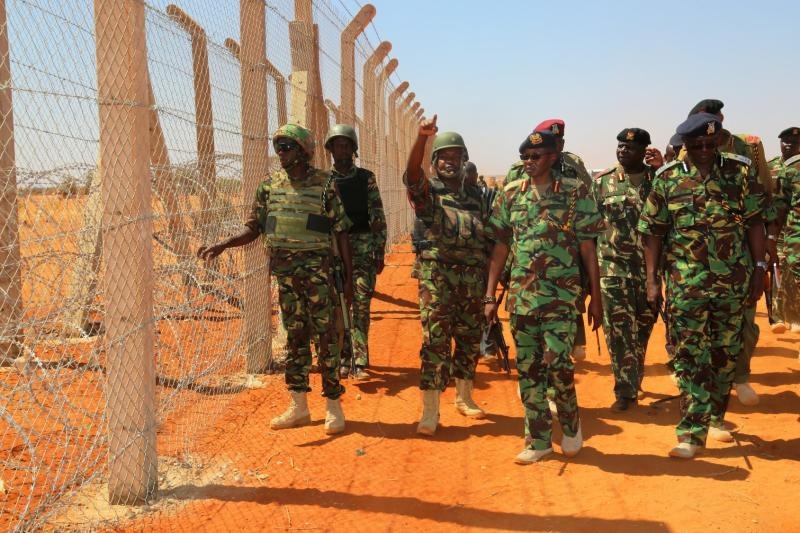
Kenya is strengthening service delivery at its borders to support trade, facilitate the lawful movement of people and goods, and safeguard the economic activities that sustain livelihoods across our country. The State Department for Internal Security and National Administration has introduced three joint service charters covering land, air and maritime borders, alongside specialized training for officers responsible for border management. These interventions connect service standards with the professional capacity required to implement them across Kenya’s 35 designated points of entry and exit.
The reforms support the Bottom-Up Economic Transformation Agenda by addressing the government processes that businesses encounter when accessing regional and international markets. Farmers supplying export markets, traders moving goods across neighboring countries, manufacturers importing production inputs and transporters delivering consignments all interact with border agencies. Published requirements, transparent charges and coordinated procedures give these businesses an administrative framework within which to organize their transactions and meet their legal obligations.
Principal Secretary Dr. Raymond Omollo launched the joint service charters at the Kenya School of Government alongside the opening of the 12th cohort of the Kenya Coordinated Border Management Programme. The cohort brings together 25 officers from border management agencies for a 10-day specialized training program focused on interagency cooperation and responses to evolving security threats. The two initiatives address connected responsibilities, establishing what border users should expect and preparing officers to deliver services within their respective mandates.
The framework advances the following priorities.
- Establishing service standards across 35 designated border points. The three charters provide a framework for land, air and maritime operations, outlining available services, application requirements, applicable charges, procedures and expected processing timelines. Access to this information supports business preparation, particularly where a transaction requires documentation and approvals from several institutions. A trader preparing a consignment needs to understand the requirements governing its movement, the offices responsible for each approval and the charges attached to the services sought. Publishing these obligations also gives government supervisors a basis for assessing whether frontline services meet institutional commitments.
- Connecting border administration to agricultural and enterprise development under BETA. Market access is an important part of the Government’s priorities for agricultural transformation and the micro, small and medium enterprise economy. Border procedures form part of the journey connecting production to customers beyond our country. Clear guidance on documentation and regulatory requirements supports participation in those markets, including for enterprises developing their capacity to trade internationally. The charters address this administrative dimension by defining service expectations at the points through which goods enter and leave Kenya.
- Strengthening cooperation among agencies handling the same movement of people and goods. Immigration, customs, policing, health inspection and other regulatory responsibilities meet within the border environment. Each institution carries a defined mandate, and completing a transaction depends on the coordination of the relevant functions. The 25-officer training cohort provides a shared learning environment for strengthening that cooperation and understanding how individual agency decisions affect the wider clearance process. Its focus on evolving security threats also supports officers’ responsibility to identify risks while facilitating legitimate travel and commerce.
- Giving travelers and traders defined timelines for communication and assistance. The announced service commitments provide for responses to verbal correspondence within 24 hours, handling of written correspondence within five days, and attention to complaints and inquiries within five days. They also provide for immediate emergency assistance, including medical evacuation. These timelines establish specific obligations for receiving requests, directing them to the responsible offices and following up on action taken. Border users gain a reference point for seeking assistance and raising concerns when the stipulated service has not been delivered.
- Embedding staff development and public accountability in daily operations. Participating agencies are expected to display the charters at their border points, familiarize frontline officers with the commitments and undertake quarterly staff capacity building. The implementation arrangements include performance monitoring, identification of service gaps and stakeholder feedback. Complaints about poor service and noncompliance are directed to the Border Management Secretariat, providing a formal channel through which users raise concerns about their experience and responsible institutions address shortcomings.
Making Border Service Commitments Accessible and Enforceable
Public access to service information is an essential part of accountable border administration. Traders and travelers need to know the documents required, the procedures to follow, the charges applicable to their transactions and the time within which they should receive a response. The joint service charters establish these expectations across land, air and maritime borders, giving users a documented basis for engaging government agencies and seeking assistance when services fall outside the stated commitments.
This approach supports BETA’s priorities on enterprise development and market access by addressing the administrative information businesses require to conduct lawful trade. A small enterprise preparing its first cross-border consignment needs clear instructions on the approvals governing its goods. A transporter following up on documentation needs an identifiable office responsible for responding. Accessible service information supports these interactions and gives businesses a basis for preparing transactions, following up on outstanding matters and raising complaints.
The charters set out specific communication, public assistance and accountability commitments.
- Responses to verbal correspondence are expected within 24 hours. This standard establishes a defined period for responding to verbal requests for information or clarification. Its practical application requires frontline officers to understand the services within their mandate and the referral arrangements for matters handled by another agency. A trader asking about documentation, an applicant seeking guidance on a procedure or a traveler requesting clarification should receive an answer that addresses the inquiry or identifies the responsible office. The 24-hour commitment concerns communication and does not establish a universal cargo or passenger clearance period.
- Written correspondence is expected to be handled within five days. Written communication provides a record of the matter raised and the response provided, supporting follow-up by the applicant and supervision within the responsible institution. Giving this commitment practical effect requires an identifiable receiving point, assignment of correspondence to the appropriate office and tracking of outstanding responses. These administrative steps support accountability when an inquiry involves several institutions or requires clarification of a specific regulatory requirement.
- Complaints and inquiries are expected to receive attention within five days. The published timeframe gives border users a reference point for following up on concerns about service delivery. Complaints also provide information about recurring operational problems, including unclear instructions, difficulties obtaining assistance or failure to observe stated procedures. Examining these concerns helps responsible institutions identify the service involved, establish what occurred and determine the action required. The commitment creates an expectation of timely handling, while the substance of each complaint determines the investigation and remedy necessary.
- Immediate emergency assistance includes medical evacuation. Border operations involve travelers, workers and other users who may require urgent assistance while within a point of entry or exit. The emergency commitment recognizes the need for prompt coordination among the agencies present and the relevant response services. Its implementation depends on officers knowing how to activate assistance, communicate the location and nature of the emergency, and facilitate access for responders. Preparedness for these situations forms part of the public service responsibility attached to border management.
- Displayed charters make service obligations available at the point of use. Agencies are expected to display the charters and familiarize frontline personnel with their contents. Public visibility allows users to consult the requirements, charges, timelines and complaint arrangements relevant to their transactions. Staff familiarity supports consistent guidance when members of the public seek assistance. Display and sensitization work together because the information presented to users needs to correspond with the instructions applied by the officers serving them.
- The Border Management Secretariat provides a channel for escalating poor service and noncompliance. A formal escalation route gives users an identified institution to approach when service commitments are not observed. Performance monitoring and stakeholder feedback are also included in the implementation arrangements, supporting examination of problems that involve several agencies. Recording the service concerned, the date of the request, the offices approached and the responses received provides a practical foundation for reviewing complaints and following up with the responsible institutions.
Building Officer Capacity for Coordinated Border Security and Trade Facilitation
Professional border management depends on officers who understand their statutory responsibilities, recognize emerging threats and coordinate effectively with the institutions operating alongside them. The State Department for Internal Security and National Administration is strengthening this capacity through the Kenya Coordinated Border Management Programme, whose 12th cohort brings together 25 officers for a 10-day specialized training program. The initiative supports the personnel responsible for applying service standards and managing the security responsibilities that accompany the movement of people and goods.
The training complements the joint service charters by addressing the institutional cooperation required to deliver their commitments. Border transactions frequently involve several government agencies, each responsible for a particular approval, inspection or enforcement function. An officer’s understanding of these connected responsibilities affects how an inquiry is directed, how information reaches the appropriate institution and how an emerging concern receives attention. Shared training provides a structured setting for strengthening that understanding across participating agencies.
The program’s stated focus on interagency cooperation and evolving security threats connects directly to the conditions required for lawful trade and enterprise under BETA. Agricultural exports, manufacturing inputs and goods traded by micro, small and medium enterprises pass through regulatory processes that protect public health, support revenue administration and safeguard national security. Officer capacity supports the execution of these responsibilities and the coordination required to facilitate legitimate economic activity.
The training initiative has practical relevance across the following areas.
- The 25-officer cohort creates a shared learning environment across border management agencies. Bringing officers into the same program supports discussion of how institutional mandates connect within a border operation. Each agency contributes a particular function, and officers need to understand where their responsibilities begin, what information another institution requires and when a matter needs referral. This shared understanding supports the handling of transactions involving several agencies and provides a foundation for professional working relationships across institutional boundaries.
- The 10-day program provides dedicated time for strengthening coordinated border management. The announced duration establishes the scope of the current training intervention and its focus on interagency cooperation and responses to evolving threats. The available information does not specify the allocation of training days to individual subjects or the assessment methods used. The substantive implementation responsibility is to connect the knowledge developed during the program to officers’ assigned duties, supervision and agency procedures.
- The focus on evolving security threats supports informed decisions at points of entry and exit. Officers working within the same border environment may encounter different aspects of a transaction or movement, depending on their mandate. Effective cooperation helps relevant information reach the institution authorized to act on it. This requires clear communication, respect for legal responsibilities and an understanding of established referral arrangements. Developing these capabilities supports the management of security concerns arising during the processing of people and goods.
- Shared understanding of service commitments supports consistent guidance to the public. The charters establish timelines for communication and complaints, while officers provide the assistance through which users experience those commitments. Personnel need to understand the requirements governing their services and how to direct questions that fall within another institution’s responsibility. Applying that understanding helps a trader identify the approval required, enables a traveler to reach the appropriate office and supports follow-up when a request involves several agencies.
- Quarterly capacity building provides for continued attention to staff preparedness. The charter implementation arrangements require participating institutions to undertake quarterly staff capacity building. This establishes a recurring opportunity to address service delivery gaps, clarify procedures and reinforce officers’ familiarity with institutional commitments. Findings from supervision, complaints and stakeholder feedback provide practical information for determining where additional guidance is needed. Agencies’ internal training arrangements also provide a channel for sharing relevant learning with personnel carrying out related duties.
- Workplace supervision provides the basis for assessing how training informs service delivery. Participation figures establish how many officers entered the program, while operational evidence is needed to assess its application. Relevant areas for supervision include the accuracy of guidance given to users, compliance with communication timelines, handling of referrals and cooperation among responsible offices. These observations give managers a basis for identifying where officers require support and where institutional procedures need attention.
Supporting Agricultural Trade and MSME Access to Regional Markets
Access to regional and international markets connects Kenya’s production ambitions with opportunities for income, employment and enterprise growth. The Bottom-Up Economic Transformation Agenda places agriculture and the micro, small and medium enterprise economy among its five core pillars. Border management supports these priorities through the administration of the requirements governing the movement of goods, the coordination of responsible agencies and the provision of information that businesses need to undertake lawful trade.
The three joint service charters extend this service framework across land, air and maritime borders. Their economic relevance lies in the transactions handled within these environments, including agricultural consignments, manufactured products, production inputs and goods traded by small enterprises. Published procedures and officer preparedness address the administrative component of those transactions. Businesses also remain responsible for meeting the customs, immigration, health and other regulatory requirements applicable to their activities.
The relationship between these border reforms and BETA’s enterprise priorities has practical implications across the following areas.
- Agricultural traders require accessible guidance on the requirements governing their consignments. Exporting agricultural goods involves compliance with the rules applicable to the product and destination market. Information on required documents, responsible agencies and processing procedures helps traders prepare before presenting a consignment for clearance. This preparation is particularly relevant to perishable products, whose commercial handling depends on careful scheduling throughout the supply chain. The charters provide a framework for communicating government service requirements, while coordination among agencies supports the handling of the approvals within their respective mandates.
- Small enterprises need clear information when entering cross-border markets. A business developing its export activities needs to identify the procedures governing its products, the charges attached to relevant services and the offices responsible for assistance. Publishing these requirements gives entrepreneurs a reference for preparing transactions and seeking clarification. This supports BETA’s emphasis on MSME market access by addressing the information required to interact with border institutions. The commercial decision to enter a market also depends on demand, financing, product standards and the enterprise’s capacity to supply customers.
- Manufacturers depend on the lawful movement of production inputs and finished goods. Border administration forms part of the supply chain through which businesses obtain machinery, components, packaging and other inputs, and deliver products to external customers. Defined service requirements help firms organize the documentation associated with these movements. Coordination among agencies is relevant where a consignment requires several regulatory interventions, each of which contributes to the completion of the transaction. The charters establish service expectations for these interactions without altering the legal approvals applicable to particular goods.
- Transport and logistics enterprises require clear procedures for following up on consignments. Transporters, clearing agents and warehouse operators work within schedules connecting producers, border facilities and customers. Access to service information helps them identify the documentation required and the institution responsible for an outstanding matter. The published communication commitments provide a basis for requesting clarification and escalating unanswered inquiries. These commitments concern the handling of communication and complaints; they do not establish a single clearance period for every category of cargo.
- Transparent charges support transaction planning and public accountability. The charters provide for disclosure of applicable charges alongside service requirements and procedures. This information helps businesses identify official payment obligations and retain the records needed to account for their transactions. Public access to charges also supports scrutiny when a requested payment requires clarification. Where users encounter poor service or noncompliance with the charter, the Border Management Secretariat provides an identified channel for raising the matter.
- Business feedback provides operational evidence for addressing service gaps. Traders and transporters interact directly with the procedures established at border points and are positioned to identify difficulties encountered during a transaction. Feedback supported by dates, documents, payment records and correspondence helps responsible institutions examine a specific concern. Reviewing recurring issues across the 35 designated points of entry and exit provides a basis for identifying requirements that need clarification, referral arrangements that require attention and areas for staff capacity building.
Tracking Implementation and Accountability Across Border Agencies
Implementation of the joint service charters requires sustained supervision across Kenya’s 35 designated points of entry and exit. The State Department for Internal Security and National Administration, through its border coordination structures, has a responsibility to keep participating institutions focused on the commitments established for land, air and maritime operations. These commitments include public access to service information, defined communication timelines, quarterly staff capacity building and channels for raising poor service and noncompliance.
The implementation framework provides for performance monitoring, identification of service gaps and stakeholder feedback. Giving these provisions practical effect requires records showing when a request was received, which institution handled it, what action followed and whether the applicable commitment was observed. Such records provide the evidence needed to assess delivery and determine where administrative intervention is required. They also support accountability where several agencies contribute to the same transaction.
The launch figures establish the initial scope of the intervention through three joint service charters and a 25-officer training cohort. Assessment of subsequent delivery requires operational evidence from the institutions applying those commitments. The following areas provide a practical basis for monitoring implementation.
- Availability of service information at each border point requires routine verification. Supervisors should establish whether the relevant charter is displayed, whether its contents are legible and whether users have access to current requirements, applicable charges and complaint channels. Verification should also examine whether the guidance provided by officers corresponds with the published information. Recording these findings by location would help responsible institutions identify missing information and assign corrective action to the appropriate office.
- Communication records provide a basis for checking the 24-hour and five-day commitments. Monitoring should distinguish verbal correspondence, written correspondence, complaints and inquiries because the charters attach specific response expectations to these categories. Records need to identify the date of receipt, the responsible agency, the response provided and any outstanding action. An acknowledgment establishes that a matter has been received; the substance of the response establishes whether the user’s request has been addressed. Tracking both elements supports an assessment of how the communication standards operate in practice.
- Complaint handling requires documented follow-up with responsible institutions. A complaint referred to the Border Management Secretariat needs sufficient information to identify the service involved and the agency responsible. Recording the action taken, the explanation provided and any corrective measures supports follow-up with the complainant and institutional supervision. Reviewing recurring complaints also helps identify whether a problem concerns staff conduct, unclear procedures, communication between agencies or an operational constraint requiring management attention.
- Quarterly capacity building should respond to documented service needs. The requirement for quarterly staff development gives participating agencies a recurring opportunity to address difficulties identified through supervision and public feedback. Training priorities should reflect the procedures officers apply, the questions users raise and the coordination problems encountered during operations. Attendance records establish participation, while subsequent supervision helps determine whether officers understand and apply the guidance provided. This approach connects staff development to specific responsibilities at the point of service.
- Interagency referrals need identifiable responsibility and follow-through. Transactions involving several institutions require officers to know where to direct an inquiry, which office is authorized to act and how to follow up on an outstanding matter. Monitoring these referrals would help establish whether requests reach the appropriate institution and whether users receive clear guidance on the next step. Where the same problem repeatedly arises between agencies, the relevant coordination structures have a basis for reviewing the referral procedure and assigning responsibility for corrective action.
- Claims about economic and security results require measured evidence. Establishing changes in clearance times requires comparable records covering the relevant cargo categories, border points and reporting periods. Assessing business costs requires evidence of the charges and expenses associated with the transactions examined. Security assessments similarly require defined indicators and verified operational records. The available information confirms the launch of the charters and the opening of the training cohort; it does not yet establish quantified changes in trade costs, clearance performance or security incidents attributable to these interventions.
Conclusion
The State Department for Internal Security and National Administration is strengthening Kenya’s border operations through joint service charters covering land, air and maritime borders and specialized training for officers responsible for their management. The framework establishes service commitments across 35 designated points of entry and exit, while the 12th cohort of the Kenya Coordinated Border Management Programme brings together 25 officers for 10 days of training focused on interagency cooperation and evolving security threats.
These interventions support the Bottom-Up Economic Transformation Agenda by connecting border administration to the needs of farmers, traders, manufacturers and transporters participating in regional and international commerce. Published requirements, transparent charges, defined communication timelines and formal complaint channels establish the standards governing their engagement with border agencies. Applying these commitments through professional officers and coordinated institutions advances the Government’s responsibility to safeguard our country, facilitate lawful trade and support enterprise development.
