
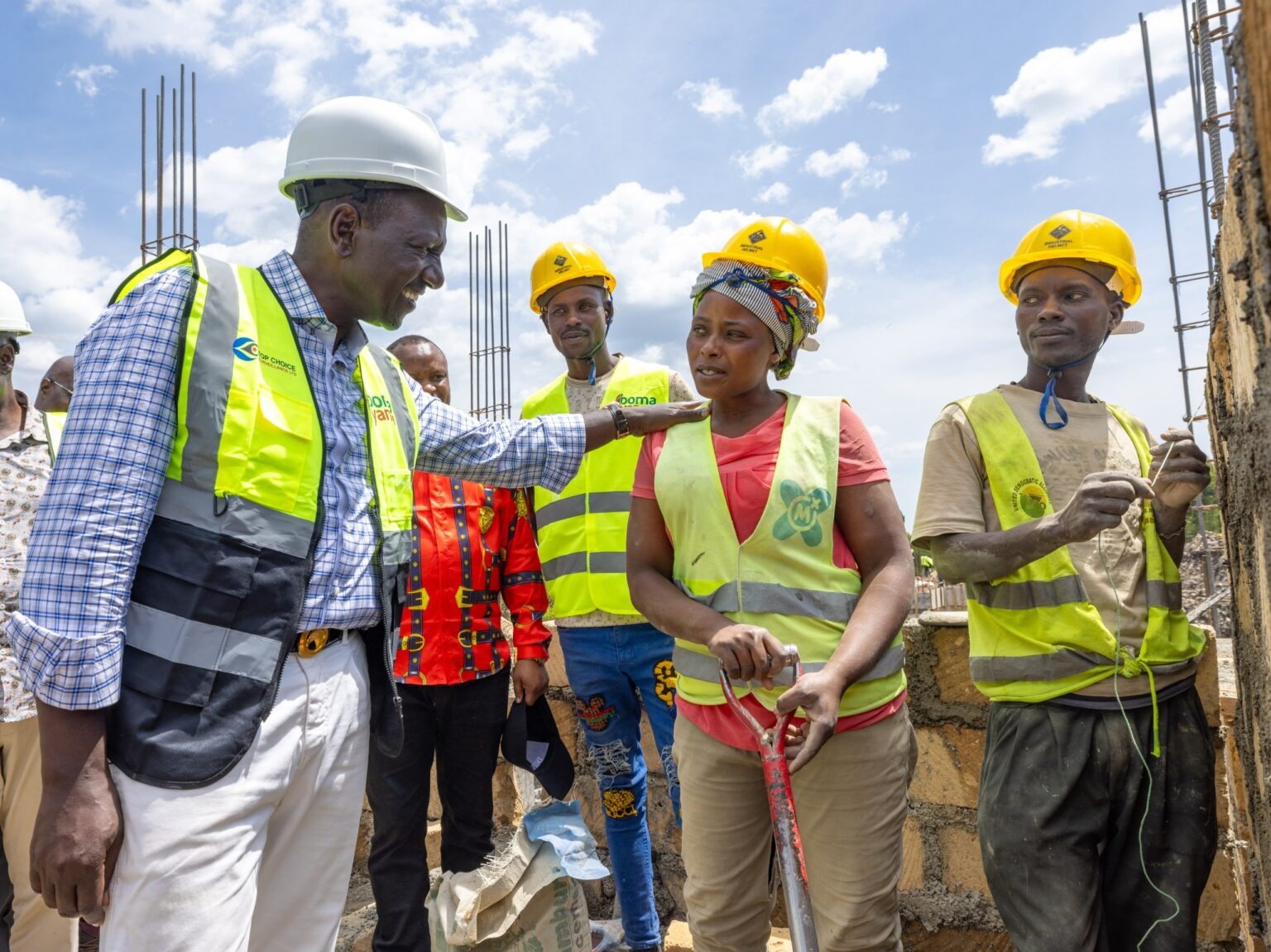
Housing occupies a strategic position within the Bottom Up Economic Transformation Agenda because investment in the built environment addresses the need for decent housing and activates an extensive domestic economic value chain. Every housing development creates demand for land planning, engineering, cement, steel, stone, sand, timber, glass, paint, electrical products, plumbing materials, doors, windows, transport, equipment, professional services and labor. The Affordable Housing Programme connects the delivery of homes with employment creation, MSME growth, Jua Kali production, domestic manufacturing and development of infrastructure within growing settlements.
Kenya’s housing challenge has accumulated over decades of population growth, rapid urbanization, inadequate production of affordable formal housing and limited access to long term housing finance. Millions of traders, artisans, farmers, transport operators, small business owners, salaried employees and other working Kenyans require housing products supported by financing arrangements suited to their incomes. Land, infrastructure and construction costs have also affected the ability of the housing market to produce sufficient units within price ranges accessible to working households.
The Affordable Housing Programme under BETA addresses these constraints through large scale construction supported by the Affordable Housing Act, 2024, the Affordable Housing Levy, public land, partnerships with county governments and private developers, the Boma Yangu platform and structured end user financing. The programme incorporates social housing, affordable housing, affordable middle class housing, rural affordable housing, institutional housing, student accommodation, modern markets and informal settlement upgrading within a national housing and settlement transformation framework.
As at August 2026, the Affordable Housing Programme has established a national pipeline of approximately 700,000 homes across the country, with projects progressing through planning, procurement and construction. Within this national pipeline, 277,281 housing units have been completed or are under implementation under the quantified programme portfolio captured in the FY 2026/27 framework. The distinction is important because the 277,281 units represent a defined implementation portfolio within a substantially larger national housing pipeline.
The Affordable Housing Programme has created more than 640,442 jobs across the housing value chain, encompassing construction, professional services, manufacturing, logistics and supporting industries. Housing projects create opportunities for masons, carpenters, plumbers, electricians, painters, welders, steel fixers, machine operators, general construction workers, architects, engineers, quantity surveyors, planners, surveyors, manufacturers, transporters and enterprises supplying construction sites.
The programme incorporates a substantial pipeline of institutional and student accommodation. 177,686 student beds have been packaged for development, and 22,512 institutional housing units are under construction. These developments create construction demand around universities, colleges, government facilities and public institutions while expanding the stock of accommodation required within these sectors.
Modern markets form another major component of the built environment programme. 476 markets have been packaged under the Modern Markets Programme, creating organized trading infrastructure for small businesses and strengthening the connection between investment in the built environment and the Bottom Up economy. Market development provides commercial spaces for traders and generates construction work, local procurement and infrastructure investment within towns and trading centers.
Demand for affordable homes is being organized through Boma Yangu, with more than 1 million Kenyans registered on the platform. Boma Yangu provides a national interface connecting prospective homeowners with housing opportunities and supports registration, savings, applications and allocation. The registration base establishes a substantial national homeownership pipeline requiring sustained construction, financing, allocation and occupation of housing units.
The programme establishes financing categories according to household income. Social housing serves households earning below KES 20,000 per month, affordable housing serves households earning between KES 20,000 and KES 149,999, and affordable middle class housing serves households earning KES 150,000 and above. End user financing provides annual interest rates of 3%, 6% and 9% respectively, with repayment periods extending up to 30 years on a reducing balance basis. Each financing category establishes defined terms for households participating in the programme.
Local production forms an integral part of the construction value chain. Hundreds of thousands of housing units require doors, windows, steelwork, cabinetry, tiles, paint, electrical fittings, plumbing products and numerous building components. Affordable housing procurement provides opportunities for Jua Kali artisans, MSMEs, youth and women to participate in fabrication, joinery, painting, tiling, landscaping and other works, directing construction demand into domestic enterprise activity.
Housing delivery also supports development of infrastructure surrounding residential developments. Roads, drainage, sewerage, water, electricity, pedestrian infrastructure, public spaces and social amenities provide the services required within functioning settlements. Informal settlement upgrading brings infrastructure investment into established communities and forms part of the national programme for improving housing and settlement conditions.
The programme has developed into a national construction and economic platform
As at August 2026, affordable housing operates as a national built environment programme connecting homeownership, employment, manufacturing, MSMEs, education infrastructure, institutional accommodation, markets and settlement development.
- Approximately 700,000 homes form the national Affordable Housing Programme pipeline: The pipeline encompasses housing projects progressing through planning, procurement and construction across the country. Within this wider programme, 277,281 units form part of the quantified completed or implementation portfolio captured in the FY 2026/27 framework, demonstrating the substantial volume of construction activity already moving through delivery.
- More than 640,442 jobs have been created across the housing value chain: Employment extends across construction, professional services, manufacturing, logistics and supporting industries. Housing investment provides work for skilled tradespeople, general workers, technical professionals and enterprises supplying goods and services to construction projects.
- More than 1 million Kenyans are registered through Boma Yangu: The registration base establishes a substantial national pool of prospective homeowners and provides a structured pathway for participation in the programme. Construction, allocation and financing progressively connect registered applicants with available housing opportunities.
- 177,686 student beds have been packaged for development: Student accommodation forms a significant component of the national housing pipeline and creates construction activity within tertiary education institutions. The programme generates demand for workers, suppliers, manufacturers and enterprises serving these developments.
- 22,512 institutional housing units are under construction: Institutional housing expands accommodation within public institutions and creates another substantial stream of construction activity. These developments generate demand for building materials, professional services, skilled labor and supporting infrastructure.
- 476 modern markets have been packaged for development: Market infrastructure provides commercial spaces for traders and small enterprises and creates construction activity within towns and trading centers. Water, sanitation, electricity, waste management and circulation infrastructure strengthen the physical environment supporting grassroots commerce.
- End user financing extends up to 30 years: Financing is structured at 3% per annum for social housing, 6% for affordable housing and 9% for affordable middle class housing on a reducing balance basis. Each category provides defined financing terms linked to household income.
- Jua Kali artisans and MSMEs are participating in the construction value chain: Housing developments generate orders for fabricated products, joinery, finishing works and supporting services. Structured participation connects smaller domestic enterprises with construction demand and supports development of technical and commercial capacity.
The scale of these interventions establishes the Affordable Housing Programme as a housing delivery platform, employment generator, construction investment programme, domestic manufacturing market, MSME opportunity, institutional infrastructure programme and settlement development intervention.
Financing a National Affordable Housing Construction Pipeline
The Affordable Housing Act provides the institutional framework
The Affordable Housing Act, 2024 provides the statutory architecture governing the Affordable Housing Programme, the Affordable Housing Levy, the Affordable Housing Fund and the development of affordable housing, institutional housing and associated social and physical infrastructure. The legislation establishes the institutional structure for resource mobilization, project financing, housing development and access to completed units.
The Act organizes housing into categories according to household income, providing a defined relationship between household earnings, housing products and financing terms. Social housing, affordable housing, affordable middle class housing and rural affordable housing provide the principal categories through which the programme addresses housing requirements across the population.
- Social housing serves households earning below KES 20,000 per month: This category provides housing products and financing terms designed for households within this income bracket. End user financing is provided at 3% per annum and supports acquisition over the applicable repayment tenure.
- Affordable housing serves households earning between KES 20,000 and KES 149,999 per month: This category encompasses salaried workers, traders, artisans, small business operators and households deriving income from numerous economic activities. Unit configurations and financing arrangements provide housing options within this income bracket.
- Affordable middle class housing serves households earning KES 150,000 and above: This category provides access to units financed at 9% per annum and forms part of the programme’s income based housing framework.
- Rural affordable housing extends the programme across rural communities: The statutory framework recognizes housing requirements within rural settlements and provides a basis for housing interventions serving households located outside urban developments.
The income classifications connect housing products with household earning capacity and financing terms. Unit pricing, financing rates and repayment tenure operate together within the homeownership framework.
The 1.5% Affordable Housing Levy creates a dedicated domestic financing stream
The Affordable Housing Levy provides the recurring financing mechanism supporting the programme, with employees contributing 1.5% of gross salary and employers making an equivalent 1.5% contribution. The statutory framework also provides for contributions on gross income received or accrued by persons covered under the applicable provisions, creating a dedicated domestic resource stream for housing and associated infrastructure.
Large housing developments require financing throughout planning, site preparation, infrastructure development, structural construction, mechanical and electrical installation, finishing and completion. The recurring financing mechanism supports these activities across multiple projects operating at various stages of implementation.
- Recurring collections provide a predictable financing base for development: Housing projects extend across multiple financial periods and require sustained capital throughout implementation. The dedicated financing stream supports contractual obligations and construction activities across the project cycle.
- Domestic resources are converted into long term physical assets: Housing expenditure transforms mobilized resources into homes, institutional accommodation, markets and associated infrastructure that provide residential, commercial and institutional value.
- A national financing pool supports projects across multiple locations: Housing developments operate across counties and urban centers within a common national programme, creating geographically distributed construction activity.
- Associated infrastructure forms part of settlement development: Water, sewerage, roads, drainage, electricity and other services support occupation and daily economic activity within housing developments.
- Construction expenditure circulates through domestic economic activity: Resources deployed into housing become wages, material purchases, professional fees, equipment hire, transport expenditure and revenues for MSMEs and artisans participating in project supply chains.
The financing model connects domestic resource mobilization with productive construction activity. Funds deployed through the programme enter labor, manufacturing, transport, professional services and enterprise value chains and produce physical housing and infrastructure assets.
Approximately 700,000 homes define the scale of the national housing pipeline
As at August 2026, 277,281 housing units have been completed or are under implementation across the country. The wider housing programme encompasses approximately 300,000 units across various stages of development, creating a substantial national construction pipeline.
Economic activity is generated throughout the implementation cycle. Site preparation creates demand for machinery and general labor. Structural works employ masons, carpenters, steel fixers and other construction workers. Mechanical and electrical installation creates work for technical trades. Finishing generates opportunities for painters, tilers, fabricators, joiners and suppliers.
- Every active development operates as a local employment center: Construction stages require skilled, semi skilled and general workers across site preparation, structural development, installation, finishing and external works. Project implementation sustains employment throughout the construction period.
- Hundreds of thousands of units create substantial demand for building materials: Cement, steel, stone, paint, glass, timber, electrical products, plumbing materials, sanitary ware and other inputs are supplied across project sites, creating sustained demand within manufacturing and distribution.
- Transport and logistics participate throughout the construction cycle: Materials move from factories, quarries, warehouses and fabrication workshops into project sites, creating recurring business for transport operators and logistics enterprises.
- Professional services support project development and construction: Architects, engineers, planners, surveyors and quantity surveyors provide design, supervision, measurement, certification and technical management from planning through completion.
- Construction wages generate economic activity around project sites: Workers spend incomes on food, transport, accommodation, retail goods and services, circulating part of housing investment through surrounding communities.
- Completed units convert construction expenditure into durable assets: Labor, materials, infrastructure and financing produce homes with long term residential and economic value.
The national pipeline represents expanding housing supply and active economic production across construction sites, manufacturing networks, professional services and supporting enterprises.
More than 640,442 jobs demonstrate the scale of the labor footprint
The Affordable Housing Programme has created more than 640,442 jobs across the housing value chain, encompassing construction activity, professional services, manufacturing, logistics and supporting industries. Housing projects absorb workers across different skills and occupational categories and generate business for enterprises supplying construction materials and services.
Construction requires professional expertise, skilled trades, semi skilled work and general labor throughout the project cycle. Manufacturing, fabrication, distribution and transportation extend the employment footprint into factories, workshops, warehouses and logistics networks.
- Masons, steel fixers and general construction workers provide labor for structural development: Housing sites create demand for these skills from foundation works through structural completion.
- Carpenters, joiners, welders and fabricators participate throughout the building cycle: Their work includes formwork, doors, windows, metalwork, cabinetry and components required across individual units and common areas.
- Electricians and plumbers install the technical services required for occupation: Electrical systems, water connections and sanitation infrastructure generate demand for trained technical personnel throughout installation and completion.
- Painters, tilers and finishing trades provide specialized services during project completion: Interior and exterior finishes create extensive labor requirements across developments approaching occupation.
- Architects, engineers, quantity surveyors, planners and surveyors provide specialized professional services: Design, supervision, measurement, planning, surveying and certification create employment across professional disciplines supporting housing development.
- Manufacturing, logistics and supporting industries extend employment into domestic supply chains: Production and movement of construction materials create jobs in factories, workshops, warehouses, transport operations and distribution networks.
- MSMEs participate in the supply of materials and services: Smaller enterprises provide fabrication, transport, finishing, equipment and other services required throughout housing development.
The more than 640,442 jobs generated across the value chain connect housing investment directly to employment, enterprise revenues, professional activity and household incomes.
Boma Yangu connects more than 1 million prospective homeowners to housing supply
More than 1 million Kenyans are registered through Boma Yangu, creating a substantial national pool of prospective homeowners. The platform provides a common interface for participation in the Affordable Housing Programme and supports registration, savings, applications and allocation.
The registration base provides information on housing demand and establishes a structured administrative pathway connecting prospective homeowners with available developments. Housing construction, financing and allocation translate this registered demand into homeownership opportunities as units become available.
- Registration creates a national database of prospective homeowners: Housing demand is captured across a large population and provides information supporting development planning and housing categories.
- Citizens have a structured entry point into the programme: Boma Yangu provides a common national platform for participation in affordable housing opportunities.
- Demand information supports housing planning: Registration patterns provide information on locations and housing categories required by prospective homeowners and support decisions around development pipelines.
- Savings and applications form part of the homeownership pathway: Prospective purchasers participate through the platform as housing opportunities become available and financing arrangements are established.
- Allocation operates within a common national framework: Digital administration connects available units with eligible applicants seeking to acquire homes.
More than 1 million registrations establish a substantial national homeownership pipeline. Continued construction, financing and allocation convert this demand into completed and occupied housing.
3%, 6% and 9% financing creates defined pathways into homeownership
End user financing under the Affordable Housing Programme provides repayment periods extending up to 30 years on a reducing balance basis, with the applicable interest rate determined by the income category of the purchaser. Unit price, financing rate, repayment tenure, household income and repayment capacity determine the financial structure of each home acquisition.
The financing framework establishes three principal interest bands serving the respective income categories. Repayment over the applicable tenure provides households with a structured schedule for financing acquisition of their homes.
- Households earning up to KES 19,999 per month access social housing financing at 3% per annum: The financing terms apply to households within the social housing income category and provide a defined pathway for acquisition of social housing units.
- Households earning between KES 20,000 and KES 149,999 per month access affordable housing financing at 6% per annum: This financing band serves a broad section of working households seeking units within the affordable housing category.
- Households earning KES 150,000 and above access affordable middle class financing at 9% per annum: The financing terms apply to households within the affordable middle class category.
- Repayment extends up to 30 years on a reducing balance basis: The acquisition cost is distributed across the agreed financing tenure according to the terms applicable to the purchaser.
- Income verification determines the appropriate financing category: Applicant income establishes the housing category and associated financing terms applicable to the home acquisition process.
- Credit assessment establishes sustainable repayment capacity: Financing arrangements take account of the household’s capacity to meet the scheduled obligations throughout the agreed tenure.
The financing architecture connects completed housing units with qualifying households and provides structured terms for acquisition across the programme’s income categories.
The programme accommodates Kenya’s diverse income structures
Kenya’s workforce includes traders, artisans, farmers, transport operators, freelancers, small business owners, salaried workers and people earning through numerous forms of productive activity. Their incomes may be generated daily, weekly, seasonally, monthly or through business cash flows. The Affordable Housing Programme incorporates this economic diversity within its homeownership framework.
End user financing provides for income verification and credit assessment and creates room for participating financial institutions to structure housing finance products suited to the earning patterns of eligible applicants. This allows different categories of workers and entrepreneurs to pursue homeownership under the applicable programme requirements.
- Salaried workers participate through verified employment income: Regular earnings provide the basis for determining housing category, repayment capacity and financing terms.
- Self employed Kenyans participate through verified income: Traders, artisans, transport operators, freelancers and business owners can enter the financing process subject to eligibility and assessment of their earning capacity.
- Income verification establishes the household’s housing category: Verified earnings connect applicants with the category and financing terms applicable to their circumstances.
- Credit assessment supports sustainable homeownership: Repayment capacity is assessed as part of structuring a financing arrangement that the household can maintain throughout the agreed tenure.
- Financial institutions can structure products suited to different earning patterns: Housing finance products can accommodate income generated through salaries, businesses, trades and other economic activities within the applicable financing framework.
- Repayment periods extending up to 30 years provide a structured financing horizon: Households meet scheduled payments over the agreed tenure according to their financing arrangements.
The programme consequently incorporates the diverse earning structures that characterize Kenya’s economy and connects eligible households with structured homeownership financing.
Housing financing is being converted into homes, jobs and domestic productive activity
The Affordable Housing Programme connects financing, construction, employment, domestic production, infrastructure and homeownership within one economic system. Resources mobilized through the Affordable Housing Levy support housing and associated infrastructure. Active projects create construction demand. Contractors employ workers and procure materials. Manufacturers and artisans receive orders. Completed developments create residential, institutional and commercial assets. End user financing connects qualifying households with completed homes.
This economic cycle generates productive activity throughout project implementation and creates durable physical assets upon completion. Housing investment therefore reaches workers, professionals, enterprises, manufacturers, transporters, institutions and households through interconnected construction and financing value chains.
- The 1.5% Affordable Housing Levy mobilizes a recurring domestic financing stream for housing development.
- 277,281 housing units have been completed or are under implementation as at August 2026.
- The wider housing programme encompasses approximately 300,000 units across various stages of development.
- More than 640,442 jobs connect housing investment directly to workers, professionals, manufacturers, logistics operators and supporting industries.
- 177,686 student beds have been packaged for development across tertiary education institutions.
- 22,512 institutional housing units are under construction within the institutional housing programme.
- 476 modern markets have been packaged for development, connecting built environment investment with traders and MSMEs.
- More than 1 million Boma Yangu registrations establish a substantial national homeownership demand pipeline.
- 3%, 6% and 9% financing provides defined homeownership terms across the programme’s income categories.
- Repayment periods extending up to 30 years provide a long term financing structure for qualifying households.
- Local manufacturing, Jua Kali production and MSME participation direct construction demand into domestic enterprise value chains.
Affordable housing under BETA mobilizes domestic resources into construction, employment, manufacturing, enterprise development, infrastructure and homeownership. The programme creates homes and settlements while generating economic activity across the domestic value chain and building long term residential, institutional and commercial assets.
Creating Jobs, Expanding Jua Kali Production and Building Local Construction Value Chains
The Affordable Housing Programme is translating housing investment into employment, enterprise growth and domestic production across the construction value chain. As at August 2026, the programme has created more than 640,442 jobs, connecting the expansion of housing construction with incomes for skilled tradespeople, general workers, professionals, manufacturers, transporters and MSMEs. The economic impact extends beyond individual construction sites because every housing project requires materials, fabricated components, logistics, equipment and services supplied through a much wider network of enterprises.
This employment architecture reflects the Bottom Up design of the programme. Large construction contracts create the physical housing developments, while significant portions of the resulting economic activity flow into trades and enterprises operating closer to communities. Masons, carpenters, plumbers, electricians, painters, welders, steel fixers and general workers participate directly on construction sites, while Jua Kali workshops, hardware businesses, transporters and manufacturers participate through the supply chain.
The programme has deliberately opened parts of this construction market to smaller domestic enterprises. 79 key building inputs have been identified for supply by MSMEs and Jua Kali enterprises, creating structured opportunities for local producers to participate in the construction of affordable homes. The approach converts the scale of the national housing programme into recurring demand for locally produced building components and services.
More than 640,442 jobs created across the housing value chain
The creation of more than 640,442 jobs demonstrates the labor absorption capacity of a national construction pipeline involving hundreds of thousands of housing units and associated infrastructure. Housing construction requires different categories of workers as projects progress from excavation and foundations into structural works, mechanical and electrical installation, fabrication, finishing, landscaping and external infrastructure.
The employment impact also extends into industries supplying construction sites. Cement production, steel fabrication, quarrying, transport, hardware distribution, electrical products, plumbing materials, paint, glass and timber all form part of the economic activity generated by housing construction.
- Masons, steel fixers and general workers are supporting structural construction across housing sites: Foundations, walls, columns, slabs and other structural elements require substantial labor throughout the early and intermediate stages of construction. The national project pipeline creates sustained demand for these skills across multiple counties rather than concentrating construction employment within a small number of urban developments.
- Carpenters, welders and fabricators are participating throughout the building cycle: Formwork, doors, windows, balustrades, frames, cabinetry and other components create opportunities for tradespeople operating both on site and from independent workshops. This expands the employment footprint from the main construction site into surrounding Jua Kali production clusters.
- Electricians and plumbers are gaining work as projects progress toward occupation: Every housing unit requires electrical wiring, water connections, sanitation systems and associated fittings. The scale of the programme creates demand for trained technical workers while providing younger artisans with opportunities to gain practical experience within large construction projects.
- Painters, tilers and other finishing trades extend employment into later stages of construction: Finishing works require significant labor after structural construction has been completed. This allows housing projects to sustain employment across a longer implementation cycle and opens additional opportunities for smaller contractors and organized artisan groups.
- Architects, engineers, quantity surveyors, planners and surveyors form part of the employment ecosystem: Affordable housing requires professional services throughout planning, design, construction supervision, measurement, certification and completion. The programme consequently generates employment across both grassroots trades and highly specialized technical professions.
- Manufacturing, transport and logistics multiply employment beyond the project gate: Construction materials must be manufactured, warehoused and transported to housing sites. The resulting demand supports factory workers, drivers, machine operators, distributors and other workers whose employment is connected indirectly to the construction programme.
The employment value of affordable housing consequently extends across the entire building cycle. Capital invested in physical housing assets simultaneously generates incomes while those assets are being constructed.
79 building inputs are creating structured opportunities for MSMEs and Jua Kali
The reservation of 79 key building inputs for MSMEs and Jua Kali enterprises creates an important entry point into a construction market that smaller businesses have historically struggled to access at scale. Rather than requiring artisans to compete for entire multimillion shilling construction contracts, the programme creates opportunities around specific components and works that can be produced or delivered by specialized local enterprises.
Large housing developments provide the volume required to turn artisan skills into organized production. A fabricator producing doors or windows for individual customers operates at a different scale from an enterprise supplying hundreds of standardized components to several housing blocks. Bulk orders create opportunities for investment in machinery, additional workers, production planning and specialization.
- Doors and windows create high volume fabrication opportunities: Every housing unit requires these components, allowing standardized designs to be manufactured repeatedly by qualified local fabricators. Orders involving hundreds or thousands of units provide Jua Kali enterprises with a larger and more predictable market.
- Carpentry and joinery expand participation into woodworking enterprises: Door frames, wooden doors, cabinetry and other joinery requirements create demand for carpenters and small manufacturing workshops. Housing construction consequently provides commercial opportunities across both metal and timber based artisan industries.
- Painting and tiling provide opportunities during project finishing: These labor intensive activities allow smaller contractors and organized groups to participate as housing developments move toward completion. Their inclusion widens the distribution of construction expenditure beyond structural contractors.
- Landscaping and external works create additional enterprise opportunities: Completed housing developments require communal spaces, walkways and surrounding works. These activities create further opportunities for smaller businesses as projects transition from construction sites into functioning residential communities.
- Standardization supports expansion from artisan work into repeat manufacturing: Producing the same component to defined dimensions and specifications allows workshops to organize production lines, improve quality control and increase output. This creates a pathway through which Jua Kali enterprises can progressively build manufacturing capability.
The 79 inputs therefore create a practical connection between large public construction expenditure and grassroots productive enterprise. Housing becomes a market through which smaller producers can participate in national infrastructure development.
Local Purchase Orders are converting housing construction into business for artisans
Jua Kali integration becomes economically meaningful when artisans receive actual orders for components required on construction sites. Affordable housing projects are creating Local Purchase Orders for doors, windows, frames and other components, moving artisan participation from capacity building into commercial production.
Uasin Gishu demonstrates the scale this model can achieve. More than 150 Jua Kali artisans have been formalized and connected to Affordable Housing Programme opportunities involving steel doors, windows, wooden frames and other building components. MSMEs participating in material supply within the county have secured opportunities valued at approximately KES 400 million, creating a substantial local construction supply economy around the housing programme.
- Artisan groups are supplying components directly into active housing developments: Housing sites provide an identifiable market for products manufactured within local workshops. This shortens the distance between grassroots production and large construction demand while creating commercial opportunities within communities hosting the projects.
- Individual enterprises are securing contracts worth millions of shillings: Repeat orders for doors, windows and related components allow artisans to move beyond small retail jobs into larger commercial production. The resulting revenues provide a stronger foundation for business expansion.
- Formalization strengthens the commercial position of Jua Kali enterprises: Organized associations, registration, certification and documented purchase orders provide enterprises with the structures required to transact with larger contractors and participate in formal procurement.
- Contract income creates opportunities for investment in productive equipment: Artisans receiving larger orders can reinvest in welding machines, cutting equipment, woodworking machinery and other tools required to increase production capacity and improve consistency.
- Successful delivery creates a track record for future contracts: Enterprises that demonstrate their ability to manufacture standardized products at the required quality and volume develop commercial credentials that can support participation in additional housing and private construction projects.
The procurement model consequently provides more than temporary work. It creates an opportunity for small workshops to develop the systems, equipment and production capacity required to operate at a larger commercial scale.
KES 400 million in MSME opportunities demonstrates the local economic multiplier
Approximately KES 400 million in material supply opportunities in Uasin Gishu illustrates the amount of economic activity that can be generated around housing projects outside the main construction contract. Each order placed with an MSME activates additional transactions involving raw materials, labor, transport, equipment and supporting services.
This circulation of expenditure is fundamental to the Bottom Up economic model because it allows infrastructure investment to reach enterprises and households operating within local economies. A housing project consequently creates economic activity long before the homeowner receives the keys.
- Fabricators purchase raw materials from hardware businesses and distributors: Orders for doors and windows generate demand for steel, glass, welding consumables, locks, hinges and finishing materials, transferring part of housing expenditure into upstream businesses.
- Larger production volumes create additional employment inside workshops: Hundreds of standardized components cannot be produced by one artisan working alone. Enterprises recruit welders, assistants, painters, loaders and other workers as their order books expand.
- Transport businesses participate at several points in the supply chain: Raw materials must reach workshops and finished components must subsequently reach construction sites. This creates recurring demand for local transport and logistics services.
- Equipment suppliers benefit as enterprises expand production: Increased orders create incentives for artisans to acquire or hire welding machines, cutting equipment, generators and other productive tools, extending the economic impact into equipment businesses.
- Income earned through contracts circulates into household expenditure: Artisans and employees use their earnings for food, housing, school fees, transport and other needs, transferring part of the construction investment into the wider local economy.
The KES 400 million example demonstrates the potential multiplication effect when national construction expenditure is deliberately connected to enterprises operating within the counties where projects are being implemented.
Affordable housing is creating sustained demand for Kenyan manufacturing
The approximately 300,000 unit housing pipeline requires enormous quantities of construction materials and building components. Cement, reinforcement steel, roofing products, paint, glass, electrical cables, plumbing products, sanitary ware, timber products, doors, windows and numerous finishing materials must be supplied continuously as developments progress through different construction stages.
This demand creates an industrial dimension to the Affordable Housing Programme. Construction provides manufacturers with a large domestic market while local content increases the share of programme expenditure capable of supporting Kenyan production, employment and investment.
- Cement demand expands with every housing block constructed: Foundations, slabs, columns, walls and external works require large volumes of cement and concrete products. A sustained national housing pipeline creates recurring demand for domestic cement production and distribution.
- Steel demand extends from structural construction into grassroots fabrication: Reinforcement steel supports buildings while steel sheets, tubes and sections provide raw materials for doors, windows, balustrades and other components produced by Jua Kali enterprises. The same housing programme consequently creates demand at both industrial and artisan production levels.
- Paint, glass and finishing materials gain a large recurring market: Thousands of housing units progressing toward completion require interior and exterior finishes, generating orders for manufacturers, distributors and retail suppliers across the country.
- Electrical and plumbing products form part of every completed unit: Wiring, switches, sockets, pipes, fittings, sanitary ware and water systems create another substantial supply chain connected directly to the housing pipeline.
- Domestic production retains more construction expenditure within the economy: Materials manufactured locally support Kenyan workers, factories, distributors and transporters while strengthening industrial capacity required for future construction demand.
The programme therefore provides a demand side instrument for industrial development. The scale and continuity of housing construction creates a market around which manufacturers and smaller producers can plan production and investment.
Standardization is helping Jua Kali enterprises move toward organized production
Participation in large housing projects requires artisans to deliver products that meet specified dimensions, quantities, timelines and quality requirements. This introduces production discipline that differs substantially from the individualized work traditionally associated with many Jua Kali workshops.
Standardized housing designs create repeated demand for similar components, allowing artisans to organize production around common specifications. The resulting shift provides a pathway from individual fabrication toward small scale manufacturing.
- Common specifications make repeat production possible: Artisans can manufacture batches of identical doors, windows and other components rather than redesigning every product for an individual customer.
- Bulk orders encourage specialization within workshops: Production can be divided between cutting, welding, assembly, grinding, painting and quality checking, increasing efficiency as order volumes expand.
- Quality requirements encourage improved production processes: Participation in formal construction projects requires enterprises to produce components that meet project specifications and pass inspection before installation.
- Delivery schedules strengthen production planning: Large orders require workshops to manage raw materials, workers and equipment against defined deadlines, developing management capabilities that remain useful beyond the Affordable Housing Programme.
- Higher production volumes strengthen the case for machinery investment: Equipment that may be uneconomical for occasional fabrication becomes commercially viable when an enterprise has a substantial order book.
Affordable housing is consequently providing a practical pathway for Jua Kali enterprises to build technical, managerial and production capacity while earning revenue from active construction demand.
Housing sites are becoming training grounds for Kenya’s construction workforce
The scale of the construction programme creates opportunities for workers to develop practical skills through sustained exposure to active projects. Young people entering housing sites as general workers can acquire competencies in masonry, carpentry, plumbing, electrical installation, steel fixing, painting, tiling and other trades as they work alongside experienced artisans and technical personnel.
This skills dimension gives the employment programme value beyond the immediate duration of individual construction projects. Workers who develop recognized construction competencies retain those skills for future housing, infrastructure and private development opportunities.
- Large projects expose workers to structured construction processes: Housing developments operate through defined work programmes, technical drawings, safety procedures and quality controls, giving workers experience within formal construction environments.
- Young workers gain practical experience alongside skilled artisans: Daily participation allows workers to learn through supervised practice and progressively develop specialized construction competencies.
- Technical skills remain economically useful after individual projects end: Masonry, plumbing, electrical installation, welding, carpentry and finishing skills are transferable across residential, commercial and infrastructure construction.
- Growing construction demand creates opportunities for specialization: Workers who begin in general labor can progressively develop expertise within particular trades, improving their productivity and future earning potential.
- Enterprise opportunities emerge as skilled workers accumulate experience: Experienced artisans can eventually organize teams, establish workshops or register businesses capable of supplying labor and components to future developments.
The housing programme therefore creates both immediate employment and a larger pool of construction skills that can support Kenya’s built environment beyond the current project pipeline.
Local procurement connects national housing investment directly to the Bottom Up economy
The integration of Jua Kali artisans, MSMEs and local manufacturers gives the Affordable Housing Programme a direct connection to the economic groups at the center of BETA. The construction of a housing unit generates a chain of transactions extending from the main contractor into factories, workshops, hardware stores, transport businesses and individual workers.
The scale of the programme magnifies this effect. Hundreds of thousands of units create repeated demand across multiple years, allowing housing expenditure to support productive enterprises rather than operating solely as a capital construction cost.
- More than 640,442 jobs are converting housing expenditure into incomes across the construction economy.
- 79 building inputs are creating defined opportunities for MSMEs and Jua Kali enterprises.
- More than 150 artisans in Uasin Gishu demonstrate the formalization and market access being created at county level.
- Approximately KES 400 million in Uasin Gishu MSME opportunities demonstrates the commercial value flowing into local supply chains.
- Local Purchase Orders are connecting artisan workshops directly to active Affordable Housing Programme sites.
- Bulk orders are encouraging investment in equipment, workforce expansion and organized production.
- Domestic manufacturers are gaining sustained demand for cement, steel, paint, glass, electrical products, plumbing materials and other construction inputs.
- Housing sites are providing practical work environments in which young Kenyans can build transferable construction skills.
The employment and local production architecture turns affordable housing into a broader economic programme in which the construction of homes creates markets for Kenyan labor, skills, enterprise and manufacturing. The programme consequently strengthens the Bottom Up objective of directing economic opportunity toward workers and productive businesses while building the physical housing assets required across the country.
Expanding Homeownership and Bringing More Kenyans Into Affordable Housing
The Affordable Housing Programme combines large scale construction with a financing architecture designed to move households progressively from housing demand into ownership. Kenya’s housing challenge has included limited access to long term financing, particularly among households whose incomes cannot support conventional mortgage products. BETA addresses this constraint through differentiated housing categories, long repayment periods, structured interest rates and the Boma Yangu platform, creating a wider pathway through which Kenyans across different income groups can participate in the programme.
As at August 2026, more than 1 million Kenyans are registered on Boma Yangu, establishing a substantial national pool of prospective homeowners. This demand is being matched against an expanding housing pipeline approaching 300,000 units across the wider programme. The relationship between registered demand and housing supply is important because the success of affordable housing depends on completed units reaching households under financing arrangements that they can sustain over the long term.
The financing structure recognizes different household income levels rather than applying one uniform housing product across the population. Social housing serves households earning below KES 20,000 per month, affordable housing serves those earning between KES 20,000 and KES 149,999, while affordable middle class housing serves households earning KES 150,000 and above. Financing rates of 3%, 6% and 9% respectively, combined with repayment periods extending up to 30 years, create differentiated pathways toward ownership.
More than 1 million Boma Yangu registrations demonstrate the scale of housing demand
The registration of more than 1 million Kenyans on Boma Yangu provides a clear indication of the demand for structured homeownership opportunities. The platform brings prospective homeowners into a common national system through which they can register, identify housing opportunities and participate in the allocation and financing process as units become available.
This digital demand architecture also strengthens housing planning. A national construction programme requires visibility over where prospective homeowners are located, the housing categories they require and the financial capacity available within different segments of the market. Boma Yangu provides an interface through which this demand can progressively be connected to developments entering completion.
- More than 1 million registrations create a substantial national homeownership pipeline: The size of the registered population demonstrates that affordable housing demand extends across counties, occupations and income groups. The construction programme consequently has an identifiable pool of prospective homeowners against which supply can progressively be developed.
- A common platform gives citizens a structured route into the programme: Prospective homeowners no longer depend entirely on discovering individual projects after completion. Registration provides an entry point into the wider Affordable Housing Programme and creates a continuing connection between citizens and emerging housing opportunities.
- Digital registration strengthens visibility over housing demand: Information generated through the platform provides a stronger basis for understanding the geographical and economic characteristics of prospective homeowners, supporting decisions on future developments and housing categories.
- Savings create a pathway from registration toward acquisition: Prospective homeowners are able to build their contributions within the programme as housing opportunities develop. This creates a progression from expression of interest into financial preparation for eventual ownership.
- Allocation connects completed units with registered applicants: The platform provides a structured mechanism through which available housing can be matched with qualifying applicants, strengthening transparency and administrative consistency within the allocation process.
The scale of registration also establishes a significant delivery requirement. More than 1 million prospective homeowners against a construction pipeline approaching 300,000 units demonstrates the need for continued expansion of housing supply across the country.
3% financing creates a homeownership pathway for the lowest income category
Social housing targets households earning below KES 20,000 per month and carries an annual financing rate of 3%. This category addresses households whose income levels place conventional mortgage financing largely beyond reach and provides the strongest affordability support within the programme.
The social housing model is important because housing affordability cannot be measured solely through the construction cost of a unit. Monthly repayment obligations determine whether a household can maintain ownership without placing excessive pressure on food, education, transport and other essential expenditure.
- The 3% annual rate reduces the financing cost carried by lower income households: Lower interest charges reduce the total cost of financing and support smaller monthly repayments over the applicable tenure.
- Repayment periods extending up to 30 years distribute acquisition costs across the long term: Spreading payments over a larger number of months reduces the amount required during each repayment period and improves affordability for households with limited disposable income.
- Social housing creates a distinct product rather than treating all buyers identically: Income segmentation allows the programme to structure financing around the economic circumstances of the household seeking ownership.
- Homeownership creates a long term household asset: Successful completion of the repayment period converts recurring housing expenditure into ownership of residential property, providing families with an asset capable of supporting longer term household security.
- Lower income participation broadens the social reach of housing development: The programme is designed to ensure that the national construction pipeline includes housing intended for households beyond the conventional mortgage market.
The social housing category consequently addresses both the supply and financing dimensions of affordability.
6% financing serves the broad affordable housing income band
Households earning between KES 20,000 and KES 149,999 per month fall within the affordable housing category and access end user financing at 6% per annum. This income band encompasses a large and economically diverse segment of the population, including salaried workers, traders, artisans, technicians, transport operators and small business owners.
The breadth of this category reflects the structure of Kenya’s workforce. Households within the band possess significantly different occupations and income patterns, making flexible financing and appropriate unit pricing important to translating housing construction into sustainable ownership.
- The 6% rate creates a defined financing pathway for a broad section of working households: Financing costs are established within the programme rather than being determined entirely by conventional commercial mortgage pricing.
- The 30 year maximum tenure provides flexibility in structuring monthly repayments: Eligible households can spread acquisition costs over a longer period, allowing financing to be aligned more closely with their capacity to pay.
- Different unit configurations provide opportunities to match housing with household resources: Affordable developments can contain different unit sizes and price points, giving households options within the wider programme.
- Income verification establishes the appropriate financing category: Applicants are placed within the financing framework according to their earnings, creating a relationship between household income and the terms applicable to the home being acquired.
- Long term ownership converts housing expenditure into household capital: Repayments progressively finance an asset rather than functioning solely as recurring expenditure on accommodation.
This category is particularly important to the scale of the programme because it encompasses a substantial section of households positioned between social housing and the higher income market.
9% financing extends the programme into affordable middle class housing
Households earning KES 150,000 and above participate within the affordable middle class category at an annual financing rate of 9%. Including this segment creates a wider housing ecosystem and allows developments to accommodate households with different income and purchasing capacities.
Mixed income housing also strengthens the ability of the programme to develop communities containing different unit types and financing categories rather than creating settlements organized exclusively around one income level.
- The 9% financing band provides a defined pathway for households with greater repayment capacity: This creates another homeownership option within the national programme while maintaining the long term financing structure.
- Up to 30 years of repayment provides flexibility across different household circumstances: Purchasers can structure acquisition over a substantial period rather than relying exclusively on large upfront capital or shorter term financing.
- The category broadens the potential demand base for developments: Incorporating different income groups increases the range of households capable of purchasing units within the programme.
- Mixed income development supports more economically diverse residential communities: Different housing categories can coexist within the wider development framework while accessing financing terms appropriate to their respective income bands.
The three financing bands create a graduated system in which housing products and financing costs respond to different levels of household income.
Informal and self employed Kenyans form an important part of the homeownership market
Kenya’s labor market extends far beyond conventional salaried employment. Traders, Jua Kali artisans, farmers, boda boda operators, matatu operators, freelancers, small business owners and other self employed citizens generate significant economic activity while receiving income through daily, weekly, seasonal or business cash flows.
The Affordable Housing Programme accommodates participation beyond formal salaried employment, subject to eligibility, income verification and assessment of repayment capacity. This is essential to the Bottom Up orientation of the programme because a homeownership model restricted to conventional payroll workers would exclude a substantial share of the country’s economically active population.
- A conventional payslip is not the only indicator of economic activity: Self employed citizens may possess sustainable income even where their earnings do not arrive as a fixed monthly salary, requiring financing approaches capable of assessing different income structures.
- Income verification determines the housing category appropriate to the applicant: Assessment of earnings provides the basis for establishing whether a household falls within social, affordable or affordable middle class housing.
- Repayment capacity protects both the homeowner and the housing financing system: Long term financing must remain manageable relative to household income, making sustainable affordability an important component of home acquisition.
- Innovative financing products create room for different earning patterns: Participating financial institutions have scope to structure products capable of serving households whose income does not follow conventional monthly payroll cycles.
- Long repayment periods strengthen inclusion: Financing extending up to 30 years reduces the monthly amount required and increases the range of households capable of structuring a sustainable path toward ownership.
This inclusion should be understood through actual income verification and financing innovation rather than claims that the programme automatically extracts individual M-Pesa, SACCO or microfinance records through a national alternative credit scoring engine.
Tenant purchase converts long term housing payments into ownership
Tenant purchase provides an important pathway within affordable housing because it connects occupation with progressive acquisition of the housing unit. The arrangement allows qualifying households to make scheduled payments toward ownership rather than requiring the full purchase price at the point of allocation.
The economic significance lies in converting regular housing expenditure into acquisition of a durable residential asset. Households that successfully complete the financing process move from paying for accommodation into ownership of property that forms part of their long term family wealth.
- Occupation and acquisition are connected within one financing pathway: Eligible households can enter the housing unit and progressively meet the financial obligations attached to its acquisition under the applicable arrangement.
- Monthly payments contribute toward eventual ownership: This changes the long term economic character of housing expenditure because payments are associated with acquisition of the residential asset.
- Long repayment periods reduce the immediate capital barrier: Households are not required to accumulate the entire purchase price before entering the homeownership pathway.
- Predictable financing allows households to plan housing expenditure over the long term: Defined repayment terms provide greater visibility over the financial commitment associated with acquiring the home.
- Successful completion creates an inheritable household asset: Residential property strengthens the asset base of families and provides value extending beyond the original purchaser.
Tenant purchase consequently connects affordable housing with household capital formation, giving the programme an economic significance extending beyond immediate shelter.
Rural affordable housing expands the homeownership agenda beyond urban centers
The Affordable Housing Act recognizes rural affordable housing as a distinct component of the national programme, acknowledging that housing quality and financing challenges also affect households outside major towns and cities. This extends the programme beyond apartment construction and provides a framework for improving housing conditions across different settlement patterns.
Rural housing is particularly relevant to households that may already have access to family or individually owned land but lack sufficient capital to construct a modern home within a short period. Financing and structured housing support can therefore address a different constraint from the land scarcity encountered within major urban centers.
- Rural households become part of the national affordable housing framework: The programme recognizes that decent housing is a national requirement rather than an exclusively urban issue.
- Existing land ownership can reduce one component of housing cost: Households with access to suitable land may require construction financing and technical support rather than acquisition of land within a housing development.
- Housing construction generates employment within rural economies: Masons, carpenters, electricians, plumbers, transporters and building material suppliers benefit when residential construction expands outside major urban centers.
- Improved rural housing creates demand for locally supplied construction materials: Hardware businesses, quarries, timber suppliers and other enterprises can participate in the resulting construction activity.
- Housing quality contributes to wider settlement development: Improved sanitation, water systems, electricity and structural quality strengthen living conditions alongside the residential asset itself.
Rural affordable housing gives the programme a broader geographical reach and allows homeownership interventions to respond to different land and settlement conditions across the country.
Homeownership is converting housing expenditure into household assets
The wider economic value of affordable housing becomes visible when a household moves from registration through financing into eventual ownership. A completed home provides shelter while also forming part of the family’s long term asset base, giving housing policy a direct connection to household wealth formation.
This asset dimension is particularly important within the Bottom Up framework because economic empowerment involves both current income and accumulation of productive or appreciating assets. Employment generated during construction provides immediate incomes, while ownership of completed housing creates longer term household value.
- More than 1 million Boma Yangu registrations establish a substantial national demand pipeline for homeownership.
- Social housing financing at 3% creates the lowest cost pathway for households earning below KES 20,000 per month.
- Affordable housing financing at 6% serves households earning between KES 20,000 and KES 149,999 per month.
- Affordable middle class financing at 9% extends the programme to households earning KES 150,000 and above.
- Repayment periods extending up to 30 years spread acquisition costs across the long term.
- Informal and self employed Kenyans can participate subject to income verification, eligibility and sustainable repayment capacity.
- Tenant purchase provides a pathway through which recurring housing payments progressively support acquisition of the residential unit.
- Rural affordable housing extends the homeownership framework beyond conventional urban developments.
- Completed ownership creates a durable residential asset that strengthens the long term economic position of households.
The homeownership architecture complements the construction and employment dimensions of the Affordable Housing Programme. BETA is expanding housing supply while developing financing pathways intended to connect that supply to households across different income categories, occupations and settlement patterns.
Building Complete Settlements Through Infrastructure, Urban Renewal and Informal Settlement Upgrading
The Affordable Housing Programme incorporates settlement infrastructure as an integral part of housing delivery under the Bottom Up Economic Transformation Agenda. Residential developments require water, sewerage, electricity, roads, drainage, pedestrian infrastructure, waste management systems, public spaces and social amenities to support occupation and economic activity. Investment in these systems transforms housing sites into functioning settlements and expands infrastructure within the towns and communities hosting the developments.
The programme integrates residential construction with site servicing and supporting infrastructure from the development stage. Civil works create an additional layer of economic activity around housing projects because roads, drainage networks, sewer lines, water systems and utility connections require engineers, contractors, machine operators, skilled workers, suppliers and transport services. Settlement infrastructure consequently strengthens the physical value of completed developments and expands the employment and procurement generated through the construction pipeline.
Informal settlement upgrading forms another component of the housing and settlement agenda. Established communities require roads, drainage, water, sanitation, lighting, planning and tenure interventions that improve living conditions and provide a stronger foundation for household investment. The Kenya Informal Settlements Improvement Project provides a structured framework for these interventions, connecting infrastructure investment with settlement planning, community participation and tenure security.
Urban renewal also forms part of the national housing programme. Redevelopment of strategically located urban land creates additional residential capacity within areas connected to transport networks, employment centers, commercial activity and public services. Vertical housing, supporting infrastructure and planned public spaces allow urban land to accommodate homes, businesses and community facilities within organized developments.
Housing developments incorporate the infrastructure required for occupation
Housing construction creates concentrated demand for essential services. A development containing hundreds or thousands of homes requires adequate infrastructure capacity for residents, commercial activities and communal facilities. Planning these systems within the development process establishes the physical foundation required for occupation and long term settlement growth.
Infrastructure construction also expands the economic footprint of every housing project. Contractors undertaking residential buildings generate one stream of activity, and civil works create additional demand for materials, machinery, technical services and labor.
- Water infrastructure supports households and community facilities: Residential developments require water connections, distribution systems, storage infrastructure and associated facilities designed around the population occupying the development. These investments provide the water services required for domestic use, sanitation and commercial activity.
- Sewerage infrastructure supports sanitation within high density settlements: Residential blocks require wastewater collection and disposal systems capable of serving concentrated populations. Sewer connections and associated infrastructure provide an essential public health service within affordable housing developments.
- Storm water drainage protects residential and public infrastructure: Buildings, roads, walkways and other developed surfaces generate runoff during rainfall. Engineered drainage channels, culverts and related infrastructure direct storm water through planned routes and protect buildings, roads and communal areas.
- Road infrastructure connects developments with surrounding economic networks: Access roads and internal circulation systems connect residents with employment centers, schools, markets, healthcare facilities, public transport and commercial areas.
- Pedestrian infrastructure supports movement within residential communities: Walkways and pedestrian connections organize movement between housing blocks, commercial spaces, public facilities, recreational areas and transport access points.
- Electricity infrastructure provides energy for homes and economic activity: Distribution networks, household connections, common area lighting and power for commercial facilities support residential life and businesses operating within developments.
- Waste management infrastructure supports clean residential environments: Collection areas and associated systems provide an organized framework for handling household and commercial waste generated within populated developments.
These infrastructure systems form part of the settlement value created through housing investment and determine the functionality of developments after occupation.
Informal settlement upgrading is improving established communities
Informal settlement upgrading brings the built environment transformation directly into communities where households already live and conduct economic activity. The programme addresses physical infrastructure, settlement planning and tenure requirements within densely populated areas and creates a framework for improving residential conditions through coordinated investment.
The Kenya Informal Settlements Improvement Project supports infrastructure and tenure interventions across participating settlements. Roads, drainage, water, sanitation, lighting and planning works improve the physical environment and establish infrastructure capable of supporting households and businesses operating within these communities.
- Road improvements strengthen movement within settlements: Improved access supports residents, traders, public transport, emergency services, utility providers and movement of goods. Internal roads also create stronger physical connections between settlements and surrounding urban networks.
- Drainage infrastructure addresses flooding and storm water management: Engineered drainage creates defined channels for runoff and protects homes, businesses, roads and pedestrian areas during periods of rainfall.
- Water infrastructure strengthens access to essential household services: Distribution networks and water connections provide infrastructure required for domestic consumption, sanitation and commercial activities within settlements.
- Sanitation infrastructure supports healthier residential environments: Sewerage and sanitation interventions address waste disposal requirements within densely populated communities and contribute directly to improved public health conditions.
- Street lighting supports movement and economic activity: Lighting improves visibility along access routes and public areas and supports commercial and community activity during evening hours.
- Settlement planning organizes land use and infrastructure: Mapping and planning establish the spatial framework for roads, drainage corridors, public facilities, household plots and utility infrastructure.
- Community participation incorporates local knowledge into upgrading: Residents contribute information on infrastructure requirements, access routes, drainage challenges and community priorities during planning and implementation.
Settlement upgrading directs housing investment into existing communities and creates physical improvements that serve households, enterprises and public services within those areas.
Tenure security strengthens household asset formation
Tenure interventions form an important component of informal settlement upgrading because clear property interests provide households with security over the places they occupy. Surveying, mapping, planning and preparation of tenure documentation establish clearer relationships between residential plots, public infrastructure, communal spaces and individual household interests.
Secure tenure provides a foundation for household investment in housing improvements and creates greater certainty around succession, transfer and long term occupation. It also gives public authorities and utility providers clearer spatial information for infrastructure planning and service delivery.
- Surveying establishes settlement boundaries and plot layouts: Accurate spatial information identifies occupied areas and provides a technical foundation for settlement planning and tenure documentation.
- Mapping records the physical structure of settlements: Roads, pathways, drainage corridors, public spaces, utility routes and residential areas are incorporated into the planning framework.
- Planning provides space for public infrastructure: Settlement layouts identify land required for roads, drainage, sanitation, public facilities and other shared services while establishing residential plots.
- Tenure documentation strengthens security of occupation: Households receive clearer recognition of their interests in residential property and gain greater certainty for long term housing decisions.
- Documented property interests support family asset security: Clear identification of residential interests provides a stronger framework for succession and transfer within households.
- Planned settlements support future infrastructure investment: County governments, utilities and development agencies gain spatial information required for expansion of water, sanitation, electricity, roads and public facilities.
Tenure interventions connect physical settlement improvement with household asset security and establish an institutional foundation for continued investment within upgraded communities.
Urban renewal is increasing the productive use of strategically located urban land
Urban renewal provides a mechanism for developing housing within established parts of towns and cities where public land, infrastructure and economic activity already exist. Multi storey construction allows housing, commercial facilities, public spaces and supporting infrastructure to be organized within planned developments serving substantial residential populations.
Vertical development is particularly relevant within high density urban areas because land represents a significant component of housing development costs. Apartments allow multiple households to occupy a defined land footprint and support organized provision of shared infrastructure and communal facilities.
- Multi storey development increases residential capacity within urban sites: Apartment construction allows a single development area to accommodate substantial numbers of households within an organized physical plan.
- Urban locations connect residents with economic activity: Housing developed within established towns places households within existing networks of employment, commerce, transport, education and public services.
- Redevelopment creates opportunities for infrastructure renewal: Water systems, sewerage, roads, drainage, electricity and public spaces can be incorporated into the redevelopment of urban housing sites.
- Commercial facilities support economic activity within residential developments: Retail spaces and service areas provide opportunities for enterprises serving resident populations and surrounding communities.
- Public spaces provide communal infrastructure within dense developments: Recreation areas, pedestrian spaces and community facilities form part of the physical planning required for residential populations.
- Vertical construction supports organized land use: Residential blocks, circulation areas, utilities, commercial spaces and communal facilities can be incorporated within one coordinated development plan.
Urban renewal therefore connects housing construction with land use planning, infrastructure investment and economic activity within established urban areas.
Sectional ownership provides property rights within vertical developments
Multi storey affordable housing requires a legal framework that identifies ownership interests within apartment developments. Kenya’s sectional property framework provides for registration of individual units and establishes the relationship between each unit and the common property serving the development.
This framework supports homeownership within vertical developments because an apartment becomes an identifiable property interest capable of registration. Common areas and shared facilities are managed within the sectional property structure, creating a legal framework suited to multi unit residential developments.
- Individual apartments can be identified within registered sectional plans: Each unit is defined within the development and forms an identifiable property interest.
- Unit ownership incorporates an interest in common property: Shared areas serving the development are incorporated within the legal structure governing sectional ownership.
- Registration provides documentary evidence of property interests: Owners acquire formal documentation associated with their units under the applicable land registration framework.
- Sectional property management provides a framework for shared facilities: Common areas, infrastructure and services require organized management within apartment developments.
- Vertical ownership supports affordable housing development in urban areas: The legal framework allows households to acquire individual residential interests within multi storey developments.
Sectional ownership therefore provides the property rights architecture required for homeownership within the vertical housing model being deployed across urban developments.
Infrastructure investment creates another employment and MSME pipeline
The economic impact of affordable housing extends through the infrastructure constructed around residential developments. Roads require earthworks, aggregates, drainage structures and machinery. Water and sewerage systems require excavation, pipes, fittings and technical installation. Electrical infrastructure requires cables, equipment and trained personnel. Landscaping and public spaces create demand for additional workers and suppliers.
This activity expands the number of enterprises capable of participating in the housing programme and creates work throughout site servicing and settlement development.
- Civil works create employment for machine operators, engineers, surveyors and construction workers: Roadworks, drainage, excavation and utility installation require a broad range of technical and practical skills.
- Water and sewerage infrastructure creates demand for pipes, fittings and installation services: Domestic manufacturers, distributors, plumbers and contractors participate in these supply and installation chains.
- Road and drainage construction generates demand for locally available materials: Stone, aggregates, sand, concrete products and other materials connect settlement development with quarrying, manufacturing, transport and distribution.
- Electrical installation creates work for trained technicians and suppliers: Cables, meters, lighting equipment, distribution components and installation services form part of the settlement infrastructure value chain.
- Landscaping and public spaces provide opportunities for smaller enterprises: Site finishing, planting, paving and maintenance create additional procurement opportunities during development and occupation.
- Infrastructure maintenance creates continuing economic activity: Roads, drainage, water systems, sewerage, electrical installations and communal facilities require maintenance throughout the life of the settlement.
Settlement infrastructure consequently expands the employment and enterprise impact generated through the national housing construction pipeline.
476 modern markets are strengthening infrastructure for grassroots commerce
The 476 modern markets packaged for development connect the built environment programme directly with traders and MSMEs operating within the Bottom Up economy. Market infrastructure provides organized spaces for commerce and incorporates facilities required for daily trading activity.
Market construction generates employment and procurement during development. Completed facilities provide permanent economic infrastructure serving traders, suppliers, customers and surrounding communities.
- Trading spaces provide organized facilities for small enterprises: Stalls and commercial areas give traders defined spaces from which to operate their businesses.
- Water and sanitation infrastructure supports hygiene within markets: Trading facilities require reliable water supply, toilets, drainage and cleaning systems to serve traders and customers.
- Electricity supports commercial activity within market facilities: Lighting and power connections allow businesses to use electrical equipment and support operation of market spaces.
- Waste management infrastructure supports environmental cleanliness: Collection and disposal systems provide an organized mechanism for handling waste generated through daily commercial activity.
- Construction creates jobs and procurement opportunities: Contractors, artisans, workers, suppliers, transporters and MSMEs participate in the development of market facilities.
- Operational markets support continuing enterprise activity: Completed facilities provide productive infrastructure through which traders earn incomes and serve consumers.
The Modern Markets Programme places commercial infrastructure within the same built environment transformation that is delivering homes, institutional accommodation and settlement improvements.
177,686 student beds are expanding accommodation infrastructure within tertiary education
The 177,686 student beds packaged for development extend the housing programme into tertiary education. Student accommodation requires residential buildings, water, sanitation, electricity, digital connectivity, furniture, security systems and communal facilities, creating a substantial construction and supply chain opportunity.
Development of student accommodation also generates economic activity within communities hosting universities, colleges and other tertiary institutions. Construction workers, suppliers, artisans, transporters and service enterprises participate during implementation, and operational accommodation supports commercial activity around student populations.
- Purpose built accommodation expands residential infrastructure serving students: Packaged developments create additional bed capacity within the tertiary education environment.
- Construction creates employment around educational institutions: Workers, professionals, contractors and artisans participate throughout site preparation, structural development, installation and finishing.
- Furniture and fittings create opportunities for domestic production: Beds, desks, wardrobes, doors and other components generate orders for carpenters, metal fabricators and manufacturers.
- Water and sanitation systems expand infrastructure serving institutional communities: Accommodation developments require utility networks capable of supporting substantial resident populations.
- Digital connectivity supports the academic environment: Student residences require telecommunications infrastructure that enables access to digital learning and communication services.
- Resident populations support surrounding enterprises: Food services, retail, transport, laundry and other businesses gain economic activity from functioning student accommodation.
Student accommodation therefore connects the Affordable Housing Programme with education infrastructure, construction employment, local production and enterprise activity.
22,512 institutional housing units are expanding accommodation within public institutions
The 22,512 institutional housing units under construction form another major component of the Affordable Housing Programme. These developments provide residential infrastructure associated with public institutions and generate construction demand across labor, materials, professional services and supporting infrastructure.
Institutional housing projects also create durable public assets capable of serving personnel over successive periods. Roads, water, sanitation, electricity and drainage developed within these projects strengthen the infrastructure supporting the institutions in which the housing is located.
- Institutional housing expands residential infrastructure within public facilities: Housing developments provide organized accommodation serving personnel attached to public institutions.
- Construction creates employment across multiple trades: Masons, carpenters, electricians, plumbers, painters, steel fixers, general workers and technical professionals participate throughout project development.
- Material procurement supports domestic supply chains: Cement, steel, paint, electrical products, plumbing materials, doors, windows and finishing products generate demand across manufacturers and distributors.
- Supporting infrastructure strengthens institutional environments: Water, sewerage, electricity, roads and drainage form part of the services required to support residential occupation.
- Completed housing creates long term public assets: Residential buildings and supporting infrastructure provide accommodation capacity throughout their operational life.
Institutional housing expands the built environment programme into public service infrastructure and creates another channel through which construction expenditure generates employment and domestic demand.
Settlement development is multiplying the value of housing investment
Affordable housing under BETA connects residential construction with infrastructure, informal settlement upgrading, urban renewal, tenure security, modern markets, student accommodation and institutional housing. These interventions create an integrated built environment programme serving households, workers, traders, students, public institutions and enterprises.
The physical investments also generate economic activity throughout their development. Infrastructure contracts employ workers and professionals, material procurement supports manufacturers and suppliers, Jua Kali enterprises participate in fabrication and finishing, transporters move inputs to construction sites, and completed developments create assets supporting residential and commercial activity.
- Residential construction expands the national housing stock and generates employment across the construction value chain.
- Roads, drainage, water, sewerage, electricity and waste systems provide the infrastructure required for functioning settlements.
- Informal settlement upgrading improves physical infrastructure within established communities.
- Tenure interventions strengthen household property security and support long term investment.
- Urban renewal creates organized residential, commercial and community spaces within strategically located urban sites.
- Sectional property arrangements provide a legal framework for ownership within multi storey developments.
- 476 modern markets create commercial infrastructure serving traders and MSMEs.
- 177,686 student beds expand accommodation infrastructure serving tertiary education.
- 22,512 institutional housing units create residential assets within public institutions.
- Infrastructure development generates additional employment, procurement and MSME opportunities throughout the housing pipeline.
The Affordable Housing Programme is developing homes, infrastructure, markets, institutional accommodation and upgraded settlements within the Bottom Up Economic Transformation Agenda. The resulting investment connects housing delivery with urban planning, public infrastructure, property security, grassroots commerce, education, public services, employment and domestic enterprise activity.
