
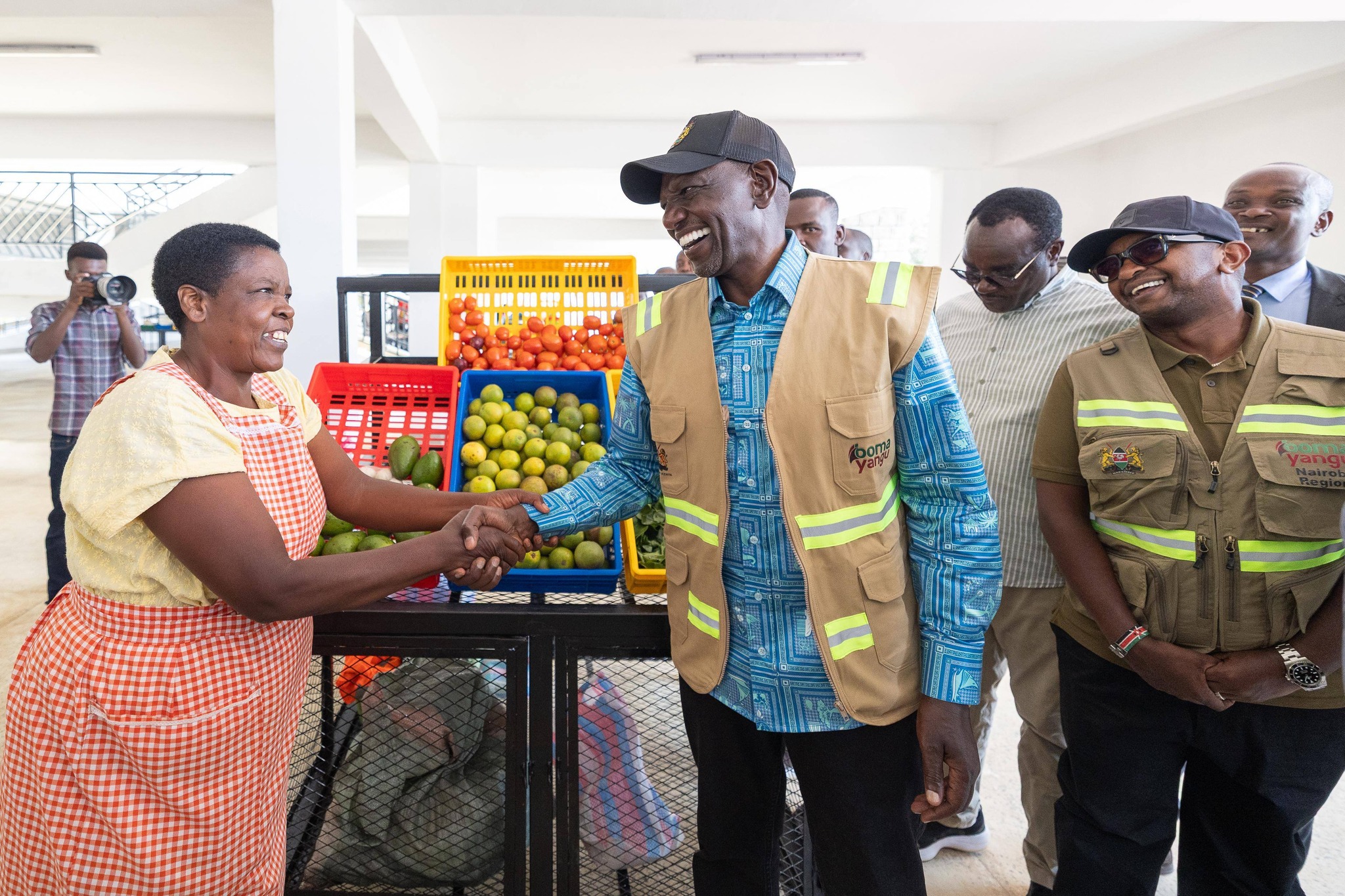
Micro, Small and Medium Enterprises occupy a strategic position within the Bottom Up Economic Transformation Agenda because millions of Kenyans generate incomes through businesses operating within communities, markets, farms, workshops, transport networks, construction sites, and emerging production centres. Traders, Jua Kali artisans, farmers, processors, transport operators, manufacturers, service providers, cooperatives, and young entrepreneurs form an extensive economic network that supplies goods and services, creates employment, sustains household incomes, and circulates money through local economies.
The MSME economy connects production with markets across several BETA value chains. Agricultural production creates business for aggregators, processors, transporters, packaging enterprises, distributors, and traders. Affordable housing generates demand for fabricators, carpenters, welders, suppliers, transporters, and construction enterprises. Digital expansion creates opportunities for online businesses, technology enabled services, digital workers, and content producers. Manufacturing provides markets for raw materials, logistics, maintenance, packaging, distribution, and professional services. Strengthening MSMEs consequently expands productive activity across sectors that directly support employment and household incomes.
The Bottom Up Economic Transformation Agenda addresses enterprise development through an integrated framework combining access to finance, youth capitalization, skills development, savings, industrial infrastructure, market development, cooperatives, and enterprise support. The Financial Inclusion Fund, commonly known as the Hustler Fund, provides digital credit and savings products. The National Youth Opportunities Towards Advancement programme, NYOTA, combines business development training, mentorship, start up capital, workplace experience, recognition of skills, savings, and market access. The Credit Guarantee Scheme supports MSMEs seeking financing through participating financial institutions. The Women Enterprise Fund, Youth Enterprise Development Fund, and other targeted programmes provide additional financing channels for entrepreneurs operating at different levels of the enterprise economy.
Physical infrastructure complements these financing interventions. County Aggregation and Industrial Parks provide facilities for aggregation, processing, manufacturing, storage, and value addition around county economic value chains. Modern markets provide structured commercial spaces for traders and small businesses. MSME development facilities support entrepreneurship, technical capacity, business formalization, and market access. Cooperatives organize producers and enterprises around collective savings, production, procurement, investment, and marketing. Together, these interventions create an enterprise development system that connects financing with the productive infrastructure required to convert capital into economic activity.
As at August 2026, NYOTA has developed into a major youth economic intervention within this architecture. The programme has progressed through nationwide business training, mentorship, and enterprise capitalization, placing resources directly into youth led businesses across the country. Its Business Support component targets young entrepreneurs in all 1,450 wards, creating a grassroots financing structure through which youth enterprise development reaches communities across all 47 counties.
More than 101,000 young entrepreneurs have received the first NYOTA business capital tranche, with approximately KES 2.5 billion deployed through the nationwide rollout. Qualifying beneficiaries receive KES 50,000 in total start up capital through 2 instalments of KES 25,000. Under the applicable disbursement structure, KES 22,000 from the first instalment enters the beneficiary’s business wallet, and KES 3,000 enters the NSSF Haba Haba savings account. The programme consequently connects immediate business capitalization with longer term savings and social protection.
NYOTA also extends into skills development and employability. The programme targets 90,000 young people for On the Job Experience, creating structured opportunities for practical learning under experienced practitioners and within workplaces. Another 20,000 young people are targeted through Recognition of Prior Learning, providing a pathway for skills acquired through practical experience to undergo assessment and certification. A further 600,000 young people are targeted for training on access to Government procurement opportunities, strengthening the ability of youth owned enterprises to understand and pursue opportunities within the public procurement market.
The FY 2026/27 Budget provides KES 4.9 billion for NYOTA, sustaining implementation during the current financial year. The wider MSME financing architecture also includes KES 5.4 billion for Supporting Access to Finance and Enterprise Recovery, KES 1.1 billion for the Rural Kenya Financial Inclusion Facility, KES 550 million for the Centre for Entrepreneurship Project, and KES 761 million for the Youth Enterprise Development Fund. These allocations support different stages of enterprise development, from initial capitalization and financial inclusion to business recovery, entrepreneurship development, and access to larger financing opportunities.
The Hustler Fund provides another major component of this enterprise financing system. Its digital architecture gives millions of Kenyans access to credit and savings products through mobile platforms, creating a financing channel for traders, artisans, service providers, and other small scale economic actors. The programme operates alongside enterprise funds and credit guarantee mechanisms, creating several financing pathways within the wider MSME economy.
Industrial and commercial infrastructure provides the production and market component of the transformation. County Aggregation and Industrial Parks are establishing facilities for aggregation, processing, manufacturing, storage, and value addition within county economies. Modern market development provides organized commercial infrastructure for traders, while cooperative development enables producers and enterprises to aggregate output, mobilize resources, acquire productive assets, and participate in larger markets.
The MSME pillar consequently operates across the enterprise development cycle. A young person can acquire business skills, mentorship, and start up capital through NYOTA. A micro trader can access digital credit through the Hustler Fund. A growing enterprise can seek financing through targeted enterprise funds and credit guarantee mechanisms. Producers can organize through cooperatives, participate in aggregation and value addition, and connect their products with structured markets. Modern markets provide commercial infrastructure through which traders and small businesses interact directly with consumers.
This integrated structure gives the MSME pillar its Bottom Up economic character. Financial resources reach individuals and enterprises. Skills strengthen productive capacity. Savings create financial assets. Industrial infrastructure supports processing and manufacturing. Cooperatives organize production and investment. Markets connect enterprises with customers. Each intervention contributes to an economic platform designed to expand enterprise ownership, employment, production, incomes, and productive assets at the grassroots.
The MSME pillar has developed into a national enterprise platform
Implementation as at August 2026 demonstrates substantial activity across youth enterprise, financial inclusion, skills development, savings, industrial infrastructure, market development, and enterprise financing.
- More than 101,000 young entrepreneurs have received the first NYOTA business capital tranche. Nationwide implementation has reached all 47 counties, moving the Business Support component from beneficiary identification and training into direct enterprise capitalization. Approximately KES 2.5 billion has been deployed through the first tranche, placing productive resources directly into youth led enterprises across the country.
- KES 50,000 provides the total NYOTA start up capital package for qualifying entrepreneurs. The financing is structured through 2 instalments of KES 25,000, allowing business support to progress alongside training, mentorship, enterprise development, and continued assessment of the beneficiary’s business journey.
- KES 22,000 from the applicable first instalment enters the entrepreneur’s business wallet. The financing provides working capital that can support stock acquisition, tools, equipment, inputs, and other productive requirements associated with the beneficiary’s approved enterprise activity.
- KES 3,000 from the applicable first instalment enters the NSSF Haba Haba savings account. This component connects enterprise development with savings and social protection, allowing young entrepreneurs to begin accumulating a financial asset alongside investment in their businesses.
- NYOTA business support combines financing with structured training and mentorship. Beneficiaries receive business development support covering practical capabilities required to establish, operate, and manage an enterprise. Mentorship provides continuing guidance as beneficiaries apply those skills within functioning businesses.
- 90,000 young people are targeted through On the Job Experience. The intervention provides structured practical exposure within workplaces and under experienced practitioners, allowing participants to acquire productive skills through direct engagement in economic activity.
- 20,000 young people are targeted through Recognition of Prior Learning. The intervention provides a route through which skills acquired in workshops, businesses, construction sites, garages, farms, and other practical environments can undergo assessment and formal recognition.
- 600,000 young people are targeted for training on access to Government procurement opportunities. The programme introduces a market access dimension to youth enterprise development, equipping participants with knowledge required to understand procurement processes, compliance requirements, and opportunities available to qualifying youth owned businesses.
- 1,450 wards provide the geographical framework for NYOTA Business Support. Ward level implementation distributes enterprise opportunities throughout the country and places youth capitalization within the communities where beneficiaries live, work, and establish businesses.
- KES 4.9 billion has been allocated to NYOTA in FY 2026/27. The allocation provides resources for continued implementation of youth enterprise, skills, employability, and economic opportunity interventions during the current financial year.
- KES 5.4 billion has been allocated to Supporting Access to Finance and Enterprise Recovery. This programme strengthens the financing architecture available to MSMEs and supports enterprises requiring capital for recovery, stabilization, and continued productive activity.
- KES 1.1 billion has been allocated to the Rural Kenya Financial Inclusion Facility. The programme extends financial inclusion interventions into rural economies, supporting productive enterprise among communities operating outside the country’s largest commercial centres.
- KES 550 million has been allocated to the Centre for Entrepreneurship Project. Enterprise development requires business knowledge, technical support, innovation, and institutional capacity alongside financing. The allocation strengthens the entrepreneurship development component of the wider MSME agenda.
- KES 761 million has been allocated to the Youth Enterprise Development Fund. The Fund provides an additional financing pathway for youth owned enterprises and complements the business capitalization, training, and mentorship delivered through NYOTA.
The scale and diversity of these interventions establish a national enterprise development platform that connects financing, youth capitalization, skills, savings, market access, and productive infrastructure. The next stage of the transformation lies in converting these resources into sustainable businesses, stronger value chains, increased production, additional employment, and growing household incomes.
NYOTA is converting youth skills and enterprise ideas into productive economic activity
Young people constitute a major source of labour, entrepreneurship, innovation, and technical skills within the Bottom Up economy. Their participation in productive economic activity requires practical pathways into business ownership, skills development, financing, markets, and recognized occupational competence. NYOTA provides a structured framework connecting these requirements and has progressed into nationwide implementation across all 47 counties.
The programme serves young people aged 18 to 29 years, with the eligibility age extending to 35 years for persons with disabilities, subject to the requirements applicable to individual programme components. Its interventions focus substantially on young people facing barriers to employment and productive economic participation. The programme provides several routes into livelihoods, including entrepreneurship, workplace experience, recognition of existing skills, business development, savings, and access to market opportunities.
NYOTA’s importance within the MSME pillar comes from the relationship between these interventions. Start up capital provides resources for enterprise activity. Business development training strengthens the ability to manage those resources. Mentorship provides practical support during enterprise development. On the Job Experience builds occupational competence. Recognition of Prior Learning provides formal acknowledgment of skills acquired through practical experience. Procurement training strengthens knowledge required to pursue structured market opportunities.
More than 101,000 young entrepreneurs have received the first business capital tranche
The NYOTA Business Support component has reached a major implementation milestone, with the first tranche rollout reaching beneficiaries across all 47 counties. More than 101,000 young entrepreneurs have received approximately KES 2.5 billion in business capital, placing productive financing directly into youth led economic activity across the country.
The programme uses a ward based structure that spreads enterprise support across all 1,450 wards. This distribution creates opportunities for young people operating within different economic environments, including agriculture, retail, services, manufacturing, transport, technology, creative enterprise, and artisanal production. The financing consequently enters numerous local value chains and supports businesses responding to economic opportunities within their communities.
- More than 101,000 entrepreneurs have received direct business capitalization. The programme has progressed from registration, selection, and training into deployment of financing. Young entrepreneurs now have capital available for productive business activities across communities throughout the country.
- Approximately KES 2.5 billion has been deployed through the first tranche. The financing represents a substantial injection of enterprise capital into youth led businesses and creates additional economic activity as beneficiaries purchase stock, equipment, tools, materials, and other business inputs.
- All 47 counties participate in the national rollout. Geographic coverage distributes enterprise investment across the country and provides young entrepreneurs in different local economies with access to a common national business support framework.
- All 1,450 wards form part of the Business Support architecture. Ward level distribution places enterprise capitalization close to communities and anchors the programme within the grassroots economic structure targeted under BETA.
- Business financing operates alongside training and mentorship. Beneficiaries receive support intended to strengthen enterprise management, financial literacy, planning, record keeping, customer development, and other capabilities required to operate sustainable businesses.
The nationwide rollout provides a measurable implementation milestone because programme resources have progressed into actual capitalization of businesses owned and operated by young people.
KES 50,000 provides a structured start up capital pathway
Qualifying beneficiaries under the NYOTA Business Support component receive KES 50,000 in total start up capital, structured through 2 instalments of KES 25,000. The financing forms part of a wider enterprise development process incorporating training, mentorship, business planning, savings, and continued business development support.
Under the applicable first instalment structure, KES 22,000 enters the beneficiary’s NYOTA business wallet, while KES 3,000 enters the NSSF Haba Haba savings account. The arrangement directs resources toward immediate productive activity and creates a savings component within the same intervention.
- KES 22,000 provides immediately deployable business capital. Beneficiaries can use the financing for productive requirements associated with their enterprises, including stock, tools, equipment, materials, inputs, and other business needs identified within their approved activities.
- KES 3,000 establishes savings through NSSF Haba Haba. Young entrepreneurs enter a savings and social protection framework alongside their business activity, connecting present enterprise investment with longer term financial accumulation.
- A second KES 25,000 instalment completes the KES 50,000 start up capital package. The phased structure allows additional capitalization to form part of the beneficiary’s continuing enterprise development journey.
- Business development training supports the use of capital. Beneficiaries acquire practical knowledge covering enterprise management, financial literacy, planning, record keeping, and other capabilities relevant to operating a business.
- Mentorship provides continuing support during implementation. Young entrepreneurs receive practical guidance as they navigate decisions involving customers, cash flow, stock, pricing, expenditure, reinvestment, and business growth.
The NYOTA financing architecture consequently connects capital with the capabilities required to use that capital productively.
Mentorship strengthens the development of functioning youth enterprises
Enterprise sustainability requires effective management of cash flow, stock, pricing, customers, expenditure, records, and reinvestment. NYOTA incorporates mentorship into the Business Support component to provide beneficiaries with continuing guidance as they establish or strengthen their enterprises.
Mentors and business development practitioners provide practical support around challenges encountered during actual enterprise operation. This creates an additional layer between the transfer of public resources and the development of sustainable businesses, helping beneficiaries translate training and financing into productive commercial activity.
- Mentorship supports the practical application of business training. Beneficiaries receive guidance while making commercial decisions within operating enterprises, allowing business knowledge to be applied to actual challenges and opportunities.
- Financial management strengthens control over business resources. Young entrepreneurs develop capabilities around budgeting, cash flow, expenditure, revenue management, record keeping, and reinvestment.
- Market development strengthens the commercial orientation of businesses. Beneficiaries require customers and reliable demand for their goods and services. Mentorship can support decisions around products, pricing, customer relationships, and identification of viable markets.
- Continued business development prepares beneficiaries for additional capitalization. The phased programme structure connects subsequent support with the beneficiary’s progression through the enterprise development process.
- Local business networks create additional opportunities for young entrepreneurs. Mentorship can connect beneficiaries with suppliers, customers, experienced entrepreneurs, and other actors operating within local economic value chains.
This structure gives NYOTA an enterprise development function extending beyond the initial disbursement of start up capital.
90,000 young people are targeted for practical workplace experience
NYOTA’s On the Job Experience intervention targets 90,000 young people for structured practical exposure within workplaces and under experienced practitioners. The programme creates opportunities for participants to develop occupational competence through direct involvement in productive activities and working environments.
Practical experience is particularly relevant within the MSME economy because many trades and occupations depend on applied technical capability. Construction, fabrication, mechanics, electrical installation, plumbing, tailoring, beauty services, food production, agriculture, hospitality, and numerous other enterprises require competence developed through repeated practical application.
- 90,000 young people form the national On the Job Experience target. The scale creates a substantial pipeline of youth receiving practical exposure to occupations and productive activities capable of supporting employment and enterprise creation.
- Participants acquire skills within real working environments. Practical placement exposes young people to tools, processes, customers, production requirements, workplace discipline, and quality standards encountered within functioning enterprises.
- Experienced practitioners participate in skills transfer. Master craftsmen and other skilled professionals provide practical knowledge developed through years of productive activity, allowing existing expertise within the economy to support a new generation of workers and entrepreneurs.
- Competency development strengthens pathways into income generation. Participants completing practical experience possess skills capable of supporting employment, contract work, self employment, and eventual establishment of independent enterprises.
- Practical skills strengthen the productive capacity of the MSME economy. Enterprises require workers and owners capable of delivering quality goods and services, making occupational competence an important component of business growth.
On the Job Experience consequently connects youth development with the practical human capital required within the Bottom Up enterprise economy.
20,000 young people are targeted through Recognition of Prior Learning
Many young Kenyans acquire valuable occupational skills through workshops, family businesses, construction sites, garages, farms, salons, kitchens, studios, and other practical environments. Recognition of Prior Learning provides a mechanism for assessing these capabilities and awarding formal recognition where the required competencies are demonstrated.
NYOTA targets 20,000 young people through this intervention. The programme creates an opportunity for artisans and other skilled workers to convert practical experience into recognized credentials capable of supporting employment, enterprise development, and participation in structured commercial opportunities.
- 20,000 young people form the Recognition of Prior Learning target. The programme establishes a defined pathway for assessing skills acquired outside conventional classroom based training.
- Competency assessment establishes demonstrated occupational ability. Beneficiaries undergo evaluation against applicable standards, allowing practical skills to receive formal recognition where the required level of competence is achieved.
- Certification strengthens professional recognition. Credentials provide evidence of occupational capability and can support employment, contracting, enterprise development, and progression into additional training.
- Jua Kali artisans gain a pathway into structured economic opportunities. Formal recognition of practical skills strengthens the position of artisans seeking contracts, employment, financing, and participation in larger value chains.
- Existing practical knowledge becomes formally recognized productive human capital. The programme assigns economic value to capabilities already operating within communities and strengthens their connection with formal training and enterprise systems.
Recognition of Prior Learning consequently brings practical skills developed within the grassroots economy into the wider framework for employment, enterprise, and professional development.
600,000 young people are targeted for Government procurement training
Enterprise development ultimately requires access to markets. NYOTA incorporates training on Government procurement opportunities for 600,000 young people, providing participants with knowledge relevant to accessing public purchasing opportunities available to qualifying businesses.
Government institutions purchase goods, works, and services across numerous sectors. Youth owned enterprises require knowledge of registration, documentation, compliance, tendering, quotation procedures, and contract requirements to participate effectively within this market.
- 600,000 young people form the procurement training target. The scale extends NYOTA into enterprise market readiness and creates a substantial pool of young people equipped with knowledge of public procurement processes.
- Training strengthens understanding of procurement procedures. Young entrepreneurs gain practical knowledge relevant to identifying opportunities, preparing documentation, submitting bids, and meeting applicable requirements.
- Compliance knowledge strengthens enterprise readiness. Businesses seeking formal contracts require appropriate registration, records, documentation, and operational structures. Training helps entrepreneurs understand these requirements before pursuing opportunities.
- Government procurement provides a structured market for qualifying youth enterprises. Public institutions procure supplies, services, works, and other commercial requirements, creating opportunities across numerous sectors of the MSME economy.
- Market access strengthens the value of enterprise capitalization. Financing, skills, and mentorship generate stronger economic outcomes when businesses possess opportunities to sell goods and services and generate sustainable revenues.
The procurement component connects youth enterprise development with market participation, strengthening the pathway from business formation into commercial activity.
KES 4.9 billion supports continued NYOTA implementation in FY 2026/27
The FY 2026/27 Budget allocates KES 4.9 billion to NYOTA, providing resources for continued implementation during the current financial year. The allocation supports a programme already operating nationally across business development, enterprise capitalization, skills, workplace experience, and other youth economic interventions.
NYOTA now forms a substantial component of the MSME pillar because its architecture addresses several requirements affecting youth economic participation. Entrepreneurs receive capital and business development support. Young workers gain practical workplace experience. Artisans obtain pathways toward recognition of existing skills. Youth owned enterprises gain knowledge relevant to pursuing structured markets. Savings provide an additional financial component alongside enterprise capitalization.
The programme consequently creates an economic pathway extending from skills and enterprise preparation into capitalization, mentorship, savings, occupational recognition, practical experience, and market access.
- 101,000+ young entrepreneurs have received first tranche business capital across all 47 counties.
- Approximately KES 2.5 billion has been deployed through the nationwide first tranche.
- KES 50,000 provides the total start up capital package for qualifying business beneficiaries.
- KES 22,000 from the applicable first instalment enters the NYOTA business wallet.
- KES 3,000 from the applicable first instalment enters the NSSF Haba Haba savings account.
- 90,000 young people are targeted through On the Job Experience.
- 20,000 young people are targeted through Recognition of Prior Learning.
- 600,000 young people are targeted for Government procurement training.
- 1,450 wards provide the national geographical framework for Business Support.
- KES 4.9 billion has been allocated to NYOTA in FY 2026/27.
NYOTA brings youth directly into the productive architecture of the Bottom Up economy through enterprise ownership, practical skills, business capital, savings, certification, mentorship, and access to markets.
Expanding Grassroots Credit, Savings and Enterprise Capital Through the Hustler Fund
Access to affordable working capital remains one of the most important requirements for the growth of micro and small enterprises. Traders require money to replenish stock, artisans need raw materials and tools, farmers finance inputs and transport, service providers purchase equipment and consumables, while small manufacturers require capital to maintain production. These financing requirements occur continuously within the Bottom Up economy and often involve relatively small amounts of money that must be available quickly enough to match daily and weekly business cycles.
The Financial Inclusion Fund, popularly known as the Hustler Fund, provides a national digital credit and savings platform designed around these realities. Launched on 30 November 2022, the Fund provides collateral free financing through mobile channels and incorporates mandatory savings into its credit architecture. Its significance within BETA lies in the creation of a financing mechanism capable of reaching millions of people whose economic activity takes place within micro businesses, informal enterprises and other income generating activities across the country.
As at August 2026, the Fund has developed a substantial national transaction footprint. Cumulative disbursements have exceeded KES 80 billion, millions of Kenyans have accessed its credit products, and billions of shillings have been accumulated through the savings component attached to borrowing. The Fund has also expanded beyond its original Personal Loan product into group and enterprise oriented financing, creating a broader financial inclusion architecture serving different levels of economic activity.
The scale of cumulative lending represents money that has circulated repeatedly through the Fund rather than the value of loans outstanding at a single point in time. Borrowers receive credit, deploy it, make repayments and become eligible for subsequent borrowing according to the applicable product rules. Repaid resources return to the financing pool and support additional lending, giving the Fund a revolving structure through which available capital can finance several successive economic transactions.
Digital infrastructure has placed micro credit within nationwide reach
The Hustler Fund uses Kenya’s extensive mobile financial infrastructure as its principal delivery channel. Credit applications, disbursements, repayments and savings transactions are undertaken digitally, allowing the Fund to operate without requiring borrowers to visit physical banking branches or complete conventional paper based loan applications.
This architecture is particularly suited to micro enterprises because many operate within short cash conversion cycles. A trader can purchase stock and sell it within days. An artisan can require materials to execute a specific order. A food vendor can require operating capital each morning. A transport operator manages fuel, maintenance and other expenses continuously. Access to appropriately structured short term capital provides these enterprises with an additional mechanism for managing such operating requirements.
- The Fund provides collateral free access to its Personal Loan product: Borrowers do not need land titles, buildings, vehicles or other physical assets to secure the loan. This opens a financing pathway for economically active Kenyans whose businesses generate income without possessing conventional collateral acceptable to commercial lenders.
- Mobile delivery provides a nationwide financial access channel: Eligible borrowers interact with the Fund using supported mobile platforms, allowing the financing mechanism to reach towns, markets, rural trading centres, farms, workshops and informal business locations across the country.
- Applications and disbursements are processed electronically: Digital administration reduces the physical procedures associated with accessing small loans and allows borrowers to receive approved funds through established mobile financial channels.
- Repayments create identifiable borrowing records: Digital transactions establish a history of borrowing and repayment within the Fund, providing information that supports management of individual credit relationships and subsequent borrowing eligibility.
- The platform accommodates large volumes of relatively small transactions: Digital infrastructure makes it possible to administer millions of credit interactions within a national system without creating a corresponding network of physical lending branches.
The digital architecture consequently extends the reach of formalized credit into sections of the economy where conventional branch based lending structures have limited practical application.
More than KES 80 billion has circulated through the Fund since November 2022
Cumulative Hustler Fund disbursements have exceeded KES 80 billion as at the latest implementation information available in 2026. This represents one of the clearest measures of the scale at which the Fund has inserted digital credit into grassroots economic activity since its launch.
The cumulative figure should be understood within the Fund’s revolving model. It records successive lending transactions rather than representing KES 80 billion held by borrowers at one time. Money that is repaid becomes available for further lending, allowing the same pool of resources to support repeated borrowing cycles.
- KES 80 billion+ in cumulative disbursements represents extensive circulation of micro credit: Millions of individual transactions collectively translate relatively small loans into a substantial national financing flow.
- Repaid resources return to the Fund for subsequent lending: The revolving mechanism extends the economic usefulness of the original financing pool and allows resources to support successive transactions.
- Repeat borrowing provides continuing access to working capital: Eligible borrowers can undertake additional borrowing cycles, giving micro enterprises a mechanism for financing recurring requirements such as stock and operating inputs.
- Digital disbursement directs financing immediately into existing payment ecosystems: Borrowers can deploy funds within the same mobile financial environment widely used by traders, suppliers, transporters and households.
- The transaction footprint provides an expanding record of grassroots credit activity: Borrowing and repayment data creates a financial history around participants who may previously have had limited interaction with structured credit systems.
The economic importance of the Fund consequently extends beyond the amount originally capitalized. Its revolving structure determines the volume of economic transactions that the available resources can support over successive credit cycles.
The 8% annual interest rate establishes a defined financing cost
The Hustler Fund Personal Loan carries an 8% annual interest rate, providing a standardized pricing framework for borrowers using the product. The financing cost is defined within the product structure and allows borrowers to establish the amount payable within the applicable loan period.
Productive deployment of the borrowed money remains fundamental to its economic value. Credit used to replenish merchandise, purchase raw materials, finance an order or support another income generating activity can contribute to business turnover from which repayment is made. Effective use and repayment then preserves access to the revolving financing ecosystem.
- 8% per annum provides the defined interest rate for the Personal Loan product: Borrowers enter the credit transaction with an established financing cost under the applicable Fund terms.
- Working capital can support recurring commercial activity: Traders and micro enterprises can deploy financing toward inventory, materials and other inputs required to sustain their operations.
- Successful repayment supports continued participation within the Fund: Borrowers establish a repayment record through completed credit cycles and remain subject to the applicable eligibility requirements for subsequent borrowing.
- Repayment replenishes the national lending pool: Individual repayment behaviour contributes directly to the resources available for further lending to other participants.
- Responsible credit use strengthens the sustainability of the financing architecture: The Fund depends on the movement of resources from disbursement into productive or household use and back into the lending pool through repayment.
Access and repayment consequently operate as complementary components of the Hustler Fund model.
5% mandatory savings converts borrowing into financial accumulation
The integration of savings provides the Hustler Fund with an additional financial inclusion function. 5% of each Personal Loan disbursement is allocated to savings, ensuring that participation within the credit system simultaneously creates a financial asset for the borrower.
This feature is particularly significant within an MSME strategy because enterprise development requires both liquidity and capital accumulation. Credit provides resources that can be deployed immediately, while savings create financial reserves capable of supporting longer term financial resilience.
- 5% of every Personal Loan disbursement is directed into savings: Each applicable borrowing transaction automatically contributes toward the borrower’s financial assets.
- Repeated borrowing progressively increases accumulated savings: Borrowers undertaking successive credit cycles continue making savings allocations through the embedded mechanism.
- Millions of individual allocations collectively create a substantial savings pool: Small contributions generated across a large participant base translate into billions of shillings in accumulated financial assets.
- Savings introduce asset accumulation into grassroots credit: Participants gain more than access to borrowed resources because part of their interaction with the Fund builds financial value registered to them.
- The model connects short term liquidity with longer term financial inclusion: Borrowing serves immediate financing requirements while savings strengthen the borrower’s longer term financial position.
This combination gives the Fund a dual role within BETA’s MSME pillar, providing accessible credit while mobilizing savings among millions of economically active Kenyans.
Credit histories create a pathway toward progressively stronger financial participation
Micro enterprises frequently encounter financing constraints because their economic activity is not fully captured within conventional financial records. Many traders, artisans and service providers receive income through daily transactions and operate businesses without extensive audited accounts or conventional employment documentation.
Digital borrowing provides another source of financial information. Every disbursement, repayment and completed credit cycle contributes to an identifiable transaction history. Over time, this record can support credit management within the Fund and provide a clearer picture of borrower behaviour.
- Borrowing creates a digital credit footprint: Individuals participating in the Fund generate records of their credit transactions and repayment behaviour.
- Repayment establishes evidence of financial discipline: Completed borrowing cycles provide measurable information on the borrower’s management of credit.
- Credit limits can develop within the applicable Fund architecture: Borrowing behaviour forms part of the information used in managing continued access to Fund products.
- Digital financial histories strengthen formal financial participation: Individuals operating within informal economic structures acquire documented interaction with a structured national financing platform.
- Progressive financial inclusion provides a bridge toward larger enterprise financing: Growing businesses ultimately require products extending beyond personal micro credit, making the establishment of financial histories an important component of enterprise development.
The Fund consequently provides an entry point into structured credit for millions of participants within the Bottom Up economy.
Group and enterprise products are widening the financing architecture
The capital requirements of an enterprise increase as the business grows. A small trader may initially require several thousand shillings to purchase additional merchandise, while an expanding enterprise may require substantially larger amounts to acquire equipment, increase inventory, employ workers or execute commercial orders.
The Hustler Fund has progressively developed financing beyond its initial Personal Loan architecture. Group and enterprise oriented products create pathways through which organized businesses and economic groups can access financing suited to larger productive activities.
- Personal loans provide an initial credit pathway: Individuals can access relatively small amounts through the Fund’s digital infrastructure and establish borrowing and repayment histories.
- Group products extend financing into organized economic activity: Registered groups create structures through which participants can access financing for collective and enterprise related purposes.
- Enterprise financing addresses larger productive requirements: Businesses progressing beyond micro credit require capital capable of financing inventory, machinery, equipment, production and expansion.
- Progressive financing supports enterprise development: A financial inclusion system acquires greater economic value when successful participants have pathways toward larger financing as their businesses develop.
- Organized groups strengthen collective economic capacity: Associations, cooperatives and other eligible structures provide mechanisms through which members can mobilize resources and undertake larger economic activities.
The expansion of the product architecture connects grassroots financial inclusion with the broader objective of growing productive MSMEs.
Credit rehabilitation protects the revolving financing pool
A digital credit programme operating at national scale also requires mechanisms for managing overdue loans and restoring borrowers to sustainable repayment. MSME incomes can fluctuate because of business cycles, seasonal demand, agricultural conditions, stock losses, household pressures and other disruptions affecting cash flow.
Credit rehabilitation provides a pathway for engaging borrowers with outstanding obligations, recovering resources and restoring eligible participants to productive credit relationships. Recovery is important because every shilling returned to the Fund becomes available for further lending.
- Borrowers with outstanding obligations remain part of the credit management framework: Digital communication provides mechanisms for engaging borrowers regarding repayment and account status.
- Repayment restores resources to the revolving Fund: Recovered capital can finance subsequent borrowing and protects the long term lending capacity of the programme.
- Credit rehabilitation supports restoration of financial discipline: Borrowers who regularize their obligations create a pathway toward rebuilding their standing within the applicable Fund requirements.
- Digital engagement enables credit management at national scale: Mobile infrastructure provides an efficient channel for communicating account information to millions of participants.
- Portfolio management protects future access to credit: Sustainable financial inclusion requires preservation of the capital pool so that financing remains available to existing and future borrowers.
The long term performance of the Hustler Fund will consequently depend on both the scale of lending and the quality of repayment across the portfolio.
Hustler Fund forms one layer of a wider MSME financing system
The Financial Inclusion Fund is not the entire MSME financing strategy under BETA. Its principal role is to expand grassroots access to digitally delivered credit and savings. Enterprises requiring additional capital can progress into other financing instruments supporting youth enterprise, rural financial inclusion, enterprise recovery, credit guarantees and productive investment.
The FY 2026/27 Budget provides KES 5.4 billion for Supporting Access to Finance and Enterprise Recovery, KES 1.1 billion for the Rural Kenya Financial Inclusion Facility, KES 761 million for the Youth Enterprise Development Fund and KES 550 million for the Centre for Entrepreneurship Project. These allocations operate alongside the Hustler Fund and NYOTA within a wider framework for enterprise development.
The financing architecture consequently provides several entry and progression points:
- NYOTA provides enterprise skills, mentorship and start up capitalization for young people entering productive economic activity.
- Hustler Fund provides digitally accessible credit and mandatory savings for individuals and micro enterprises.
- Youth enterprise financing provides additional capital pathways for young entrepreneurs developing businesses.
- Rural financial inclusion extends enterprise financing into agricultural and county economies.
- Access to Finance and Enterprise Recovery supports businesses requiring additional productive capital and enterprise strengthening.
- Credit guarantee mechanisms support qualifying MSMEs seeking financing through participating formal financial institutions.
- Entrepreneurship development strengthens the managerial and commercial capabilities required to deploy capital productively.
This financing ecosystem reflects the different stages through which an enterprise develops. Start up capital supports entry into business, micro credit finances immediate operating requirements, savings build financial assets, larger enterprise financing supports expansion, and structured commercial credit provides additional capacity as businesses develop. Under BETA, financial inclusion consequently serves as a pathway into productive enterprise growth rather than an isolated lending intervention.
Expanding MSME Financing, Enterprise Growth and Access to Productive Capital
Micro, small and medium enterprises require capital throughout their development cycle. Entrepreneurs need financing for stock, raw materials, equipment, technology, transport, premises, employees, certification, production and execution of commercial orders. The Bottom Up Economic Transformation Agenda addresses these financing requirements through an enterprise financing architecture incorporating NYOTA, the Hustler Fund, the Youth Enterprise Development Fund, the Women Enterprise Fund, rural financial inclusion interventions, enterprise recovery programmes, entrepreneurship development and credit guarantees.
The FY 2026/27 Budget provides substantial resources for these interventions. KES 5.4 billion has been allocated to Supporting Access to Finance and Enterprise Recovery, KES 1.1 billion to the Rural Kenya Financial Inclusion Facility, KES 761 million to the Youth Enterprise Development Fund and KES 550 million to the Centre for Entrepreneurship Project. These allocations provide financing and enterprise development support across different sectors, locations and categories of entrepreneurs within the MSME economy.
The Credit Guarantee Scheme forms part of this financing architecture and supports qualifying MSMEs accessing credit through participating financial institutions. Government provides partial guarantees on eligible lending, creating a risk sharing mechanism that facilitates financing for productive businesses. Enterprises accessing this financing establish formal credit relationships and build financial records that support their participation within structured financial markets.
Women entrepreneurs participate through the Women Enterprise Fund, which provides financing and enterprise development support to women engaged in income generating activities and businesses. Its products support individual and group based economic activity and form part of the wider framework through which targeted enterprise funds direct capital toward grassroots production, trade and services.
These interventions create an enterprise financing system covering start up capitalization, working capital, productive investment, business development, rural enterprise, youth enterprise, women owned businesses and access to formal commercial credit. The structure supports entrepreneurs as they acquire productive assets, increase output, execute orders, enter structured markets and create employment.
KES 5.4 billion is strengthening access to finance and enterprise recovery
The KES 5.4 billion allocated to Supporting Access to Finance and Enterprise Recovery in FY 2026/27 provides a major financing envelope for MSME development. The programme supports enterprises requiring productive capital and strengthens businesses undertaking recovery, stabilization and expansion.
Working capital determines the ability of an enterprise to maintain operations and respond to commercial opportunities. Contractors require resources for materials and labour before invoices are settled. Manufacturers purchase raw materials before finished products generate revenue. Traders finance inventory before merchandise is sold. Agribusinesses require resources for aggregation, storage, processing and distribution. Financing enables these enterprises to sustain the production cycle from expenditure to revenue.
- KES 5.4 billion provides financing for access to finance and enterprise recovery: The FY 2026/27 allocation supports interventions directed toward productive enterprises requiring capital for business activity, stabilization and development.
- Working capital supports execution of commercial orders and contracts: Enterprises can finance materials, labour, transport, inventory and operational requirements associated with supplying customers and completing contracted work.
- Productive financing supports acquisition of business assets: Machinery, equipment, technology, vehicles and other productive resources increase enterprise capacity and support additional production.
- Enterprise recovery preserves productive activity: Viable businesses undergoing financial disruption can retain productive assets, skills, employees, customers and supplier relationships while undertaking recovery measures.
- Expanded production creates economic activity throughout enterprise supply chains: Growing businesses purchase additional inputs and services, generating demand for suppliers, transporters, workers, distributors and professional services.
The KES 5.4 billion allocation provides a substantial resource base for strengthening enterprises and supporting productive investment within the MSME economy.
KES 1.1 billion is extending financial inclusion into rural economies
The Rural Kenya Financial Inclusion Facility has received KES 1.1 billion in FY 2026/27, strengthening access to financial services within rural economies. Enterprise activity in these areas spans agriculture, livestock, retail, processing, transport, construction, hospitality, repair services and numerous household businesses.
Agricultural production supports extensive MSME value chains. Farmers purchase seed, fertilizer, animal feeds, equipment and technical services. Harvested commodities require aggregation, storage, transport, processing, packaging, distribution and retail. Each stage creates enterprise opportunities capable of supporting incomes and employment within producing communities.
- KES 1.1 billion supports rural financial inclusion during FY 2026/27: The allocation provides resources for interventions serving productive activities and enterprises within rural economies.
- Agricultural value chains generate business across numerous MSME activities: Input suppliers, aggregators, processors, transporters, mechanics, storage operators, packaging enterprises and retailers participate in the movement of commodities from production into markets.
- Financing supports acquisition of productive assets and working resources: Rural enterprises require equipment, technology, inventory, transport, storage and other inputs needed to increase productive capacity.
- Local enterprises circulate income through surrounding communities: Businesses purchase goods and services, employ workers and transact with suppliers operating within county and community economies.
- Rural financing supports participation in county value addition: Enterprises with appropriate capital can engage in aggregation, processing, manufacturing, logistics and other activities associated with locally produced commodities.
The facility integrates rural enterprise financing into the wider BETA framework for production, value addition and grassroots economic development.
KES 761 million is strengthening youth enterprise development
The Youth Enterprise Development Fund has received KES 761 million in FY 2026/27, providing a financing channel for young entrepreneurs. The Fund supports youth owned enterprises seeking resources for productive activity and business development.
The youth enterprise ecosystem under BETA includes skills development, mentorship, start up capitalization, savings, practical experience, market readiness and enterprise financing. NYOTA provides a substantial entry point into this ecosystem, while the Youth Enterprise Development Fund provides financing opportunities for eligible youth businesses seeking capital for their operations and development.
- KES 761 million supports youth enterprise development in FY 2026/27: The allocation provides resources for financing and enterprise interventions targeting businesses owned and operated by young people.
- Youth businesses require capital for productive activities: Financing supports inventory, equipment, technology, raw materials, premises, employees and other requirements associated with enterprise operations.
- Additional productive capacity supports increased business activity: Enterprises investing in stock, machinery and operational resources can serve additional customers and undertake larger commercial assignments.
- Youth owned businesses create employment and supplier opportunities: Enterprise activity generates demand for workers, transporters, suppliers, distributors and service providers operating within connected value chains.
- Enterprise financing works alongside training and mentorship: Business management capabilities support budgeting, investment planning, cash flow management and productive deployment of financing.
The Fund strengthens the financing component of the national youth enterprise development framework and supports young people seeking to build productive businesses.
KES 550 million is strengthening entrepreneurship capability
The Centre for Entrepreneurship Project has received KES 550 million in FY 2026/27. The programme strengthens the capabilities required to establish, manage and grow enterprises and adds an institutional development component to the wider MSME financing agenda.
Entrepreneurs manage markets, costs, cash flow, records, employees, suppliers, customers, taxation, quality requirements and investment decisions. Business development support strengthens these capabilities and provides entrepreneurs with knowledge required to manage increasingly complex commercial activities.
- KES 550 million supports entrepreneurship development in FY 2026/27: The allocation provides resources for strengthening enterprise capabilities and supporting entrepreneurship development.
- Financial management strengthens control over enterprise resources: Budgeting, cash flow management, bookkeeping and financial planning provide entrepreneurs with information required for commercial decision making.
- Business planning supports investment and production decisions: Entrepreneurs can assess market demand, costs, financing requirements, production capacity and projected revenues when planning enterprise activity.
- Enterprise formalization supports participation in structured markets: Registration, records, governance and compliance provide businesses with institutional structures required for commercial relationships, procurement and financing.
- Management systems support enterprise growth: Businesses employing workers, executing contracts and managing larger transaction volumes require appropriate operational and financial controls.
The Centre for Entrepreneurship Project strengthens the capabilities that enable MSMEs to convert capital, skills and market opportunities into productive commercial activity.
Credit guarantees are expanding access to formal business financing
The Credit Guarantee Scheme provides a financing mechanism for qualifying MSMEs seeking credit through participating financial institutions. Government guarantees an agreed portion of eligible lending, supporting the flow of commercial financing into productive enterprises.
The scheme connects MSMEs with regulated financial institutions and creates opportunities for businesses to finance working capital, equipment, inventory and other qualifying productive requirements. Successful repayment establishes formal credit records that can support future financial relationships.
- Partial Government guarantees support qualifying MSME loans: The scheme provides risk sharing within eligible financing issued through participating financial institutions.
- MSMEs gain access to financing for productive requirements: Eligible businesses can seek capital for working resources, inventory, equipment and enterprise investment under applicable lending arrangements.
- Formal borrowing creates enterprise credit histories: Repayment records provide documented evidence of the business’s management of commercial credit.
- Financial institutions provide additional services required by growing enterprises: Transaction accounts, payment infrastructure and financing products support increasingly structured business operations.
- Credit guarantees mobilize financing through participating lenders: Public risk sharing supports the extension of commercial credit to eligible enterprises through the formal financial system.
The Credit Guarantee Scheme forms an important link between enterprise development programmes and formal commercial finance.
Women Enterprise Fund strengthens women owned businesses
Women operate enterprises throughout agriculture, trade, manufacturing, hospitality, food production, textiles, beauty, services and numerous other areas of the MSME economy. The Women Enterprise Fund provides dedicated financing and enterprise development support for women engaged in productive economic activity.
Financing allows participating entrepreneurs to purchase stock, acquire equipment, finance production and meet other business requirements. Group based structures also allow women to organize around collective economic activities and access applicable products through established enterprise arrangements.
- Women entrepreneurs have access to a dedicated enterprise financing mechanism: The Fund provides financing products targeted at women engaged in businesses and income generating activities.
- Group financing supports organized enterprise activity: Women operating through eligible groups can mobilize around collective economic activities and access applicable financing.
- Capital supports productive business requirements: Financing provides resources for stock, inputs, equipment, production and other eligible enterprise needs.
- Enterprise support strengthens business management capabilities: Entrepreneurs receive interventions that support the development and management of their businesses.
- Women owned enterprises generate economic activity across local value chains: Their businesses create incomes and demand for workers, suppliers, transporters and service providers.
The Women Enterprise Fund expands the reach of the MSME financing architecture and directs productive resources toward women participating in grassroots economic activity.
Financing and market access operate within the same enterprise growth cycle
Financing produces sustainable enterprise outcomes when businesses generate revenues from goods and services. Market development forms part of the MSME growth architecture under BETA. Government procurement, modern markets, industrial value chains, cooperative marketing and private sector supply chains provide channels through which enterprises can convert productive capacity into sales.
NYOTA targets 600,000 young people for training on access to Government procurement opportunities. This intervention provides young entrepreneurs with knowledge of registration, documentation, compliance, tendering and other requirements associated with public procurement. Modern markets provide commercial spaces for traders, while County Aggregation and Industrial Parks create opportunities for MSMEs participating in aggregation, processing, packaging, logistics and manufacturing.
- 600,000 young people are targeted for Government procurement training through NYOTA: The intervention strengthens understanding of procurement requirements and prepares youth owned businesses to pursue qualifying opportunities.
- Modern markets provide structured commercial infrastructure: Traders and other small enterprises gain spaces through which goods and services reach consumers.
- County Aggregation and Industrial Parks create industrial market opportunities: MSMEs can participate as producers, processors, suppliers, transporters, packaging enterprises, maintenance providers and distributors.
- Cooperatives organize producers and enterprises for market participation: Collective structures aggregate products, resources and productive capacity and support engagement with larger commercial buyers.
- Enterprise formalization supports access to structured commercial relationships: Registration, financial records, quality compliance and governance strengthen the ability of MSMEs to transact with institutional and private sector customers.
The integration of financing and markets creates a complete commercial cycle in which enterprises obtain productive resources, generate goods and services, reach customers, earn revenues and reinvest in continued economic activity.
The financing architecture provides multiple pathways for enterprise development
The MSME financing architecture under BETA combines programmes serving young entrepreneurs, women owned enterprises, rural businesses, micro enterprises and growing MSMEs. These interventions provide resources for start up activity, working capital, productive investment, enterprise recovery, entrepreneurship development and formal commercial lending.
- KES 4.9 billion supports NYOTA implementation in FY 2026/27, including youth enterprise, skills and economic opportunity interventions.
- More than 101,000 NYOTA entrepreneurs have received first tranche business capitalization across all 47 counties.
- Hustler Fund provides digital credit and savings within the grassroots economy.
- KES 5.4 billion supports Access to Finance and Enterprise Recovery in FY 2026/27.
- KES 1.1 billion supports the Rural Kenya Financial Inclusion Facility.
- KES 761 million supports the Youth Enterprise Development Fund.
- KES 550 million supports the Centre for Entrepreneurship Project.
- Women Enterprise Fund provides financing and enterprise development support for women engaged in productive economic activity.
- Credit guarantees support qualifying MSMEs accessing commercial financing through participating financial institutions.
- Procurement training, modern markets, industrial infrastructure and cooperative organization connect enterprise financing with market opportunities.
The financing architecture channels capital into enterprises operating throughout the Bottom Up economy and supports the development of businesses capable of increasing production, serving larger markets, generating employment and building productive assets.
Building County Production, Value Addition and Industrial Capacity Through CAIPs
County Aggregation and Industrial Parks provide infrastructure for aggregation, processing, manufacturing, storage, packaging and enterprise development. The CAIP programme connects grassroots production with industrial activity and establishes facilities around productive value chains within participating counties.
The programme brings the National Government and county governments together in the development of industrial infrastructure aligned with county economic opportunities. Agricultural commodities and other locally available resources provide inputs for processing and manufacturing, while enterprises participate in transport, packaging, maintenance, distribution and supporting services. The resulting production ecosystem links farmers, cooperatives, processors, manufacturers and MSMEs within organized county value chains.
As at August 2026, 34 County Aggregation and Industrial Parks are under development at different stages of implementation. National Government resources have supported physical construction and the acquisition of common user machinery required for productive operations. KES 4.052 billion has been disbursed by the National Government toward construction, while KES 2.45 billion has been provided for common user machinery. The FY 2025/26 allocation of KES 4.448 billion supported continued implementation of the programme.
Common user machinery gives the CAIP model a direct productive function. Industrial equipment supports processing, manufacturing, grading, packaging and other value addition activities within the parks. Shared facilities provide MSMEs and organized producers with productive infrastructure capable of supporting commercial activity around county value chains.
The current common user machinery intervention covers 15 counties: Meru, Embu, Kirinyaga, Migori, Trans Nzoia, Garissa, Kiambu, Kisii, Machakos, Kwale, Busia, Bungoma, Homa Bay, Nakuru and Uasin Gishu. The equipment investment supports operationalization of industrial facilities and strengthens the productive capacity available to enterprises within participating counties.
34 CAIPs are expanding county industrial infrastructure
The 34 CAIPs under development establish industrial facilities within county economies and create infrastructure for aggregation, processing, manufacturing and related enterprise activity. Their economic role begins with locally produced commodities and extends across the businesses required to move those commodities through value addition and into markets.
Agricultural producers supply commodities, cooperatives organize production and aggregation, processors undertake value addition, manufacturers supply inputs, transporters move raw materials and finished products, while distributors connect processed output with markets. CAIPs provide physical infrastructure around which these activities can operate within organized production systems.
- 34 CAIPs are under development at different stages of implementation: The programme is establishing facilities designed to support aggregation, processing, manufacturing, storage and enterprise activity within county economies.
- KES 4.052 billion has been disbursed by the National Government toward construction: The financing supports development of buildings, utilities, internal infrastructure and associated works required for industrial activity.
- KES 4.448 billion was allocated in FY 2025/26 to advance CAIP implementation: The allocation supported continued development of industrial facilities across participating counties.
- KES 2.45 billion has been provided for common user machinery: The investment supports productive equipment required for processing and manufacturing within the parks.
- 15 counties are participating in the current common user machinery intervention: Equipment deployment strengthens the operational capacity of the industrial facilities and supports value addition within county economies.
The programme establishes physical infrastructure and productive equipment required to support county based industrial activity.
KES 2.45 billion in common user machinery is expanding productive capacity
Industrial machinery enables enterprises to process raw materials, manufacture products, increase production volumes and meet commercial specifications. The KES 2.45 billion investment in common user machinery provides equipment supporting these activities within participating CAIPs.
Shared machinery creates productive infrastructure serving enterprises and producer organizations operating within the parks. Equipment can support locally relevant value chains and provide facilities for processing, preservation, grading, packaging and other industrial activities.
- KES 2.45 billion has been provided for common user machinery: The investment finances productive equipment required to support processing and manufacturing within participating industrial parks.
- Shared equipment provides MSMEs with access to industrial machinery: Enterprises can undertake production using common facilities established within organized industrial environments.
- Processing creates additional products from locally produced commodities: Raw materials can undergo value addition and enter markets in forms suitable for different commercial uses.
- Machinery supports commercial production volumes: Industrial equipment provides productive capacity for processing substantial quantities of commodities and manufacturing goods for structured markets.
- Standardized production equipment supports product consistency: Enterprises serving structured markets require products manufactured according to defined specifications and quality requirements.
- Machinery creates demand for technical skills and services: Operators, electricians, mechanics, technicians and maintenance enterprises participate in installation, operation and servicing of productive equipment.
Common user machinery provides productive infrastructure required to convert county resources into processed and manufactured products.
15 counties are receiving common user machinery support
The current machinery intervention covers Meru, Embu, Kirinyaga, Migori, Trans Nzoia, Garissa, Kiambu, Kisii, Machakos, Kwale, Busia, Bungoma, Homa Bay, Nakuru and Uasin Gishu. The programme provides productive equipment supporting value addition within the economic activities associated with participating counties.
County economies contain different combinations of agriculture, livestock, manufacturing, trade and services. Common user machinery provides infrastructure through which enterprises can process locally available commodities and develop products for commercial markets.
- Meru, Embu and Kirinyaga are participating in the machinery intervention: Productive infrastructure supports value addition around agricultural and enterprise activities within these county economies.
- Migori, Kisii and Homa Bay are receiving machinery support within the Lake Region economy: Industrial equipment provides productive capacity for locally relevant processing and enterprise activities.
- Trans Nzoia and Uasin Gishu connect the machinery programme with major agricultural production areas: Aggregation and processing infrastructure supports value addition around commodities produced within these counties and surrounding areas.
- Kiambu, Machakos and Nakuru bring diversified county economies into the common user machinery programme: Their productive bases provide opportunities across agriculture, processing, manufacturing, logistics and enterprise services.
- Garissa, Kwale, Busia and Bungoma extend the machinery programme across additional regional value chains: The facilities provide productive infrastructure aligned with economic activities within participating counties.
The 15 county machinery intervention represents an important operational component of the wider CAIP development programme.
Aggregation is organizing production for industrial processing
Aggregation brings commodities from multiple producers into organized collection systems capable of supplying processing facilities and commercial markets. CAIPs incorporate this function within their industrial architecture and create a connection between grassroots production and value addition.
Farmers and producer organizations supply commodities into aggregation systems, processors receive organized raw materials, and transport, storage and handling enterprises participate throughout the movement of products. This structure supports the volumes and continuity required for industrial operations.
- Aggregation consolidates commodities from multiple producers: Individual production enters organized volumes capable of supporting processing and structured supply arrangements.
- Organized supply supports industrial production schedules: Processing facilities require dependable flows of raw materials to maintain productive operations.
- Transport enterprises move commodities into industrial facilities: Aggregation creates demand for logistics connecting farms, producer groups and collection points with CAIPs.
- Storage supports management of commodities within the production cycle: Facilities provide infrastructure for handling products before processing and distribution.
- Sorting and grading support preparation for processing: Organized aggregation allows commodities to be handled according to applicable product and quality requirements.
- Cooperatives coordinate producer participation: Collective organizations can aggregate member output, organize deliveries and engage processors and buyers through established structures.
Aggregation establishes the supply foundation required for county based processing and manufacturing.
Value addition is expanding economic activity around county production
Processing and manufacturing create several economic activities around locally produced commodities. Industrial production requires labour, machinery, energy, packaging, transport, maintenance, storage, quality management, marketing and distribution. MSMEs can participate at each of these stages and generate incomes from the expanding value chain.
CAIPs provide facilities through which these activities can develop within county economies. Commodities enter the parks as productive inputs and leave as processed or manufactured products capable of serving commercial markets.
- Processing creates marketable products from primary commodities: Value addition expands the range of products generated within county economies and creates commercial activities around production.
- Packaging creates opportunities for manufacturers and service enterprises: Bottles, cartons, bags, containers, labels and printing services form part of the production requirements for finished goods.
- Industrial facilities generate technical employment: Machine operators, electricians, mechanics, technicians, production supervisors and quality personnel participate directly within productive operations.
- Transport operates throughout the production chain: Raw materials, industrial inputs and finished products require logistics connecting producers, processors and markets.
- Maintenance creates recurring business for technical MSMEs: Machinery, electrical systems, buildings, water infrastructure and other industrial assets require continuing servicing.
- Distribution connects production with commercial demand: Wholesalers, retailers, logistics companies and other enterprises move finished products from industrial facilities into markets.
The value addition model creates enterprise opportunities throughout the production cycle and strengthens economic activity generated from county resources.
Cooperatives are organizing producers for industrial participation
Cooperatives provide structures through which producers and enterprises can aggregate output, mobilize savings, purchase inputs, access financing and participate in commercial value chains. Their organizational role supports the supply of commodities into industrial facilities and creates opportunities for members to participate in value addition.
CAIPs provide a productive platform for cooperative organizations. Producer groups can supply aggregated commodities, engage processors and participate in commercial activities associated with locally relevant value chains.
- Cooperatives aggregate member production: Consolidated output creates organized supplies capable of supporting processing facilities and commercial buyers.
- Collective procurement supports access to productive inputs: Members can combine demand for materials, equipment and services and organize purchases through their cooperative structures.
- Savings mobilization supports productive investment: Member contributions create financial resources capable of supporting credit, equipment and enterprise development.
- Formal organization supports commercial relationships: Cooperatives provide structures through which producers engage processors, buyers, financial institutions and other market participants.
- Cooperatives create opportunities for participation in value addition: Producer organizations can undertake aggregation, processing, packaging and other commercial activities within their value chains.
- Governance structures support management of collective economic resources: Member participation, elected leadership, financial records and reporting provide mechanisms for managing shared enterprise interests.
Cooperative organization strengthens the capacity of individual producers to participate within organized industrial and commercial systems.
CAIPs are creating wider MSME ecosystems around industrial activity
Industrial parks generate demand for numerous enterprises operating around processing and manufacturing. Transporters move workers and commodities, food businesses serve employees, technical enterprises maintain equipment, financial service providers process transactions, security companies protect facilities, and logistics businesses manage inventory and distribution.
These activities expand the economic footprint of CAIPs into surrounding communities and create opportunities for MSMEs providing goods and services required by functioning industrial centres.
- Transport enterprises support movement of workers, commodities and finished products: Industrial activity creates recurring demand for passenger and freight services.
- Food and hospitality enterprises serve workers and visitors: Restaurants, caterers, kiosks and suppliers participate in economic activity generated around industrial facilities.
- Technical MSMEs maintain productive infrastructure: Mechanics, electricians, welders and equipment specialists provide services required by industrial operations.
- Digital and financial enterprises support business transactions: Industrial businesses require communications, payments, accounting, banking and technology services.
- Security and cleaning enterprises provide operational support: Industrial facilities require continuing services that create business opportunities for specialized MSMEs.
- Warehousing and logistics enterprises manage inventory and distribution: Raw materials and finished products require storage and movement throughout the production cycle.
The industrial parks support networks of enterprises operating within and around the productive facilities.
CAIPs are connecting county production with structured markets
Industrial production generates sustainable economic activity when finished products reach consumers and commercial buyers. CAIPs connect aggregation and processing with packaging, quality management, logistics and market access, creating a production pathway extending from grassroots producers into national, regional and export markets.
Products entering structured markets require consistent supply, appropriate packaging, applicable quality standards and reliable distribution. Industrial infrastructure provides enterprises with facilities that support these requirements and strengthens the commercial readiness of locally produced goods.
- Processing prepares commodities for commercial uses: Value addition creates finished and intermediate products capable of serving different categories of buyers.
- Aggregation supports reliable commercial volumes: Organized supply creates quantities required for processing and structured market arrangements.
- Packaging provides finished products with commercial presentation: Labels, containers and standardized packaging support distribution through retail and institutional channels.
- Quality management supports compliance with applicable standards: Production systems provide an environment for enterprises to implement requirements associated with formal markets.
- Logistics connects industrial facilities with distribution networks: Finished products move from county production centres into wholesale, retail, institutional and other markets.
- Qualifying products can access regional and international markets: Enterprises meeting applicable commercial and regulatory requirements can pursue export opportunities alongside domestic markets.
The CAIP programme integrates grassroots production, aggregation, processing, industrial infrastructure and market access within county economies.
KES 6.502 billion across construction disbursements and machinery support demonstrates substantial productive investment
National Government support across the 2 quantified CAIP implementation components amounts to KES 6.502 billion, comprising KES 4.052 billion disbursed toward construction and KES 2.45 billion provided for common user machinery. These resources support industrial facilities and productive equipment required for county based value addition.
The investment establishes infrastructure through which producers, cooperatives, processors, manufacturers and MSMEs can participate in organized value chains. Construction establishes industrial facilities, machinery enables production, aggregation supplies commodities, enterprises undertake processing, logistics move products and markets generate commercial revenues.
- KES 4.052 billion has been disbursed toward CAIP construction: The resources support development of industrial infrastructure within participating counties and provide physical facilities for productive activity.
- KES 2.45 billion has been provided for common user machinery: The investment supports productive equipment for processing and manufacturing within participating industrial parks.
- KES 6.502 billion represents National Government support across the 2 quantified implementation components: The combined figure captures construction disbursements and common user machinery support within the programme.
- 34 CAIPs are under development at different stages: The programme is establishing an expanding network of county industrial infrastructure for aggregation, value addition and enterprise activity.
- 15 counties are participating in the current common user machinery intervention: Equipment deployment strengthens the productive capacity available within participating industrial facilities.
- Aggregation connects grassroots producers with organized processing systems: Farmers, cooperatives and other producers supply commodities required for industrial activity.
- Common user machinery provides infrastructure for processing and manufacturing: MSMEs and producer organizations gain access to productive facilities supporting value addition.
- Value addition activates multiple enterprise activities: Production creates demand for packaging, transport, maintenance, storage, technical services and distribution.
- Cooperatives organize producers around aggregation and commercial participation: Collective structures support coordinated supply, investment and engagement within industrial value chains.
- CAIPs connect county resources with processing, manufacturing and structured markets: The programme creates an industrial pathway through which locally generated production supports enterprises, employment and commercial activity within county economies.
Modern Markets, Cooperatives and Jua Kali Enterprise Development
The transformation of the MSME economy requires productive infrastructure at the places where millions of Kenyans trade, manufacture, fabricate, repair, process and sell goods. Modern markets, Jua Kali production spaces, Micro and Small Enterprise development facilities and cooperative structures form part of this infrastructure under the Bottom Up Economic Transformation Agenda. These interventions connect enterprise financing with physical working spaces, organized production, market access, skills development and collective economic capacity.
As at August 2026, the Modern Markets Programme has reached substantial national scale. A total of 476 markets have been packaged for development across the country, with 354 already under implementation. The programme provides trading infrastructure for small scale traders while generating construction activity and demand for materials, labour and services within the locations where the markets are being developed.
The MSME development agenda also incorporates dedicated enterprise infrastructure. The 2026 Budget Policy Statement provides for the establishment of MSME Development Hubs across all 47 counties, together with modernization of Constituency Industrial Development Centres and worksites into enterprise and innovation centres. These facilities are intended to provide entrepreneurs with technical training, mentorship, market intelligence, affordable workspaces, common user facilities and linkages to domestic and export markets.
Jua Kali enterprises occupy an important position within this framework. Artisans, mechanics, carpenters, welders, tailors, fabricators and other small producers require secure working spaces, equipment, commercial opportunities and organized market linkages. Government interventions are strengthening these productive environments while connecting Jua Kali enterprises with construction, housing, markets and other value chains created through BETA.
Cooperatives provide another organizational layer within the MSME economy. They allow producers and entrepreneurs to aggregate output, mobilize savings, access finance, undertake value addition and engage markets through organized economic structures. Current policy places cooperative development within agriculture, manufacturing, trade and services, giving collective enterprise a direct role in production and market development.
476 modern markets are expanding grassroots trading infrastructure
The Modern Markets Programme has packaged 476 markets for development nationwide, with 354 under implementation as at the latest FY 2026/27 Budget reporting. The scale of the programme places market infrastructure among the major physical interventions supporting grassroots enterprise under BETA.
Markets are productive economic infrastructure because they concentrate traders, consumers, suppliers, transporters and service providers within organized commercial spaces. Fresh produce traders require appropriate areas for handling food products. Retailers require secure trading spaces. Customers require accessible commercial facilities. Transport and logistics businesses depend on the movement of goods into and out of these trading centres.
The development of 354 markets therefore represents active investment within local commercial economies. Construction itself generates jobs and procurement opportunities, while completed facilities create long term spaces for enterprise activity.
- 476 markets have been packaged for development nationwide: The programme establishes a substantial pipeline of trading infrastructure serving MSMEs and traders across the country.
- 354 markets are already under implementation: This represents approximately 74% of the packaged market portfolio progressing through implementation and establishes a significant active construction footprint within towns and trading centres.
- 122 packaged markets form the remaining development pipeline: Their progression through planning, procurement and implementation will extend the programme’s physical footprint.
- Market construction creates employment during implementation: Masons, electricians, plumbers, welders, carpenters, painters, general labourers and other workers participate in development of the facilities.
- Construction generates procurement for local enterprises: Cement, steel, stone, electrical products, plumbing materials, fabricated components, transport and supporting services create business opportunities throughout the construction cycle.
- Completed markets provide permanent commercial infrastructure: Traders gain organized spaces from which they can undertake business and interact with customers, suppliers and other enterprises.
The Modern Markets Programme consequently links infrastructure development directly with the daily economic activity of grassroots traders.
Modern market infrastructure is strengthening the operating environment for traders
The economic usefulness of a market depends on the infrastructure available to traders and customers. Water, sanitation, lighting, drainage, circulation areas and organized trading spaces support daily commercial activity and improve the functionality of high traffic trading centres.
Modern market projects are being developed around these requirements, with individual designs reflecting site conditions, the categories of traders being served and the commercial activities taking place within each facility. Fresh produce markets, for example, require infrastructure capable of supporting food handling and sanitation, while larger urban markets require organized movement of people, goods and services.
- Water infrastructure supports daily market operations: Traders handling food and other products require access to water for hygiene, cleaning and general commercial activity.
- Sanitation facilities support public health within trading centres: Markets accommodate substantial daily human traffic and require appropriate sanitation infrastructure for traders and customers.
- Lighting strengthens functionality and security: Appropriate electrical and lighting systems support commercial activity within market buildings and common areas.
- Drainage protects the trading environment: Proper management of wastewater and storm water supports sanitation and protects commercial spaces and surrounding infrastructure.
- Organized stalls provide identifiable business spaces: Traders operating within structured market facilities gain designated locations for displaying, storing and selling their products according to individual market designs.
- Circulation areas support movement of customers and merchandise: Functional layouts allow people and goods to move through the market and connect trading activity with surrounding transport and commercial networks.
Investment in these facilities gives physical expression to the BETA objective of strengthening the operating environment for grassroots enterprise.
Market construction is creating an additional MSME value chain
Every market entering construction creates an economic value chain before traders occupy the completed facility. Contractors purchase materials, employ workers, hire equipment, procure transport and engage technical services. Local enterprises participate in activities ranging from fabrication and joinery to food supply and logistics around construction sites.
The 354 markets under implementation therefore represent an active construction programme alongside their future function as commercial infrastructure. This allows public investment in markets to generate economic activity during development and provide productive infrastructure after completion.
- Construction workers earn incomes throughout project implementation: Market development provides employment across structural, mechanical, electrical and finishing works.
- Fabricators participate in metalwork requirements: Gates, grills, railings, roofing components and other fabricated products create opportunities for skilled Jua Kali enterprises according to project requirements.
- Carpenters and joiners participate in construction and finishing works: Market developments generate demand for timber related components, fittings and other applicable works.
- Transport enterprises move construction materials: Cement, sand, stone, steel and other materials require continuous movement from suppliers into project sites.
- Material suppliers participate throughout the implementation period: Hardware businesses, manufacturers, distributors and other enterprises supply the inputs required as construction progresses.
- Completed infrastructure supports continuing commercial activity: The economic role of the investment shifts into trading, logistics, supply, maintenance and service activity when markets become operational.
The programme consequently creates both construction period enterprise opportunities and long term commercial infrastructure.
MSME Development Hubs are extending enterprise support across all 47 counties
The 2026 Budget Policy Statement establishes all 47 counties as the geographical framework for MSME Development Hubs. The hubs are intended to provide business mentorship, technical training, market intelligence, market linkages and access to appropriate working and production environments.
The programme also provides for NYOTA beneficiaries to be linked with Micro and Small Enterprises Authority institutions, including Constituency Industrial Development Centres, Enterprise Development Centres and the Kariobangi Centre of Excellence. This creates a pathway through which young entrepreneurs receiving business development support can access an existing enterprise development infrastructure.
- 47 counties are targeted for MSME Development Hubs: The national framework provides for enterprise support infrastructure across the entire county system.
- Business mentorship forms part of the hub model: Entrepreneurs require commercial guidance in areas such as planning, production, finance, management and business development.
- Technical training supports productive enterprise capability: Skills development strengthens the ability of MSMEs to produce goods and deliver services within their respective sectors.
- Market intelligence helps enterprises understand commercial opportunities: Information on buyers, product requirements and market conditions strengthens enterprise decision making.
- Domestic and export market linkages form part of the development framework: MSMEs require connections with customers and supply chains capable of sustaining production and business growth.
- Affordable workspaces and common user facilities support production: Enterprise infrastructure provides physical environments where MSMEs can undertake productive activity and access shared facilities.
The development hub model connects financing and entrepreneurship support with physical enterprise infrastructure across county economies.
Constituency Industrial Development Centres and worksites are being repositioned as productive enterprise infrastructure
Constituency Industrial Development Centres and MSME worksites provide an existing physical foundation for enterprise development. Current policy provides for modernization of these facilities into technology driven enterprise and innovation centres capable of supporting production, incubation, skills development and business growth.
These facilities are particularly relevant to artisans and small manufacturers whose businesses depend on access to suitable production environments. Welding, carpentry, metal fabrication, repair work, tailoring, leatherwork and other productive activities require working space, power, equipment and an environment capable of supporting commercial production.
- CIDCs provide infrastructure for productive MSME activity: Their modernization creates opportunities to strengthen enterprise production environments at grassroots level.
- Worksites provide organized spaces for artisans and manufacturers: Secure production areas allow enterprises to undertake fabrication, repairs, manufacturing and other technical activities.
- Common user facilities support shared productive capacity: Enterprises can benefit from facilities established to serve several businesses operating within organized production environments.
- Technology integration supports enterprise modernization: Updated production environments create opportunities for MSMEs to improve processes, skills and commercial capabilities.
- Enterprise centres provide locations for incubation and mentorship: Physical infrastructure creates spaces where business support can operate alongside productive activity.
- Market linkages connect production with commercial opportunities: MSMEs require reliable demand for the goods and services generated within enterprise centres.
Modernization of this infrastructure strengthens the productive foundation supporting artisans and small manufacturers within the Bottom Up economy.
Jua Kali enterprises are participating in BETA construction value chains
The expansion of Affordable Housing and modern market construction has created a substantial market for fabrication, construction and supporting services. Government interventions through the Micro and Small Enterprises Authority are connecting Jua Kali enterprises with contractors and developers undertaking these projects.
This integration is already visible within housing and market projects where artisans are participating in construction related work. The approach provides an avenue through which public infrastructure expenditure enters grassroots enterprise value chains and generates commercial opportunities for skilled artisans.
- Jua Kali enterprises are being linked with Affordable Housing contractors and developers: The initiative connects informal and micro enterprises with construction opportunities generated through the national housing programme.
- Market construction creates additional opportunities for artisans: Fabrication, carpentry, electrical works, plumbing, painting and other activities create demand for practical enterprise skills.
- Participation provides businesses with commercial experience: Execution of construction assignments allows enterprises to develop production records and strengthen their ability to participate in future opportunities.
- Construction demand supports employment within artisan enterprises: Fabricators and other small businesses can engage additional workers when undertaking production and installation assignments.
- Public construction expenditure circulates into grassroots businesses: Procurement of locally supplied goods and services channels part of infrastructure investment into MSMEs operating within project value chains.
The connection between Jua Kali enterprises and BETA construction programmes demonstrates the role of public investment in creating markets for grassroots production.
Jua Kali production zones are receiving stronger institutional protection
Productive enterprises require secure places from which to operate. Many Jua Kali clusters depend on common user production zones and worksites that accommodate artisans and small manufacturers. Government has established an interagency technical process to address land and tenure challenges affecting these spaces and strengthen their role within the MSME economy.
The initiative brings together institutions responsible for MSME development, land, county administration, industry and planning. Its mandate includes securing Jua Kali production spaces, protecting existing worksites and improving coordination around land required for grassroots productive activity.
- Jua Kali production zones are recognized as productive MSME infrastructure: These spaces accommodate artisans and small manufacturers undertaking economic activity within towns and urban centres.
- A multi agency process is addressing land challenges affecting worksites: Institutional coordination provides a mechanism for resolving issues that affect the security and development of designated enterprise spaces.
- Protection of worksites supports continuity of productive activity: Artisans require reliable operating environments in which they can invest in equipment, serve customers and organize production.
- Spatial planning strengthens integration of enterprise zones with surrounding infrastructure: Coordination between national and county institutions supports appropriate management of production spaces within growing settlements.
- The National MSME Formalisation Policy provides a framework for strengthening Jua Kali organization: The policy process addresses the structure and governance of Jua Kali associations and their integration within the wider formal economy.
Secure productive spaces provide artisans with a physical foundation for enterprise investment and long term commercial development.
Cooperatives are strengthening aggregation, finance and market participation
Cooperatives form an important component of the BETA MSME architecture because they organize individual producers and enterprises into collective economic structures. Members can mobilize savings, aggregate products, purchase inputs, undertake value addition and participate in markets through organizations possessing established governance and financial systems.
Current policy prioritizes cooperative development across agriculture, manufacturing, trade and services. Targeted value addition investment is also being directed toward cooperative value chains, including dairy, cotton and coffee, creating opportunities for producers to participate in processing and commercial activity associated with their output.
- Cooperatives aggregate production from individual members: Organized volumes support processing, marketing and supply arrangements within agricultural and industrial value chains.
- Savings mobilization creates collective financial capacity: Member contributions establish resources that can support credit, investment and productive activity within cooperative structures.
- Collective procurement organizes demand for inputs: Cooperatives can coordinate the purchase of materials and services required by members engaged in production.
- Value addition infrastructure expands productive participation: Investment in processing allows cooperative members to participate in economic activity generated after primary production.
- Marketing structures connect members with commercial buyers: Cooperatives provide an organized interface through which products can be aggregated and supplied into established markets.
- Governance provides an institutional framework for collective enterprise: Member ownership, elected leadership, financial records and accountability systems support management of shared economic resources.
Cooperative organization consequently strengthens the ability of individual producers and enterprises to participate in organized production and commercial value chains.
More than 300,000 new businesses and 50,000 registered MSMEs demonstrate expanding formal enterprise participation
The MSME formalization agenda is producing measurable institutional outcomes. The 2026 Budget Policy Statement records more than 300,000 new businesses registered between 2022 and 2024, while more than 50,000 MSMEs had been registered under MSME interventions. The same reporting records 174,165 community self help groups formed, demonstrating the scale at which individuals are organizing economic and community activity within recognized structures.
Formalization provides enterprises with legal and administrative identities that support commercial transactions, financial relationships, procurement, contracts and participation in structured markets. The ongoing National MSME Formalisation Policy seeks to strengthen this process and improve the environment within which grassroots enterprises transition into sustainable businesses.
- More than 300,000 new businesses were registered between 2022 and 2024: The registrations expand the number of enterprises operating within identifiable formal business structures.
- More than 50,000 MSMEs have been registered through MSME interventions: Registration strengthens the administrative visibility and organization of enterprises participating in the sector.
- 174,165 community self help groups have been formed: Organized groups provide structures through which citizens undertake collective economic and social activities.
- Business registration reforms reduced processing time from 14 days to 24 hours: Faster registration strengthens the administrative pathway through which entrepreneurs establish formal enterprises.
- Business registration costs were reduced from KES 10,950 to KES 5,000: The revised fee structure lowers the direct administrative cost associated with establishing qualifying businesses.
These indicators demonstrate continuing expansion of the institutional infrastructure supporting enterprise formation, organization and formal economic participation.
Modern markets, Jua Kali infrastructure and cooperatives are building a grassroots production and trading network
The combined development of markets, enterprise hubs, worksites, Jua Kali production zones and cooperative structures creates an interconnected infrastructure for the MSME economy. Traders require commercial spaces, artisans require production environments, entrepreneurs require skills and mentorship, producers require aggregation systems, and enterprises require markets capable of absorbing their goods and services.
As at August 2026, the scale of these interventions provides a substantial platform for continued MSME development:
- 476 modern markets have been packaged for development nationwide, establishing a large national pipeline of grassroots commercial infrastructure.
- 354 markets are already under implementation, representing approximately 74% of the packaged market portfolio progressing through development.
- MSME Development Hubs are planned across all 47 counties, creating a national framework for mentorship, technical training, market intelligence and enterprise linkages.
- CIDCs and MSME worksites are being modernized into enterprise and innovation centres, strengthening the physical infrastructure available to artisans and small manufacturers.
- Jua Kali enterprises are being connected with Affordable Housing and market construction value chains, creating commercial opportunities around major public investments.
- Government is strengthening protection of Jua Kali production zones and worksites, recognizing secure productive space as an important requirement for enterprise development.
- Cooperative value addition is being strengthened across agriculture, manufacturing, trade and services, including targeted investment within dairy, cotton and coffee value chains.
- More than 300,000 new businesses were registered between 2022 and 2024, expanding the population of formally identifiable enterprises.
- More than 50,000 MSMEs have been registered through sector interventions, strengthening formal participation within the enterprise economy.
- 174,165 community self help groups have been formed, expanding organized grassroots participation in collective economic activity.
- Business registration processing has been reduced from 14 days to 24 hours, accelerating the administrative pathway into formal enterprise.
- Registration costs have moved from KES 10,950 to KES 5,000, reducing the direct cost associated with formal business establishment.
These interventions establish an MSME development system extending from the trader’s market stall to the artisan’s workshop, the cooperative aggregation network and the county enterprise hub. The physical infrastructure provides places for production and commerce, enterprise institutions provide skills and organization, cooperatives provide collective economic capacity, and expanding BETA value chains provide markets through which grassroots enterprises participate in national economic activity.
Building an Integrated Bottom Up MSME Economy
The MSME pillar of the Bottom Up Economic Transformation Agenda brings together enterprise skills, business capitalization, accessible credit, savings, productive infrastructure, industrial development, modern markets, cooperative organization and market access within a broad framework for grassroots economic development. The interventions address different requirements within the enterprise cycle and create pathways through which citizens can acquire skills, establish businesses, finance operations, increase production and participate in structured value chains.
As at August 2026, implementation has developed across several major programmes. NYOTA is supporting young people with training, mentorship, business capitalization and employment pathways. The Hustler Fund has established a nationwide digital credit and savings platform. Enterprise financing programmes are directing additional resources toward MSMEs, youth, women and rural businesses. County Aggregation and Industrial Parks are developing infrastructure for aggregation, processing and manufacturing. Modern markets are expanding organized trading infrastructure, while cooperative and Jua Kali interventions are strengthening collective production, enterprise organization and participation in commercial value chains.
These interventions operate across the different stages of economic activity. Skills development prepares citizens for enterprise and employment. Capitalization provides resources for productive activity. Credit supports working capital requirements. Savings create financial assets. Industrial infrastructure provides facilities for processing and manufacturing. Markets connect enterprises with customers. Cooperatives aggregate production and resources. Formalization provides enterprises with institutional identities required for financing, contracts and structured commercial relationships.
The scale of implementation provides measurable evidence of the expansion of the MSME agenda. KES 4.9 billion has been allocated to NYOTA in FY 2026/27. More than 101,000 young entrepreneurs have received first tranche business capitalization. More than KES 80 billion has circulated through the Hustler Fund since its launch. KES 5.4 billion has been allocated to Supporting Access to Finance and Enterprise Recovery, 34 CAIPs are under development, 476 modern markets have been packaged, 354 markets are under implementation, and MSME Development Hubs are planned across all 47 counties. These interventions establish a substantial national platform for enterprise development.
NYOTA is building a new pipeline of young entrepreneurs and workers
Youth economic participation forms a major component of the MSME transformation. NYOTA combines entrepreneurship support with employability interventions, recognizing that economic opportunity includes business creation, skills development, work experience and access to markets.
The programme provides training and mentorship before and after business capitalization, giving beneficiaries an opportunity to develop enterprise management capabilities alongside financial support. More than 101,000 entrepreneurs have already received the first tranche of business capitalization, creating a substantial national cohort of youth owned enterprises operating across all 47 counties.
The programme also targets 600,000 young people for training on access to Government procurement opportunities. This extends the intervention into market access and provides young entrepreneurs with knowledge required to participate in qualifying public procurement processes.
- KES 4.9 billion has been allocated to NYOTA in FY 2026/27: The financing supports youth entrepreneurship, employability and economic opportunity interventions across the country.
- More than 101,000 young entrepreneurs have received first tranche business capitalization: The disbursement has placed productive resources directly into youth enterprises across all 47 counties.
- KES 25,000 is provided to each qualifying business beneficiary: KES 22,000 enters the business wallet and KES 3,000 is directed to NSSF, connecting enterprise capitalization with social protection.
- 600,000 young people are targeted for Government procurement training: The intervention strengthens market readiness and understanding of procurement requirements among youth owned enterprises.
- Training and mentorship accompany capitalization: Beneficiaries receive enterprise development support aimed at strengthening business management and productive deployment of resources.
NYOTA consequently creates an enterprise pipeline linking skills, capitalization, mentorship, procurement readiness and social protection.
More than KES 80 billion in Hustler Fund disbursements has expanded grassroots financial access
The Hustler Fund provides a digital financing mechanism serving individuals and micro enterprises through mobile financial infrastructure. Cumulative disbursements exceeding KES 80 billion represent repeated credit transactions undertaken since the Fund was launched on 30 November 2022.
The revolving structure allows repaid resources to support subsequent lending. Borrowers receive financing, make repayments and participate in additional borrowing cycles subject to applicable product conditions. The system consequently keeps resources circulating within the credit architecture while creating transaction histories for participating borrowers.
Mandatory savings form an additional component of the model. The Personal Loan product directs 5% of each applicable disbursement into savings, integrating financial asset accumulation into the borrowing process.
- More than KES 80 billion has been cumulatively disbursed through the Hustler Fund: The figure demonstrates the national transaction scale achieved through digitally delivered grassroots credit.
- The Personal Loan product carries an 8% annual interest rate: Borrowers operate within a defined financing structure applicable to the product.
- 5% of each Personal Loan disbursement is directed into savings: Credit participation consequently generates savings alongside access to financing.
- Digital delivery provides nationwide reach: Mobile infrastructure allows eligible borrowers to interact with the Fund from communities across the country.
- Repayment returns capital to the revolving financing pool: Recovered resources support subsequent lending and sustain continued access to credit.
The Fund adds a large scale digital financial inclusion platform to the enterprise development architecture under BETA.
KES 7.811 billion in identified FY 2026/27 enterprise interventions is strengthening productive businesses
The FY 2026/27 Budget provides KES 7.811 billion across 4 identified enterprise development interventions, comprising KES 5.4 billion for Supporting Access to Finance and Enterprise Recovery, KES 1.1 billion for the Rural Kenya Financial Inclusion Facility, KES 761 million for the Youth Enterprise Development Fund and KES 550 million for the Centre for Entrepreneurship Project.
These programmes serve different components of enterprise development. Access to finance supports productive capital and enterprise recovery. Rural financial inclusion extends financing into county economies. Youth enterprise financing supports businesses owned by young people. Entrepreneurship development strengthens the managerial capabilities required to operate productive enterprises.
- KES 5.4 billion supports Access to Finance and Enterprise Recovery: The allocation provides resources for interventions serving MSMEs requiring productive financing and business development support.
- KES 1.1 billion supports the Rural Kenya Financial Inclusion Facility: The programme strengthens access to finance within agricultural and other rural enterprise value chains.
- KES 761 million supports the Youth Enterprise Development Fund: The allocation maintains a dedicated financing channel for youth owned enterprises.
- KES 550 million supports the Centre for Entrepreneurship Project: The investment strengthens business capabilities, entrepreneurship and enterprise management.
- KES 7.811 billion is provided across these 4 identified FY 2026/27 interventions: The combined allocation demonstrates the scale of enterprise financing and capability development operating alongside NYOTA and the Hustler Fund.
These financing interventions provide additional productive pathways within the MSME ecosystem and connect entrepreneurs with resources required for business development.
34 CAIPs are connecting grassroots production with industrial value addition
County Aggregation and Industrial Parks provide productive infrastructure linking county resources with aggregation, processing and manufacturing. As at August 2026, 34 CAIPs are under development at different stages of implementation, creating an expanding industrial footprint within participating counties.
National Government support includes KES 4.052 billion disbursed toward construction and KES 2.45 billion provided for common user machinery, representing KES 6.502 billion across these 2 quantified implementation components. The machinery intervention covers 15 counties and provides productive equipment intended to support processing and manufacturing within the industrial parks.
CAIPs create opportunities extending across the industrial value chain. Farmers and producer organizations supply commodities, processors undertake value addition, manufacturers provide inputs, transporters move products, technical enterprises maintain machinery and distributors connect finished products with markets.
- 34 CAIPs are under development: The facilities provide infrastructure for aggregation, processing, manufacturing and enterprise activity within county economies.
- KES 4.052 billion has been disbursed toward construction: The resources support development of industrial facilities and associated infrastructure.
- KES 2.45 billion has been provided for common user machinery: Productive equipment supports processing and manufacturing within participating parks.
- 15 counties are participating in the current common user machinery intervention: The programme is progressing industrial facilities toward productive operations.
- Aggregation connects individual producers with organized industrial supply: Commodities enter structured systems capable of supporting processing and commercial markets.
CAIPs provide an industrial platform through which grassroots production can generate additional economic activity within county value chains.
476 modern markets are creating a national network of grassroots commercial infrastructure
Modern markets provide physical infrastructure for traders and connect enterprise development with commercial activity. 476 markets have been packaged for development, with 354 under implementation, creating a substantial pipeline of organized trading infrastructure across the country.
The programme generates economic activity during construction through employment, materials, fabrication, transport and professional services. Completed facilities provide commercial spaces where traders interact with customers, suppliers, transporters and service enterprises.
- 476 modern markets have been packaged for development: The programme creates a national pipeline of infrastructure serving grassroots trade.
- 354 markets are under implementation: Approximately 74% of the packaged portfolio has progressed into implementation.
- Market construction creates jobs for skilled and general labour: Masons, plumbers, electricians, welders, carpenters, painters and other workers participate throughout project implementation.
- Construction generates procurement for MSMEs: Materials, fabrication, transport and supporting services create business around active project sites.
- Completed markets provide organized spaces for commerce: Trading facilities support the movement of goods from producers and suppliers into consumer markets.
The market programme places physical commercial infrastructure within the wider MSME transformation agenda.
47 county MSME Development Hubs are extending enterprise support nationwide
The planned establishment of MSME Development Hubs across all 47 counties provides a national framework for entrepreneurship support, technical training, mentorship, market intelligence and enterprise linkages. Constituency Industrial Development Centres and MSME worksites provide additional infrastructure for productive enterprise activity.
The modernization of these facilities supports artisans, manufacturers and other businesses requiring appropriate working environments. Enterprise centres can accommodate incubation, skills development, common user facilities and connections with commercial opportunities.
- All 47 counties are targeted for MSME Development Hubs: The framework establishes nationwide geographical coverage for enterprise development support.
- Technical training strengthens productive capability: Entrepreneurs gain skills relevant to the goods and services produced within their enterprises.
- Mentorship supports enterprise management: Business owners receive guidance relevant to planning, finance, operations and growth.
- Market intelligence supports commercial decision making: Enterprises require information on buyers, demand and product requirements when developing their businesses.
- CIDCs and worksites provide productive environments for artisans and manufacturers: Modernization strengthens infrastructure available for enterprise activity at grassroots level.
The development hub architecture connects entrepreneurs with the institutional support required to build sustainable businesses.
Jua Kali enterprises are being connected with major BETA value chains
Artisans and small manufacturers form an extensive productive segment of the MSME economy. Welders, carpenters, fabricators, mechanics, tailors and other skilled enterprises produce goods and services required throughout construction, manufacturing, transport and household economic activity.
Affordable Housing and modern market development create substantial demand for construction related products and services. Government interventions are connecting Jua Kali enterprises with these value chains, providing commercial opportunities generated through major public investments.
Secure worksites and production zones also form part of the enterprise development framework. Institutional efforts to protect Jua Kali production spaces strengthen the environments within which artisans operate, invest in equipment, employ workers and serve customers.
- Jua Kali enterprises are being connected with Affordable Housing construction opportunities: Public investment creates demand for fabrication and other services supplied by grassroots enterprises.
- Modern market construction creates additional artisan opportunities: Metalwork, carpentry, electrical installation, plumbing, painting and other activities form part of project implementation.
- MSME worksites provide spaces for productive activity: Artisans require suitable environments for fabrication, repairs, manufacturing and other technical work.
- Government is addressing land and tenure challenges affecting Jua Kali production zones: Secure productive spaces support continuity of enterprise operations and investment.
- Formalization strengthens participation in structured commercial opportunities: Organized enterprises can develop the administrative and commercial capabilities required to transact within larger value chains.
Jua Kali development consequently connects practical skills and grassroots manufacturing with expanding domestic demand.
Cooperatives are organizing production, savings, investment and market participation
Cooperatives provide structures through which individual producers and entrepreneurs combine resources and participate collectively within economic value chains. Members aggregate products, mobilize savings, access credit, purchase inputs, undertake value addition and engage buyers through organized institutions.
Agriculture, manufacturing, trade and services provide extensive opportunities for cooperative development. Value addition initiatives within dairy, coffee, cotton and other productive sectors create additional commercial activities around member output and connect producers with processing and markets.
- Cooperatives aggregate member production: Organized volumes support processing, marketing and commercial supply arrangements.
- Savings mobilization builds collective financial resources: Member contributions support credit, investment and enterprise activity within cooperative structures.
- Collective procurement organizes demand for productive inputs: Members can coordinate purchases of materials and services required within their respective value chains.
- Value addition creates additional commercial activity: Processing allows producer organizations to participate in economic activities generated from their commodities.
- Cooperative marketing connects members with buyers: Organized structures provide mechanisms for aggregating and supplying products into commercial markets.
Cooperatives strengthen the organizational capacity required for grassroots producers and enterprises to participate in structured economic activity.
Enterprise formalization is expanding the institutional base of the MSME economy
Business formalization provides enterprises with legal and administrative identities that support contracts, financing, procurement, taxation and participation in structured markets. Current implementation information records substantial activity in business and MSME registration.
More than 300,000 new businesses were registered between 2022 and 2024, more than 50,000 MSMEs have been registered through sector interventions, and 174,165 community self help groups have been formed. Business registration reforms have also reduced processing time from 14 days to 24 hours and registration costs from KES 10,950 to KES 5,000.
- More than 300,000 new businesses were registered between 2022 and 2024: The registrations expanded the number of enterprises operating through identifiable business structures.
- More than 50,000 MSMEs have been registered through MSME interventions: Registration strengthens organization and administrative visibility within the sector.
- 174,165 community self help groups have been formed: These organizations provide structures for collective economic and community activity.
- Business registration processing has moved from 14 days to 24 hours: Entrepreneurs can complete formal registration within a shorter administrative cycle.
- Registration costs have moved from KES 10,950 to KES 5,000: The current fee structure reduces the direct administrative expenditure associated with establishing qualifying businesses.
Formalization connects grassroots economic activity with the institutional systems required for financing, procurement, contracts and commercial growth.
BETA is building an integrated enterprise development platform
The progress of the MSME pillar as at August 2026 is reflected across youth enterprise, digital credit, productive financing, industrial infrastructure, modern markets, Jua Kali development, cooperatives and business formalization. These interventions connect citizens with different components of the enterprise development cycle and channel public investment toward productive economic activity.
The national implementation footprint is substantial:
- More than 101,000 NYOTA entrepreneurs have received first tranche business capitalization across all 47 counties, placing productive resources directly into youth owned enterprises.
- 600,000 young people are targeted for Government procurement training through NYOTA, strengthening their readiness to pursue qualifying market opportunities.
- More than KES 80 billion has been cumulatively disbursed through the Hustler Fund since November 2022, creating a large national digital credit footprint within the grassroots economy.
- KES 7.811 billion has been allocated across 4 identified FY 2026/27 enterprise financing and development interventions, supporting access to finance, rural financial inclusion, youth enterprise and entrepreneurship capability.
- 34 CAIPs are under development at different stages, establishing county infrastructure for aggregation, processing, manufacturing and enterprise activity.
- KES 6.502 billion has been provided across the identified CAIP construction disbursements and common user machinery components, linking physical industrial development with productive equipment.
- 15 counties are participating in the current common user machinery intervention, strengthening the productive capacity available within their industrial facilities.
- 476 modern markets have been packaged for development, creating a substantial national pipeline of grassroots commercial infrastructure.
- 354 modern markets are under implementation, representing approximately 74% of the packaged market portfolio progressing through development.
- MSME Development Hubs are planned across all 47 counties, creating a nationwide framework for technical training, mentorship, market intelligence and enterprise support.
- More than 300,000 new businesses were registered between 2022 and 2024, expanding the formal enterprise base participating within the economy.
- More than 50,000 MSMEs have been registered through sector interventions, strengthening the organization and institutional visibility of grassroots businesses.
- 174,165 community self help groups have been formed, expanding organized participation in collective economic activity.
- Business registration processing has moved from 14 days to 24 hours, strengthening the administrative environment for enterprise formation.
- Business registration costs have moved from KES 10,950 to KES 5,000, reducing the direct administrative cost associated with establishing qualifying enterprises.
The MSME pillar under BETA has developed into a broad economic platform connecting entrepreneurship, finance, savings, industrial production, markets, cooperatives and enterprise formalization. Its implementation places productive resources within grassroots economies, creates infrastructure for enterprise activity and strengthens the pathways through which traders, artisans, farmers, young entrepreneurs, women owned enterprises and small manufacturers participate in national production and commerce.
