
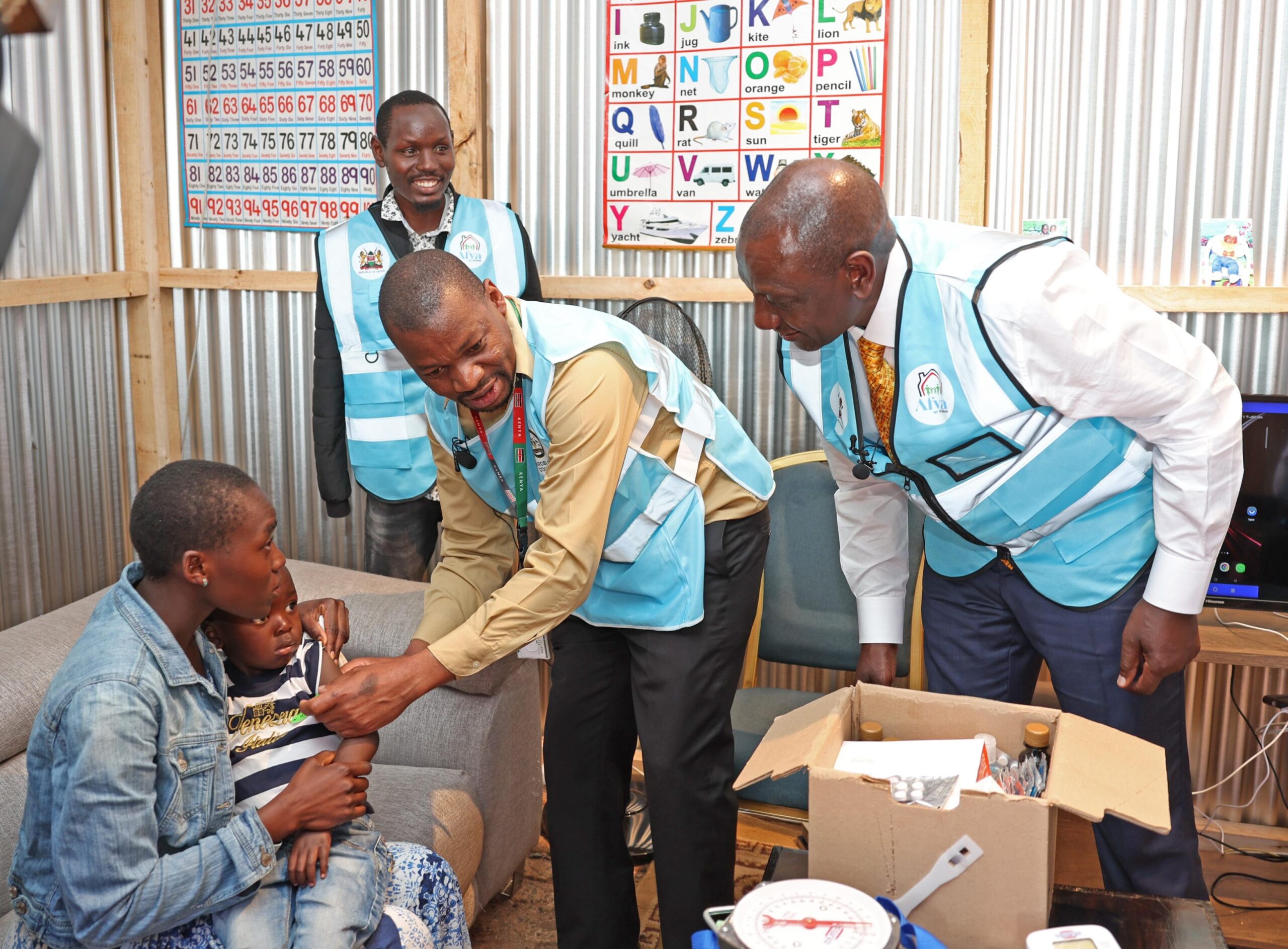
Healthcare occupies a defining place within the Bottom Up Economic Transformation Agenda because access to treatment directly affects household income, productivity, education, nutrition and the ability of families to build and retain productive assets. A serious illness does not end with the clinical diagnosis. It creates expenditure on consultations, laboratory tests, imaging, medicines, hospital admission, surgery, transport, rehabilitation and, in chronic cases, treatment extending over months or years. The healthcare transformation under BETA addresses this relationship between health and household economic security by building a national system intended to provide access to care while protecting families from debilitating medical expenditure.
The programme is anchored in the Social Health Insurance Act, the Primary Health Care Act, the Digital Health Act and the Facility Improvement Financing Act. These laws establish the institutional architecture for healthcare financing, primary healthcare delivery, digital health information management and management of resources generated by public health facilities. Their implementation has created a framework extending from preventive healthcare within households to primary care, hospital treatment, specialized medicine, chronic disease management and critical care.
At the centre of the transformation is the Social Health Authority, which administers the national social health financing architecture. Healthcare financing has been organized around three complementary funds: the Primary Healthcare Fund, the Social Health Insurance Fund and the Emergency, Chronic and Critical Illness Fund. Each serves a defined part of the patient journey, creating dedicated financing mechanisms for frontline primary healthcare, insured medical services and conditions requiring expensive or prolonged intervention.
By 2026, implementation had reached substantial national scale. More than 31.5 million Kenyans had registered under SHA, accompanied by millions of registered dependants. Thousands of public, faith based and private health facilities have been incorporated into the provider network, while healthcare financing flowing through the system has reached tens of billions of shillings. The transformation is consequently moving beyond institutional establishment into the daily financing of consultations, maternity care, admissions, surgeries, dialysis, oncology, diagnostics, medicines and other covered services.
The 2026 programme has also expanded financial protection for medical conditions carrying significant treatment costs. Cancer coverage provides a clear example. Annual chronic cancer support under the Emergency, Chronic and Critical Illness Fund has been increased to KES 400,000 per eligible patient. When combined with applicable benefits under the Social Health Insurance Fund, an eligible cancer patient can access annual treatment support of up to KES 800,000. By June 2026, more than 43,000 patients had benefited from the enhanced oncology package, with more than 3,000 completing treatment.
Maternal and newborn healthcare forms another major component of the programme. More than 1.16 million safe deliveries had been financed through the health financing system by June 2026. Approximately KES 12.5 billion is also being directed toward maternal and newborn survival interventions, covering delivery and essential newborn care, lifesaving commodities, family planning commodities and recruitment of additional nurses. These interventions strengthen the continuum of care from pregnancy and delivery to postnatal and newborn services.
Healthcare access is simultaneously being extended into communities through more than 107,000 Community Health Promoters. Equipped with medical kits and digital devices, CHPs provide the household connection to the formal health system through screening, health promotion, maternal and child health follow up, identification of disease risks, referrals and community health surveillance. Their deployment places preventive healthcare within communities and provides a mechanism for identifying health risks before they require advanced hospital intervention.
Digitization is providing the infrastructure connecting these different levels of healthcare. More than 10,000 health facilities have been connected to national digital health systems and tens of thousands of digital devices deployed. Digital registration, patient identification, claims processing, provider verification and health information management are progressively creating a healthcare system in which clinical and financial information can move with the patient across participating facilities.
Medicines and medical commodities form another essential component of Universal Health Coverage. The Kenya Medical Supplies Authority reported a facility fill rate above 90% by June 2026, reflecting increased availability of essential health products within the public supply chain. The Government is also pursuing local manufacturing of health products and technologies as part of the wider strategy to strengthen medicine security, create domestic industrial capacity and reduce exposure to disruptions in imported medical supplies.
The Bottom Up healthcare transformation therefore extends across the full healthcare pathway. It begins in the household through Community Health Promoters, moves into primary healthcare facilities and Primary Care Networks, connects patients to hospital and specialized treatment through SHA financing, strengthens medicine and equipment availability, and provides additional financial protection when chronic and critical illness requires prolonged treatment.
The transformation is being delivered through an integrated healthcare architecture
The scale of the programme becomes clearer when its major interventions are considered together:
- More than 31.5 million people registered under SHA: Registration has created a national platform through which millions of households can access healthcare benefits under the new financing architecture. Dependants registered within households extend this protection to spouses, children and other eligible family members, making household coverage an important component of the system.
- Thousands of healthcare facilities incorporated into the SHA provider network: Public, faith based and private facilities provide the physical infrastructure through which financed healthcare reaches citizens. Contracting facilities across different levels of care expands the geographical and clinical reach of the programme and creates pathways from primary healthcare to referral and specialized treatment.
- More than 107,000 Community Health Promoters connecting healthcare to households: CHPs provide preventive and promotive healthcare within communities, conducting household visits, screening for health risks, supporting maternal and child health, identifying people requiring clinical intervention and directing patients into appropriate facilities.
- More than 10,000 healthcare facilities connected to digital health infrastructure: Digitization supports patient identification, clinical information management, claims processing and provider accountability. Tens of thousands of digital devices deployed within the health system provide the hardware required to move healthcare administration away from fragmented manual processes.
- Up to KES 800,000 in annual cancer treatment support for eligible patients: Expanded oncology benefits provide financial protection across chemotherapy, radiotherapy, imaging, laboratory investigations, medicines and other covered cancer interventions. The package responds directly to one of the most financially demanding categories of chronic illness.
- More than 1.16 million safe deliveries financed: Maternal healthcare financing supports women during pregnancy, childbirth and the postnatal period while strengthening essential newborn care. The programme places maternal and newborn health within the broader UHC financing architecture.
- KES 12.5 billion supporting maternal and newborn survival interventions: The financing covers KES 4 billion for delivery and essential newborn care, KES 1 billion for lifesaving maternal and newborn commodities, KES 2.5 billion for family planning commodities and KES 5 billion annually for recruitment of 5,000 nurses.
- A medicine supply fill rate above 90% reported by KEMSA: Improved availability of medicines and health commodities strengthens the ability of healthcare facilities to translate insurance coverage into actual treatment. Financing a consultation has limited value where prescribed medicines, diagnostics or clinical commodities are unavailable.
These interventions place Universal Health Coverage within a broader national healthcare transformation involving financing, workforce, infrastructure, technology, medicines, prevention and specialized care. The objective is to establish a system in which a citizen can enter healthcare at the appropriate level, receive treatment according to clinical need and obtain financial protection throughout the care pathway.
Building the Financing Architecture for Universal Health Coverage
Establishing the Social Health Authority
The establishment of the Social Health Authority created the institutional platform for the current national health financing system. SHA administers the Social Health Insurance Fund and operates within a wider architecture that includes the Primary Healthcare Fund and the Emergency, Chronic and Critical Illness Fund.
The structure recognizes the different financial requirements arising across healthcare. Primary healthcare involves high volume frontline services such as consultations, screening, immunization, maternal healthcare and routine disease management. Hospital treatment involves admissions, diagnostics, surgery and specialist services. Chronic and critical illnesses may require prolonged treatment, repeated procedures, expensive medicines and advanced clinical technologies.
Organizing financing around these different requirements provides a mechanism for allocating healthcare resources according to the type and intensity of treatment required.
Three funds supporting the patient across the healthcare journey
The healthcare financing architecture operates through three complementary mechanisms:
- The Primary Healthcare Fund finances frontline healthcare: Government appropriations finance eligible primary healthcare services delivered through designated facilities and Primary Care Networks. This places public financing at the point where citizens commonly first encounter the formal healthcare system and supports preventive, promotive and routine clinical services.
- The Social Health Insurance Fund finances broader insured healthcare services: Contributions collected through the social health insurance framework are pooled to finance eligible outpatient, inpatient, diagnostic, surgical and specialized services delivered through contracted healthcare providers.
- The Emergency, Chronic and Critical Illness Fund provides an additional financial protection layer: The fund supports prescribed services for eligible emergency, chronic and critical conditions, particularly where treatment requires substantial expenditure or extends beyond the applicable SHIF benefit limits.
The three fund structure provides a continuum of financing extending from basic healthcare through hospital treatment to expensive specialized care. It also provides a basis for separating expenditure streams and directing public resources toward defined healthcare functions.
The Primary Healthcare Fund brings healthcare financing closer to citizens
Primary healthcare is the foundation of the Bottom Up health model because it places clinical services closer to households. Dispensaries, health centres and other eligible primary healthcare facilities manage many of the conditions responsible for everyday healthcare demand and provide the entry point for preventive and maternal services.
The Primary Healthcare Fund finances eligible services through designated facilities and supports the Primary Care Network model. These networks organize facilities within defined geographical areas and create structured referral relationships between community health services, dispensaries, health centres and higher level facilities.
The scope of primary healthcare is extensive:
- Consultation, diagnosis and treatment: Citizens presenting at eligible primary healthcare facilities can receive clinical assessment and management for conditions falling within the prescribed benefit package.
- Maternal and newborn healthcare: Antenatal services, delivery, essential newborn care and postnatal interventions are integrated within the primary healthcare financing framework. Normal delivery and essential newborn care attract reimbursement of KES 10,000, while Caesarean section and essential newborn care attract KES 30,000 at eligible Level 2 and Level 3 facilities.
- Child health and immunization: Primary healthcare facilities provide routine childhood immunization, growth monitoring, nutrition interventions and management of common childhood illnesses.
- Non communicable disease screening and management: Hypertension, diabetes and other chronic conditions can be identified and managed earlier through screening and routine clinical follow up within primary healthcare facilities.
- Communicable disease interventions: Primary healthcare supports diagnosis, treatment, surveillance and referral for diseases including malaria, tuberculosis and HIV within applicable national programmes.
- Reproductive and family health services: Family planning, reproductive health counselling and related services are incorporated into the primary healthcare benefit framework.
- Basic diagnostics and medicines: Laboratory investigations, prescribed medicines and other eligible clinical interventions support diagnosis and treatment without requiring every patient to enter a referral hospital.
The Primary Healthcare Fund therefore finances more than individual medical encounters. It supports a healthcare delivery model intended to identify illness earlier, maintain routine management of chronic conditions, strengthen maternal and child health and connect patients requiring advanced treatment to the appropriate referral level.
The Social Health Insurance Fund creates a national risk pool
The Social Health Insurance Fund provides the contributory component of the national healthcare financing framework. Contributions from households and workers are pooled to finance eligible healthcare services when members require treatment.
Risk pooling is fundamental to social health insurance because medical expenditure is unpredictable at household level. A family may require little medical treatment during one period and face surgery, hospitalization or prolonged illness during another. Pooling contributions across millions of people creates a financial mechanism through which treatment costs are shared across the insured population.
The fund supports eligible services across the contracted provider network, including:
- Outpatient clinical services covered within the applicable tariff framework.
- Inpatient admission and hospital treatment.
- Surgical interventions.
- Laboratory and diagnostic procedures.
- Medical imaging.
- Specialist consultations.
- Prescribed medicines and treatment.
- Renal care and dialysis within the approved benefit package.
- Oncology services.
- Other specialized interventions included within SHA tariffs and benefits.
The contribution framework also recognizes the income patterns of households outside conventional monthly payroll structures. The Lipa SHA Pole Pole mechanism provides an instalment based pathway through which eligible contributors can progressively meet their annual contribution obligation. This is particularly relevant within an economy where millions of citizens earn income through farming, small businesses, casual employment, transport, trade and other activities characterized by variable cash flows.
The Emergency, Chronic and Critical Illness Fund strengthens protection against high cost treatment
Chronic and critical illnesses create some of the largest medical expenses faced by households. Cancer treatment may require surgery, chemotherapy, radiotherapy, repeated imaging, laboratory monitoring and medicines over extended periods. Renal disease can require recurring dialysis. Critical conditions may require intensive treatment, specialist intervention and prolonged hospitalization.
The Emergency, Chronic and Critical Illness Fund provides an additional financing mechanism for prescribed services falling within these categories.
The expansion of oncology benefits in 2026 provides one of the clearest demonstrations of this function:
- KES 400,000 annual chronic cancer support: The annual benefit available through the Emergency, Chronic and Critical Illness Fund has been increased to KES 400,000 for eligible patients.
- Up to KES 800,000 in combined annual cancer coverage: Eligible patients can access additional applicable oncology benefits through SHIF, taking the combined annual financial protection to as much as KES 800,000.
- More than 43,000 cancer patients supported: By June 2026, more than 43,000 patients had benefited from the enhanced oncology package, demonstrating substantial utilization of the expanded benefit.
- More than 3,000 patients completing treatment: Completion of treatment provides an important patient level indicator because oncology financing must support continuity across multiple treatment cycles.
- A wider range of oncology interventions covered: The package provides financial support for prescribed chemotherapy, radiotherapy, laboratory investigations, CT scans, MRI, PET imaging, brachytherapy, medicines and other approved interventions required during diagnosis and treatment.
The financial implications extend beyond oncology. Dedicated protection for chronic and critical illness recognizes that UHC must address both routine healthcare and conditions capable of exhausting household savings within a short period.
More than 31.5 million registrations are expanding the national health financing pool
SHA registration had exceeded 31.5 million people by 2026, accompanied by millions of registered dependants. Registration is important because it establishes the population base through which healthcare entitlements, contributions, dependants, service utilization and provider claims are managed.
The digital registration framework allows citizens to enrol through several channels, reducing dependence on physical registration offices. Identity information, household details and dependants are incorporated into the health financing system and used to support access to eligible benefits.
The scale of registration creates several operational advantages:
- A larger national risk pool: Millions of registered people broaden the population across which healthcare financing risks are distributed.
- Household based health protection: Registration of dependants extends healthcare coverage beyond the principal contributor and incorporates eligible family members within the financing system.
- More accurate planning for healthcare demand: Registration information provides a stronger population base for planning financing, service utilization and provider capacity.
- Digital verification at healthcare facilities: Patient identification within the system supports verification of eligibility and processing of services provided by contracted facilities.
- A foundation for targeted public support: Household information provides the administrative infrastructure required to identify people whose contributions require public financing or other forms of support under the applicable framework.
Registration is therefore an operational component of Universal Health Coverage rather than a standalone numerical achievement. Its value is realized when registered citizens are able to obtain treatment and healthcare providers are reimbursed for delivering those services.
Healthcare financing is translating into actual treatment
The performance of a health financing system ultimately depends on whether money reaches healthcare providers and finances services received by patients. By June 2026, SHA reported KES 147.37 billion in claims payments to healthcare providers.
These payments represent healthcare delivered across the system, including maternity care, outpatient and inpatient treatment, surgery, dialysis, oncology, diagnostics and other eligible services.
The flow of healthcare financing serves several interconnected purposes:
- Patients receive covered treatment without carrying the entire medical bill directly at the point of care.
- Hospitals receive reimbursement for eligible services delivered to registered beneficiaries.
- Public facilities obtain resources linked to healthcare utilization and service delivery.
- Faith based and private providers participate within the national UHC network under contracted terms and approved tariffs.
- Claims data provides information on healthcare utilization, expenditure patterns and emerging demand across different clinical services.
The scale of claims payments also places financial governance at the centre of SHA implementation. Accurate patient identification, valid clinical records, provider verification, approved tariffs and claims auditing are necessary to ensure that healthcare resources finance genuine treatment.
UHC is also an economic protection programme for households
The healthcare transformation under BETA carries an economic purpose that reaches beyond hospitals and clinics. Medical expenditure can consume household savings, disrupt school fee payments, reduce business working capital, affect agricultural investment and force families to dispose of productive assets.
Financial protection within healthcare therefore contributes directly to household economic resilience.
A functioning UHC system supports households through several channels:
- Primary healthcare financing reduces the immediate financial barrier to seeking early treatment, allowing illnesses to be identified and managed before they require expensive intervention.
- Social health insurance pools the cost of medical treatment across a large population, reducing dependence on individual households financing major hospital bills entirely from current income or savings.
- Dedicated chronic and critical illness financing provides additional protection during expensive treatment, particularly for conditions requiring repeated or prolonged medical intervention.
- Maternal healthcare financing protects families during pregnancy and childbirth, periods in which clinical complications can generate significant unplanned expenditure.
- Access to medicines and diagnostics strengthens the value of healthcare financing, because an insurance entitlement becomes meaningful when facilities possess the commodities and clinical capacity required to provide treatment.
This financial protection places healthcare firmly within the Bottom Up Economic Transformation Agenda. A household protected from catastrophic medical expenditure retains a stronger capacity to save, educate children, operate a business, invest in agriculture, maintain consumption and accumulate productive assets.
The healthcare transformation is consequently both a social investment and an economic intervention. Its success will be measured through the number of citizens who obtain treatment, the quality and availability of healthcare services, the financial protection provided to households, the sustainability of healthcare financing and the ability of the system to reach citizens from the community level through specialized care.
Taking Healthcare to the Household Through Community Health Promoters
The Bottom Up healthcare transformation places the household at the foundation of the national health system. This approach recognizes that many of the conditions responsible for illness, disability and expensive hospital treatment begin long before a patient reaches a health facility. Hypertension can remain undetected for years. Diabetes may progress without diagnosis. A pregnancy can develop warning signs between scheduled clinic visits. A child can become malnourished within the community. An infectious disease can spread across households before affected people present themselves for treatment.
Community Health Promoters provide the operational connection between these households and the formal healthcare system. More than 107,000 CHPs are currently supported across the country with monthly stipends, digital devices and medical kits, giving the primary healthcare system a permanent community level workforce for disease prevention, early detection, referrals, health education and household level healthcare services.
The scale of this network is significant. With each Community Health Promoter expected to cover approximately 100 households, the programme creates the capacity for routine healthcare engagement across millions of households. The CHP becomes a defined point of contact between families and nearby primary healthcare facilities, providing a pathway through which health risks identified at home can be referred for clinical assessment and treatment.
This structure gives practical meaning to a Bottom Up healthcare system. Health intervention begins within communities, primary healthcare facilities provide the next level of clinical management, and Primary Care Networks create the referral structure connecting patients to higher levels of treatment when required.
More than 107,000 Community Health Promoters form the national household healthcare network
The Community Health Promoter programme has converted community healthcare into a structured component of Universal Health Coverage. More than 107,000 CHPs have been deployed nationally and are being supported with equipment, digital tools and monthly stipends.
Their responsibilities cover several interconnected areas of public health:
- Household health surveillance brings the health system closer to everyday living conditions: CHPs routinely engage households to identify health risks, provide basic health information and establish whether individuals require further assessment. This creates an opportunity to detect illness within the community and connect affected citizens to appropriate healthcare facilities.
- Early identification of disease strengthens preventive healthcare: Community level screening supports identification of people at risk of conditions such as hypertension and diabetes. Earlier identification provides an opportunity for clinical assessment, treatment and follow up before complications require more intensive medical intervention.
- Maternal healthcare follow up connects pregnant women to skilled care: CHPs identify pregnant women within their assigned households, encourage antenatal attendance, provide health education, identify warning signs and facilitate referral to health facilities where clinical intervention is required. This places community surveillance within the wider maternal and newborn health strategy.
- Child health interventions extend beyond the walls of healthcare facilities: Community Health Promoters support immunization follow up, nutrition surveillance, health education and identification of children requiring clinical attention. Household engagement provides an additional mechanism for locating children who may miss scheduled services.
- Disease surveillance begins at community level: Because CHPs work within defined household clusters, unusual patterns of illness can be identified within communities and escalated through the health system. Their role supports national preparedness for communicable diseases and emerging public health threats.
- Referral provides the bridge between household screening and clinical treatment: A CHP does not replace a clinician or healthcare facility. The programme provides a mechanism for identifying health needs, conducting permitted community level interventions and directing people requiring medical assessment into the formal healthcare system.
The national scale of the network gives primary healthcare a human infrastructure extending into villages, settlements and urban neighbourhoods. More than 107,000 frontline workers operating across defined household populations create a direct channel through which preventive healthcare programmes can reach citizens.
Approximately 100 households assigned to each Community Health Promoter
The household assignment model provides a clear unit of responsibility within community healthcare. Each CHP is expected to cover approximately 100 households, enabling promoters to develop familiarity with the communities they serve and establish a structured population for routine health engagement.
At national scale, this model provides the operational capacity to reach millions of households.
The 100 household structure serves several functions:
- Defined responsibility strengthens accountability: Each promoter has an identifiable population for health promotion, surveillance, follow up and referral. This creates a clearer basis for measuring whether households within an assigned area are receiving community health services.
- Repeated household contact supports continuity: Community health risks frequently require follow up rather than a single encounter. Pregnancy, childhood nutrition, chronic disease management and treatment adherence all benefit from repeated engagement over time.
- Household level information supports local health planning: Data collected across defined household clusters provides health authorities with information on disease risks, service utilization and community health needs.
- Community familiarity strengthens referral pathways: A promoter who understands the households within an assigned area is better positioned to identify vulnerable people, encourage healthcare utilization and follow up after referral.
The household allocation model consequently transforms community health from an undefined outreach activity into a structured frontline service with identifiable populations, defined responsibilities and digital reporting mechanisms.
Digital devices are connecting community healthcare to the national health information system
The CHP programme is also a major component of the health digitization agenda. Promoters are equipped with digital devices that support electronic recording and transmission of community health information.
The Electronic Community Health Information System provides the digital infrastructure through which household information can be captured and incorporated into the wider health system. By March 2025, more than 106,000 CHPs had already been onboarded onto eCHIS and more than 8.57 million households registered. Subsequent implementation has continued expanding digitized community healthcare.
This digital connection strengthens several areas of health delivery:
- Household records become part of a structured information system: Information collected during community interactions can be captured electronically, reducing dependence on isolated paper based community records.
- Screening information supports referrals: Where a health risk is identified, digital information can support referral and follow up within the primary healthcare system.
- Community health trends become visible to planners: Aggregated information provides health authorities with a clearer picture of disease patterns, maternal health needs, immunization requirements and other public health indicators.
- Digital reporting strengthens accountability for household coverage: Assigned households and community interventions can be recorded, providing a mechanism for monitoring the reach of Community Health Promoters.
- Public health surveillance gains a wider grassroots information network: Community level data provides an additional source of information for identifying unusual health patterns and strengthening responses to communicable and emerging diseases.
Digitization gives the Community Health Promoter network an additional strategic function. CHPs are not solely delivering health education and basic interventions. They are also generating structured information from the lowest level of the healthcare system, strengthening the evidence available for public health decision making.
Medical kits are turning household visits into practical health interventions
The effectiveness of a Community Health Promoter depends on the ability to provide practical services during household engagement. Government support has therefore included medical kits alongside digital devices.
The kits provide basic equipment required for approved community level health interventions and screening. Their deployment supports the movement of selected preventive services closer to households.
This has several practical implications:
- Blood pressure screening supports earlier identification of hypertension: Hypertension frequently develops without obvious symptoms. Community screening provides an opportunity to identify elevated readings and refer affected individuals for clinical assessment.
- Blood glucose screening supports detection of diabetes risk: Identifying abnormal glucose levels within the community creates an entry point for further diagnostic assessment and management.
- Temperature and basic clinical measurements strengthen household assessment: Basic diagnostic equipment allows CHPs to gather objective health information during household engagement and determine whether referral is required.
- Maternal health monitoring supports identification of risk: Household engagement allows promoters to identify pregnancies, reinforce antenatal attendance and recognize circumstances requiring clinical referral.
- Nutrition screening supports interventions for children and vulnerable households: Community level assessment can identify nutritional concerns requiring counselling, supplementation or referral to healthcare facilities.
The Government’s 2026 health budget priorities include replacement and upgrading of CHP kits, reflecting the importance of keeping this frontline equipment functional and adequately supplied as community healthcare expands.
Preventive healthcare is being built around measurable household interventions
The scale of community health activity provides an important indication of what the CHP network can deliver. Ministry reporting has documented tens of millions of community screenings for major non communicable diseases and more than one million referrals into healthcare services.
This is particularly important for hypertension and diabetes because both conditions can progress silently and produce expensive complications affecting the heart, kidneys, eyes and vascular system.
Community screening changes the point at which the healthcare system encounters these risks.
The preventive model operates through a sequence of interventions:
- Screening identifies a possible health risk within the household: The promoter conducts an approved assessment or recognizes symptoms requiring further investigation.
- Referral connects the individual to clinical diagnosis: Citizens requiring further assessment are directed to an appropriate healthcare facility where qualified professionals can confirm diagnosis and determine treatment.
- Treatment is linked to the primary healthcare system: Patients diagnosed with conditions requiring ongoing management can receive clinical care within the applicable healthcare network.
- Household follow up supports continuity: Community Health Promoters can reinforce adherence to clinical advice, encourage follow up visits and identify circumstances requiring renewed referral.
This creates a practical connection between prevention and healthcare financing. Detecting disease within the community has greater value when the patient can subsequently enter a financed healthcare pathway for diagnosis and treatment.
Community healthcare strengthens the maternal and newborn health pathway
Maternal and newborn health is one of the areas where community level healthcare has direct implications for timely access to clinical services. Pregnancy requires repeated interaction with the health system, and complications can develop between scheduled facility visits.
Community Health Promoters provide an additional layer of contact between pregnant women and healthcare facilities.
Their contribution includes identification of pregnancies, promotion of antenatal attendance, health education, identification of warning signs, referral and follow up after delivery.
This community infrastructure operates alongside the substantial maternal and newborn health investments being implemented in 2026. The Government is directing approximately KES 12.5 billion toward maternal and newborn survival interventions, with resources allocated across clinical services, commodities and health personnel.
The programme includes:
- KES 4 billion for delivery and essential newborn care: This financing supports services surrounding childbirth and the immediate care required by newborns.
- KES 1 billion for lifesaving maternal and newborn commodities: Availability of essential commodities is critical to managing complications and protecting mothers and newborns during delivery and the postnatal period.
- KES 2.5 billion for family planning commodities: Reproductive health services form part of the broader continuum of maternal and family healthcare.
- KES 5 billion annually for 5,000 nurses: Additional nursing personnel strengthen the clinical workforce required to deliver maternal, newborn and other healthcare services.
- Targeted intervention in high burden counties: Resources and programme attention are being concentrated in counties carrying a significant share of maternal and newborn mortality, allowing interventions to respond to geographical patterns of health need.
Community Health Promoters provide the household connection within this investment. Their ability to identify pregnancies and connect mothers with appropriate facilities strengthens the pathway between community level prevention and financed clinical care.
Primary Care Networks connect CHPs to healthcare facilities
Community healthcare requires an organized clinical system behind it. The Primary Care Network model provides this structure by linking community health services with Level 2 and Level 3 facilities and creating referral relationships with higher levels of care.
By early 2026, 267 Primary Care Networks had been established, with implementation continuing toward wider national coverage.
Primary Care Networks strengthen the system in several ways:
- CHP referrals have a defined clinical destination: Individuals identified within households can be directed toward facilities integrated within the local primary care structure.
- Patients can move between levels of care according to clinical need: A condition that cannot be managed at a dispensary or health centre can be referred into a higher level facility.
- Facilities operate as part of a local healthcare ecosystem: Community units and health facilities are linked around defined populations, improving coordination of healthcare delivery.
- Preventive and curative services become part of the same patient pathway: Community screening, facility diagnosis, treatment and follow up can operate within an interconnected local health network.
- Population health information can inform local resource planning: Data generated at community and facility level provides a stronger basis for understanding demand within individual Primary Care Networks.
The Primary Care Network is therefore the organizational bridge between the Community Health Promoter and the formal clinical system. It gives household level healthcare a referral structure and establishes a local network through which patients can progress according to the complexity of their medical needs.
107,000 Community Health Promoters receiving comprehensive medical cover from July 2026
Professionalizing the community health workforce also requires protection for the workers delivering these services. From 1 July 2026, the Government introduced comprehensive medical insurance for approximately 107,000 Community Health Promoters.
The arrangement is financed jointly by the national and county governments on a 50:50 basis and covers primary healthcare, laboratory services and specialized treatment.
This intervention adds another component to the institutionalization of community healthcare:
- CHPs receive healthcare protection while delivering healthcare to communities: Medical insurance provides frontline workers with access to the same wider health protection agenda they support within households.
- National and county governments share responsibility for the programme: The 50:50 financing arrangement reflects the intergovernmental structure of healthcare delivery and the joint role of both levels of government in community health.
- Medical cover complements monthly stipends: The combination of remuneration, healthcare protection, equipment, training and digital tools moves the CHP programme toward a more structured community health workforce.
- Workforce welfare supports retention and continuity: A stable community health workforce is important because household healthcare depends on sustained relationships between promoters and the populations assigned to them.
The Government is also pursuing standardization of CHP stipends and continued investment in training and equipment. These interventions recognize that a national community health system requires sustained financing for the workforce alongside financing for clinical services.
Community Health Promoters strengthen national disease surveillance and health security
The Community Health Promoter network also contributes to public health preparedness. Disease outbreaks frequently begin as localized clusters within households and communities. A nationwide network of frontline health workers provides an additional mechanism for detecting unusual symptoms, communicating public health information and directing suspected cases into formal surveillance and treatment systems.
This role has particular relevance to emerging and re emerging infectious diseases. During heightened disease alerts in 2026, the Ministry of Health emphasized the role of CHPs in hygiene promotion, disease prevention and community surveillance.
The network strengthens health security through several functions:
- Community awareness allows public health messages to reach households directly, particularly during outbreaks or heightened disease surveillance.
- Early identification of unusual illness provides an additional reporting pathway, supporting escalation of suspected health threats to clinical and public health authorities.
- Household education strengthens prevention, including hygiene practices and other measures relevant to communicable disease control.
- Referral directs suspected cases into appropriate facilities, allowing clinical assessment and formal surveillance mechanisms to take over.
- Digital reporting strengthens the speed and geographical visibility of community health information, giving health authorities a broader information base for public health response.
The Community Health Promoter programme consequently serves preventive healthcare, maternal and child health, chronic disease screening, health education, referrals and national health security within a single grassroots delivery infrastructure.
Building Universal Health Coverage from the household upwards
The Community Health Promoter programme demonstrates the Bottom Up character of the healthcare transformation in practical terms. Universal Health Coverage depends on citizens being able to reach healthcare services, and the community health model reverses that relationship by taking selected health services directly to citizens.
The architecture now connects four levels of intervention. More than 107,000 CHPs provide the household interface. Approximately 100 households assigned to each promoter create defined populations for community healthcare. Digital systems connect household information to the wider health ecosystem. Primary Care Networks connect community referrals to healthcare facilities.
The resulting model places prevention and early identification alongside healthcare financing. A citizen identified with elevated blood pressure during a household visit can be referred for clinical assessment. A pregnant woman can be connected to antenatal and delivery services. A child requiring immunization or nutritional intervention can be identified within the community. A suspected disease outbreak can enter the surveillance system from household level.
This is the operational foundation of preventive Universal Health Coverage under BETA: healthcare beginning within communities, supported by a professionalized frontline workforce, connected digitally to the health system and linked through Primary Care Networks to clinical treatment.
Building a National Emergency Medical Response and Ambulance Network
Emergency healthcare entered a new implementation phase in August 2026 with the launch of the National Ambulance Dispatch Centre at the Social Health Authority headquarters in Nairobi. The centre provides the country with a centralized platform for coordinating emergency medical dispatch across all 47 counties and connects ambulance deployment, clinical triage, communication between emergency responders and health facilities, patient referrals and emergency health information within one national response system.
The centre is accessible through the SHA 922 Lifeline, providing a dedicated point of contact for medical emergencies. When an emergency is reported, trained personnel assess the incident, determine the required response and coordinate deployment through the national dispatch platform. Ambulance crews are connected digitally to the system, allowing patient information to be transmitted while a patient is being transported and enabling receiving facilities to prepare for the incoming emergency.
This intervention addresses an important component of Universal Health Coverage. Access to healthcare depends on the ability of a patient to reach appropriate treatment within the clinical window available during an emergency. Severe trauma, cardiac arrest, respiratory distress, major bleeding, seizures, obstetric complications and other acute conditions require a health system capable of coordinating response from the point of incident to an appropriate healthcare facility.
The emergency care framework under BETA consequently brings together emergency communication, ambulance coordination, clinical triage, patient stabilization, digital information exchange and dedicated healthcare financing. Its objective is to establish emergency medical care as an organized national health service rather than a collection of disconnected ambulance operations.
The National Ambulance Dispatch Centre creates one coordination platform for all 47 counties
The National Ambulance Dispatch Centre was officially launched on 5 August 2026 as the country’s first centralized emergency medical dispatch platform serving all 47 counties. The national architecture provides a single coordination point through which participating emergency medical resources can be organized according to the location and clinical needs of patients.
Its functions extend beyond receiving telephone calls. The centre coordinates several elements of the emergency care pathway:
- Emergency calls enter a centralized clinical triage system: Calls received through the SHA 922 Lifeline are assessed to establish the nature and severity of the emergency. Clinical triage enables the dispatch system to prioritize cases according to medical urgency and determine the response required.
- Ambulance deployment is coordinated from a national platform: The system provides visibility over accredited emergency transport resources connected to the network, supporting assignment and coordination of ambulances according to the location and requirements of an incident.
- Emergency responders and healthcare facilities are connected during the patient journey: Communication between ambulance teams and receiving facilities allows clinical information to move ahead of the patient. A facility receiving a severely injured or critically ill patient can obtain relevant information while transportation is underway.
- Patient referrals form part of the dispatch architecture: Emergency care does not always end at the first facility reached. Where a patient requires a higher level of treatment, the platform supports coordination of referral and transfer to an appropriate healthcare facility.
- Incident management is connected to the wider national health information architecture: The system integrates emergency incident information with the National Health Information Exchange, creating a digital connection between pre hospital emergency care and the wider healthcare system.
The dispatch centre therefore functions as a command and coordination layer within emergency healthcare. Ambulances provide transport and clinical response, healthcare facilities provide treatment, and the national platform coordinates the movement of information, patients and emergency resources between them.
SHA 922 provides a dedicated national entry point into emergency medical response
The SHA 922 Lifeline gives citizens a dedicated channel for accessing the national emergency medical response system. The significance of the number lies in the healthcare infrastructure operating behind it.
A medical emergency requires several decisions to be made quickly. The location of the patient must be established. The nature of the emergency must be understood. The appropriate response resource must be identified. The receiving facility must have the clinical capacity required by the patient’s condition. Information must move between the caller, dispatcher, ambulance crew and healthcare facility.
The 922 Lifeline brings these functions into a coordinated pathway:
- A citizen initiates the emergency response through one medical lifeline: The call creates an entry point into the dispatch system and allows emergency personnel to begin assessing the incident.
- Clinical triage establishes the level of urgency: Dispatch personnel evaluate available information and categorize the emergency according to clinical severity, helping prioritize resources where the medical need is greatest.
- The dispatch platform coordinates an appropriate ambulance response: Accredited ambulances connected to the system can be assigned according to operational availability and the requirements of the incident.
- The ambulance crew receives information before reaching the patient: Digital dispatch provides responders with incident information needed to prepare for the emergency.
- Clinical information can be transmitted while the patient is in transit: The point of care application allows ambulance crews to securely share patient information, strengthening continuity between pre hospital care and facility based treatment.
- The receiving healthcare facility becomes part of the response before arrival: Communication between emergency teams and facilities provides an opportunity for clinical teams to prepare for the patient’s condition and organize the resources required for immediate treatment.
The result is an emergency pathway extending from the initial request for assistance to definitive clinical care.
More than 100 ambulances had already passed accreditation before the national launch
Building a centralized dispatch system requires participating ambulances to meet defined operational and clinical requirements. During preparations for the Emergency Evacuation Services Programme, more than 100 ambulances had already been accredited by June 2026 following compliance assessments.
Recruitment and training of dispatch personnel had also been completed, while dispatch systems were undergoing testing and simulation exercises ahead of the August launch.
These preparations demonstrate that emergency medical response requires more than the physical availability of ambulances:
- Ambulance accreditation establishes minimum service requirements: Emergency vehicles participating in the system must satisfy applicable standards before becoming part of the organized national response network.
- Trained dispatch personnel provide the human decision making capacity behind the technology: Emergency calls require assessment, prioritization and coordination by personnel capable of understanding the clinical and logistical implications of each incident.
- Simulation exercises test the response chain before live deployment: Dispatch technology, ambulance communication, staffing and facility coordination must function together during an actual emergency. Simulation allows operational gaps to be identified before they affect patients.
- Central coordination creates visibility over participating emergency resources: An ambulance becomes more useful to the national emergency system when dispatchers know its availability, location and operational status and can assign it to an incident.
The accreditation programme also provides a mechanism for expanding the emergency fleet progressively as additional public and contracted ambulance providers satisfy the required standards.
Ambulance evacuation is financed under the Emergency, Chronic and Critical Illness Fund
Emergency transport is incorporated into the SHA benefit framework through the Emergency, Chronic and Critical Illness Fund. This creates a financing mechanism for evacuation from the point of an incident to an appropriate healthcare facility and for qualifying transfers where a patient requires further emergency clinical care.
The benefit framework provides important financial protections:
- Emergency ambulance evacuation is accessible to Kenyans under the prescribed benefit framework: The benefit covers evacuation from the point of an incident to the nearest appropriate facility with Accident and Emergency capability and qualifying transfers requiring further emergency clinical care.
- A fixed reimbursement applies within a 25 km radius: The published tariff provides reimbursement of up to KES 4,500 for qualifying ambulance evacuation within the prescribed 25 km intra metropolitan radius.
- Longer emergency journeys receive distance based reimbursement: For qualifying evacuation beyond 25 km, the published framework provides an additional tariff of KES 75 per kilometre.
- Transfers are coordinated through the national ambulance call centre: Central management provides a mechanism for linking financing with accredited emergency transport and documented patient movement.
This financing component is important because an ambulance network cannot provide equitable national access when emergency transport depends entirely on the immediate ability of individual households to independently secure and finance evacuation.
Emergency stabilization is available across Level 2 to Level 6 facilities
The emergency benefit framework extends beyond transportation. Accident and emergency services under the Emergency, Chronic and Critical Illness Fund provide for resuscitation and stabilization across Level 2 to Level 6 facilities for specified emergencies.
Covered emergency presentations include serious clinical conditions where immediate intervention can determine survival and long term health outcomes.
The benefit framework specifically provides for emergencies including:
- Cardiac and pulmonary arrest: Immediate resuscitation and stabilization are covered within prescribed tariffs, providing a financing mechanism for the investigations and clinical management required during these life threatening events.
- Major trauma: Severe burns, head injuries, serious wounds and multiple fractures fall within the emergency benefit framework, supporting immediate investigation, resuscitation and stabilization.
- Shock: Haemorrhagic shock, septic shock and severe dehydration require rapid medical intervention to restore circulation and prevent organ failure. These conditions are included within the emergency care package.
- Altered consciousness: Unconsciousness and acute confusion can indicate neurological, metabolic, toxicological or traumatic emergencies requiring immediate clinical assessment.
- Severe respiratory distress: Patients experiencing life threatening difficulty in breathing require urgent stabilization and access to appropriate respiratory support.
- Seizures: Acute seizure emergencies are included within the stabilization framework, allowing immediate clinical intervention while the underlying cause is assessed.
The published emergency tariff framework provides up to KES 5,015 for investigations associated with cardiac and pulmonary arrest and up to KES 97,900 for management. Major trauma carries published maximum reimbursement of KES 13,614 for investigations and KES 79,549 for management.
These tariffs translate emergency healthcare from a general entitlement into a defined financing framework through which licensed healthcare providers can be reimbursed for specified lifesaving interventions.
The first 24 hours of emergency stabilization receive dedicated protection
The emergency care benefit provides resuscitation and stabilization for up to a maximum of 24 hours under the applicable Emergency, Chronic and Critical Illness Fund provisions. Where continued treatment is required after the emergency stabilization period, applicable SHIF benefits are activated for eligible paid up members.
This creates a defined transition within the patient journey:
- The immediate emergency is treated as a distinct clinical phase: The priority during the first hours is resuscitation, stabilization, investigation and prevention of avoidable deterioration.
- Dedicated emergency financing supports this critical treatment window: The Emergency, Chronic and Critical Illness Fund provides the applicable financing mechanism within the prescribed benefit and tariff structure.
- Continued hospital treatment moves into the applicable insurance benefit: Once the immediate stabilization period is completed, patients requiring continued inpatient or specialized care transition into the relevant healthcare financing pathway according to eligibility.
- Clinical need determines the progression of treatment: A stabilized patient may be discharged, admitted within the same facility or transferred to a facility capable of providing the required specialist intervention.
The structure creates continuity between emergency response and the broader UHC financing architecture.
Emergency care is protected even where a provider is outside the ordinary contracted network
Emergency medicine presents circumstances in which a patient may have no practical ability to select a particular contracted healthcare provider. Trauma can occur on a highway, at work, within a rural community or in any location where the nearest licensed facility provides the fastest opportunity for lifesaving intervention.
The Social Health Insurance framework recognizes this reality. Emergency benefits may be paid to a licensed and certified healthcare provider or facility that provides qualifying emergency treatment under the applicable benefit package even where the ordinary provider contracting arrangements would otherwise apply.
This provision is significant for several reasons:
- Emergency response is organized around immediate clinical need: A patient requiring stabilization does not have to navigate ordinary healthcare purchasing decisions before receiving urgent treatment.
- Licensed facilities have a reimbursement pathway for qualifying emergency care: This strengthens the financial architecture supporting providers that receive emergency patients.
- The emergency benefit follows the clinical event: Financing is connected to qualifying emergency treatment under the prescribed package and tariffs.
- The framework supports wider geographical access: Emergency incidents occurring away from a patient’s usual provider network can still enter the national financing framework where the applicable requirements are satisfied.
This approach strengthens the principle that emergency healthcare must function according to the urgency of the medical condition.
Digital technology connects the ambulance to the hospital before the patient arrives
One of the most important components of the National Ambulance Dispatch Centre is the integration of pre hospital clinical information into the digital health system.
The platform includes a point of care application through which ambulance crews can securely transmit patient information while the patient is in transit. The incident management system is also connected to the National Health Information Exchange.
This creates a digital clinical pathway with several operational benefits:
- Patient information can move ahead of the ambulance: Receiving clinicians can obtain information about the patient’s condition before arrival.
- Hospitals can prepare according to clinical need: A facility expecting a major trauma patient may require a different preparation from one receiving a patient experiencing a seizure or severe respiratory distress.
- Emergency records become part of a wider digital health pathway: Information generated during ambulance response can contribute to continuity of care as the patient moves into hospital treatment.
- Dispatch information provides visibility over emergency incidents: The national platform creates structured information on emergency calls, responses, transfers and patient movement.
- Referral coordination becomes digitally supported: Where specialized treatment is required, information can support movement between facilities and reduce fragmentation during referral.
The ambulance is consequently being integrated into the healthcare information system as a mobile clinical environment rather than functioning solely as a transport vehicle.
A national dispatch system strengthens response to road traffic trauma
Road traffic injuries place particular demands on emergency medical systems because outcomes can depend heavily on the period immediately following an accident. Severe bleeding, head injuries, spinal trauma, multiple fractures and respiratory compromise require rapid assessment, stabilization and transfer to an appropriate facility.
The national emergency response architecture creates a coordinated pathway for these incidents. A call through the SHA 922 Lifeline enters clinical triage. The dispatch centre coordinates an accredited ambulance. The responding team provides pre hospital care and communicates patient information. The receiving facility prepares for treatment. Where advanced intervention is required, referral can be coordinated through the same wider system.
The Emergency, Chronic and Critical Illness Fund provides the financing layer supporting qualifying ambulance evacuation and emergency stabilization.
This combination of dispatch, transport, clinical response, hospital coordination and financing gives road trauma response a structured place within Universal Health Coverage.
Obstetric emergencies gain a coordinated referral and evacuation pathway
Emergency medical transport is equally important in maternal healthcare. Severe bleeding, obstructed labour, hypertensive emergencies, ruptured ectopic pregnancy and other obstetric complications can deteriorate rapidly and may require surgical or specialist intervention.
The national dispatch system provides an additional referral mechanism connecting pregnant women and mothers experiencing emergencies to appropriate healthcare facilities.
This emergency infrastructure operates alongside the maternal healthcare investments already being implemented under UHC. Community Health Promoters identify pregnancies and support referral. Primary healthcare facilities provide antenatal and maternity services. SHA finances eligible maternal healthcare. The emergency medical system provides a coordinated evacuation pathway when urgent intervention is required.
The result is a connected maternal health pathway extending from household surveillance to routine maternity care and emergency referral.
The 2026 launch moves emergency medical care into the national UHC architecture
The National Ambulance Dispatch Centre represents an important expansion of the Bottom Up healthcare transformation because it addresses the period between the onset of a medical emergency and arrival at definitive treatment.
The national model now brings together several components that previously operated across separate parts of the healthcare system:
- SHA 922 provides the public entry point for emergency medical assistance.
- The National Ambulance Dispatch Centre provides centralized coordination across all 47 counties.
- Accredited ambulances provide organized emergency evacuation and pre hospital care.
- Clinical triage prioritizes emergencies according to medical severity.
- Digital point of care technology allows patient information to move between ambulance crews and healthcare facilities.
- The National Health Information Exchange connects emergency incidents to the wider digital health infrastructure.
- The Emergency, Chronic and Critical Illness Fund finances qualifying evacuation, resuscitation and stabilization under prescribed tariffs.
- Level 2 to Level 6 facilities provide the clinical network through which qualifying emergency stabilization can be delivered.
- SHIF provides the applicable pathway into continued treatment after the emergency stabilization period for eligible members.
The August 2026 launch therefore adds a national pre hospital and emergency response layer to Universal Health Coverage. A citizen facing a medical emergency now has a defined entry point into an organized system connecting dispatch, ambulance response, clinical stabilization, referral, healthcare facilities, digital information and financing.
Building One Digital Health System Around the Patient
Digitization forms a core operating layer of the Bottom Up healthcare transformation because Universal Health Coverage depends on more than registering citizens and financing treatment. The health system must be able to identify a patient, establish eligibility for benefits, connect clinical information across facilities, process claims, verify providers, maintain records, support referrals and protect public healthcare resources. The Digital Health Act provides the legal foundation for this transformation, while the Digital Health Agency is responsible for developing and coordinating the national digital health ecosystem.
Implementation has reached substantial scale in 2026. By January, 10,277 healthcare facilities had been connected to national digital systems and 30,087 digital devices deployed. The Social Health Authority is also transitioning healthcare providers from the SHA Provider Portal to the Social Health Authority Health Management Information System, creating a deeper connection between healthcare delivery and financing within a unified digital environment.
The national digital architecture is being built around interoperability. A patient may first interact with a Community Health Promoter, receive treatment at a dispensary, undergo laboratory investigations at another facility and later require referral to a county or national hospital. A functional digital system allows authorized health information to support continuity across these encounters while preserving the controls required for privacy, security and patient consent.
This architecture also provides the infrastructure required to manage a health financing system serving more than 31 million registered people and thousands of healthcare providers. By June 2026, SHA had 31.39 million registered Kenyans, 11,034 contracted healthcare facilities and KES 147.37 billion in claims payments. Managing transactions at this scale requires digital systems capable of connecting patients, providers, benefits, clinical services and payments within an auditable national framework.
10,277 healthcare facilities connected to national digital systems
The connection of 10,277 facilities to national health systems represents one of the largest components of the healthcare digitization programme. The objective is to establish common digital infrastructure across healthcare providers and reduce fragmentation between individual facility systems.
The programme is significant because healthcare information is generated at multiple points. Registration creates demographic information. Consultations generate diagnoses and clinical observations. Laboratories generate test results. Pharmacies generate prescription and dispensing records. Hospitals generate admission and discharge information. SHA generates claims and payment information.
Connecting facilities provides the infrastructure required to bring these different data streams into an interoperable healthcare environment.
The programme supports several practical functions:
- Digital patient identification creates a consistent healthcare identity: A patient entering a connected facility can be identified within the national digital ecosystem, supporting access to applicable healthcare services and reducing dependence on isolated facility records.
- Clinical information can support continuity between healthcare encounters: When authorized information is available electronically, clinicians can obtain relevant information generated during previous encounters, supporting clinical decision making as patients move between facilities.
- Healthcare financing is connected to actual service delivery: SHA claims can be linked to patient identification, the healthcare provider, the clinical service delivered and the applicable tariff, strengthening the relationship between financing and treatment.
- Referral information can move with the patient: Digital health infrastructure supports continuity when a patient moves from primary healthcare into secondary, tertiary or specialized treatment.
- National health information becomes more useful for planning: Aggregated information from connected facilities provides a stronger basis for understanding service utilization, disease patterns and healthcare demand.
Facility connectivity therefore provides the physical and digital foundation on which the wider national health information ecosystem is being constructed.
30,087 digital devices deployed to support healthcare digitization
Connecting healthcare facilities requires equipment at the points where health services are actually delivered. By January 2026, 30,087 digital devices had been deployed as part of the national health digitization programme.
These devices support the movement of healthcare administration and clinical information into digital workflows.
Their role extends across several functions:
- Patient registration and verification: Digital devices allow facilities to identify patients and access the systems required to confirm information relevant to healthcare delivery.
- Clinical documentation: Healthcare workers can capture information generated during patient encounters within digital systems rather than relying entirely on disconnected paper records.
- Claims processing: Digital access allows healthcare providers to submit and manage SHA claims within the prescribed system.
- Provider authentication: Digital systems strengthen verification of facilities and healthcare providers participating in service delivery.
- Health information exchange: Connected devices provide the access points through which authorized clinical information can move between healthcare systems.
The deployment of devices is consequently part of a wider infrastructure programme involving connectivity, software, health information standards, cybersecurity, user training and institutional governance.
The National Shared Health Record is creating continuity across healthcare encounters
A central component of the digital transformation is the National Shared Health Record. The platform is designed to provide an interoperable national record through which authorized healthcare information can be securely exchanged across participating healthcare providers.
The Shared Health Record uses Fast Healthcare Interoperability Resources standards, commonly known as FHIR. These standards provide a common technical structure through which different health information systems can exchange data.
By August 2026, the Shared Health Record platform was reporting more than 10 million clinical observations, more than 4.5 million claims, more than 1.7 million prescriptions and more than 1.2 million healthcare encounters. It also contained more than 890,000 recorded diagnoses, more than 315,000 service requests and more than 64,000 diagnostic reports.
These figures demonstrate the growing volume of actual healthcare information moving through the digital ecosystem.
The Shared Health Record supports several categories of information:
- Clinical observations provide a longitudinal view of patient health: Vital signs, laboratory findings and other clinical observations can contribute to a patient’s continuing health record and support decisions during subsequent healthcare encounters.
- Medication records strengthen treatment continuity: Prescription and dispensing information helps establish which medicines have been prescribed and supplied, supporting safer medication management across healthcare providers.
- Diagnoses provide clinical context across facilities: Documented medical conditions form part of the patient’s health history and can assist clinicians when treatment moves between different levels of care.
- Diagnostic reports bring laboratory and imaging information into the patient record: Access to available diagnostic information can support clinical assessment and reduce fragmentation between testing and treatment.
- Healthcare encounter records establish the patient’s journey through the system: Visits to participating healthcare providers become part of a continuing record rather than remaining entirely isolated within individual facilities.
- Service requests support referrals and subsequent treatment: Requests for investigations, specialist services and other healthcare interventions can be managed within the wider digital pathway.
The significance of the Shared Health Record lies in continuity. Healthcare becomes safer and more efficient when authorized clinicians have access to relevant patient information generated during previous encounters.
Afya Yangu gives citizens access to their own health information
The digital transformation also provides a patient facing component through the Afya Yangu platform. The portal allows citizens to interact directly with parts of the national digital health ecosystem and access their health information.
The patient platform incorporates several functions intended to place citizens more directly within the management of their healthcare:
- Secure access to personal health information: Citizens can access available health information associated with their digital record, creating greater visibility over their healthcare journey.
- Prescription information provides continuity beyond the consultation room: Patients can access information related to prescribed medicines and treatment within the supported digital environment.
- Appointment functionality supports interaction with healthcare services: Digital appointment management creates an additional pathway for organizing care.
- SHA integration connects healthcare information with financing: The platform supports interaction with insurance claims and preauthorization functions within the broader healthcare financing architecture.
- Consent management gives patients a role in control of their information: The digital framework incorporates mechanisms through which access to personal health information can be managed according to applicable consent and privacy requirements.
- Biometric integration strengthens identity verification: Registration and patient identification functions incorporate biometric capability as part of the wider national digital health architecture.
This patient facing layer is important because digital healthcare should provide value to citizens as well as institutions. A national health information system becomes more meaningful when patients can access and interact with their own health information.
SHA HMIS is integrating healthcare delivery with healthcare financing
A major 2026 digital reform is the transition from the SHA Provider Portal to the Social Health Authority Health Management Information System. The transition is being implemented jointly with the Digital Health Agency and healthcare providers.
The SHA HMIS is intended to integrate healthcare service delivery with financing on a secure digital platform. This is particularly important because the integrity of social health insurance depends on establishing a reliable connection between the patient who receives care, the provider delivering the service, the clinical intervention performed and the claim submitted for reimbursement.
The system supports several important functions:
- Real time patient verification establishes eligibility at the point of service: Healthcare facilities can verify patients within the SHA system as treatment is being delivered.
- Electronic claims management creates an auditable reimbursement pathway: Claims can be generated, submitted and processed digitally, linking healthcare expenditure to identifiable clinical services.
- Digital provider authentication strengthens accountability: The system supports verification of the providers participating in healthcare delivery and claims submission.
- Secure information exchange allows compliant hospital systems to connect: Healthcare facilities using compliant Hospital Management Information Systems can exchange required information within the national architecture.
- Claims information can be assessed against approved benefits and tariffs: Digital processing provides the infrastructure required to determine whether a claimed service falls within the applicable benefit package and reimbursement framework.
- Data generated through financing supports health system oversight: Claims provide information on utilization, disease burden, treatment patterns and expenditure across providers and geographical areas.
The transition to SHA HMIS is therefore an important stage in moving the health financing architecture from digital registration into integrated digital service delivery.
Digital verification strengthens protection of healthcare resources
The scale of SHA makes claims integrity a major public finance issue. By June 2026, KES 147.37 billion had been paid in claims. Protecting a financing pool of this size requires systems capable of identifying irregular transactions and ensuring that payments correspond to genuine healthcare services.
Digital systems provide several layers of control:
- Patient verification establishes that the beneficiary exists and is appropriately identified: This reduces opportunities for claims associated with fictitious or incorrectly identified patients.
- Provider authentication establishes who delivered the service: Claims can be connected to identifiable healthcare facilities and providers operating within the applicable regulatory and contracting framework.
- Electronic clinical records provide evidence supporting claims: A claim for treatment can be assessed against the underlying clinical information required by the financing system.
- Tariff controls establish the approved reimbursement for services: Digital processing allows submitted claims to be assessed against the applicable SHA tariff structure.
- Duplicate and abnormal claims can be identified for review: Electronic claims data provides the basis for detecting unusual patterns that require clinical or financial audit.
- Clinical audits provide an additional verification layer: Claims requiring assessment can be reviewed to establish whether procedures were authorized, medically justified and appropriately documented.
The objective is not to claim that fraud has been eliminated. Fraud risk remains an active governance challenge within healthcare. The digital architecture provides stronger mechanisms for detection, verification, audit and enforcement.
Digital systems are strengthening enforcement against fraudulent and non compliant claims
The transition to SHA has been accompanied by an active anti fraud programme involving SHA, healthcare regulators and the Ministry of Health. Digital claims information provides evidence that can support investigations where suspicious billing patterns are identified.
Authorities have identified practices including upcoding, falsification of medical records, inappropriate claims, duplicate entries, missing authorizations and services delivered outside licensed facility capacity.
The response combines technology with regulatory enforcement:
- Automated systems identify unusual claims patterns: Large volumes of electronic claims can be analysed for transactions that depart from expected clinical or financial patterns.
- Clinical audits establish whether services were medically justified and delivered: Digital detection is followed by professional assessment where required.
- Regulators can investigate facilities operating outside licensed capacity: Claims data can expose situations where facilities bill for services beyond the level at which they are licensed to operate.
- SHA can suspend facilities where investigations establish serious concerns: Contracting and reimbursement provide enforcement mechanisms alongside professional regulation.
- Provider training addresses legitimate submission errors: Not every rejected claim is fraudulent. Documentation gaps, coding errors and late submissions require technical correction, making provider training part of the claims integrity programme.
The digital health system consequently supports both enforcement and administrative improvement. It protects public resources while providing healthcare providers with clearer processes for submitting valid claims.
Digitization is creating accountability around KES 147.37 billion in claims payments
The size of SHA’s claims expenditure illustrates why digital financial governance is essential. KES 147.37 billion had been paid in claims by June 2026, representing healthcare delivered through thousands of contracted facilities.
At this scale, even small weaknesses in verification can translate into substantial financial losses. Digital claims management creates the infrastructure required to trace expenditure from the financing system to individual healthcare services.
This allows the system to answer fundamental accountability questions:
- Which patient received the healthcare service?
- Which facility provided the treatment?
- Which clinician or authorized provider was responsible for the service?
- What diagnosis or clinical indication supported the intervention?
- Which procedure, medicine or diagnostic service was provided?
- Which approved tariff applies to the claim?
- Was the service appropriately documented and authorized?
- Has the same service already been claimed elsewhere?
The ability to answer these questions digitally strengthens financial accountability and creates a stronger evidence base for clinical audit, provider management and health expenditure planning.
Digital health connects the household, facility, ambulance and financing system
The wider significance of digitization becomes visible when the different parts of the healthcare transformation are connected.
A Community Health Promoter can identify a health risk within a household using the digital community health system. The citizen can be referred into a Primary Care Network. A connected healthcare facility can identify the patient and document the clinical encounter. Laboratory results, prescriptions and diagnoses can contribute to the Shared Health Record. Where hospital treatment is required, relevant information can support referral. SHA provides the financing pathway. In an emergency, ambulance crews can transmit clinical information while a patient is being transported.
The digital architecture consequently links several layers of healthcare:
- Community health information generated by CHPs.
- Primary healthcare encounters within local facilities.
- Hospital and specialized clinical services.
- Laboratory and diagnostic information.
- Prescription and medication records.
- SHA eligibility, benefits, claims and payments.
- Emergency medical response and ambulance information.
- Patient access through Afya Yangu.
- National health planning and surveillance information.
This interoperability is fundamental to the long term design of Universal Health Coverage because healthcare is a continuous journey rather than a collection of isolated transactions.
Digital health is establishing the information infrastructure for Universal Health Coverage
The Bottom Up healthcare transformation is building a national health system in which financing, clinical services and health information increasingly operate within the same digital ecosystem.
The scale already achieved in 2026 demonstrates the direction of implementation. More than 10,000 facilities have been connected to national systems. More than 30,000 digital devices have been deployed. The National Shared Health Record contains millions of clinical observations, claims, prescriptions and healthcare encounters. SHA HMIS is integrating service delivery with financing. Afya Yangu provides a citizen facing connection to the digital health ecosystem. Emergency medical response is being connected through the National Health Information Exchange.
The resulting architecture creates a digital thread running through the patient journey. A citizen’s interaction with healthcare can begin within the household, move through primary care, proceed into hospital or specialized treatment and remain connected to the financing system supporting that care.
This digital infrastructure provides the foundation for stronger continuity of care, claims accountability, provider verification, health planning and patient access to information. Within BETA, digitization is consequently not a standalone technology programme. It is the information infrastructure required to make a national Universal Health Coverage system function at scale.
Strengthening Medicines, Medical Equipment and Local Pharmaceutical Manufacturing
Universal Health Coverage becomes meaningful when a patient arriving at a healthcare facility can obtain the medicines, diagnostics, medical equipment and clinical interventions required for treatment. Financing a consultation without the medicine prescribed by the clinician leaves part of the healthcare need unresolved. Registering citizens for healthcare without functional diagnostic and treatment equipment limits the range of services that facilities can provide. The Bottom Up healthcare transformation is addressing this delivery chain through reforms in medical commodity supply, deployment of modern equipment, local pharmaceutical manufacturing, health product regulation and procurement.
The Kenya Medical Supplies Authority provides the national supply chain through which essential medicines and health commodities are procured, warehoused and distributed to public healthcare facilities. By June 2026, the reported commodity fill rate had reached approximately 92%, strengthening availability of essential medicines and medical supplies across the public health system.
Medical equipment is being addressed through the National Equipment Service Programme, which links access to diagnostic and treatment equipment with actual healthcare services delivered. The programme covers equipment required across areas including radiology, surgery and intensive care and places responsibility for installation, maintenance and upgrading within contracted service arrangements. The Government has continued procurement and deployment activity under the programme during 2026.
The health commodities strategy is also extending into domestic manufacturing. The Government is pursuing increased local production of medicines, vaccines, diagnostics and other health technologies as part of the national health security and industrialization agenda. The objective is to build domestic production capacity, strengthen supply resilience, attract investment and expand the availability of locally manufactured health products.
These interventions connect healthcare financing to the clinical capacity required to treat patients. SHA provides the financing pathway. Healthcare facilities provide the clinical environment. KEMSA supplies medicines and commodities. Medical equipment programmes provide diagnostic and treatment capacity. Domestic manufacturers provide an expanding local production base for health products and technologies.
A 92% KEMSA fill rate strengthens availability of essential health commodities
The availability of medicines is one of the clearest tests of healthcare delivery because patients experience the health system through the treatment they actually receive. KEMSA’s reported fill rate of approximately 92% by June 2026 indicates that a large share of health facility orders were being fulfilled through the national medical supply chain.
The significance of this performance extends across the healthcare system:
- A higher fill rate increases the probability that prescribed medicines are available within public facilities: Patients receiving treatment for common infections, chronic illnesses, maternal health needs and other conditions depend on the facility having the medicines and commodities required to implement the clinician’s treatment plan. Commodity availability strengthens the connection between diagnosis and treatment.
- Reliable supplies strengthen the value of SHA financing: Health insurance provides financial protection for eligible services. Its practical value increases when facilities have the medicines, consumables and other health products required to deliver those services within the covered healthcare pathway.
- Commodity availability supports continuity of treatment for chronic conditions: Hypertension, diabetes, HIV, tuberculosis and other conditions frequently require sustained treatment. Reliable medicine supply supports adherence and reduces interruptions arising from commodity shortages.
- Maternal and newborn healthcare depends heavily on functioning medical supply chains: Delivery services require medicines, consumables and emergency commodities. The Government’s 2026 maternal health programme includes KES 1 billion specifically for lifesaving maternal and newborn commodities, recognizing that clinical capacity depends on the availability of these products.
- Predictable facility orders strengthen national supply planning: Information on actual consumption and facility requirements provides KEMSA with a stronger basis for procurement, warehousing and distribution decisions across the public healthcare network.
The commodity fill rate is consequently more than a logistics indicator. It measures part of the health system’s ability to convert healthcare financing and clinical consultations into actual treatment.
KES 1 billion is supporting lifesaving maternal and newborn commodities
The 2026 maternal and newborn survival programme provides KES 1 billion for lifesaving commodities required during pregnancy, childbirth and newborn care.
This investment forms part of the wider KES 12.5 billion maternal and newborn package and addresses a critical element of clinical readiness. A health facility may have trained personnel and maternity infrastructure, yet its ability to manage complications depends on access to appropriate medicines, blood related supplies, newborn commodities and other essential clinical products.
The intervention strengthens maternal and newborn care in several areas:
- Delivery facilities require continuous access to essential medicines and consumables: Childbirth involves predictable clinical requirements alongside the possibility of complications requiring immediate intervention. Commodity financing helps facilities maintain the products needed for routine and emergency maternity care.
- Postpartum complications require rapid clinical response: Severe bleeding and other maternal emergencies require healthcare workers to have immediate access to appropriate medicines and medical supplies.
- Newborn survival depends on timely access to essential commodities: Babies requiring immediate intervention after delivery depend on facilities possessing appropriate medicines, equipment and supplies during the critical neonatal period.
- Commodity financing complements SHA maternity benefits: SHA finances eligible maternity services while dedicated commodity investment strengthens the capacity of facilities to deliver the treatment being financed.
- Targeting high burden counties directs resources toward areas carrying substantial maternal and newborn health needs: The wider programme concentrates intervention in counties facing elevated maternal and neonatal mortality burdens, connecting commodity investment with identified health need.
The programme demonstrates the importance of aligning health financing with facility readiness. A maternity benefit becomes more effective when the facility providing the service has the medicines, equipment, personnel and commodities required for safe delivery and newborn care.
KES 2.5 billion is supporting family planning commodities
The 2026 healthcare programme also provides KES 2.5 billion for family planning commodities, placing reproductive healthcare within the wider Universal Health Coverage agenda.
Family planning services require consistent availability of commodities at primary healthcare and other service delivery points. The allocation supports the supply infrastructure required to provide reproductive health services across the country.
Its significance extends across several dimensions of healthcare:
- Commodity availability supports informed reproductive healthcare choices: Health facilities require adequate stocks to provide the options included within national reproductive health programmes.
- Family planning forms part of the continuum of maternal healthcare: Reproductive health services connect pre pregnancy healthcare, birth spacing, maternal health and broader family wellness.
- Primary healthcare facilities provide an important delivery platform: Locating reproductive health services within accessible facilities strengthens community level access and supports the broader preventive healthcare model.
- Community Health Promoters strengthen the household connection: CHPs provide health education and referrals, linking community level reproductive health information to clinical services available within facilities.
The allocation therefore complements the wider maternal and newborn health investment and reinforces the role of primary healthcare within the national UHC architecture.
The National Equipment Service Programme is expanding access to diagnostic and treatment equipment
Medicines represent only one component of clinical treatment. Modern healthcare also depends on functioning medical equipment for diagnosis, surgery, intensive care, imaging, monitoring and specialized treatment.
The National Equipment Service Programme provides the framework through which medical equipment is being deployed and maintained in county health facilities. The programme covers priority service areas including surgery, radiology and intensive care and is designed around a Fee for Service arrangement.
Under this structure, contracted vendors provide, install, maintain and upgrade equipment while payment is linked to services rendered.
The programme carries several operational implications:
- County facilities obtain equipment without carrying the entire acquisition cost upfront: The service model reduces the requirement for individual facilities or county governments to finance large equipment purchases before services can begin.
- Maintenance responsibility is incorporated into the service arrangement: Medical equipment requires calibration, servicing, repairs and replacement of components. Incorporating maintenance into the contractual structure addresses the risk of expensive equipment becoming unusable because servicing has not been adequately financed.
- Technology upgrades form part of the equipment lifecycle: Vendors are responsible for maintaining and upgrading equipment according to the applicable programme arrangements, supporting continued access to functioning technology.
- Payment is linked to services actually rendered: The Fee for Service model connects expenditure with utilization, creating a relationship between public financing and the diagnostic or treatment service delivered.
- Healthcare workers receive equipment related training: Vendors provide training and refresher support to healthcare personnel, strengthening the capacity of clinicians and technicians to use deployed equipment appropriately.
The equipment programme therefore combines technology, financing, maintenance and workforce development within one service delivery model.
7 vendors were selected for the first phase of the equipment service programme
The initial implementation process resulted in the selection of 7 vendors in October 2024 following a procurement process jointly involving the Ministry of Health and county governments.
The programme has subsequently moved through intergovernmental agreements, equipment planning and deployment arrangements. In April 2026, the Ministry of Health signed an additional cooperation framework bringing together national referral hospitals, SHA and the Digital Health Agency to accelerate implementation.
The institutional structure is important because advanced medical equipment interacts with several parts of the health system:
- County governments operate many of the facilities where equipment is required.
- The national government provides policy, programme coordination and elements of financing.
- SHA finances eligible diagnostic and treatment services delivered to beneficiaries.
- The Digital Health Agency provides the digital infrastructure required to connect services and health information.
- Vendors provide equipment, maintenance, upgrades and technical support.
- Healthcare professionals provide the clinical services generated through the equipment.
Coordinating these actors allows equipment deployment to be connected to actual healthcare delivery rather than treated as an isolated procurement exercise.
2026 procurement is extending medical equipment deployment
The medical equipment programme remained active during 2026. The Ministry of Health issued procurement processes for biomedical equipment and for provision of medical equipment services under fixed Fee for Service arrangements during July and August 2026.
This demonstrates continuing implementation within the current financial year and provides an important distinction between equipment already deployed and the additional capacity being procured.
The 2026 procurement programme covers several components of equipment access:
- Supply of biomedical equipment expands the physical clinical capacity available within public facilities.
- Installation and commissioning ensure equipment becomes operational within the facilities receiving it.
- Testing verifies functionality before equipment enters routine clinical use.
- On use training equips healthcare workers with the technical knowledge required to operate the equipment.
- Fee for Service arrangements provide a financing mechanism linking equipment availability to patient services.
This implementation approach treats equipment as part of a continuing clinical service rather than ending Government responsibility at the point of purchase.
Advanced equipment is intended to take specialized services closer to patients
The geographical distribution of diagnostic and treatment capacity affects the cost and accessibility of healthcare. Where advanced services are concentrated in a small number of facilities, patients may need to travel considerable distances for imaging, surgery, intensive care or specialist treatment.
The National Equipment Service Programme is intended to expand access to these services within county facilities.
This supports Universal Health Coverage in several ways:
- Radiology equipment strengthens diagnostic capacity: Imaging plays an essential role in identifying injuries, cancers, neurological conditions, respiratory diseases and numerous other clinical conditions.
- Surgical equipment allows more procedures to be performed within appropriately equipped county facilities: Expanding surgical capacity reduces the need for every eligible procedure to be referred to a small number of national institutions.
- Intensive care equipment strengthens management of critically ill patients: Functional critical care equipment provides facilities with greater capacity to manage patients requiring advanced monitoring and life support.
- Local access reduces non medical costs carried by households: Treatment obtained closer to home reduces expenditure associated with travel, accommodation and time away from work or family responsibilities.
- Distributed equipment supports the referral network: Primary and lower level facilities can refer patients into county based specialized services where appropriate, reserving national referral institutions for cases requiring highly specialized intervention.
Medical equipment investment consequently has both a clinical and household economic dimension.
KES 29 billion is being advanced for 13 new Level 5 referral hospitals
Healthcare infrastructure received another major investment commitment in August 2026. The Government is advancing development of 13 new Level 5 comprehensive county referral hospitals under a programme valued at approximately KES 29 billion.
The planned facilities will each have approximately 300 beds and are intended for Kilifi, Mandera, Marsabit, Embu, Migori, Nyamira, Turkana, Baringo, Nakuru, Bomet, Narok and Laikipia, with the programme encompassing 13 hospitals across the selected locations.
The investment is being structured around healthcare need, population, disease burden, existing infrastructure and available financing.
The programme expands the UHC architecture in several important areas:
- Level 5 hospitals increase specialized capacity within counties: These facilities provide a higher level of diagnostics, specialist care, surgery and inpatient treatment within the referral hierarchy.
- Approximately 300 beds per facility add substantial inpatient capacity: Across 13 planned hospitals, the programme represents a major expansion of potential referral hospital infrastructure.
- County location strengthens geographical access to specialized care: Locating referral capacity closer to populations reduces the distance many patients must travel for higher level treatment.
- Infrastructure is being linked to Government, development partner and private sector financing: The programme incorporates multiple financing channels to support delivery of capital intensive health infrastructure.
- Facility expansion complements SHA financing: Increasing health insurance coverage must be accompanied by adequate provider capacity. New referral infrastructure expands the physical network through which financed services can ultimately be delivered.
The programme is also intended to complement the first phase of the 2,000 bed Kiplombe multispecialty hospital and a planned Level 6 facility in Mombasa, extending the health infrastructure pipeline beyond the 13 Level 5 facilities.
Local pharmaceutical manufacturing is becoming part of national health security
The Government is positioning domestic manufacturing of medicines and health technologies as a strategic component of Universal Health Coverage and national health security.
This policy direction reflects the importance of maintaining reliable access to medicines, vaccines, diagnostics and other essential health products. Domestic production creates an additional supply source within the country and provides opportunities for investment, employment, technology transfer and industrial development.
In March 2026, the Government convened investors, health sector leaders and development partners during the Kenya International Investment Conference to accelerate investment into pharmaceutical and medical technology manufacturing.
The strategy extends across several categories:
- Medicines: Increasing domestic pharmaceutical production expands the local industrial base supplying essential treatments.
- Vaccines: Vaccine manufacturing capacity strengthens preparedness for routine immunization and future public health emergencies.
- Diagnostics: Local production of diagnostic technologies strengthens access to products required for disease detection and clinical management.
- Medical technologies: Manufacturing equipment and other health technologies creates additional domestic capacity within the wider healthcare value chain.
- Health consumables: Locally manufactured consumables provide opportunities to supply high volume products required throughout hospitals and primary healthcare facilities.
The health manufacturing agenda consequently links UHC with industrial policy. Healthcare expenditure creates demand, while local manufacturing provides an opportunity for part of that demand to support domestic productive capacity.
Local manufacturing is being linked to sustainable procurement
Manufacturing health products locally requires a reliable market for products that satisfy applicable quality and regulatory standards. Government policy in 2026 has consequently emphasized sustainable procurement alongside investment in domestic manufacturing.
The approach recognizes that production capacity depends on predictable demand.
Several mechanisms are central to this strategy:
- Public procurement provides a substantial market for essential health products: Government health facilities, KEMSA and other public institutions purchase significant volumes of medicines, diagnostics and medical commodities.
- Preference for compliant locally manufactured products can strengthen domestic demand: Procurement policy provides a mechanism for supporting local producers while maintaining required quality and safety standards.
- Pooled procurement can increase purchasing efficiency and market predictability: Coordinating demand across health institutions creates larger and more predictable procurement volumes.
- Long term demand supports investment decisions: Pharmaceutical manufacturing requires substantial capital expenditure, regulatory compliance and specialized production facilities. Predictable procurement strengthens the commercial case for investors establishing production capacity.
- Domestic production strengthens supply resilience: A larger local manufacturing base reduces exposure to international supply interruptions affecting essential medicines and medical technologies.
This strategy places procurement at the intersection of healthcare and industrial development.
Pharmaceutical regulation remains essential as local production expands
Expanding domestic pharmaceutical manufacturing requires equally strong systems for quality assurance and regulatory oversight. Medicines and medical technologies must meet established standards regardless of where they are produced.
The Ministry of Health has consequently identified pharmaceutical regulation as a core component of the 2026 health transformation alongside digitization and local manufacturing.
A credible regulatory framework performs several functions:
- Product registration establishes whether medicines and health technologies meet the requirements for entry into the market.
- Manufacturing oversight ensures production facilities comply with applicable quality standards.
- Post market surveillance identifies substandard, falsified or unsafe health products already circulating within the market.
- Digital regulatory systems strengthen traceability and administrative efficiency.
- Enforcement protects patients and compliant manufacturers from unsafe or illegally supplied products.
Local manufacturing and strong regulation must consequently advance together. Expanding production without effective quality assurance would undermine patient safety and confidence in locally manufactured health products.
The health manufacturing agenda extends into continental market opportunities
Kenya’s local manufacturing strategy is also being positioned within a wider African health market. During 2026, the Government has advocated stronger African production of medicines, vaccines, diagnostics and other health technologies, accompanied by harmonized regulation and pooled procurement.
This creates a broader commercial opportunity for domestic manufacturers capable of meeting regional and international quality standards.
The strategic logic includes:
- A larger African market creates greater production scale: Pharmaceutical manufacturing becomes more commercially viable where producers can serve markets extending beyond domestic demand.
- Regulatory harmonization can reduce barriers to regional market entry: Common or aligned standards can simplify the movement of compliant health products between African markets.
- Technology transfer can strengthen domestic manufacturing capability: Partnerships with established pharmaceutical and medical technology companies provide pathways for skills, intellectual property, production systems and technical knowledge.
- Regional procurement can create predictable demand: Coordinated purchasing by African countries and institutions can support investment in large scale manufacturing.
- Domestic manufacturing strengthens Kenya’s position within regional health security: Production capacity can supply national needs while contributing to continental preparedness during health emergencies.
The local manufacturing agenda is therefore both a health security programme and an industrial growth strategy.
Medicines, equipment and infrastructure complete the healthcare financing equation
The healthcare transformation requires financing and clinical capacity to advance together. More than 31 million SHA registrations create demand for healthcare. Primary and social health funds provide financing. Community Health Promoters connect households to services. Digital systems connect patients, facilities and claims. The medicine supply chain, medical equipment and healthcare infrastructure provide the physical capacity required to deliver treatment.
The 2026 implementation picture demonstrates this interdependence:
- A KEMSA fill rate of approximately 92% strengthens medicine and commodity availability.
- KES 1 billion is supporting lifesaving maternal and newborn commodities.
- KES 2.5 billion is supporting family planning commodities.
- The National Equipment Service Programme is expanding access to surgery, radiology, intensive care and other equipment dependent services.
- 7 vendors formed the initial equipment service provider base, with additional procurement activity continuing during 2026.
- KES 29 billion is being advanced for 13 new Level 5 comprehensive county referral hospitals.
- The first phase of the 2,000 bed Kiplombe multispecialty hospital forms part of the wider specialized infrastructure pipeline.
- Local pharmaceutical manufacturing is being expanded across medicines, vaccines, diagnostics and medical technologies.
- Public procurement is being positioned to support compliant domestic production and strengthen health supply security.
These investments address a fundamental requirement of Universal Health Coverage. Financial protection gives citizens the means to seek treatment. A functioning health system must then possess the medicines, commodities, equipment, infrastructure and skilled personnel required to provide that treatment.
Under the Bottom Up Economic Transformation Agenda, health supply security is consequently being integrated into the wider UHC architecture, connecting the financing of healthcare with the physical capacity to deliver it.
