
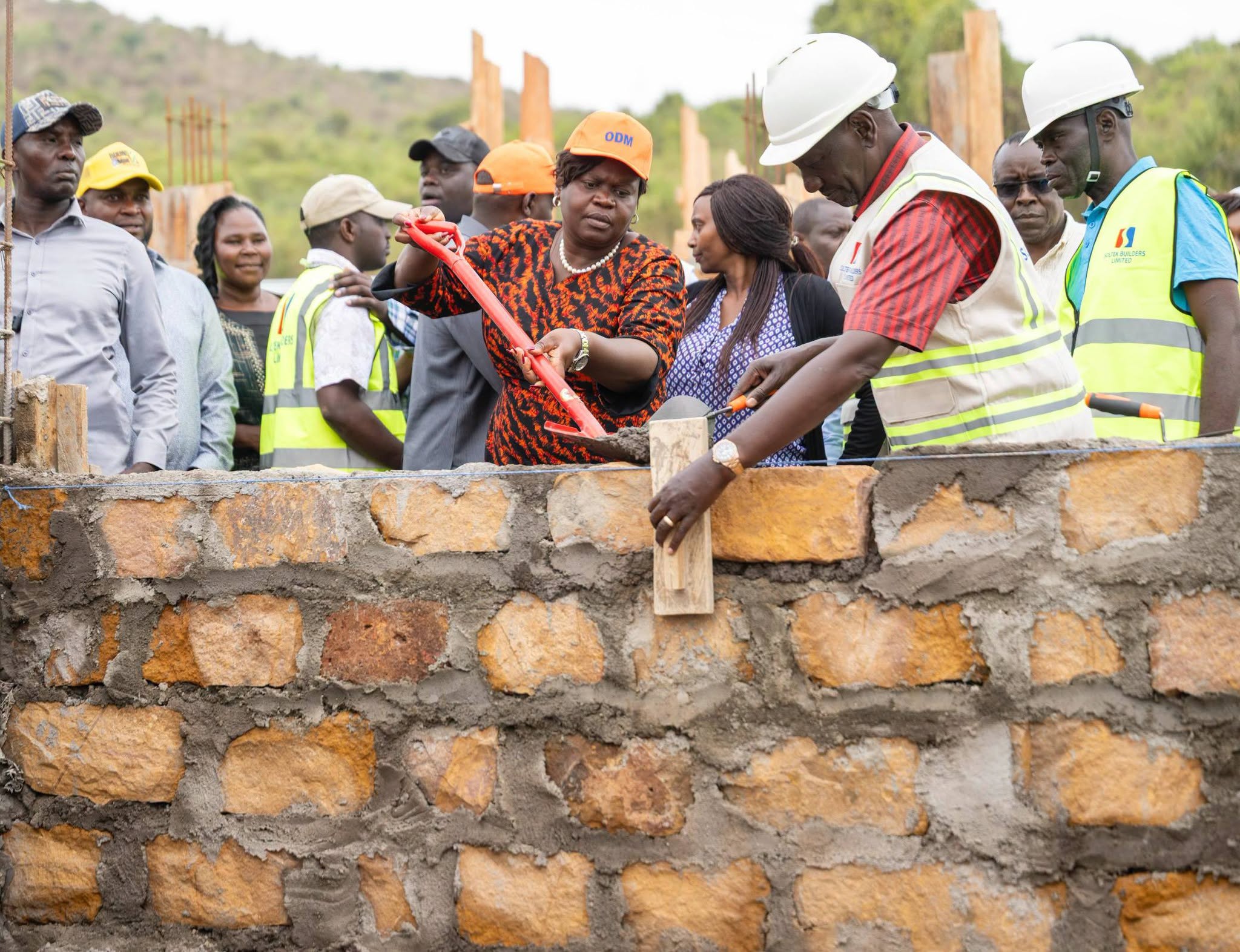
President William Ruto’s BETA working tour across the South Rift and Nyanza in September 2026 brought into focus a vast development portfolio spanning Bomet, Kericho, Kisumu, Siaya, Migori and Homa Bay counties. From roads opening productive areas and electricity reaching households to new homes, modern markets, water and sanitation systems, healthcare facilities and infrastructure supporting enterprise, the tour showcased public investments designed around the everyday needs and livelihoods of communities.
The South Rift leg began in Bomet on September 9, 2026, before proceeding through Kericho, while the four-day Nyanza leg ran from September 14 to 17, covering Kisumu, Siaya, Migori and Homa Bay. Across the six counties, President Ruto commissioned completed facilities, launched new projects and inspected ongoing works under the Bottom-Up Economic Transformation Agenda, providing a broad picture of the infrastructure investments taking shape across the two regions.
The financial commitments demonstrate the scale of the development pipeline.
- KES 173.8 billion represents the documented investment portfolio across Kisumu, Siaya, Migori and Homa Bay, covering roads, housing, water and sanitation, electricity, markets, healthcare, education, agriculture, fisheries and other infrastructure serving communities across the four Nyanza counties.
- KES 22 billion has been committed to the construction and upgrading of more than 300 kilometres of roads across Kericho County, creating an extensive transport programme alongside investments in electricity, affordable housing, healthcare, education, markets, sports facilities and industrial development.
- KES 19 billion has been allocated to 11 roads covering approximately 380 kilometres across Bomet County, forming part of a development programme that also encompasses electricity connectivity, water and sanitation, affordable housing, modern markets, healthcare and other public infrastructure.
These figures represent investments taking shape in places where people live, work, farm, trade and build businesses. The road programmes serve agricultural communities moving tea, milk, vegetables, livestock, fish and other produce to collection points, processors and markets. Electricity investments are extending power to households and enterprises. Water and sanitation projects are strengthening essential services in growing towns, while housing developments are creating homes and generating work across the construction value chain.
Modern markets connect the investment programme directly to traders and micro, small and medium enterprises whose daily businesses support household incomes. Healthcare and education projects strengthen access to services and professional training, while industrial and productive infrastructure creates platforms for agro processing, manufacturing, digital services and other economic activities capable of supporting employment and enterprise.
The Lake Victoria counties add another important economic dimension through fisheries, agriculture, tourism, transport and cross-county trade. Infrastructure reaching fishing communities and lakeside towns supports the movement, preservation, processing and sale of fish and other products, while improved roads connect these communities to markets and commercial centres across the region.
The South Rift carries its own powerful production story through tea, dairy farming, livestock, horticulture and other agricultural activities that sustain thousands of households. Roads, electricity, markets, water and productive infrastructure provide the physical connections required to move agricultural output, support processing and strengthen commercial activity around farming communities.
Taken together, the investments highlighted during the tour present a development programme rooted in the practical requirements of households and productive sectors. Roads connect people and goods, electricity powers homes and businesses, water sustains communities and institutions, markets provide spaces for trade, housing accommodates families, healthcare facilities serve patients, and productive infrastructure creates room for businesses and employment.
The billions of shillings committed across the counties visited will ultimately be reflected in the infrastructure that citizens can see, access and use in their daily lives. The county-by-county projects provide the clearest picture of where that investment is going, beginning with the South Rift before following the President’s working tour into the four Nyanza counties.
Kisumu and Siaya Anchor Major Infrastructure Investment Across the Lake Victoria Economic Basin
President William Ruto’s Nyanza working tour opened in Kisumu with an extensive development programme covering water and sanitation, roads, housing, markets, student accommodation, aviation and security infrastructure. The programme subsequently moved into Siaya, where major road projects, water infrastructure and investments supporting the Lake Victoria economy formed a substantial part of the President’s itinerary. The projects place essential infrastructure within communities whose livelihoods are anchored in agriculture, fisheries, trade, manufacturing, transport, education and small enterprise.
Kisumu occupies a strategic position within the Lake Victoria Basin as a commercial, administrative, transport, healthcare and education centre. Sustaining its growth requires investment in the infrastructure that supports households, businesses, industries and public institutions. The projects launched, commissioned and inspected during the tour address these requirements at several levels, ranging from basic water and sanitation services to major transport corridors connecting Kisumu with surrounding agricultural and industrial areas.
- KES 8.4 billion Lake Victoria Water and Sanitation Project expands water supply and sewerage infrastructure in Kisumu.
President Ruto launched the KES 8.4 billion Lake Victoria Water and Sanitation Project at Nyamasaria, placing water security and wastewater management among the principal infrastructure investments undertaken during the Kisumu tour. The programme is designed to expand access to reliable water and increase sewerage coverage across Kisumu as the city continues to accommodate new residential developments, businesses, educational institutions, healthcare facilities and public infrastructure.
The project includes significant investment in sewerage infrastructure at Nyamasaria and expansion of the systems required to collect, convey and treat wastewater. Reliable sanitation infrastructure carries direct implications for public health, environmental protection and orderly urban development. Growing settlements require adequate sewer networks and treatment facilities capable of handling increasing volumes of wastewater, particularly in densely populated residential and commercial areas.
Water supply carries an equally important economic function. Households depend on reliable water for daily needs, healthcare facilities require uninterrupted supply to maintain essential services, and businesses require water for commercial and industrial operations. Expanded distribution infrastructure creates capacity for existing communities and planned developments to access dependable services. The KES 8.4 billion investment consequently strengthens one of the fundamental systems supporting Kisumu’s continued physical and economic development.
- KES 23 billion road programme targets eight roads covering approximately 270 kilometres across Kisumu County.
Transport infrastructure formed a substantial component of the Kisumu programme, with KES 23 billion committed to eight roads covering approximately 270 kilometres. The investment addresses connectivity across communities, agricultural areas, industrial centres and trading zones whose economic activities depend on efficient movement of people, raw materials, agricultural produce and finished goods.
Kisumu serves as an important market for agricultural produce originating within the county and surrounding areas. Farmers moving produce into markets require dependable transport corridors, manufacturers need efficient routes for supplies and distribution, and public transport operators depend on roads capable of sustaining regular movement between population centres. Road construction also improves access to schools, healthcare facilities and government services, giving the investment a direct social and economic impact within the communities served.
The 270 kilometre programme also supports the integration of rural production areas with Kisumu’s established commercial infrastructure. Better connections between farms, trading centres, processing facilities and urban markets can reduce logistical difficulties and support reliable movement throughout agricultural value chains. Construction activity associated with the programme also creates demand for labour, materials, transport and services during implementation.
- The Kisumu, Chemelil, Muhoroni and Kipsitet corridor receives major investment to strengthen agricultural and industrial connectivity.
President Ruto inspected works along the Kisumu, Chemelil, Muhoroni and Kipsitet corridor, where a major road upgrade valued at approximately KES 15.7 billion is being implemented in phases. The corridor serves communities associated with agriculture, sugar production, manufacturing and trade and provides an important transport connection between Kisumu and economic centres towards the South Rift.
Chemelil and Muhoroni sit within one of Kenya’s established sugar producing areas. Sugarcane transportation requires roads capable of supporting frequent movement between farms and processing facilities, and manufacturing operations depend on reliable transport for machinery, inputs, employees and finished products. Improvements along this corridor provide infrastructure supporting these productive activities and strengthen access to Kisumu’s commercial and transport networks.
Communities situated along the route also gain improved access to public transport, healthcare, education and trading centres. The investment consequently serves industrial establishments, farms, businesses and households along the corridor, creating a transport link that supports several components of the local economy.
- The 12 kilometre Rabuor Chiga road strengthens connectivity between productive communities and Kisumu’s commercial network.
The upgrading of the approximately 12 kilometre Rabuor Chiga road to bitumen standard forms part of the road investment programme undertaken during the Kisumu tour. The route serves communities where agriculture, trade and small enterprise provide important sources of household income and connects these settlements to established transport networks leading into Kisumu.
Improved road conditions support movement of produce from farms to trading centres and allow traders to transport merchandise with greater reliability. Public transport operators also gain a dependable route serving residents travelling to schools, health facilities, workplaces and commercial centres. The road consequently provides essential connectivity between local economic activity and the larger market represented by Kisumu City.
The project also demonstrates the importance of feeder and connecting roads within a countywide transport system. Major highways depend on functional local networks capable of bringing passengers and commodities from villages, farms and smaller trading centres into the principal corridors. The Rabuor Chiga road strengthens that connection within the areas it serves.
- Investment at Kisumu International Airport supports aviation connectivity across the Lake Victoria region.
The President inspected infrastructure at Kisumu International Airport during the tour, including facilities associated with air traffic management and airport operations. The airport is a critical transport asset serving Kisumu and communities across western Kenya and provides air connections supporting business travel, tourism, government operations and movement of passengers.
Aviation infrastructure has particular relevance to Kisumu’s position within the Lake Victoria economy. Tourism establishments, businesses, conferences, educational institutions and healthcare facilities attract travellers from different parts of the country and the region. Efficient airport infrastructure strengthens Kisumu’s capacity to accommodate this movement and supports commercial activities associated with passenger and air transport services.
Airport development also complements the road infrastructure being constructed across the county. Roads provide access between communities and the airport, and aviation services connect the city to national and regional destinations. The resulting transport network supports mobility required by businesses, public institutions and residents.
- Kisumu West Sub County Police Headquarters expands security infrastructure serving growing communities.
President Ruto commissioned the Kisumu West Sub County Police Headquarters as part of the public infrastructure programme undertaken during the tour. The facility provides an operational and administrative base for security services within an area experiencing continued residential and commercial development.
Population growth and expansion of economic activity generate corresponding requirements for security services. New housing developments, markets, transport corridors and commercial establishments require policing infrastructure capable of supporting public safety, crime prevention and emergency response. Investment in permanent police facilities provides officers with the physical infrastructure required to coordinate these responsibilities and serve surrounding communities.
Siaya
President Ruto’s tour proceeded into Siaya with road construction occupying a central position in the county’s development programme. Siaya contains agricultural communities, fishing centres, growing towns and numerous settlements distributed across a wide geographical area. Reliable roads provide the connections required to move agricultural produce, fish, merchandise and passengers between these areas and established markets.
- KES 32 billion road programme targets approximately 400 kilometres across Siaya County.
The Government has committed KES 32 billion towards construction and improvement of approximately 400 kilometres of roads across Siaya County. The programme represents a substantial expansion of transport infrastructure serving communities across several constituencies and creates new connections between production areas, markets, public institutions and major transport corridors.
Agriculture remains an important source of livelihoods across Siaya, making transport infrastructure essential to movement of produce and agricultural inputs. Fishing communities situated along Lake Victoria also depend on reliable roads because fish must move efficiently from landing sites to markets, storage facilities and processing centres. Traders, transport operators and small enterprises require the same infrastructure to reach customers and maintain regular movement of merchandise.
The scale of the 400 kilometre programme gives it countywide economic relevance. Roads reaching several constituencies create interconnected routes that allow people and goods to move between rural settlements, towns and regional transport corridors. The investment also creates construction activity across the county, generating demand for labour, materials, machinery, transport and associated services during implementation.
- KES 1.9 billion Kalandini Ka Elija Road opens a 31.8 kilometre transport corridor in Rarieda.
President Ruto launched construction of the 31.8 kilometre Kalandini Ka Elija Road in Rarieda at a cost of KES 1.9 billion. Upgrading the route to bitumen standard provides improved transport infrastructure to communities whose economic activities include agriculture, fishing, retail trade and passenger transport.
The road strengthens connections between settlements and commercial centres, allowing farmers and traders to move goods within the constituency and access markets across the county. Residents also gain improved access to schools, health facilities and government services located along connected routes.
Rarieda’s proximity to Lake Victoria gives transport infrastructure an additional role in supporting fisheries and lakeshore commerce. Roads serving fishing areas provide the terrestrial connection required to move fish and related products from beaches into established market networks. Investment in these routes consequently supports the physical infrastructure required by households and businesses participating in the lake economy.
- KES 4.6 billion road package covers 74.8 kilometres across Bondo, Alego Usonga and Gem.
A KES 4.6 billion investment covering approximately 74.8 kilometres forms another major component of Siaya’s road programme. The package includes the Kodiaga Rabango Awelo Ogam Nyamonye, Ogam Usenge, Dudi Mutumbu Kodiaga and Bondo Technical Training Institute access roads, creating an extensive network across Bondo, Alego Usonga and Gem.
These routes connect settlements with trading centres and important economic areas around Usenge and Lake Kanyaboli. Improved road access supports agriculture, fisheries, tourism, trade and movement to educational institutions. Communities situated along these routes also gain stronger connections to Siaya’s principal transport corridors.
Lake Kanyaboli and the surrounding ecosystem carry economic potential in fisheries, conservation and tourism. Usenge is closely connected to fishing and commerce along Lake Victoria. Transport infrastructure linking these areas with inland population centres creates the physical connectivity required to support movement of visitors, products, services and investment.
- The 20 kilometre Sihay Bar Ober Sega Road strengthens the transport network serving Ugenya.
Construction of the approximately 20 kilometre Sihay Bar Ober Sega Road in Ugenya forms part of the broader programme to expand bitumen roads across Siaya. The project strengthens movement between settlements and established transport routes serving the constituency.
Communities along the corridor depend on roads for agricultural transport, public service access and everyday commercial activity. Improved connectivity allows farmers to transport produce, traders to move merchandise and residents to access markets and public institutions with greater reliability. The road also adds another functional connection to the countywide network created under the 400 kilometre investment programme.
- Dhogoye Bridge and the Kisian Usenge Osieko corridor strengthen access to Lake Victoria’s fishing and trading communities.
President Ruto inspected Dhogoye Bridge and associated road works in Bondo during the Siaya tour. Development of the Kisian Usenge Osieko corridor and the planned upgrading of the Bondo Usenge Osieko road provide improved connections to communities situated along the Lake Victoria shoreline.
The corridor serves areas where fisheries form an important component of local livelihoods. Fish landed at beaches must reach consumers, markets and processing facilities quickly, creating a direct relationship between transport infrastructure and the commercial performance of the fisheries value chain. Reliable roads also support movement of fishing equipment, fuel, ice, packaging materials and other inputs required by enterprises operating around landing sites.
Lakeshore communities also participate in agriculture, retail trade, passenger transport and tourism. Road and bridge infrastructure provides these activities with access to Bondo, Kisumu and other commercial centres and strengthens the movement of people and commodities along the shoreline.
- The planned 500 kilometre Lake Victoria Ring Road creates a transport corridor linking counties around Kenya’s section of the lake.
The planned Lake Victoria Ring Road emerged as one of the major regional infrastructure projects highlighted during the tour. Construction is scheduled to commence in November 2026, with approximately 500 kilometres planned from Busia through Siaya, Kisumu and Homa Bay to Muhuru Bay in Migori.
The corridor follows the economic geography of Kenya’s Lake Victoria shoreline, where fishing beaches, farms, towns, markets, tourism facilities and processing centres are spread across several counties. Connecting these areas creates a continuous transport network capable of supporting movement of fish, agricultural commodities, passengers and commercial goods throughout the basin.
Fisheries stand to benefit from improved links between landing sites, cold storage facilities, processing centres and consumer markets. Agricultural communities gain additional routes for moving produce into urban centres. Tourism operators gain road connections to attractions and hospitality facilities around the lake. Traders and transport businesses gain access to a wider network of commercial centres.
The project also creates infrastructure capable of supporting future investment along the corridor. Fish processing facilities, cold chains, markets, logistics centres, accommodation facilities and commercial developments require dependable transport connections to function effectively. The Ring Road provides a physical framework around which such investments can be developed as implementation proceeds.
- Siaya’s transport programme supports investment in fisheries and the wider Lake Victoria economy.
The roads being constructed across Siaya connect directly with an economic programme that recognises fisheries as a major source of employment, food and household income. Development around Usenge and other lakeshore centres includes infrastructure intended to support fish landing, marketing and movement of products into established commercial networks.
A productive fisheries sector requires an integrated chain beginning at the lake and continuing through landing, handling, cold storage, processing, transportation and marketing. Infrastructure weaknesses at any point can affect product quality and commercial returns. Roads, bridges, piers, electricity, water and organised markets consequently form part of the physical system required to strengthen economic activity around Lake Victoria.
The investments undertaken in Kisumu and Siaya establish a substantial infrastructure footprint across the northern section of the Lake Victoria Basin. Kisumu’s KES 8.4 billion water and sanitation project strengthens essential urban services, and the KES 23 billion road programme targets approximately 270 kilometres of transport infrastructure. Siaya’s KES 32 billion programme targets approximately 400 kilometres of roads connecting agricultural communities, fishing centres, towns and markets.
The planned 500 kilometre Lake Victoria Ring Road provides an important regional connection linking these investments with Homa Bay, Migori and Busia. The President’s tour subsequently proceeded into Migori and Homa Bay, where roads, markets, electricity, healthcare, water infrastructure, fisheries and other investments placed the economic development of the Lake Victoria shoreline firmly within the national infrastructure programme.
Migori and Homa Bay Deepen Investment in Roads, Markets, Water, Energy and the Lake Economy
President William Ruto’s Nyanza working tour proceeded into Migori and concluded in Homa Bay with a development programme centred on roads, electricity, water and sanitation, markets, housing and infrastructure supporting communities around Lake Victoria. Migori’s programme placed particular emphasis on transport connectivity and electricity access, with investments also directed towards urban water systems and the productive sectors that sustain livelihoods across the county. Homa Bay brought markets, housing, roads and lakeshore economic infrastructure into focus as the President concluded the Nyanza itinerary.
The projects undertaken across the two counties address infrastructure requirements within rural communities, growing towns, agricultural production areas and fishing settlements. Their implementation also creates connections between local economic activity and the wider Lake Victoria transport and commercial network.
Migori
- KES 2.11 billion Posta Nyikendo St Philgona Nyarongi Macalder Osiri Road opens a 32 kilometre corridor across Suna East and neighbouring communities.
President Ruto launched construction and upgrading of the approximately 32 kilometre Posta Nyikendo St Philgona Nyarongi Macalder Osiri road at a cost of KES 2.11 billion. The project forms part of the Government’s road investment programme in Migori and serves communities whose livelihoods depend on agriculture, mining, trade, transport and access to the county’s principal commercial centres.
The corridor provides an important connection towards Macalder, an area associated with agriculture, mining activity and communities extending towards the Lake Victoria economic zone. Upgrading the road creates a dependable transport route for residents, traders and farmers moving between settlements and established markets. Agricultural produce, merchandise and inputs require functional road networks to move efficiently across the county, giving the project direct relevance to household and commercial activity along the route.
The Government also announced plans to connect the road network towards Sibuoche, creating additional connectivity between communities served by separate road corridors. Development of these connections strengthens the county road network and allows economic activity in smaller settlements to feed into larger commercial centres.
- The Kanyawanga Kwoyo Madiaba Dede Odongo Oher Rapogi Awendo Road strengthens a major agricultural corridor.
The President also launched works on the approximately 32 kilometre Kanyawanga Kwoyo Madiaba Dede Odongo Oher Rapogi Awendo road. The corridor serves communities in an area where agriculture, sugarcane production, retail trade and passenger transport contribute significantly to local livelihoods.
Awendo occupies an important position within Migori’s sugar economy. Road infrastructure serving the surrounding agricultural areas supports movement of sugarcane from farms to processing facilities and enables farmers to access inputs, markets and services. Efficient transport also supports businesses operating within Awendo and the smaller trading centres situated along the route.
The road provides communities with improved connections to schools, healthcare facilities and commercial centres. Public transport operators, traders and agricultural producers depend on these connections every day, giving the project an economic role across several sectors of the local economy.
- The Stella Sibuoche Gogo Oyani corridor expands connectivity across Uriri and surrounding agricultural communities.
President Ruto inspected the Stella Sibuoche Gogo road works in Uriri and announced that construction would be completed under the ongoing programme. Plans were also outlined to strengthen the connection from Sibuoche towards Macalder, creating a wider road network linking agricultural communities and trading centres.
Uriri supports substantial agricultural activity, including sugarcane production, food crops and livestock. Road connectivity influences the movement of produce from farms, access to agricultural inputs and the ability of residents to reach commercial centres. Completion of the corridor provides physical infrastructure required by farmers, traders, transport operators and households throughout the areas it serves.
Linking Sibuoche with Macalder also strengthens connections towards communities associated with mining, fisheries and lakeshore commerce. The resulting network creates routes connecting inland production areas with economic centres towards Lake Victoria and Migori town.
- KES 124 million has been committed to the reconstruction of Migori Bridge as part of the improvement of the county headquarters’ transport network.
Migori town received a specific commitment of KES 124 million for reconstruction of Migori Bridge. The bridge forms part of the transport infrastructure serving the county headquarters and carries traffic moving between residential areas, businesses, public institutions and connecting roads.
Urban bridges are critical points within road networks because disruption at a single crossing can affect movement across an entire town. Reconstruction of Migori Bridge will strengthen the route serving motorists, public transport vehicles, pedestrians and commercial traffic using the county headquarters.
The Government also announced plans for reconstruction of the Migori Bypass and tarmacking of approximately five kilometres of roads within Migori town. These works are intended to improve circulation within the urban area and provide additional capacity as residential and commercial activity expands.
- KES 700 million investment in Migori water and sewerage infrastructure addresses the requirements of an expanding urban population.
The Government is investing approximately KES 700 million in water and sewerage projects serving Migori town. Expansion of these systems is essential to residential development, public health, commercial activity and environmental management within the county headquarters.
Reliable water supply supports households, hospitals, schools, hotels, restaurants and businesses operating throughout the town. Sewerage infrastructure provides the systems required to collect and manage wastewater generated by a growing population. Investment in these services creates capacity for existing neighbourhoods and planned developments to operate within an organised urban environment.
The water and sewerage programme also complements investments in roads and housing. Urban development requires coordinated provision of transport, water, drainage, sanitation and other essential services. Implementation of these projects gives Migori town infrastructure capable of supporting continued residential and commercial growth.
- Masaba power infrastructure and additional Last Mile investment expand electricity access across Migori.
Energy infrastructure formed an important component of the Migori itinerary, with the President inspecting the Masaba power substation in Kuria West. The Government has also outlined additional investment in Last Mile electricity connectivity intended to connect thousands of households across the county.
Electricity access creates productive capacity within homes, farms and trading centres. Small businesses require power for refrigeration, welding, milling, digital services, hairdressing, retail operations and numerous other income generating activities. Schools and health facilities also depend on reliable electricity to operate equipment and deliver essential services.
Expansion of the distribution network consequently creates infrastructure for household use and economic activity. Communities connected to electricity gain opportunities to establish enterprises requiring powered equipment, and existing businesses gain capacity to expand their operations.
- Migori’s sugar economy remains closely connected to the infrastructure programme.
The President’s engagements in Awendo placed the sugar sector within the wider development conversation. South Nyanza Sugar Company remains a major economic institution for farmers and communities whose incomes depend on sugarcane production, transport and processing.
Road development across Awendo, Uriri and surrounding agricultural areas provides infrastructure serving this value chain. Sugarcane requires regular transportation from farms to milling facilities, agricultural inputs must reach growers, and workers and businesses depend on transport connections around the industry.
Investment in roads, electricity and water consequently supports the physical environment within which agricultural production and agro processing take place. The county’s development programme creates infrastructure that can serve farms, factories, traders and households participating in these productive activities.
Homa Bay
President Ruto concluded the Nyanza leg in Homa Bay, where modern markets occupied a prominent position in the day’s programme. Road development, housing, water, education and infrastructure associated with the Lake Victoria economy also form part of the Government’s investment portfolio in the county.
- Approximately KES 3.7 billion is being invested in 21 modern markets across Homa Bay County.
The Government is constructing 21 modern markets across Homa Bay at an investment estimated at approximately KES 3.7 billion. The programme provides purpose built commercial spaces for traders operating across towns and trading centres within the county.
Markets occupy a central position in local economic activity because they connect producers, wholesalers, retailers and consumers. Agricultural produce from farms, fish from Lake Victoria and manufactured goods all pass through trading centres where thousands of small enterprises generate household incomes.
Modern market infrastructure provides organised trading spaces together with sanitation, water, drainage and facilities required for daily commercial activity. Development of these facilities also creates permanent economic centres capable of accommodating growing numbers of traders as surrounding settlements expand.
- Kendu Bay Economic Stimulus Programme Market provides organised trading space for approximately 300 traders.
President Ruto officially opened and handed over the Kendu Bay Economic Stimulus Programme Market during the Homa Bay tour. The facility has capacity for approximately 300 traders, including vegetable vendors and other small businesses operating within Kendu Bay.
Kendu Bay serves communities within Karachuonyo and functions as an important commercial centre along the Lake Victoria corridor. The new market provides permanent infrastructure where traders can conduct business within an organised environment supported by essential facilities.
The investment also strengthens the town’s role as a collection and distribution point for goods moving between rural communities, fishing areas and established urban markets. Traders gain dedicated operating space, consumers gain an organised commercial facility, and surrounding enterprises benefit from economic activity generated around the market.
- Misambi Modern Market creates new commercial infrastructure for approximately 200 traders in Kabondo Kasipul.
The President inspected construction of Misambi Modern Market in Kabondo Kasipul, where the facility is being developed to accommodate approximately 200 traders. Completion is scheduled for November 2026.
Kabondo Kasipul supports substantial agricultural activity, making organised markets important to movement of produce from farms into local and regional distribution networks. Traders require facilities where produce can be assembled, displayed and sold within an environment equipped with sanitation and supporting infrastructure.
The market also provides a permanent commercial asset around which transport and other services can develop. Regular customer traffic creates opportunities for businesses operating around the facility and strengthens Misambi’s function as a local trading centre.
- Kijebi Modern Market strengthens organised commerce in Suba South.
President Ruto also opened Kijebi Modern Market in Suba South as part of the countywide market construction programme. Suba South contains communities whose economic activities include fishing, agriculture, livestock keeping and trade, creating demand for organised facilities where goods can be exchanged and distributed.
The market provides infrastructure serving traders and consumers within the surrounding area and creates a designated commercial centre capable of supporting regular economic activity. Its location within a constituency closely connected to Lake Victoria also gives the facility relevance to enterprises participating in fisheries and agricultural trade.
Road connectivity serving these markets remains equally important because produce and merchandise must move between farms, beaches, trading centres and consumers. Market development and road construction consequently operate within the same local economic system.
- KES 27 billion investment in affordable housing, markets and student accommodation expands Homa Bay’s construction and urban development programme.
The Government has outlined approximately KES 27 billion in investment covering affordable housing, modern markets and accommodation for students attending universities, technical institutions and Kenya Medical Training Colleges within Homa Bay.
Housing construction creates demand across an extensive supply chain involving cement, steel, roofing materials, electrical equipment, plumbing products, transport, professional services and labour. The programme also provides opportunities for artisans, contractors and small enterprises participating in construction and finishing works.
Student accommodation addresses infrastructure requirements created by expanding tertiary education. Purpose built hostels provide residential capacity around learning institutions and support commercial activity within surrounding towns. The combined programme creates physical assets serving households, traders and students across different parts of the county.
- Homa Bay’s road programme connects agricultural areas, fishing communities and growing commercial centres.
Road investment across Homa Bay forms an important component of the county’s development portfolio, with projects serving communities in Rachuonyo, Rangwe, Ndhiwa, Suba and other parts of the county. These routes connect agricultural production areas, fishing beaches and trading centres to Homa Bay town and other established markets.
The county’s economic geography makes these connections particularly important. Agricultural production is distributed across inland communities, and fisheries are concentrated around Lake Victoria and its islands. Goods produced in these areas require road networks capable of moving them towards markets and processing facilities.
Improved roads also support public transport and access to healthcare, schools and government services. The resulting network provides mobility required by households and businesses and creates transport links between productive communities and commercial centres.
- Lake Victoria infrastructure places fisheries, transport and lakeshore enterprise within Homa Bay’s development programme.
Homa Bay possesses one of Kenya’s extensive Lake Victoria shorelines and supports thousands of households involved in fishing, fish trading, transport, hospitality and associated businesses. Infrastructure serving the lake economy consequently forms an important component of the county’s development agenda.
Fish landing facilities, roads, electricity, water, cold storage and organised markets are all required within an efficient fisheries value chain. Fish landed at beaches requires proper handling and timely transportation to preserve quality and increase the value reaching producers and traders. Electricity supports refrigeration and cold storage, and road infrastructure provides connections to processing centres and consumer markets.
Development of these systems creates an environment capable of supporting additional investment in fish processing, logistics, tourism, hospitality and lake transport. Homa Bay’s position along the planned Lake Victoria Ring Road also places the county within a transport corridor designed to connect communities from Busia through Siaya, Kisumu and Homa Bay to Muhuru Bay in Migori.
The Migori and Homa Bay legs completed a Nyanza tour characterised by substantial investment in the infrastructure supporting everyday economic activity. Roads connect farms, factories, fishing beaches and markets. Electricity provides energy for homes and enterprises. Water and sanitation systems support expanding towns. Modern markets provide permanent commercial spaces, and housing projects generate construction activity while expanding residential infrastructure.
Across Kisumu, Siaya, Migori and Homa Bay, these investments form an interconnected development programme shaped around the economic activities of the Lake Victoria Basin and the infrastructure requirements of its communities.
A Development Programme Built Around Production, Connectivity and Essential Public Infrastructure
The President’s working tour across the South Rift and Nyanza brought together projects operating at different stages of implementation and serving distinct economic needs. Roads, water systems, electricity connections, markets, housing, healthcare facilities, educational institutions, industrial infrastructure and investments around Lake Victoria formed the core of the programme. Their economic relevance rests in the activities these assets are designed to support once construction is completed and services become fully operational.
The projects also reveal a development programme organised around several interconnected requirements. Agricultural production requires roads, electricity, water, markets and processing capacity. Growing towns require housing, sewerage systems, water distribution, security infrastructure and organised commercial spaces. Fisheries require landing infrastructure, electricity, cold chains, roads and markets. Industrial development requires reliable transport, energy, serviced land and skilled human capital. The projects launched, commissioned and inspected during the tour place substantial public investment within these systems.
- Road construction creates the physical network linking farms, factories, fishing communities, markets and towns.
Transport infrastructure accounted for some of the largest commitments highlighted during the tour. Bomet has a KES 19 billion programme covering 11 roads and approximately 380 kilometres. Kisumu has KES 23 billion committed to eight roads covering approximately 270 kilometres. Siaya has a KES 32 billion programme targeting approximately 400 kilometres. Individual projects in Kericho and Migori add significant investments to this road construction pipeline.
The economic function of these roads is visible in the productive areas they serve. Roads around Chemelil and Muhoroni support communities connected to sugar production and manufacturing. Roads around Awendo and Uriri serve agricultural areas linked to the sugar value chain. The routes under development in Bomet and Kericho traverse communities producing tea, milk, livestock, vegetables and other agricultural commodities. Roads in Siaya, Migori and Homa Bay provide connections to fishing beaches, agricultural areas and trading centres around Lake Victoria.
The planned 500 kilometre Lake Victoria Ring Road gives the road programme a regional dimension. Its proposed route from Busia through Siaya, Kisumu and Homa Bay to Muhuru Bay in Migori will connect communities and economic centres distributed along Kenya’s Lake Victoria shoreline. Construction is scheduled to commence in November 2026, placing the project among the major infrastructure undertakings expected to shape transport around the basin.
A functional road network also supports investments made in markets, housing, healthcare and education. Traders need routes to transport merchandise into markets. Hospitals require reliable access for patients, healthcare workers, medicines and supplies. Housing developments require connections to workplaces and commercial centres. Educational institutions depend on transport networks serving students, staff and surrounding communities. Road construction consequently provides the physical connectivity required to support many of the other projects featured during the tour.
- Modern markets place permanent commercial infrastructure directly within local economies.
Market construction emerged prominently in Bomet, Kisumu and Homa Bay. Bomet is developing 11 modern markets at a combined cost of KES 1.7 billion. Kisumu’s wider KES 44 billion housing and urban infrastructure programme includes 20 markets. Homa Bay has 21 modern markets under development at an estimated KES 3.7 billion.
These facilities place investment directly within an economic segment where thousands of households earn their incomes. Farmers sell vegetables, cereals, fruits, livestock products and other commodities through local markets. Fish traders depend on organised commercial spaces to reach consumers. Retailers use the same centres to distribute household goods, clothing and manufactured products. Transport operators, food vendors and service businesses also earn income from commercial activity generated around established markets.
Kendu Bay Economic Stimulus Programme Market, with capacity for approximately 300 traders, provides an example of this investment at community level. Misambi Modern Market is being developed to accommodate approximately 200 traders, and Kijebi Modern Market provides additional organised trading infrastructure in Suba South. Kapkwen and Chebunyo form part of Bomet’s market development programme.
Investment in markets also supports sanitation, water access, waste management and organisation of trading activities. These facilities create permanent assets serving producers, traders and consumers and provide commercial centres around which additional enterprises can establish operations.
- Electricity investment expands productive capacity within households, farms and trading centres.
The Last Mile Electricity Connectivity programme formed another important component of the South Rift projects. Bomet has KES 2.8 billion allocated to connect approximately 25,000 households, and Kericho has a KES 1.6 billion programme targeting 16,371 households. Energy infrastructure also featured during the Migori leg, including the Masaba power substation and additional household connectivity initiatives.
Electricity access has immediate relevance to household welfare and economic activity. Small enterprises use electricity for refrigeration, welding, milling, tailoring, digital services, salons, workshops and retail operations. Agricultural businesses require power for activities such as milk cooling, irrigation, processing and storage. Healthcare facilities depend on electricity for diagnostic equipment, refrigeration of medical supplies, lighting and emergency services.
Electricity also becomes increasingly important within the Lake Victoria fisheries economy. Cold storage and refrigeration are essential to preservation of fish after landing, particularly where products must travel significant distances before reaching consumers. Expansion of electricity infrastructure can support investment in cold rooms, ice production and processing facilities around fishing centres, strengthening the infrastructure available throughout the fisheries value chain.
- Water and sanitation investment provides essential infrastructure for growing towns and productive communities.
The KES 8.4 billion Lake Victoria Water and Sanitation Project in Kisumu represents one of the largest water investments highlighted during the tour. Bomet’s KES 1.7 billion water project has been completed, with an additional KES 600 million planned for distribution expansion and sewerage works. Migori is receiving approximately KES 700 million in water and sewerage investment.
These projects address a fundamental requirement created by urban growth. Housing developments, hospitals, markets, educational institutions, hotels and businesses all require dependable water supply. Growing populations also generate increasing volumes of wastewater, requiring sewer networks and treatment systems capable of protecting public health and the environment.
Kisumu presents a particularly important case because extensive housing, market and student accommodation investments are being developed within the city. Water and sewerage infrastructure provides capacity required to serve these developments and surrounding communities. Migori’s water and sewerage programme performs a similar function within the county headquarters, where residential and commercial growth is increasing demand for essential urban services.
Water investment also supports economic production outside major towns. Agriculture, livestock keeping, food processing, markets and healthcare services all depend on reliable water. Expansion of water infrastructure consequently supports households and productive activities within the areas served.
- Affordable housing programmes are creating residential infrastructure and extensive construction activity.
Housing formed a substantial component of the tour. President Ruto handed over 220 completed affordable housing units in Bomet, where an additional KES 5 billion programme is planned to deliver 2,000 units. Kericho has 2,280 units valued at KES 5.9 billion planned at Chelimo Kevogo. Kisumu’s KES 44 billion programme incorporates 12,000 housing units alongside markets and student accommodation. Homa Bay also has a multibillion shilling programme covering housing, markets and student accommodation.
Construction of housing activates a wide supply chain. Cement, steel, sand, ballast, roofing materials, doors, windows, electrical fittings, plumbing equipment and finishing products are required throughout implementation. Contractors need engineers, architects, quantity surveyors, electricians, plumbers, masons, carpenters, machine operators and general labourers. Transporters and suppliers also participate in the movement of materials and equipment.
Completed developments create additional demand for shops, transport, schools, healthcare services, water, electricity and other urban amenities. Housing programmes consequently interact directly with the roads, markets, water systems and electricity investments being implemented within the same counties.
- Healthcare and medical education investments expand infrastructure for treatment and training.
The commissioning of the Dr Joyce Laboso Mother and Child Hospital at Longisa placed maternal and child healthcare among the major social infrastructure investments featured during the South Rift tour. The facility provides specialised infrastructure supporting maternal services, child healthcare, theatre services, emergency care and inpatient and outpatient treatment.
Kericho’s KES 5.6 billion University of Kabianga School of Medicine and Health Sciences introduces another component through training of healthcare professionals. The first phase incorporates facilities for medicine, nursing, teaching, administration and digital learning.
Investment in medical education supports development of the workforce required by hospitals and other healthcare institutions. Universities and training facilities also generate surrounding economic activity through accommodation, transport, food services, retail and other services required by students and staff.
- Industrial and enterprise infrastructure in Kericho creates a platform for investment and employment.
Development of the Chelimo Special Economic Zone forms an important component of Kericho’s economic infrastructure programme. Approximately 800 acres have been secured around Chelimo Kevogo as part of the expansion of Kericho town and development of an investment zone expected to accommodate agro industry, pharmaceuticals, medical devices, biotechnology, light agricultural machinery and business process outsourcing.
The proposed business process outsourcing component is projected to support over 10,000 jobs once developed and operationalised. Its success will depend on supporting infrastructure, including electricity, telecommunications, roads, water and suitable commercial facilities.
Agro industrial investment carries particular relevance to Kericho because the county possesses an established agricultural production base. Processing creates additional commercial activity around commodities produced within surrounding communities and generates demand for logistics, packaging, technical services and other supporting businesses.
- Lake Victoria infrastructure provides a platform for fisheries, tourism, transport and lakeshore commerce.
The four Nyanza counties visited during the tour share an economic asset whose productive potential depends heavily on infrastructure. Lake Victoria supports fisheries, transport, tourism, hospitality and commerce and provides livelihoods to communities distributed across Kisumu, Siaya, Migori and Homa Bay.
Investment in roads serving fishing communities improves movement between beaches and markets. Electricity provides the energy required for refrigeration and cold storage. Water and sanitation improve conditions around markets and growing lakeshore settlements. Piers and landing facilities support movement on the lake, and organised markets provide commercial spaces where fish and other commodities can be traded.
The planned Lake Victoria Ring Road creates a physical connection between these investments. A road corridor running approximately 500 kilometres from Busia to Muhuru Bay can connect fishing communities with towns, markets, processing centres and tourism areas throughout the Kenyan section of the basin. Such connectivity provides infrastructure upon which businesses can establish cold storage facilities, processing plants, logistics services, accommodation establishments and other commercial ventures.
- Implementation will determine the economic value ultimately realised from the investment programme.
The working tour brought projects at several stages of development into public view. Some facilities were commissioned and handed over for use, some construction sites were inspected, some projects were formally launched, and other investments were announced for implementation. Maintaining these distinctions is essential because infrastructure begins delivering its intended public value when construction is completed, facilities become operational and services reach the communities for which they were designed.
Road projects require sustained financing and construction until the entire contracted sections become usable. Markets need completion, allocation to traders and effective management. Water projects require functional distribution networks that deliver water to households. Sewerage investments require operational collection and treatment systems. Electricity programmes must culminate in household and enterprise connections. Housing projects need completed units and supporting services. Industrial zones require serviced infrastructure and investors capable of establishing productive operations.
The scale of investment presented across Bomet, Kericho, Kisumu, Siaya, Migori and Homa Bay creates substantial implementation responsibilities for government agencies, contractors and institutions responsible for operating the completed assets. Timely delivery, construction quality, proper maintenance and effective management will shape the economic contribution of the projects over their operational lives.
President Ruto’s South Rift and Nyanza working tour ultimately placed the development programme directly within communities where infrastructure is expected to perform a practical economic function. Roads are being constructed along agricultural and commercial corridors. Markets are being developed where traders conduct daily business. Electricity connections are reaching households and enterprises. Water and sanitation systems are being expanded within growing towns. Housing is creating residential capacity and construction activity. Healthcare and education projects are strengthening social infrastructure, and investment around Lake Victoria is building physical connections across one of Kenya’s most important regional economies.
The projects now carry an implementation mandate measured in kilometres of completed roads, households connected to electricity and water, traders operating from completed markets, families occupying finished housing units, functioning healthcare facilities, operational sewerage systems, productive industrial investments and economic activity generated around the Lake Victoria Basin.
From Project Launches to Economic Assets, Delivery Now Becomes the Defining Assignment
The conclusion of President William Ruto’s working tour across the South Rift and Nyanza leaves behind an extensive portfolio of infrastructure projects at different stages of implementation. Bomet, Kericho, Kisumu, Siaya, Migori and Homa Bay now carry investments covering roads, electricity, water, sewerage, affordable housing, modern markets, healthcare, medical training, aviation, industrial infrastructure and the Lake Victoria economy.
The development programme is significant because many of the projects are located directly within productive economic corridors. Agricultural communities require roads to move produce. Traders require markets equipped with appropriate facilities. Manufacturers require dependable transport and electricity. Growing towns require water, sewerage, housing and security infrastructure. Fishing communities require roads, electricity, landing infrastructure, markets and cold chain facilities. Educational and healthcare institutions require buildings, utilities, transport connections and accommodation.
The task ahead is to translate the projects launched and inspected during the tour into functioning public assets that deliver these services.
- Completion of the road programme will determine the strength of the new economic connections being created across the six counties.
Hundreds of kilometres of roads are now contained within the programmes highlighted during the tour. Bomet’s KES 19 billion road investment, Kisumu’s KES 23 billion programme, Siaya’s KES 32 billion programme and the individual corridors under construction in Kericho and Migori represent substantial commitments to physical connectivity.
Their completion will create transport links serving tea, dairy, sugarcane, fisheries, horticulture, livestock, manufacturing and retail commerce. Farmers need reliable access between production areas and markets. Processing facilities need predictable movement of raw materials. Traders need efficient distribution routes. Public transport requires roads capable of sustaining regular movement between settlements and commercial centres.
The planned 500 kilometre Lake Victoria Ring Road carries a particularly important regional role because its route connects Busia, Siaya, Kisumu, Homa Bay and Migori. The project creates the prospect of a continuous economic corridor serving communities around Kenya’s section of Lake Victoria and linking numerous local road investments into a wider transport network.
- The Lake Victoria Basin is emerging as a major focus of integrated infrastructure investment.
Kisumu, Siaya, Migori and Homa Bay share an economic geography shaped substantially by Lake Victoria. Fisheries provide livelihoods to thousands of households, towns along the shoreline function as commercial centres, agricultural production supports local markets, and the lake provides opportunities in transport, tourism, hospitality and processing.
Infrastructure investment across the four counties is increasingly connecting these activities. Roads provide access to fishing beaches and agricultural communities. Markets create organised commercial spaces. Electricity can support refrigeration, ice production and processing. Water and sanitation infrastructure supports towns and trading centres. Housing accommodates growing urban populations, and transport investments connect production areas with consumers.
The development of this infrastructure provides the physical foundation required to increase economic activity around the lake. A fisherman landing a catch requires an efficient chain extending from handling and preservation to transportation and sale. A farmer requires access from the farm to an aggregation point, market or processing facility. A tourism enterprise requires roads, water, electricity, accommodation and reliable transport connections. The infrastructure programme addresses several components of these economic chains simultaneously.
- Construction itself creates an immediate economic footprint across the counties hosting the projects.
The scale of the projects also generates economic activity during construction. Roads require engineers, machine operators, drivers, surveyors, contractors and general labour. Housing developments require masons, plumbers, electricians, carpenters, painters and suppliers. Water projects require pipework, civil works, technical installations and skilled personnel. Markets require construction materials, fittings, electrical systems, drainage and sanitation infrastructure.
Local businesses participate through transport, accommodation, food supply, hardware, equipment hire and numerous services required by construction sites. The economic footprint created during implementation can support household incomes and enterprises throughout the construction period.
Completed projects subsequently create their own operational requirements. Markets need management, cleaning, security and maintenance. Housing estates require property management and supporting commercial services. Water and sewerage systems require technical personnel. Hospitals and educational facilities require professional and support staff. Industrial developments create demand for workers and suppliers once investors establish operations.
- Affordable housing and urban infrastructure are creating new centres of economic activity.
Housing projects featured prominently in Bomet, Kericho, Kisumu and Homa Bay. Their development creates residential infrastructure alongside demand for water, electricity, roads, sanitation, markets, transport and public services.
The 220 affordable housing units already handed over in Bomet provide an example of a completed development entering its occupation stage. The additional 2,000 units planned in Bomet, 2,280 units at Chelimo Kevogo in Kericho and the 12,000 units included within Kisumu’s programme represent substantial additions to the construction pipeline.
The economic activity associated with these developments continues after construction. Residents require food outlets, transport, schools, healthcare, retail services and other amenities. Commercial enterprises can establish themselves around new residential concentrations, creating additional employment and business opportunities within the surrounding areas.
- Modern markets place infrastructure directly in the hands of small traders and agricultural value chains.
Market development across Bomet, Kisumu and Homa Bay represents a direct investment in the spaces where thousands of small enterprises conduct business. The facilities provide permanent commercial infrastructure for traders handling agricultural produce, fish, clothing, household goods and numerous other commodities.
Their economic value will depend on effective occupation and management after construction. Traders require accessible stalls, reliable water, sanitation, drainage, electricity, waste management and security. Transport connections must also allow merchandise and customers to reach the facilities efficiently.
The markets can also support agricultural aggregation and distribution. Produce arriving from surrounding farms can be assembled within established commercial centres before reaching retailers and consumers. Fish traders can operate within organised spaces connected to transport and storage infrastructure. These facilities consequently become part of the supply chains supporting agriculture, fisheries and retail commerce.
- Water, sanitation and electricity investments strengthen the essential services required to sustain development.
Large physical projects require supporting utilities to function effectively. The KES 8.4 billion Lake Victoria Water and Sanitation Project in Kisumu, Bomet’s completed KES 1.7 billion water project, additional sewerage investments and the approximately KES 700 million programme in Migori provide infrastructure serving households, businesses and institutions.
Electricity programmes in Bomet, Kericho and Migori extend another essential service into communities and productive areas. Thousands of additional household connections create access to energy that can also support enterprise development.
Reliable utilities will become increasingly important as housing, markets, educational institutions and industrial developments become operational. Water, sewerage and electricity infrastructure provides the basic systems upon which these investments depend.
- The Chelimo Special Economic Zone introduces an industrial dimension to the regional investment programme.
Kericho’s Chelimo development creates space for agro industry, pharmaceuticals, biotechnology, medical devices, light agricultural machinery and business process outsourcing. Approximately 800 acres have been secured within the area as part of the planned expansion of Kericho town and establishment of the economic zone.
The proposed business process outsourcing component carries projections of more than 10,000 jobs once developed and operationalised. Industrial activity within the zone will require dependable electricity, water, roads, telecommunications and other infrastructure, placing the project within the wider network of investments being undertaken in the county.
Agro industry has particular relevance within an agricultural region because processing creates additional commercial activity around locally produced commodities. Manufacturing and processing facilities can generate demand for transport, packaging, professional services, maintenance, logistics and numerous supporting enterprises.
- Public accountability will increasingly centre on completion, operationalisation and measurable service delivery.
The working tour presented projects at several distinct stages. Completed facilities were commissioned and handed over. Construction sites were inspected. New works were formally launched. Additional investments were announced with implementation timelines.
The next phase places attention on execution. A launched road must progress towards completion. A market under construction must eventually receive traders. A housing project must deliver habitable units. Water infrastructure must produce reliable supply at household level. Electricity investment must result in functioning connections. Industrial infrastructure must attract productive activity.
Project values and kilometres provide important measures of investment, and the eventual development impact will also be visible in practical outcomes experienced within the communities served. These include travel conditions along completed roads, access to clean water, functioning sewerage systems, reliable electricity, occupied markets, completed homes, operational healthcare facilities and businesses established around new economic infrastructure.
President Ruto’s South Rift and Nyanza working tour placed a substantial portfolio of development projects before the country. The projects reach agricultural communities in Bomet and Kericho, industrial and commercial centres in Kisumu, farming and fishing communities in Siaya, productive corridors across Migori and the extensive Lake Victoria economy of Homa Bay.
The infrastructure being developed provides roads on which produce can travel, markets in which traders can operate, electricity that can power enterprises, water systems serving households and institutions, housing for expanding urban populations, healthcare facilities serving families and economic infrastructure capable of supporting investment.
