
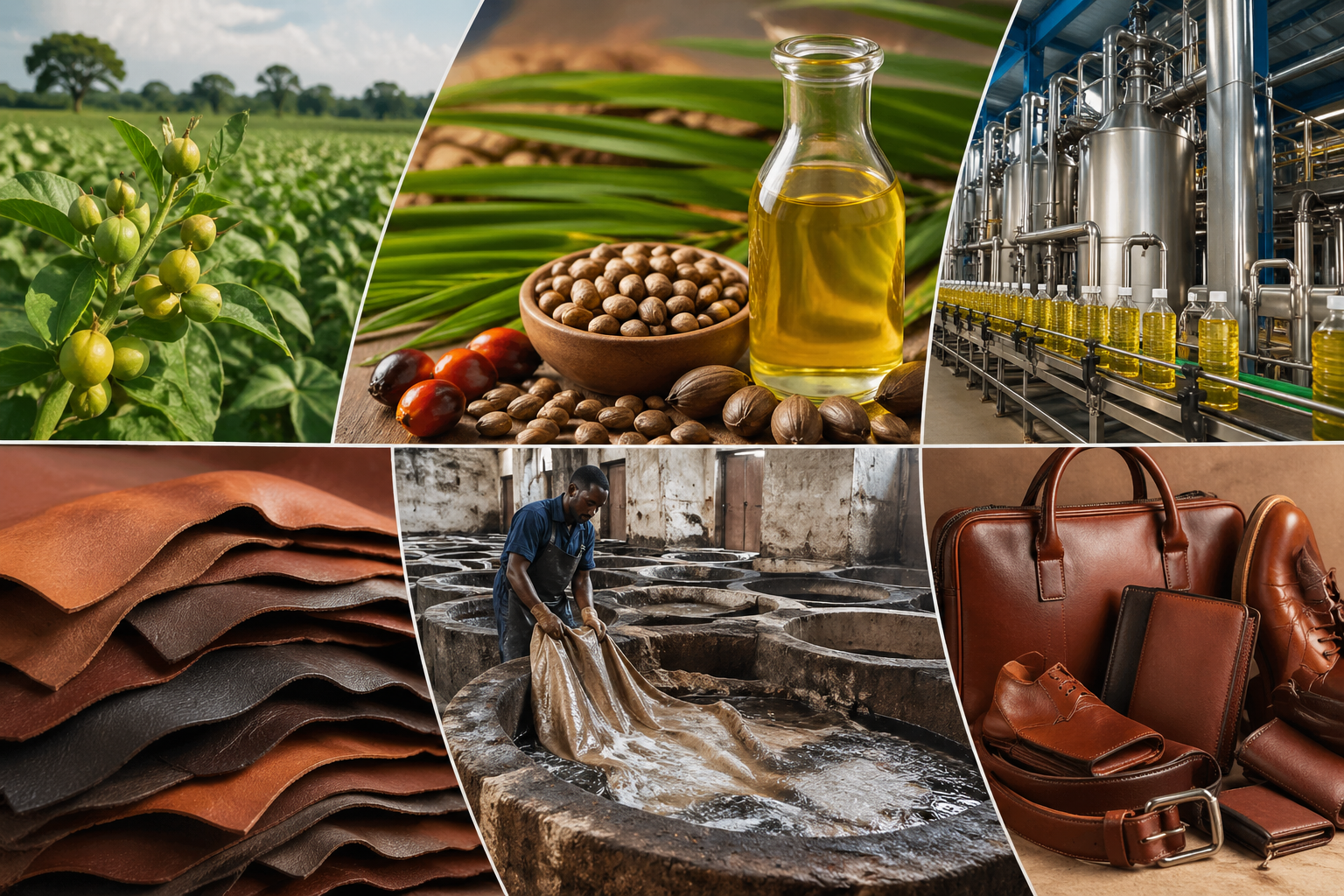
The Edible Oils and Livestock segment under the Bottom-Up Economic Transformation Agenda BETA is structured to strengthen domestic production capacity, reduce pressure on foreign exchange, and build integrated value chains that link primary production to processing and industrial use. Implementation is anchored on targeted input distribution, expansion of high-yield crop varieties, and development of industrial infrastructure that supports downstream processing.
In the edible oils value chain, government intervention has focused on increasing production of oil crops through direct support to farmers in suitable agro-ecological zones. As part of this program, over 1.2 million high-yielding oil palm seedlings have been distributed in the Coastal region, alongside 2.5 million sunflower seeds supplied to farmers in Western Kenya. These inputs are designed to increase acreage under oil crops, improve yields per hectare, and expand the supply of raw materials required for local edible oil processing.
This expansion is aligned with the structure of the edible oils market, where domestic production remains below national demand. Increased cultivation of oil palm and sunflower supports a gradual shift toward local sourcing of raw materials, strengthening the supply base for processors and stabilizing input availability within the industry.
In the livestock value chain, industrial development is being anchored on the establishment of structured processing infrastructure. The National Leather Industrial Park at Kenanie is now approximately 85% operational, providing a centralized facility for processing hides and skins into value-added leather products. The park is designed to integrate slaughterhouses, tanneries, and manufacturing units within a single industrial ecosystem, ensuring that raw materials are processed locally before entering domestic and export markets.
This infrastructure creates a formalized market for hides and skins, improving price realization for livestock producers and reducing losses associated with unprocessed raw materials. The integration of production and processing within the leather value chain strengthens industrial linkages and supports expansion of manufacturing activities tied to livestock production.
Edible Oils Value Chain: Supply Expansion, Processing Systems, and Import Substitution Dynamics
The edible oils value chain under the Bottom-Up Economic Transformation Agenda BETA is structured as an integrated production and industrial system that links primary agriculture, aggregation networks, and refining capacity into a single coordinated supply chain. The objective is to expand domestic production of oil crops, stabilize raw material supply for processors, and progressively reduce reliance on imported edible oils.
Kenya’s edible oil market is defined by high consumption levels, established refining capacity, and a structural deficit in locally produced oil seeds and oil palm feedstock. Current interventions are focused on closing this gap through targeted input distribution, expansion of cultivated acreage, and strengthening of farmer-to-processor linkages.
National Demand, Import Exposure, and Structural Supply Gap
- Consumption Levels, Market Size, and Demand Pressure
Kenya’s annual edible oil consumption is estimated at over 900,000 metric tonnes, driven by household demand, food processing industries, hospitality, and institutional consumption. This level of demand creates a large and consistent market for edible oils across the economy. - Import Bill, Foreign Exchange Outflows, and Market Dependence
Domestic production supplies a limited portion of this demand, with the balance met through imports of crude and refined edible oils. The resulting import bill is estimated at KES 150 billion to KES 160 billion annually, representing a significant outflow of foreign exchange.
This exposure subjects the domestic market to global price fluctuations, exchange rate pressures, and supply chain disruptions in international markets. - Structural Deficit, Raw Material Constraints, and Industrial Bottlenecks
The primary constraint within the value chain lies in the availability of locally produced raw materials. Existing refining capacity within the country remains underutilized due to insufficient supply of oil seeds and oil palm inputs.
This creates a disconnect between agricultural production and industrial processing, where installed capacity exists but is not fully supplied by domestic sources.
Crop Expansion Strategy, Input Distribution, and Yield Optimization
- Oil Palm Development, Coastal Belt, and Long-Term Production Base
Distribution of over 1.2 million high-yielding oil palm seedlings is supporting expansion of oil palm cultivation across the Coastal region, including counties such as Kwale, Kilifi, and Lamu. Oil palm is a high-yield perennial crop with the capacity to produce significantly higher oil output per hectare compared to seasonal oil crops.
Once mature, these plantations provide a continuous and predictable supply of fresh fruit bunches, creating a stable raw material base for processing industries over multiple years. - Sunflower Expansion, Western Kenya, and Short-Cycle Production Systems
Distribution of 2.5 million sunflower seeds in Western Kenya supports expansion of a short-cycle oil crop suited to regions such as Bungoma, Kakamega, Busia, and Trans Nzoia. Sunflower provides a harvest cycle within a single season, enabling farmers to generate income within shorter timeframes while contributing to national oil seed supply.
This dual approach, combining perennial oil palm and seasonal sunflower, creates a balanced production system that delivers both immediate and long-term output. - Yield Improvement, Seed Quality, and Agronomic Support
High-yielding seed varieties are being introduced to improve output per hectare and enhance productivity across participating farms. Extension support and farmer training programs are reinforcing proper agronomic practices, including planting density, pest control, and harvesting techniques.
Improved yields increase the efficiency of land use and strengthen the economic viability of oil crop farming at smallholder level.
Aggregation Networks, Supply Coordination, and Market Linkages
- Smallholder Participation, Production Scaling, and Supply Consolidation
Oil crop production is predominantly driven by smallholder farmers. Expansion of acreage through seed distribution increases participation across multiple counties, creating a dispersed production base.
Aggregation systems are being strengthened to consolidate output from individual farmers into volumes suitable for industrial processing, ensuring that production gains translate into usable supply. - Collection Systems, Logistics, and Post-Harvest Management
Efficient collection systems are critical in maintaining quality and minimizing losses. Structured aggregation points and coordinated transport networks enable timely movement of harvested oil crops from farms to processing facilities.
This reduces post-harvest losses, preserves oil content quality, and improves overall supply chain efficiency. - Processor Linkages, Offtake Agreements, and Price Transmission
Linkages between farmers and processors are being formalized through structured offtake arrangements. These arrangements provide assurance of market access for farmers and ensure a steady supply of raw materials for processors.
Stable offtake systems support predictable pricing mechanisms, enabling farmers to plan production while ensuring processors receive consistent input flows.
Industrial Processing, Refining Capacity, and Value Retention
- Existing Refining Capacity, Industrial Infrastructure, and Utilization Levels
Kenya has established refining capacity capable of processing large volumes of edible oils. These facilities include industrial-scale refineries operated by major manufacturers, designed to process both crude imports and locally sourced oil seeds.
Utilization of this capacity has historically been constrained by limited availability of domestic raw materials, resulting in reliance on imported crude inputs. - Raw Material Substitution, Capacity Optimization, and Output Expansion
Expansion of oil crop production increases the supply of locally sourced feedstock, enabling processors to substitute imported inputs with domestic raw materials. This supports higher utilization rates within existing refining infrastructure, improving operational efficiency and increasing output of locally produced edible oils. - Value Retention, Industrial Linkages, and Employment Generation
Processing of locally sourced oil crops ensures that value addition occurs within the country, supporting industrial growth and employment within manufacturing. Activities such as crushing, refining, packaging, and distribution create jobs and strengthen linkages between agriculture and industry.
Import Substitution, Foreign Exchange Management, and Sector Stability
- Reduction of Import Dependence, Supply Diversification, and Market Resilience
Expansion of domestic production gradually reduces reliance on imported edible oils, strengthening resilience within the sector. Increased local supply diversifies input sources and reduces vulnerability to external shocks affecting global markets. - Foreign Exchange Savings, Balance of Payments, and Economic Impact
Lower import volumes reduce pressure on foreign exchange reserves, contributing to improved balance of payments stability. Retention of value within the domestic economy supports broader economic activity and strengthens fiscal sustainability.
Integrated Value Chain Development and Production Trajectory
- Agriculture-Industry Linkage, System Coordination, and Output Flow
The edible oils program establishes a direct linkage between farm-level production and industrial processing. Farmers produce raw materials that feed into manufacturing systems, while processors provide a structured market for output.
This coordination ensures that production expansion is aligned with processing capacity and market demand. - Scaling Trajectory, Production Growth, and Long-Term Sustainability
Sustained expansion of acreage, improved yields, and strengthened aggregation systems support a steady increase in national output over time. The combination of perennial and seasonal crops ensures continuity of supply, enabling the sector to build a stable production base that supports long-term industrial growth.
Livestock and Leather Value Chain: Industrial Processing, Market Structuring, and Value Addition
The livestock value chain under the Bottom-Up Economic Transformation Agenda BETA is being expanded from primary animal production into structured industrial processing, with leather positioned as a major value addition pathway. Kenya has a large livestock base, producing millions of hides and skins annually, which form the raw material foundation for tanning, leather goods manufacturing, and export-oriented production.
Kenanie Leather Industrial Park, Processing Systems, and Industrial Capacity
- Industrial Park Development, Infrastructure, and Operational Status
The Kenya Leather Industrial Park at Kenanie in Machakos County is established as a centralized industrial hub designed to integrate tanning, leather processing, and manufacturing within a single ecosystem. The park sits on approximately 500 acres and has developed core infrastructure including internal road networks, power supply systems, water storage and distribution, and industrial facilities designed for plug-and-play occupancy.
At approximately 85% operational status, the park has moved beyond construction into functional readiness, with infrastructure in place to support tenant onboarding and industrial activity. - Tanneries, Manufacturing Units, and Value Addition Pipeline
The park is structured to host tanneries and downstream manufacturing units that convert raw hides and skins into finished leather products. Kenya produces large volumes of hides and skins annually from cattle, sheep, and goats, yet a significant portion has historically been exported in raw or semi-processed form.
The Kenanie facility provides capacity to retain this value within the country by supporting full processing into finished leather, footwear, bags, upholstery materials, and industrial leather products.
Hides and Skins Value Chain, Quality Control, and Market Structuring
- Raw Material Supply, Livestock Systems, and Production Base
The livestock sector provides a steady supply of hides and skins through slaughterhouses and pastoral production systems across the country. This raw material base is critical for sustaining industrial leather processing.
Strengthening this supply chain ensures consistent input availability for tanneries and manufacturing units. - Quality Improvement, Slaughter Systems, and Post-Slaughter Handling
Quality of hides and skins determines the final value of leather products. Interventions are being implemented to improve flaying techniques, handling, and preservation at slaughterhouses. Distribution of flaying tools and training of slaughterhouse operators are improving the quality of raw materials entering the value chain.
Improved quality reduces defects, increases yield during processing, and enhances pricing for producers and traders. - Aggregation Systems, Market Access, and Price Realization
Structured aggregation systems are being strengthened to ensure that hides and skins are collected, graded, and supplied efficiently to processing facilities. This reduces losses, improves coordination within the value chain, and supports better price realization for livestock farmers.
Industrial Processing, Environmental Systems, and Production Efficiency
- Tanning Processes, Industrial Throughput, and Capacity Utilization
Tanneries within the park are designed to process large volumes of hides and skins, converting them into finished and semi-finished leather. Increased processing capacity supports higher throughput and enables scaling of production within the leather industry. - Environmental Management, Effluent Treatment, and Compliance
Leather processing generates industrial waste that requires controlled treatment. The Kenanie park includes centralized effluent treatment systems designed to manage waste from multiple processing units.
This ensures environmental compliance, reduces operational costs for individual firms, and supports sustainable industrial activity within the leather sector.
Manufacturing Linkages, Employment, and Industrial Growth
- Downstream Manufacturing, Product Diversification, and Market Expansion
The leather value chain extends into manufacturing of finished goods including footwear, bags, belts, upholstery, and industrial leather products. Establishment of processing infrastructure supports expansion of these industries by ensuring availability of locally processed leather. - Employment Creation, Skills Development, and Industrial Participation
The leather ecosystem supports employment across multiple stages including livestock production, slaughter operations, tanning, manufacturing, and distribution. Expansion of industrial capacity increases demand for skilled and semi-skilled labor, supporting job creation within both rural and urban economies. - Import Substitution, Value Retention, and Export Potential
Processing hides and skins locally reduces reliance on imported finished leather products. It also enables Kenya to export higher-value finished goods rather than raw materials, increasing foreign exchange earnings and strengthening industrial competitiveness.
Integrated Livestock-Industry Linkage and Economic Impact
- Linkage Between Livestock Production and Manufacturing
The leather industry creates a direct linkage between livestock farmers and industrial manufacturing. Raw materials generated at farm level are processed into finished goods within the country, ensuring that value addition occurs across the entire chain. - Market Structuring, Revenue Flow, and Sector Stability
A structured market for hides and skins improves pricing, reduces waste, and ensures consistent demand. This stabilizes income for livestock producers while supporting steady supply for industrial processors. - Industrial Scaling and Long-Term Sector Development
The development of the Kenanie Leather Industrial Park provides a foundation for long-term growth of the leather sector. Integration of production, processing, and manufacturing within a single system supports efficiency, scalability, and sustained industrial expansion.
Socio-Economic Outcomes and Current Status
The Edible Oils and Livestock segments under the Bottom-Up Economic Transformation Agenda BETA are in a foundation and early operational phase, where inputs have been deployed, infrastructure has been established, and initial system-level effects are emerging across production, aggregation, and processing.
Outcomes and Progress
- Establishment of Oil Crop Production Base and Early Output Signals
Distribution of 1.2 million oil palm seedlings in the Coastal region and 2.5 million sunflower seeds in Western Kenya has expanded acreage under oil crops.
Sunflower, being a short-cycle crop, is already generating localized harvests and initial supply into aggregation systems, particularly within participating counties.
Oil palm plantations are in the establishment phase, with trees yet to reach full productive maturity. This intervention is building a long-term production base, with output expected to rise progressively over time. - Processing Alignment and Industrial Readiness in Edible Oils
Kenya’s edible oil refining capacity remains in place, with processors continuing to rely on imported crude inputs. Increased domestic oil seed supply is beginning to feed into aggregation channels, though volumes are still below levels required for full substitution of imports.
The current phase reflects early alignment between agriculture and processing, with supply chains being structured to support future scale. - Leather Industrial Park at Kenanie and Operational Status
The Kenya Leather Industrial Park at Kenanie has reached an advanced infrastructure stage, with core systems including power, water, internal roads, and effluent treatment facilities in place.
At approximately 85% operational readiness, the park is positioned for industrial activity, with tenant onboarding and phased operationalization underway.
Full-scale tanning and manufacturing output is in the ramp-up phase, rather than at peak production levels. - Improvement in Hides and Skins Quality
Interventions within slaughter systems, including improved flaying techniques and distribution of appropriate tools, are already contributing to better quality hides and skins entering the value chain.
Improved quality increases usability for processors and supports higher value realization within the leather industry. - Strengthening of Aggregation and Market Coordination
Aggregation systems for both oil crops and livestock by-products are being organized to improve collection, grading, and delivery to processing facilities.
These systems are functioning at an early stage, with increasing coordination between farmers, traders, and processors, supporting more structured movement of raw materials.
Functional Status Across the Value Chain
- Production
Oil palm in establishment phase
Sunflower producing at localized scale
Livestock continues to supply hides and skins consistently - Aggregation
Collection and coordination systems active and improving
Supply consolidation increasing across participating regions - Processing
Edible oil refining active with imported inputs
Leather park infrastructure ready with phased industrial uptake - Markets
Structured linkages forming between producers and processors
Price signals improving with better quality and organized supply
System Positioning
The current phase reflects system construction with early operational outputs, where:
- Input deployment has been completed at scale
- Infrastructure has reached functional readiness
- Initial production and quality improvements are visible
- Full industrial output is still building toward scale
The interventions are therefore active and functional, with measurable early results in short-cycle production and quality improvements, while long-cycle investments continue to mature.
Conclusion
The Edible Oils and Livestock segments under the Bottom-Up Economic Transformation Agenda BETA reflect a structured approach to linking primary production with industrial processing through targeted input deployment and infrastructure development.
Distribution of 1.2 million oil palm seedlings and 2.5 million sunflower seeds has established a production base for oil crops across Coastal and Western regions, with sunflower already contributing to localized supply and oil palm building a longer-term output pipeline. Within the livestock value chain, the Kenya Leather Industrial Park at Kenanie, at approximately 85% operational readiness, has put in place the infrastructure required to support tanning and manufacturing activity, with industrial uptake progressing in phases.
Early outcomes are visible in improved organization of supply chains, better quality of hides and skins entering processing channels, and initial alignment between production systems and industrial demand. Larger-scale output in both edible oils and leather manufacturing will build progressively as production systems mature and processing facilities move toward full operational capacity.
This framework positions both sectors within a value chain structure where agriculture supplies raw materials into domestic industry, enabling value addition within the economy, supporting employment across production and manufacturing, and creating a pathway toward reduced import dependence over time.
