
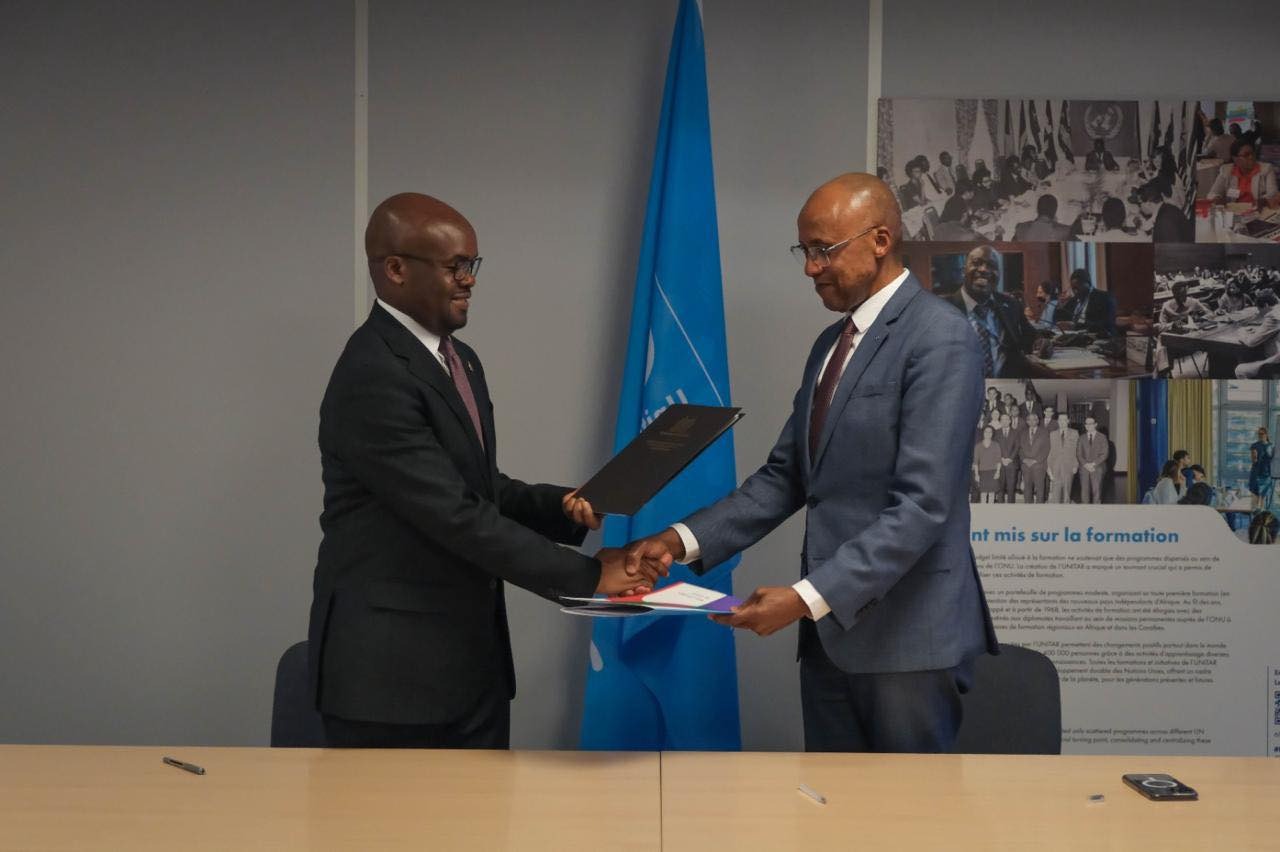
The Government of Kenya has entered into a strategic institutional partnership with the United Nations Institute for Training and Research (UNITAR) as part of a deliberate agenda to strengthen internal security governance, enhance public administration effectiveness, and build sustainable institutional capacity across the national security architecture. The collaboration reflects a policy driven commitment to human capital development, evidence informed decision making, and internationally aligned professional standards within the internal security sector.
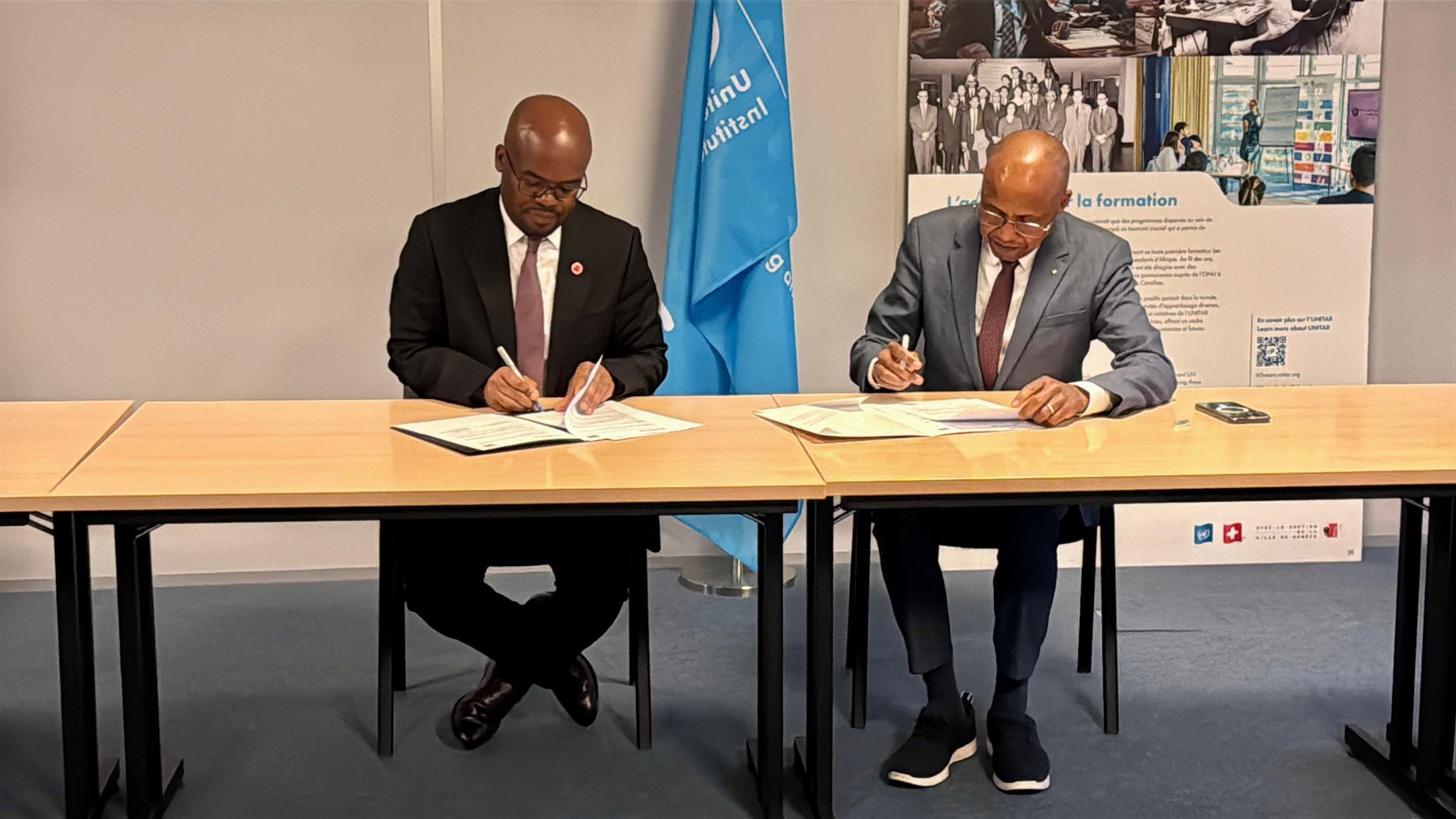
The partnership is anchored in a three year Memorandum of Understanding signed in Geneva on February 10, 2026, by Dr. Raymond Omollo, Principal Secretary for the State Department for Internal Security and National Administration, and Mr. Evariste Karambizi, Director of the Division for Peace at UNITAR. The agreement establishes a structured framework for cooperation in training, applied research, and institutional strengthening, providing a platform for sustained technical engagement aimed at improving operational readiness, leadership capability, and coordination across institutions responsible for public order management, law enforcement, investigations, custodial services, border management, and maritime security.
The collaboration is structured to support the following institutions that form the operational backbone of Kenya’s internal security ecosystem:
- National Government Administrative Officers
- Kenya Police Service
- Administration Police Service
- Directorate of Criminal Investigations
- Kenya Prisons Service
- Kenya Coast Guard Service
These institutions are responsible for safeguarding public safety, enforcing the law, conducting intelligence led investigations, managing correctional systems, and securing territorial waters, and play a central role in maintaining national stability and public order.
Core areas of cooperation under the partnership focus on professional skills development, policy oriented research, and institutional strengthening. Training interventions will prioritize leadership, strategic planning, operational coordination, and ethical service delivery within the internal security environment. Research initiatives will support evidence based policy formulation and operational decision making, ensuring that reforms are informed by data, contextual analysis, and practical implementation considerations. Institutional strengthening efforts will reinforce coordination frameworks, accountability mechanisms, and organizational performance across agencies.
The initiative places emphasis on strengthening governance practices that uphold the rule of law, professional accountability, and institutional discipline. Through structured learning, technical assistance, and knowledge exchange, the collaboration seeks to embed legal compliance, ethical conduct, and performance management standards within routine operations, with the objective of strengthening institutional legitimacy and public confidence.
Established in 1963 as the training arm of the United Nations, UNITAR brings extensive global experience in governance, peacebuilding, and public sector development. Through this partnership, the institute will deliver tailored training programs, leadership development initiatives, and institutional learning platforms that respond to contemporary security challenges. The engagement is designed to strengthen public sector performance while anchoring Kenya’s internal security reforms in evidence based methodologies, institutional resilience, and sustained international cooperation.
Institutional Scope and Collaborative Program Framework
The collaborative Program brings together Kenya’s internal security and national administration institutions within a single, structured capacity development and institutional strengthening architecture. The Program is anchored on reinforcing the effectiveness of National Government Administrative Officers, who constitute the frontline of state administration and coordination at the community level. Their central role in public order management, intergovernmental coordination, and service delivery positions them as a critical pillar within the internal security governance framework. In parallel, the Program advances professional and operational capability across the primary law enforcement and investigative agencies, including the Kenya Police Service, the Administration Police Service, and the Directorate of Criminal Investigations, which collectively underpin enforcement, crime prevention, and intelligence led response.
The inclusion of the Kenya Prisons Service and the Kenya Coast Guard Service extends the scope of the Program to encompass custodial management, rehabilitation systems, and maritime security operations. This integrated design ensures that the Program addresses internal security across its full continuum, from prevention and enforcement through investigation, detention, rehabilitation, and territorial protection. By aligning institutions whose mandates intersect operationally, the Program strengthens coherence, reduces fragmentation, and supports consistent standards of leadership, professionalism, and service delivery across the sector.
Over the three year implementation period, the Program is structured to deliver the following strategic outputs, each designed to generate measurable institutional impact and support sustained reform outcomes:
- Comprehensive professional training and leadership development
The Program will deliver tailored training interventions aligned to the operational mandates and functional environments of participating institutions. These interventions will focus on leadership development, strategic management, operational planning, ethical conduct, and service delivery excellence. Training content will be structured to strengthen command capability, decision making under complex conditions, and professional accountability, with emphasis on practical application and institutional relevance.
- Applied research to inform policy formulation and operational reform
The Program will support targeted research initiatives aimed at strengthening evidence based policy making within the internal security and national administration sectors. Research outputs will inform institutional reform agendas, operational strategies, and resource allocation decisions through systematic analysis of emerging security trends, administrative performance, and governance challenges. This research function will also support forward planning and adaptive responses to evolving risk environments.
- Institutional learning, knowledge exchange, and leadership continuity
Structured platforms will be established under the Program to facilitate knowledge sharing, peer learning, and leadership development across institutions. These mechanisms are intended to promote institutional memory, continuity of leadership standards, and the diffusion of best practice across the sector. Knowledge exchange initiatives will reinforce collaboration, strengthen professional cohesion, and support a unified approach to internal security governance.
- Enhanced inter agency coordination and integrated operational frameworks
The Program prioritizes the strengthening of coordination mechanisms across security and administrative institutions to support integrated planning and operational coherence. Joint learning activities, harmonized standards, and shared institutional frameworks will improve responsiveness to complex security challenges that cut across institutional mandates. This approach is intended to improve efficiency, strengthen collective impact, and enhance service delivery at both national and sub national levels.
Through this Program, the Ministry of Interior and National Administration is positioned to systematically leverage international technical expertise and globally tested methodologies in support of domestic reform priorities. Alignment with internationally recognized standards will reinforce professionalism, institutional discipline, and accountability across the internal security sector. The structured rollout of the Program enables sustained institutional strengthening, supports long term reform objectives, and contributes to resilient, well coordinated internal security governance.
Maritime Security and the Reform Agenda
Maritime security remains a central pillar within the national security and governance reform agenda, with direct implications for territorial integrity, economic stability, and regional cooperation. The Kenya Coast Guard Service occupies a critical role in safeguarding territorial waters, ports, and exclusive economic zones while securing maritime trade routes and coastal communities. The Service addresses complex transnational maritime threats, including narcotics trafficking, human smuggling, maritime terrorism, piracy, and unauthorized fishing. These activities pose material risks to national security, economic interests, and environmental sustainability across the Western Indian Ocean region.
The strategic inclusion of the Kenya Coast Guard Service within the partnership with the United Nations Institute for Training and Research (UNITAR) reflects a deliberate policy commitment to strengthening maritime governance as an integral component of the wider internal security reform Program. This engagement recognizes the blue economy as a strategic growth frontier and positions maritime security as a foundational enabler of safe commerce, environmental protection, and sustainable coastal development. The integration of maritime security into institutional capacity development initiatives reinforces a comprehensive internal security approach that spans land, sea, and border domains.
Within the broader reform agenda, the government has prioritized the following strategic focus areas to strengthen professionalism, legitimacy, and operational effectiveness across the security sector:
- Professionalization of security services
The reform agenda emphasizes standardized, mandate specific training frameworks designed to enhance technical competence, operational discipline, and leadership capacity across security institutions. This focus supports modern skills development, operational readiness, and specialized expertise aligned to evolving security threats, including those within the maritime environment.
- Respect for human rights and constitutional safeguards
The reforms reinforce the requirement that all internal security operations adhere strictly to constitutional provisions and internationally recognized human rights standards. Human rights education forms an integral component of institutional training curricula, strengthening lawful conduct, proportionality in operations, and protection of civil liberties, while reinforcing institutional legitimacy and public confidence.
- Strengthening institutional accountability and oversight
The reform agenda prioritizes robust oversight mechanisms within law enforcement and administrative institutions to promote transparency, integrity, and ethical conduct. This includes the strengthening of internal accountability systems, compliance structures, and performance management frameworks that support responsible exercise of authority and effective governance.
- Modernization of border and maritime security systems
The government continues to advance modernization across border and maritime security systems through upgraded surveillance capabilities, improved operational infrastructure, and enhanced personnel competencies. This focus strengthens national capacity to manage cross border risks, disrupt transnational criminal networks, and secure entry points across maritime and terrestrial boundaries.
These reforms are reinforced through a transition toward evidence based policy formulation and operational decision making, supported through international technical expertise under the three year cooperation framework. Engagement with UNITAR supports structured leadership development, institutional learning, and adoption of tested international practices that enhance public sector effectiveness across the security architecture.
The integration of professional ethics, leadership development, and human rights standards into core training frameworks across security institutions supports the consolidation of public trust and the reinforcement of the rule of law. This reform oriented approach ensures that Kenya’s security agencies remain adaptive, professional, and capable of responding to increasingly sophisticated criminal networks while maintaining accountability, institutional discipline, and democratic governance principles.
Organizational Roles and Responsibilities
The three year pact establishes a comprehensive Program framework for the structured development of Kenya’s internal security and national administration institutions. The Program is designed around the principle that effective internal security delivery depends on clear institutional mandates, professional competence, and sustained coordination across agencies whose responsibilities intersect in practice. Each institution within the Program performs a defined role within the security ecosystem, with collective effectiveness determined through alignment of leadership standards, operational frameworks, and governance practices. The Program therefore places emphasis on strengthening institutional identity while reinforcing coherence across the broader security architecture.
National Government Administrative Officers (NGAOs)
National Government Administrative Officers constitute the primary coordinating authority of the national government at the grassroots level and serve as the anchor of administrative control, public order management, and intergovernmental coordination within counties, sub counties, divisions, locations, and sub locations. Their role extends across security coordination, policy implementation, dispute resolution, and crisis management, placing them at the centre of daily state interaction with citizens. Within the Program, capacity development efforts are directed toward strengthening leadership effectiveness, coordination authority, and administrative professionalism across this cadre.
Key responsibilities of National Government Administrative Officers include:
- Policy communication and administrative coordination
Officers are responsible for the interpretation, dissemination, and communication of national policies, laws, and administrative directives to the public and local institutions. This function ensures policy awareness, regulatory compliance, and orderly governance, while facilitating alignment between national priorities and local implementation realities.
- Community mobilization and social cohesion
Officers mobilize community leadership structures, civil society actors, and public resources in support of development initiatives, peacebuilding efforts, and conflict prevention mechanisms. This role strengthens social cohesion, supports early conflict detection, and reinforces collaboration between government and communities.
- Local security leadership and crisis response
Officers chair and coordinate local security committees, oversee threat assessment processes, and lead coordinated responses to security incidents, emergencies, and administrative disruptions. This responsibility requires strong situational awareness, coordination capability, and decision making under pressure, all of which form a core focus of Program interventions.
Kenya Police Service and Administration Police Service
The Kenya Police Service and the Administration Police Service operate within the National Police Service framework and provide the operational backbone of law enforcement, public safety, and protective security across the country. Their mandates cover diverse security environments, ranging from urban policing and crime investigation to rural security, infrastructure protection, and border control. The Program recognizes the complementary nature of these Services and supports their development through aligned professional standards and leadership strengthening.
- Kenya Police Service
The Kenya Police Service carries responsibility for maintaining general law and order, preventing and investigating crime, and protecting life and property throughout the country. Its mandate includes public order management, criminal investigations at station and regional levels, traffic enforcement, and community policing initiatives. The Service also plays a critical role in intelligence led policing and inter agency operations that address organized crime and public safety risks.
- Administration Police Service
The Administration Police Service focuses on protective security functions and specialized operational environments. Its responsibilities include safeguarding government officials, securing critical national infrastructure such as dams, communication installations, and public facilities, and supporting border security operations. The Service also addresses rural security challenges, including stock theft and cross border incursions, particularly within pastoral and frontier regions where terrain and mobility present complex enforcement conditions.
Through the Program, both Services receive targeted support to strengthen operational discipline, leadership capacity, ethical standards, and coordination effectiveness.
Directorate of Criminal Investigations (DCI)
The Directorate of Criminal Investigations serves as the lead institution for complex, serious, and organized crime investigations within the national security framework. Its mandate underpins the criminal justice system through specialized investigative capacity, forensic expertise, and criminal intelligence development. The Program supports the Directorate’s role in responding to increasingly sophisticated criminal networks that operate across national and international boundaries.
Core responsibilities of the Directorate include:
- Forensic science and criminal intelligence management
The Directorate conducts forensic examinations, manages criminal intelligence systems, and maintains national criminal records to support investigations, prosecutions, and judicial processes. These functions enhance evidentiary integrity and strengthen case outcomes within the justice system.
- Investigation of organized and transnational crime
The Directorate leads investigations into terrorism, narcotics trafficking, cybercrime, financial crimes, human trafficking, and other organized criminal activities that pose national and regional security risks. This role requires advanced analytical capability, technical expertise, and coordinated operational planning.
- International law enforcement cooperation
The Directorate coordinates engagement with international law enforcement organizations, including Interpol, to address cross border crime, information sharing, and joint investigations. This function strengthens Kenya’s participation in global security efforts and enhances national capacity to address transnational threats.
Program interventions focus on strengthening investigative professionalism, analytical depth, and institutional coordination within the Directorate.
Kenya Prisons Service
The Kenya Prisons Service occupies a critical position within the internal security and justice system through custodial management, offender rehabilitation, and correctional reform. Its mandate extends beyond secure detention to include rehabilitation, skills development, and social reintegration of offenders. The Program recognizes correctional administration as an essential component of public safety and long term crime reduction.

Key functions of the Kenya Prisons Service include:
- Custodial management and humane detention
The Service ensures secure custody of individuals lawfully committed to correctional facilities while upholding humane treatment standards and legal safeguards. This responsibility supports institutional discipline and respect for rights within custodial environments.
- Rehabilitation and reintegration programs
The Service implements reformative programs focused on behavioral change, education, vocational training, and social reintegration. These initiatives aim to reduce recidivism and support successful re entry into society.
- Management of borstal and corrective institutions
The Service oversees borstal institutions and corrective centres that provide specialized training, education, and welfare services for young and special category offenders. This function contributes to early intervention and long term public safety outcomes.
Program Support and Institutional Strengthening
The strategic collaboration with the United Nations Institute for Training and Research (UNITAR) provides a structured platform for leadership development, applied research, and institutional learning across all participating agencies. Program support focuses on strengthening professional integrity, operational efficiency, and governance standards through tailored training, evidence informed research, and sustained knowledge exchange. This integrated approach reinforces coherence across Kenya’s internal security and national administration institutions and supports durable reform outcomes.
National Security Strategy Outlook, Long-Term Impact, and Strategic Trajectory
The three year partnership between the Government of Kenya and the United Nations Institute for Training and Research (UNITAR) is positioned within the National Security Strategy as a foundational instrument for advancing long term institutional resilience, strategic coherence, and governance maturity across the internal security domain. The engagement supports a deliberate transition from episodic security interventions toward sustained capacity development, institutional professionalism, and anticipatory governance. Within the national threat environment, this approach responds to the convergence of transnational crime, border insecurity, maritime risks, cyber enabled offenses, and internal vulnerabilities linked to demographic pressures, urbanization, and mobility.
From a strategic planning perspective, the partnership strengthens the state’s ability to move from reactive security postures toward integrated, intelligence informed, and institutionally coordinated responses. The emphasis on structured training, applied research, and leadership development strengthens institutional readiness and decision making across security and administrative agencies. This orientation supports the National Security Strategy objective of building capable institutions that function with legal clarity, professional discipline, and operational coherence across national and sub national levels.
The collaboration contributes to national security outcomes across multiple strategic horizons. In the immediate to medium term, it strengthens leadership competence, operational consistency, and coordination across institutions whose mandates intersect in daily security delivery. Over the longer term, it embeds institutional learning systems that sustain reform momentum beyond the life of the Memorandum of Understanding. These learning systems support continuity of standards, preservation of institutional memory, and adaptive response capacity within a dynamic threat environment.
Within the National Security Strategy outlook, the partnership advances the following strategic pathways:
- Strategic depth and institutional resilience
Continuous professional development frameworks and research driven learning systems strengthen leadership pipelines, technical expertise, and institutional memory across internal security and administrative institutions. This depth reduces institutional vulnerability during periods of crisis, leadership transition, or operational stress, while strengthening long range preparedness.
- Whole of government security governance
The emphasis on coordination, shared standards, and joint institutional learning strengthens the coherence of the national security architecture. Integrated governance frameworks support unified planning, synchronized operations, and efficient resource utilization across agencies addressing interconnected security risks, including terrorism, organized crime, border insecurity, and maritime threats.
- Legitimacy, public trust, and social stability
The integration of accountability, human rights observance, and ethical leadership within institutional practice strengthens legitimacy and public confidence in security institutions. Public trust functions as a strategic security asset, supporting intelligence flow, community cooperation, and social cohesion, all of which contribute directly to national stability and conflict prevention.
- International alignment and strategic partnerships
Alignment with internationally recognized governance and security standards strengthens Kenya’s capacity for regional and global cooperation. This alignment supports effective participation in multilateral security frameworks, compliance with United Nations obligations, and collaboration with international partners addressing shared security challenges across borders and maritime spaces.
As implementation advances, focus shifts toward institutionalization of reform across participating agencies. This phase emphasizes performance monitoring, leadership accountability, and sustained learning mechanisms that translate strategic objectives into operational practice. Institutional ownership of reform processes remains central, ensuring durability and relevance of outcomes across political, administrative, and security transitions.
Within the National Security Strategy trajectory, this engagement reflects a forward oriented governance model anchored in evidence informed decision making, professional leadership, and institutional coordination. Successful execution of the partnership strengthens national security posture, enhances resilience against evolving threats, and consolidates Kenya’s position as a regional reference point for security sector reform, institutional governance, and sustainable national administration.
