
Infrastructure, Integration and Economic Expansion
The North Eastern Development Tour by President William Ruto undertaken from February 10 to February 12, 2026, covering Garissa, Wajir and the strategic transport spine linking Isiolo to Mandera. The three day engagement served as a comprehensive progress audit of flagship infrastructure investments under the Bottom Up Economic Transformation Agenda. The tour integrates transport corridor expansion, digital backbone rollout, aviation modernization, housing delivery, youth enterprise activation, energy connectivity and water security planning within a coordinated regional growth strategy.
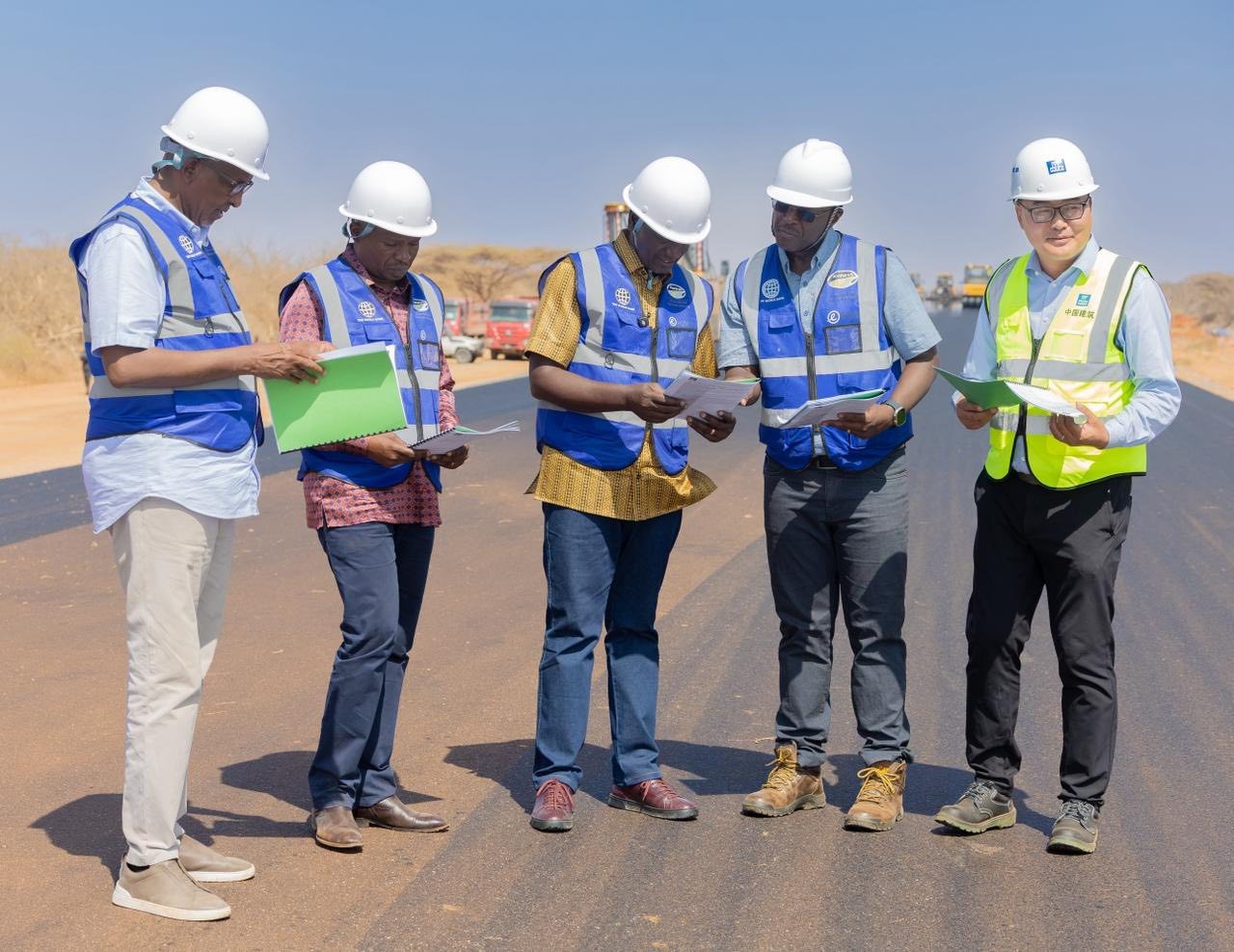
The focus of the tour is the Horn of Africa Gateway Development Project valued at KES 100 billion. This corridor program is structured to position Kenya’s Northern Frontier as a functional trade and logistics bridge between central Kenya, Ethiopia and Somalia. During the corridor inspection on February 11, 2026, the President confirmed that the 750 kilometre Isiolo Wajir Mandera Road has attained 45% completion. The project involves high grade bitumen surfacing designed for heavy commercial freight, reinforced drainage systems to withstand seasonal rainfall variability, bridge installations across seasonal rivers and comprehensive road safety infrastructure including signage, markings and guard rails. The corridor integrates fiber optic cabling along its length to strengthen broadband penetration, digital financial services access, security coordination systems and e government functionality across remote settlements.
Throughout the February 10 to 12 mission, the President has been conducting contractor performance reviews, milestone verification exercises, stakeholder consultations and implementation oversight sessions to ensure adherence to timelines, budget discipline and quality standards. The tour reinforces a deliberate strategy to transform North Eastern counties into active contributors within the national production and logistics ecosystem.
Progress of Strategic Road Infrastructure
The administration is overseeing an interconnected network of high value corridors that are reshaping mobility patterns, strengthening freight efficiency and stimulating private sector confidence across the region.
- Isiolo Wajir Mandera Road 750km KES 100 billion
As of February 11, 2026, construction has reached 40 percent completion. The project spans multiple contract packages executed concurrently to accelerate delivery. The road significantly reduces travel time between Isiolo and Mandera, enhances livestock transport efficiency and strengthens security response mobility. The integrated fiber optic installation along the highway establishes a digital corridor that enables mobile banking expansion, digital identity verification systems, E-commerce growth and improved coordination among security agencies. Once complete, the corridor will lower transportation costs for traders, reduce vehicle wear and tear and stimulate development of logistics hubs, fuel stations, warehousing facilities and service centers along the route.
- Isiolo Garissa Lamu Road 420km KES 27 billion
This corridor establishes a direct linkage between the Northern Frontier and the Port of Lamu. Construction works include pavement stabilization, bridge construction, culvert installation and earthworks across challenging terrain. The route strengthens export potential for livestock products, hides and skins, agricultural produce and emerging light manufacturing output. Enhanced port access supports integration into regional and global supply chains, encourages establishment of aggregation centers and improves investor confidence in northern counties.
- Modika Dadaab Liboi Harhar Road 211km
This segment strengthens connectivity toward the Somalia border and enhances structured cross border trade flows. The road improves humanitarian logistics efficiency in areas hosting refugee populations and supports customs administration by facilitating movement of goods through designated entry points. Reinforced pavement standards accommodate heavy freight vehicles, improving durability and reducing long term maintenance costs.
- Wajir Tarbaj Road 57km
The project includes development of an axle load control station to enforce freight weight regulations and protect road infrastructure. The corridor enhances inter town connectivity, facilitates livestock trade mobility and improves access to health facilities, markets and administrative centers. Construction includes drainage channels, culverts and road safety installations to ensure sustainability and safety compliance.
- Tarbaj Kotulo Road 64km
Works are advancing steadily with installation of a backbone territorial fiber optic cable integrated within the road reserve. This digital backbone expands broadband access, strengthens communication networks, enables remote education platforms and supports telemedicine services. The corridor enhances economic interaction between settlements and improves delivery of government services.
- Kotulo Kobo Road 38km
This segment strengthens intra county connectivity between Mandera and Wajir, facilitating agricultural aggregation, livestock mobility and commercial exchange. Improved road quality reduces travel time, lowers transport costs and supports coordinated security operations across county boundaries.
These corridors collectively establish a continuous transport and digital matrix that enhances regional competitiveness, stimulates enterprise formation and anchors North Eastern within national and cross border trade networks.
Aviation and Urban Infrastructure Expansion
Urban modernization initiatives are progressing alongside corridor development to support administrative efficiency, higher education growth and commercial expansion.
- Garissa Airstrip Modernization
Inspected during the February 10 to 12, 2026 tour, the project includes runway extension, surface strengthening, installation of modern navigation systems and construction of a new passenger terminal building. The upgraded facility is designed to handle an annual passenger capacity of 200,000. Enhanced air connectivity supports business travel, cargo logistics, tourism development and medical evacuation services. Reduced travel time to Nairobi strengthens investor access and improves administrative coordination.
- Garissa University Tuition Block KES 279 million
The new tuition block includes lecture halls equipped with digital learning infrastructure, administrative offices and student support facilities. The expansion enhances enrollment capacity, strengthens academic delivery and supports research development within the region.
- University Hostels KES 750 million Capacity 1,700 students
The hostel development incorporates residential units, sanitation infrastructure, security systems and communal facilities. Expanded accommodation capacity improves student welfare, supports enrollment growth and strengthens the institution’s capacity to attract learners from across the country.
- Garissa Township Affordable Housing Project
The project contributes to the national housing target of 200,000 units annually. Development includes serviced plots, road access, water reticulation systems, electricity connectivity and structured urban planning standards. Housing delivery stimulates construction employment, supports local supply chains and enhances living standards for residents.
Urban investments position Garissa and surrounding towns as structured growth nodes capable of sustaining increased commercial and administrative activity.

Financial Inclusion and Youth Empowerment
The National Youth Opportunities Towards Advancement program is a central empowerment pillar highlighted during the February 2026 tour.
- Garissa Disbursement KES 63 million to 2,520 youth
Funds were issued to support start ups across trade, services, agribusiness and micro manufacturing sectors. Beneficiaries receive orientation on business planning, financial discipline and digital transaction management to enhance sustainability.
- Allocation Structure KES 25,000 per participant
KES 22,000 is credited directly to a mobile wallet to facilitate procurement of inventory and operational inputs. KES 3,000 is deposited into an NSSF savings account to instill structured savings culture and long term social protection participation.
- National Reach 123,000 beneficiaries as of February 2026
The program expands financial inclusion by connecting youth to formal financial systems, digital payment platforms and savings structures. It stimulates grassroots enterprise growth and income diversification across counties.
The initiative strengthens youth productivity, supports household income expansion and broadens participation in formal economic activity.
Energy and Water Security Integration
Utility integration and water infrastructure development form the foundation for sustainable economic growth across North Eastern counties.
- National Grid Connectivity Target June 2026
Wajir and Mandera are scheduled for full integration into the national electricity grid. Stable power supply supports cold storage facilities, water pumping systems, small scale manufacturing enterprises and digital service providers. Grid access enhances quality of life for households and strengthens institutional service delivery.
- Ten Major Dams for North Eastern Region
Planned mega dams will support livestock watering, irrigation schemes and domestic water supply systems. Reservoir development enhances drought resilience and stabilizes agricultural production cycles.
- Contribution to 2.5 million acre national irrigation target by 2030
Water infrastructure expansion supports crop production, fodder cultivation and agribusiness development. Irrigation growth strengthens food security resilience and enhances investment attractiveness in agriculture.
Socioeconomic Impact and National Integration
2026 Madaraka Day Preparations in North Eastern Kenya
The integration of the North Eastern region into Kenya’s national identity and development framework forms a central pillar of the administration’s 2026 agenda. During the February 10 to February 12, 2026 development tour, it was formally announced that a county within the North Eastern region will host the 63rd Madaraka Day celebrations on June 1, 2026. This will be the first time since independence that the national event is held within the former Northern Frontier District. The decision carries strong national symbolism and affirms structured inclusion, equitable visibility and balanced territorial representation in national commemorations.
The hosting of Madaraka Day in the region signals deliberate recognition of North Eastern counties as integral contributors to Kenya’s political, economic and social architecture. The celebration provides a platform to showcase ongoing infrastructure transformation, reinforce national cohesion and project a unified development narrative anchored on equal opportunity and shared citizenship.
Targeted Infrastructure for National Celebrations
Preparation for a national celebration of this magnitude requires accelerated investment in public facilities, transport access, utilities and security readiness. Several priority projects are being fast tracked to ensure operational readiness ahead of June 1, 2026.
- Wajir County Stadium 10,000 Seater Capacity
Construction and upgrade works are progressing at pace to deliver a fully functional 10,000 seater stadium that will serve as the primary venue for the Madaraka Day celebrations. The facility includes spectator stands, VIP sections, media bays, athlete changing rooms, security command areas and supporting sanitation infrastructure. Beyond the national event, the stadium is positioned as a long term regional sports hub that will nurture youth talent, host inter county competitions and stimulate sports based economic activity.
- Urban Road Rehabilitation Approximately 15 Kilometres
Township roads within the host county are undergoing rehabilitation and surfacing to improve traffic circulation, pedestrian safety and access to the stadium and government offices. The facelift includes drainage improvement, road markings, street lighting installation and pedestrian walkways. Enhanced urban mobility supports efficient movement of visitors, delegations and security teams during the celebrations while delivering permanent benefits to residents and businesses.
- Utility Stabilization and Grid Integration
Engineers are strengthening water reticulation systems and stabilizing electricity supply at event venues and surrounding facilities. These upgrades align with the broader target of integrating Wajir and Mandera fully into the national electricity grid by June 2026. Stable utilities support hospitality services, media broadcasting infrastructure, medical readiness and long term commercial expansion.
The accelerated infrastructure rollout ensures that the celebrations serve as a catalyst for sustainable urban development rather than a temporary intervention.
Strategic Economic Gains from Corridor Development
The February 2026 tour emphasized the broader economic transformation linked to the Isiolo Wajir Mandera highway beyond transport functionality. The corridor is positioned as a structural economic enabler with measurable cost and efficiency gains.
- Logistics Efficiency and Cost Reduction
Completion of the corridor is projected to reduce travel time between Isiolo and Mandera from approximately 96 hours to nearly 12 hours. This dramatic improvement lowers fuel consumption, vehicle maintenance costs and freight delays. Reduced transit time enhances livestock transport efficiency, stabilizes commodity prices and improves access to essential goods for remote communities.
- Digital Connectivity 750 Kilometres of Fiber Optic Cable
The highway project integrates laying of 750 kilometres of fiber optic cable along the corridor. This digital backbone delivers high speed internet access to schools, hospitals, government offices and businesses. Broadband expansion supports telemedicine services, digital learning platforms, financial inclusion initiatives and e government systems, strengthening productivity and service delivery across the region.
- Market Integration and Export Potential
Improved connectivity links North Eastern counties directly to the Port of Lamu, strengthening livestock export potential to Middle Eastern markets and expanding trade within the Horn of Africa. Enhanced market access encourages establishment of aggregation centers, cold chain facilities and value addition enterprises, reinforcing the livestock value chain and stimulating regional economic diversification.
These economic gains position the corridor as a foundational asset for long term growth and competitiveness.
Security Strengthening and Social Cohesion
The tour also addressed longstanding structural challenges affecting the region, including historical citizenship profiling concerns and service access disparities. The administration affirmed that access to government programs and national identification services is a constitutional right for all citizens.
- Security Infrastructure Enhancement
Upgraded road networks enable rapid deployment of security personnel and emergency response units across vast distances. Improved mobility strengthens border surveillance capacity, enhances coordination among agencies and supports stability along porous frontiers. Infrastructure development reinforces state presence and enhances operational efficiency.
- National Identity and Belonging
Hosting the 63rd Madaraka Day celebrations in North Eastern Kenya reinforces the message that every county is integral to the Republic of Kenya. The event fosters shared national pride, strengthens civic participation and deepens social cohesion. Visible state investment, inclusive national commemorations and expanded economic opportunity collectively build confidence and reinforce unity.
Long Term Vision and the Path to 2027
Livestock Modernization and Border Trade Expansion
The concluding phase of the February 10 to February 12, 2026 North Eastern Development Tour centered on long term economic sustainability anchored on livestock commercialization and structured cross border trade restoration. The administration has identified 2026 as a transition year that consolidates infrastructure delivery and advances structural economic transformation under the Bottom Up Economic Transformation Agenda. The focus is to move pastoral livelihoods into higher value production systems, expand export readiness and strengthen the region’s integration into national and regional markets.
Livestock remains the primary economic driver across Garissa, Wajir and Mandera. The strategy for 2026 through 2027 positions the region as a competitive livestock production and export zone supported by disease control systems, cold chain facilities, market linkages, financial inclusion tools and upgraded transport corridors. The long term objective is to formalize value chains, increase household income stability and enhance food security resilience across arid and semi arid counties.
Livestock Value Chain Support Project
The government has integrated Garissa, Wajir and Mandera into the KES 9.7 billion Livestock Value Chain Support Project. The program is structured to commercialize pastoralism, enhance export compliance and expand value addition capacity across the region.
- Disease Free Zones
Designated zones are being established to meet international sanitary and phytosanitary standards required for meat exports. These zones incorporate vaccination programs, veterinary surveillance systems, traceability mechanisms and quarantine facilities. Compliance with export standards strengthens access to premium markets in the Middle East and other regions, enhances price realization for producers and reduces livestock mortality linked to preventable diseases.
- Cold Chain Infrastructure Development
Investment is being directed toward regional cooling plants, milk chilling centers and refrigerated transport systems. Cold chain infrastructure reduces post harvest losses in dairy and meat production, improves product quality, stabilizes supply and strengthens farmer bargaining power. Expanded cooling capacity enables aggregation at scale, supports cooperative marketing models and enhances competitiveness in both domestic and export markets.
- Genetic Improvement Programs
Structured breeding programs are being rolled out to improve herd weight, milk yield and disease resistance. Artificial insemination services, breed selection initiatives and technical training for pastoralists support productivity growth. Genetic enhancement contributes to higher off take rates, improved carcass quality and increased income per animal.
- National Budget Allocation KES 47.6 Billion for Food Security and Agricultural Productivity 2025 2026 Financial Year
A substantial allocation within the national budget supports agricultural transformation, rangeland management and livestock productivity enhancement. Funding supports pasture development, water infrastructure, extension services and research initiatives. Strengthened rangeland management enhances grazing sustainability and reduces vulnerability to drought cycles.
These interventions collectively position livestock as a structured commercial sector capable of sustaining household incomes and supporting export led growth.
Reopening of the Kenya Somalia Border
During engagements in Mandera and Wajir, the President confirmed the formal reopening of the Kenya Somalia border in April 2026. The decision follows a 15 year closure and signals renewed economic and diplomatic engagement across the Horn of Africa.
- Trade Integration and Enterprise Expansion
The reopening enables structured cross border trade through designated entry points. The 5,020 NYOTA grant beneficiaries within the region gain access to expanded markets for goods and services. Formalized trade channels reduce reliance on informal networks, improve revenue collection and strengthen regulatory compliance.
- Customs Modernization and Security Reinforcement
New border posts in Mandera, Garissa and Wajir are being equipped with modern customs processing systems, digital clearance platforms and enhanced inspection infrastructure. Increased police and security deployments support orderly movement of goods and reinforce stability along the border. Coordinated security management enhances investor confidence and facilitates legitimate commerce.
- Regional Connectivity Leveraging the Isiolo Mandera Corridor
Reopened borders align with the progress of the Isiolo Mandera highway. The corridor facilitates movement of goods between the Port of Lamu and markets across the Horn of Africa. Improved freight efficiency strengthens livestock exports, agricultural trade and distribution of manufactured goods. Integration of road and border infrastructure creates a seamless logistics chain that enhances regional competitiveness.
The border reopening marks a structural shift toward regulated economic engagement and cross border cooperation.
Conclusion
February 10 to February 12, 2026 tour affirms a clear and measurable commitment to closing the remaining infrastructure gaps across the Northern Frontier. The alignment of modern road corridors, expanded digital backbone infrastructure and structured financial inclusion through the NYOTA program establishes an integrated development framework that strengthens productivity, formalizes enterprise activity and expands the region’s contribution to national GDP.
As Kenya approaches the 63rd Madaraka Day celebrations on June 1, 2026, the North Eastern region stands at a defining moment of visibility and consolidation. The national event will provide a platform to commission completed projects, affirm inclusive governance and demonstrate tangible progress in transport, utilities, housing, youth empowerment and livestock commercialization. The trajectory set in 2026 anchors the region firmly within Kenya’s long term economic architecture and charts a confident path toward sustained growth beyond 2027.
