

The first two days of the presidential work tour across Kisii and Nyamira counties represent a concentrated deployment of public investment within one of Kenya’s most densely populated and economically active rural regions. The area carries a combined population approaching 2 million people, with Kisii at approximately 1.27 million and Nyamira at about 720,000 residents. Population density across parts of Kisii exceeds 1,000 persons per square kilometre, creating sustained pressure on land, infrastructure, and income systems. Economic activity is dominated by smallholder agriculture, informal trade, and micro-enterprise operations that depend on efficient movement, reliable market access, and stable local demand.
The first phase of the tour has therefore focused on unlocking constraints that directly affect household income and enterprise productivity. Infrastructure investments across transport corridors, logistics systems, sports facilities, and market environments have been sequenced to influence how goods move, how traders operate, and how local economies connect to wider national systems. Each project carries a measurable economic function, with clear implications for cost reduction, income expansion, and employment generation within the region.
Transport and Mobility Infrastructure
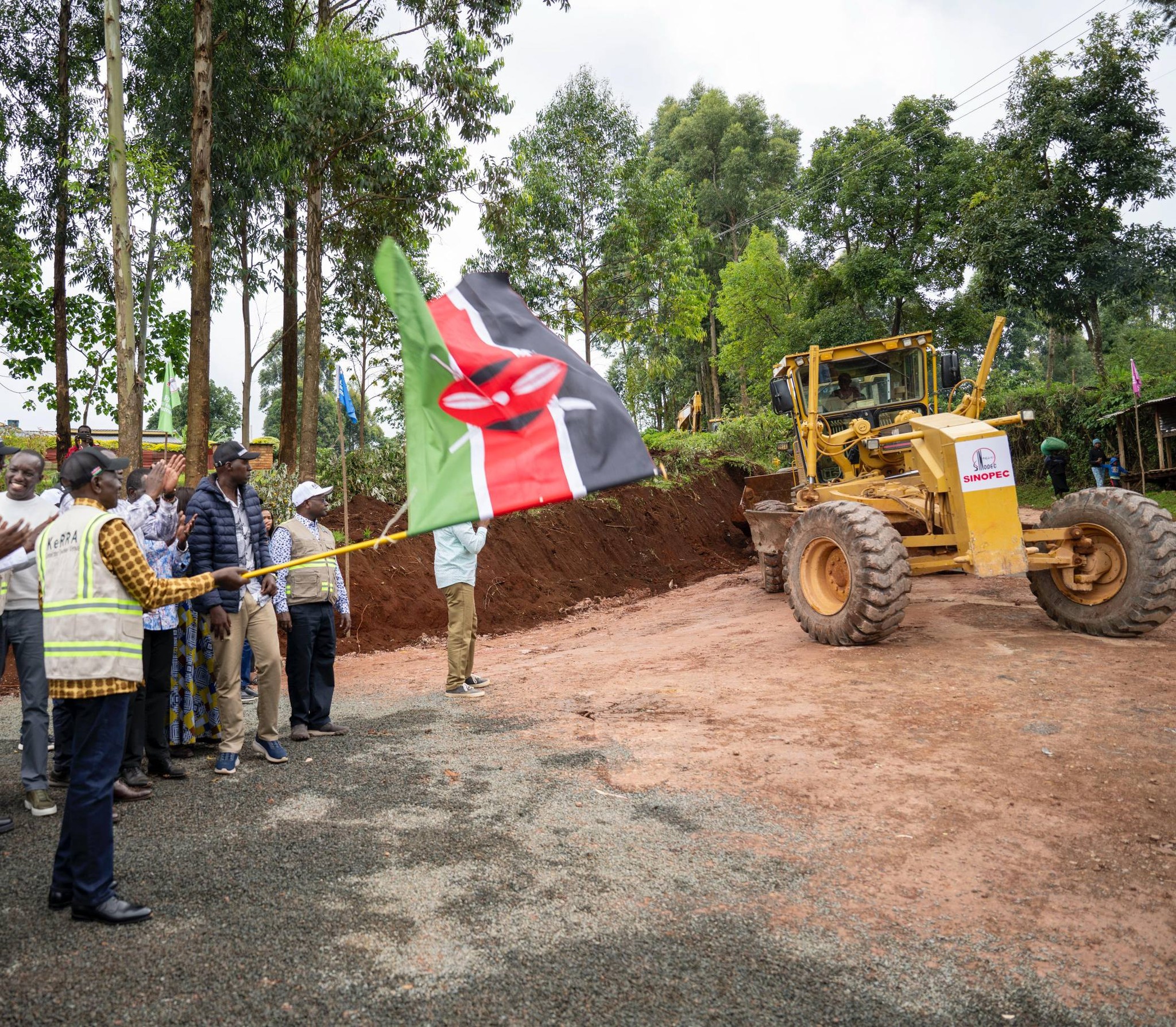
Road development across key intra-county corridors forms a central component of the rollout. The selected roads serve productive agricultural belts where movement efficiency directly determines income outcomes. Rural transport inefficiencies in Kenya absorb a significant share of farm earnings, with transport costs frequently ranging between 20% and 30% of total produce value. Delays in movement contribute to post-harvest losses that average between 20% and 30% across perishable commodities. Upgrading these corridors introduces a shift in how local economies function by reducing travel time, lowering logistical costs, and expanding access to higher-value markets.
- Bobaracho–Manyasi–Tinga Road Upgrade
This corridor cuts through densely populated agricultural zones with high volumes of banana and mixed horticultural production. The upgrade improves surface quality, drainage, and accessibility across previously constrained sections. Travel time along this route is projected to decline significantly, enabling farmers to deliver produce to Kisii Town markets within shorter timeframes. Faster movement supports better pricing, reduces spoilage, and increases the frequency of market participation for smallholder farmers.
- Keumbu–Ibeno Road Development
This route links interior production zones to trading centres that serve as aggregation points for agricultural produce. Poor road conditions have historically limited vehicle access, increasing reliance on manual transport systems and raising logistical costs. The upgrade enhances accessibility for transporters, allowing aggregation at scale and supporting consistent supply flows into regional markets. This improves bargaining power for farmers and stabilises supply chains.
- Sameta–Egetuki Road Improvement
The Sameta–Egetuki stretch serves dairy and tea-producing areas where timely delivery is critical to maintaining product quality. Delays in milk transport affect freshness and pricing, while tea leaf delivery timelines influence processing outcomes. Improved road conditions support faster collection and delivery cycles, enhancing quality retention and strengthening income streams for producers within these sectors.
- Etago–Ekona–Geteri–Nyamaiya Road Corridor
This corridor connects multiple trading centres across Kisii and Nyamira, forming a key inter-county link. Its upgrade strengthens regional integration by facilitating movement of goods, services, and people across administrative boundaries. Improved connectivity along this route supports trade expansion, increases market reach for traders, and enhances overall economic interaction within the Gusii region.
Air Connectivity and Regional Logistics
The launch of the Suneka Airstrip development introduces a new dimension within the regional logistics architecture. Air connectivity expands the range of economic activities that the region can support, particularly those requiring speed and reliability.
- Suneka Airstrip Development Project (Bonchari Constituency)
The project establishes a functional aviation facility within proximity to Kisii Town, reducing reliance on Kisumu International Airport located over 100 kilometres away. This significantly shortens logistical timelines for high-value goods such as horticultural produce and medical supplies. Air transport systems in comparable regions have demonstrated reductions in delivery timelines exceeding 60%, improving product quality and market competitiveness. The airstrip also strengthens emergency response capacity by enabling faster medical evacuations and rapid deployment of services. Its presence enhances the attractiveness of the region for investment, as accessibility remains a critical factor in location decisions.
Sports Infrastructure and Economic Systems
Investment in sports infrastructure introduces a structured economic sector that supports employment, youth engagement, and local commerce. The Gusii region has a strong football culture, with established fan bases and active participation at community and competitive levels.
- Gusii Stadium Upgrade and Expansion Project
The project focuses on increasing seating capacity, improving playing surfaces, and upgrading supporting facilities. Construction activities generate employment opportunities across skilled and unskilled labour categories, while operational phases sustain jobs in maintenance, event management, and security. Sporting events held at upgraded facilities stimulate local commerce, increasing demand for transport, food services, and retail activity. The stadium also provides a platform for talent development, enabling structured training and exposure for athletes within the region.
- Shabana Football Club Support Package
The provision of a team bus valued at KES 27 million, alongside an additional allocation of KES 20 million for operational support, strengthens the club’s logistical and financial capacity. Reliable transport ensures consistent participation in national league fixtures, while operational funding supports player welfare, training programmes, and administrative functions. Football clubs operate as economic anchors within their communities, supporting employment across players, technical staff, media, and vendors. Strengthening Shabana FC contributes to the broader sports ecosystem and reinforces youth engagement in structured activities.
Trade Infrastructure and Market Systems
The informal trade sector dominates employment within the region, with a large proportion of households relying on small-scale trading activities. Market infrastructure plays a central role in determining trader productivity and income stability.
- Ikonge Modern Market Project (Nyamira County)
The project introduces a structured trading environment equipped with permanent stalls, cold storage facilities, sanitation systems, and secure storage units. Open-air markets expose traders to weather-related losses and product spoilage, limiting profitability. Modern market infrastructure reduces these risks by preserving product quality and extending shelf life. Traders operating within upgraded facilities typically record income increases ranging between 20% and 40%, driven by improved storage, higher customer volumes, and better operating conditions. The market also enhances organisation within the trading system, enabling stronger linkages with suppliers, transporters, and financial institutions.
Human Capital Infrastructure and Urban Structuring as Economic Catalysts
The second layer of interventions within the first two days of the presidential work tour across Kisii and Nyamira counties shifts focus toward human capital development and spatial urban organisation. Infrastructure alone does not sustain economic transformation without parallel investment in skills, healthcare capacity, and living environments. The projects initiated within this phase therefore address the quality and productivity of labour, while structuring urban growth in a manner that supports long-term economic stability.
The Gusii region presents a high labour participation rate driven largely by necessity, with a significant proportion of the population engaged in informal or semi-formal economic activities. Youth unemployment and underemployment remain persistent, particularly among secondary school and tertiary institution graduates. At the same time, healthcare systems face capacity constraints due to population pressure, while urban expansion continues to outpace structured housing development. These dynamics create a scenario where economic potential exists, though it operates below optimal efficiency due to gaps in skills development, service delivery, and spatial planning.
The projects rolled out in this segment of the tour therefore focus on strengthening the foundations that support a productive workforce and organised urban systems.
Medical Training and Health Infrastructure Expansion
Healthcare capacity within densely populated regions depends heavily on the availability of trained personnel and supporting infrastructure. Kenya’s doctor-to-patient ratio currently stands at approximately 1 doctor per 5,000 people, significantly above the World Health Organization recommendation of 1 doctor per 1,000 people. This gap places pressure on existing health systems and limits access to quality care, particularly in rural and peri-urban regions.
The expansion of medical training infrastructure within Kisii and Nyamira addresses this constraint by increasing the pipeline of healthcare professionals.
- Nyamira Kenya Medical Training College Development
The establishment and expansion of the Nyamira KMTC campus introduces additional training capacity for nurses, clinical officers, and allied health professionals. Training institutions serve as long-term investments in healthcare delivery, with each graduating cohort contributing directly to service availability within the region. Increased intake capacity supports the gradual reduction of personnel shortages and strengthens local health systems.
- Nyangweta KMTC Project
The Nyangweta facility expands access to medical training within a region that previously required students to travel long distances for similar programmes. Proximity to training institutions increases enrolment rates, particularly among students from low-income households. Localised training also improves retention of healthcare workers within the region, as graduates often serve within familiar geographic areas.
- Nyamache KMTC Hostel Development
Student accommodation forms a critical component of training infrastructure. The construction of hostels increases the number of students that institutions can accommodate, directly influencing enrolment capacity. Reliable accommodation reduces dropout rates associated with housing constraints and creates a stable learning environment for trainees.
The combined effect of these projects is a gradual strengthening of the healthcare workforce pipeline, which translates into improved service delivery across public health facilities. Increased availability of trained personnel supports expanded service coverage, reduced patient waiting times, and improved health outcomes.
Higher Education and Technical Training Infrastructure
Human capital development extends beyond healthcare into broader technical and vocational training systems. The demand for skilled labour within construction, manufacturing, and service sectors continues to rise, requiring targeted investment in training institutions that align with market needs.
- Keroka Technical Training Institute Construction
The establishment of a technical training institute in Keroka introduces structured pathways for skills development in areas such as construction, electrical installation, mechanical services, and ICT. Technical institutions play a central role in equipping youth with practical skills that translate directly into employment or entrepreneurship. The presence of such an institution within the region reduces the need for relocation, increasing accessibility for local students.
- Kisii National Polytechnic Hostel Development
Expansion of accommodation facilities at Kisii National Polytechnic supports increased student intake across multiple technical programmes. Hostels enhance institutional capacity by providing stable living conditions for trainees, allowing institutions to operate at higher enrolment levels. Increased intake contributes to a larger pool of skilled workers entering the labour market.
- Kisii University Student Hostel Projects
The development of additional hostel infrastructure at Kisii University responds to growing enrolment demand. University-level education supports the development of professional skills across sectors including business, education, health sciences, and technology. Accommodation capacity directly influences the number of students that institutions can support, making hostel development a critical component of higher education expansion.
These investments collectively strengthen the skills base within the region, enabling youth to transition into structured economic activities. A more skilled workforce supports productivity growth, attracts investment, and enhances the overall competitiveness of the regional economy.
Affordable Housing and Urban Structuring
Rapid population growth within Kisii and surrounding urban centres has led to increasing demand for housing. Kenya faces a national housing deficit estimated at over 2 million units, with annual demand exceeding supply by approximately 200,000 units. Urban centres within the Gusii region reflect similar pressures, with informal settlements expanding in response to limited formal housing options.
The rollout of affordable housing projects within the tour addresses both housing demand and economic activity within the construction sector.
- Nyachenge Affordable Housing Project
The project introduces structured residential units designed to accommodate low- and middle-income households. Housing developments of this nature generate employment across construction, supply chains, and associated services. Each housing unit constructed supports multiple jobs across skilled and unskilled labour categories.
The economic impact extends beyond construction. Formal housing developments stimulate demand for utilities, retail services, and community infrastructure, contributing to the growth of organised urban centres. Residents benefit from improved living conditions, access to services, and enhanced security.
Housing projects also play a role in financial inclusion. Structured housing programmes often integrate financing mechanisms that allow households to access home ownership through manageable payment plans. This introduces long-term asset accumulation for families, strengthening household financial stability.
Urban Economic Organisation and Growth Nodes
The combination of education infrastructure, healthcare training institutions, and housing developments contributes to the emergence of structured urban growth nodes within the Kisii–Nyamira corridor. Urbanisation rates within the region are estimated at 3% to 4% annually, driven by population growth and migration toward economic centres.
- Keroka and Kisii Urban Expansion
Infrastructure investments in and around Keroka and Kisii Town support the distribution of economic activity across multiple centres. This reduces pressure on central urban zones while maintaining connectivity through improved transport networks. Distributed growth enhances efficiency by bringing services and opportunities closer to residents.
- Integration of Training Institutions with Local Economies
The presence of universities, technical institutes, and medical training colleges creates local demand for housing, retail, and services. Students contribute to economic activity through consumption, while institutions attract staff and investment into surrounding areas. This creates a self-reinforcing economic cycle that sustains urban growth.
- Linkages Between Housing, Skills, and Employment
Housing developments provide stable living environments for workers, while training institutions supply the skills required for employment within construction, services, and emerging sectors. This integration strengthens the overall economic structure, ensuring that growth is supported by both human capital and physical infrastructure.
The projects under this phase collectively address the foundational elements of economic productivity by strengthening healthcare capacity, expanding access to education and skills training, and structuring urban development in a manner that supports sustained growth.
Integrated Economic Impact and Regional Value Chain Consolidation
The first two days of the presidential work tour across Kisii and Nyamira counties, when assessed as a unified investment package, present a coordinated attempt to activate regional value chains through interconnected infrastructure, human capital development, and enterprise support systems. The projects introduced across transport, logistics, sports, education, healthcare, housing, and trade operate within a shared economic logic. Each intervention addresses a specific constraint, while collectively strengthening the productivity framework of the region.
The Gusii region functions as a high-frequency economic zone driven by agriculture, informal trade, and service-based micro-enterprises. Household income cycles are short, market participation is frequent, and economic resilience depends on efficiency across movement, storage, processing, and service delivery systems. Any disruption within these systems has immediate effects on income stability. The projects rolled out within the first two days therefore target the removal of inefficiencies that suppress output, limit earnings, and constrain expansion.
Agricultural Value Chains and Market Integration
Agriculture remains the primary income source for a significant proportion of households across Kisii and Nyamira. The region produces tea, bananas, dairy, maize, and horticultural crops, with most production taking place on smallholder farms averaging less than two acres. Within such systems, value chain efficiency determines the difference between subsistence-level income and surplus generation.
- Transport Integration Across Agricultural Zones
The road projects initiated during the tour create direct linkages between production areas and aggregation centres. Improved road surfaces support higher vehicle frequency, enabling consistent collection of produce. Farmers gain the ability to negotiate better prices due to increased access to multiple markets. Reduced transport time preserves product quality, particularly for perishable goods such as bananas and vegetables. This leads to improved grading outcomes and stronger pricing at point of sale.
- Market Infrastructure and Trade Efficiency
The Ikonge Modern Market introduces structured systems for storage, sanitation, and trading operations. Cold storage facilities reduce spoilage, extending the shelf life of produce and allowing traders to manage supply more effectively. Structured stalls improve organisation, creating a more predictable trading environment that attracts higher customer volumes. These improvements enhance the flow of goods from farms to consumers, strengthening the entire value chain.
- Logistics Enhancement Through Air Connectivity
The Suneka Airstrip adds a high-speed transport option for goods requiring rapid delivery. High-value horticultural products benefit from shorter transit times, enabling access to premium markets. Medical supplies and emergency services also gain from improved logistical efficiency. The presence of aviation infrastructure expands the economic scope of the region, introducing new opportunities for trade and service delivery.
Labour Productivity and Human Capital Alignment
The effectiveness of any economic system depends on the quality and availability of labour. The projects initiated within the first two days introduce a structured pipeline for skills development, directly influencing productivity across sectors.
- Medical Training and Healthcare Workforce Expansion
The establishment and expansion of KMTC campuses increase the output of trained healthcare professionals. Each graduating cohort contributes to service delivery across hospitals and clinics within the region. Improved staffing levels reduce patient-to-provider ratios, enhancing efficiency within healthcare systems. Healthier populations maintain higher productivity levels, supporting sustained economic activity.
- Technical and Vocational Training Systems
The construction of the Keroka Technical Training Institute and expansion of facilities at Kisii National Polytechnic strengthen the skills base across sectors such as construction, electrical services, and mechanical work. Skilled labour supports infrastructure development, maintenance, and service provision. Increased availability of trained personnel reduces reliance on external labour markets, retaining economic value within the region.
- Higher Education and Professional Development
Expansion of hostel infrastructure at Kisii University supports increased enrolment across various disciplines. Graduates contribute to sectors including education, business, health services, and administration. A larger pool of educated individuals enhances the region’s capacity to attract investment and manage complex economic activities.
Urban Systems and Housing-Led Economic Activity
Urbanisation within Kisii and Nyamira continues to accelerate, driven by population growth and expanding economic opportunities. Housing and urban infrastructure play a central role in shaping how this growth translates into economic output.
- Affordable Housing and Construction Sector Activity
The Nyachenge Affordable Housing Project introduces structured residential development targeting low- and middle-income households. Construction activities generate employment across multiple categories, including masonry, carpentry, electrical installation, and material supply. Each housing unit supports several jobs throughout the construction cycle. This contributes to income generation within the region while expanding housing stock.
- Urban Demand Stimulation
Housing developments create demand for utilities, retail services, transport, and social amenities. Residents within formal housing environments contribute to organised economic systems through consistent consumption patterns. This stimulates growth in local businesses and supports expansion of service sectors.
- Spatial Organisation of Economic Activity
Infrastructure investments distribute economic activity across multiple centres, reducing congestion in primary urban areas while maintaining connectivity. Growth nodes such as Kisii Town and Keroka benefit from improved infrastructure, supporting balanced urban expansion. This approach enhances efficiency in service delivery and supports long-term sustainability.
Sports Economy and Youth Employment Systems
The integration of sports infrastructure within the development framework introduces a distinct economic subsystem centred on youth engagement and commercial activity.
- Gusii Stadium as an Economic Anchor
The stadium upgrade positions the facility as a venue for large-scale sporting events. Event-driven economic activity generates income for transport operators, vendors, hospitality providers, and service personnel. Regular sporting events create predictable revenue streams, supporting livelihoods across multiple sectors.
- Shabana Football Club and Ecosystem Development
Support to Shabana FC strengthens its operational capacity, enabling consistent participation in national competitions. Football clubs operate as economic hubs, supporting employment across players, coaching staff, administrative personnel, media, and merchandise vendors. Strong club performance increases fan engagement, driving attendance and associated economic activity.
- Youth Engagement and Social Stability
Structured sports systems provide avenues for youth participation in organised activities. This contributes to social stability by creating opportunities for talent development and income generation. The sports sector supports a wide range of roles, enabling youth to engage beyond traditional employment pathways.
Aggregate Economic Impact
The projects initiated within the first two days collectively generate a multi-layered economic impact that extends across households, enterprises, and institutional systems.
- Income Expansion at Household Level
Reduced transport costs, lower post-harvest losses, and improved market access contribute directly to increased household earnings. Farmers and traders benefit from better pricing, higher volumes, and reduced wastage.
- Employment Generation Across Sectors
Construction activities, infrastructure maintenance, sports operations, and market systems create employment opportunities across both skilled and unskilled labour categories. These jobs provide income and support local economic circulation.
- Productivity Gains Across Value Chains
Improved infrastructure and training systems enhance efficiency in production, processing, and service delivery. Higher productivity supports economic growth and strengthens resilience within the region.
- Investment Attraction and Economic Confidence
Infrastructure development signals long-term commitment to regional growth, increasing investor confidence. Improved accessibility, skilled labour availability, and structured urban systems create an environment conducive to business expansion.
Strategic Synthesis and National Development Significance
The first two days of the presidential work tour across Kisii and Nyamira counties, when viewed in totality, reveal a coordinated development model anchored in precision targeting of economic constraints within a high-density regional system. The interventions span transport infrastructure, logistics, human capital development, housing, trade systems, and sports economy activation. Each project operates within a clearly defined functional space, while the collective impact lies in the integration of these functions into a cohesive economic framework.
The Gusii region presents a unique development profile. Land fragmentation has resulted in smallholder farming systems with limited capacity for scale expansion. Household income is therefore driven by efficiency rather than acreage. Frequent production cycles require consistent access to markets, reliable transport systems, and stable pricing environments. Informal trade dominates employment, absorbing over 80% of the labour force, while youth populations continue to expand within a constrained formal job market. These structural characteristics require interventions that improve throughput, reduce losses, and enhance productivity across every stage of the value chain.
The road infrastructure projects initiated during the tour form the backbone of this transformation. Movement of goods within agricultural economies determines income outcomes at the most basic level. Transport inefficiencies impose a direct cost burden that limits profitability. The targeted corridors within Kisii and Nyamira address this constraint by improving accessibility across production zones and linking them to aggregation centres and urban markets. Travel time reductions projected within the range of 30% to 50% create measurable improvements in market participation frequency. Reduced delays preserve product quality, particularly for perishable goods, supporting higher price realisation. Lower vehicle operating costs reduce the financial pressure on transporters, which in turn benefits farmers through more competitive pricing structures.
The introduction of the Suneka Airstrip extends this mobility framework into a higher-speed logistics tier. Air connectivity introduces a level of efficiency that supports sectors requiring rapid movement, including horticulture and healthcare services. The reduction in delivery timelines for time-sensitive goods strengthens the competitiveness of regional producers within broader markets. Emergency response capacity improves through faster evacuation and deployment systems. Accessibility continues to rank as a primary determinant of investment decisions, and the presence of aviation infrastructure positions the region within a more attractive investment landscape.
Market infrastructure development through the Ikonge Modern Market addresses a different layer of economic constraint. Informal trade systems operate under conditions that limit productivity and expose traders to consistent losses. Weather exposure, inadequate storage, and limited sanitation infrastructure reduce the efficiency of trading activities. Structured market environments introduce stability, allowing traders to operate within organised systems that support product preservation and increased customer engagement. Income gains within upgraded market environments have been observed within the range of 20% to 40%, driven by improved operational conditions. This transition supports integration into formal economic systems, strengthening linkages with suppliers, financial institutions, and regulatory frameworks.
Human capital development forms the foundation upon which these physical investments translate into sustained economic output. The expansion of medical training institutions increases the pipeline of healthcare professionals, addressing existing shortages within the system. Improved staffing levels support better health outcomes, which directly influence labour productivity. Healthier populations sustain consistent participation in economic activities, reducing productivity losses associated with illness and limited access to care.
Technical and vocational training institutions introduced within the region strengthen the skills base required to support infrastructure development and service delivery. Construction, maintenance, and service sectors depend on the availability of skilled labour. Localised training reduces dependence on external labour markets and retains economic value within the region. Increased access to training opportunities supports youth employment pathways, reducing pressure on informal systems and expanding participation in structured economic activities.
Housing development through the Nyachenge Affordable Housing Project introduces both immediate and long-term economic effects. Construction activities generate employment across multiple skill levels, injecting income into local economies. Supply chains for materials and services expand in response to increased demand. Over the long term, formal housing developments support organised urban growth, improving access to services and enhancing living conditions. Housing also functions as a financial asset, enabling households to build long-term stability through structured ownership frameworks.
The integration of sports infrastructure within this development model introduces a distinct economic subsystem centred on youth engagement and commercial activity. The upgrade of Gusii Stadium provides a platform for organised sporting events, generating economic activity across transport, hospitality, and retail sectors. Support to Shabana Football Club strengthens its operational capacity, enabling consistent participation in national competitions. Football clubs operate as economic anchors within their communities, supporting employment across multiple roles. The sports sector contributes significantly to national economic activity, with estimates placing its value at approximately KES 50 billion annually. Expansion of infrastructure within regions such as Kisii enables decentralised participation in this value chain.
The cumulative effect of these interventions lies in the creation of an integrated regional economy where movement, production, trade, and services operate within a coordinated system. Infrastructure investments improve connectivity, training institutions enhance labour quality, market systems increase efficiency, and housing developments support structured urban growth. Each component reinforces the others, creating a cycle of productivity and income generation.
At the household level, the impact manifests through increased earnings driven by reduced costs and improved market access. Farmers benefit from better pricing and lower losses. Traders operate within environments that support higher turnover and reduced risk. Workers access employment opportunities generated through construction, services, and emerging sectors. Youth populations gain entry points into structured economic activities through training and sports systems.
At the enterprise level, improved infrastructure and skilled labour availability create conditions that support business expansion. Reduced logistical constraints lower operational costs, while access to organised markets increases revenue potential. Enterprises benefit from a more predictable operating environment, enabling planning and investment.
At the institutional level, the projects strengthen service delivery systems and improve coordination across sectors. Healthcare systems gain capacity, education institutions expand access, and urban planning frameworks support organised growth. These improvements contribute to long-term stability and resilience within the region.
The first two days of the work tour therefore represent a structured deployment of development interventions that extend beyond individual projects. They form part of a broader framework aimed at transforming regional economies through targeted investment in infrastructure, human capital, and institutional systems. The approach reflects an understanding that economic growth within high-density regions depends on efficiency, integration, and sustained support across multiple sectors.
The remaining days of the tour are expected to extend this framework, building upon the foundations established within the initial phase. The trajectory set within the first two days provides a clear indication of a development model that prioritises measurable outcomes, regional integration, and long-term economic sustainability.
