

The Government of Kenya has instituted an integrated national framework to confront drug and substance abuse as a governance, security, and economic priority. Within the Bottom Up Economic Transformation Agenda, the dismantling of illicit drug networks and the reduction of addiction rates are positioned as foundational pillars for national stability, workforce productivity, and social cohesion. Through structured coordination between the National Authority for the Campaign Against Alcohol and Drug Abuse and the Ministry of Interior and National Administration, the state has activated a whole of government enforcement, prevention, and rehabilitation architecture designed to secure communities and protect long term economic performance.
The national response is anchored on the understanding that sustainable development depends on a healthy, disciplined, and economically active population. Drug dependency undermines household income, weakens labor participation, strains public health systems, and exposes communities to organized criminal networks. Government policy therefore integrates supply suppression, public awareness, institutional reform, and accessible treatment services within a unified operational framework.
This strategy prioritizes youth protection in recognition of Kenya’s demographic structure. Young people represent the country’s greatest development asset and require structured safeguards against trafficking syndicates that target schools, informal settlements, entertainment venues, and digital platforms. The National Policy for the Prevention, Management, and Control of Alcohol, Drugs, and Substance Abuse provides a coordinated implementation roadmap that guides national and county governments in delivering measurable, evidence based interventions aligned with Kenya Vision 2030 and broader economic transformation objectives.
Legislative Foundations and Regulatory Policy
The anti drug campaign is grounded in a strengthened legislative environment designed to eliminate regulatory gaps across the production, distribution, advertising, and consumption of alcohol and narcotics. The Alcoholic Drinks Control Amendment Bill of 2024 enhances state oversight, reinforces compliance standards, and equips enforcement agencies with clearer mandates for inspection, licensing control, and prosecution of offenders.
The National Policy of 2025
Launched in July 2025, the National Policy for the Prevention, Management, and Control of Alcohol, Drugs, and Substance Abuse operationalizes a series of regulatory and public health reforms intended to reshape the national substance control landscape. Key provisions include:
- Minimum Age Requirements:
The legal age for purchase and consumption of alcohol is set at 21 years. This measure is grounded in medical and psychological research on cognitive development and risk behavior patterns among adolescents and young adults. Enforcement mechanisms include mandatory age verification, strengthened penalties for vendors who breach compliance, and coordinated inspections by national and county enforcement teams.
- Regulation of Digital Commerce:
The policy prohibits online sale and home delivery of alcoholic beverages in order to close digital access points frequently exploited to supply minors. Regulatory oversight extends to e commerce platforms, mobile applications, and social media marketing channels. Compliance monitoring involves collaboration with communications regulators and digital service providers to ensure enforcement across emerging distribution models.
- Zoning Mandates:
Licensing regulations prohibit the establishment and operation of bars and liquor outlets within a 300 meter radius of schools, playgrounds, and places of worship. County governments are required to conduct spatial audits of existing outlets, enforce relocation directives where necessary, and integrate zoning compliance into future urban planning approvals. This provision strengthens community level protection and reinforces safe learning environments.
- Advertising and Promotion Restrictions:
Promotion of alcohol across social media platforms, outdoor billboards, and youth oriented programming is prohibited. The objective is to limit exposure among impressionable demographics and reduce normalization of substance consumption within popular culture. Media monitoring frameworks and advertising compliance reviews are integrated into regulatory oversight processes.
Intergovernmental Coordination and Enforcement Architecture
The Intergovernmental Relations Technical Committee facilitates harmonization between national policy directives and county legislation. All forty seven counties are required to establish specialized regulatory and compliance units tasked with licensing oversight, inspection scheduling, enforcement reporting, and inter agency coordination.
County commissioners, local administrators, and security agencies collaborate to identify illegal brewing sites, dismantle distribution networks, and prosecute offenders. Data reporting frameworks enable centralized monitoring of enforcement metrics, allowing national authorities to evaluate performance, identify emerging hotspots, and allocate resources strategically. This coordination structure embeds accountability at every administrative level and strengthens policy implementation consistency across the country.
Oversight of Precursor Chemicals and Pharmaceutical Controls
The monitoring of precursor chemicals has been intensified to prevent diversion into the production of synthetic narcotics. Through the Pharmacy and Poisons Board, importation, distribution, storage, and dispensing of regulated pharmaceutical inputs are tracked through structured licensing and reporting requirements.
Enhanced inspection protocols, digital tracking systems, and cross border intelligence collaboration reduce the risk of diversion into illegal markets. This vigilance protects the integrity of the pharmaceutical supply chain, safeguards public health, and strengthens Kenya’s compliance posture within international drug control frameworks.
This integrated framework positions substance control as a national transformation agenda anchored in governance discipline, regulatory reform, youth protection, and economic resilience. By aligning legislation, enforcement, prevention, and rehabilitation within a unified strategy, government advances a structured pathway toward safer communities and sustained development outcomes.
Enforcement Strategies and the 100 Day Rapid Results Initiative
The Government has accelerated its operational response through the 100 Day Rapid Results Initiative, a structured high intensity enforcement cycle designed to dismantle the production, financing, and distribution infrastructure of illicit drugs and second generation alcohol. Led by the Ministry of Interior and National Administration, the initiative applies a whole of government security architecture that integrates intelligence, enforcement, prosecution, and regulatory oversight within a defined performance timeline.
The Rapid Results framework focuses on measurable output, including seizure volumes, closure of illegal premises, arrests, prosecutions, and disruption of supply chains. Performance tracking mechanisms enable central command structures to evaluate field outcomes in real time and redeploy resources to emerging hotspots. This disciplined execution model reinforces national resolve and signals sustained state authority across affected regions.
Multi Agency Security Operations
A central pillar of the enforcement strategy is the deployment of multi agency operational teams comprising the National Police Service, the Anti Narcotics Unit, and National Government Administration Officers. These teams conduct coordinated intelligence led operations targeting manufacturing dens, storage facilities, transport corridors, and retail distribution hubs. Intelligence fusion centers integrate data from informants, surveillance, financial analysis, and community reporting to guide targeted interventions.
Recent operations have delivered significant outcomes:
- Large Scale Seizures:
Intelligence driven operations along the Kenyan coast resulted in the seizure and destruction of narcotics valued at KSh 8.2 billion. These seizures disrupted established trafficking routes, dismantled storage networks, and initiated prosecution processes against key operatives.
- Illicit Brew Eradication:
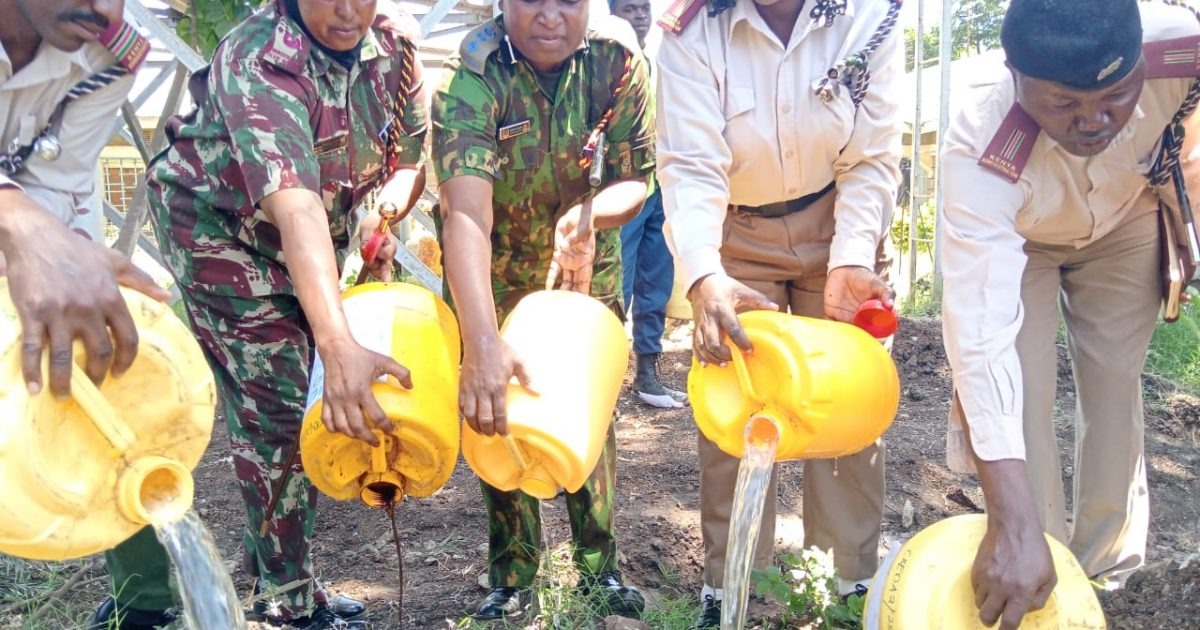
Sustained crackdowns across Central Kenya and the Rift Valley have led to the destruction of thousands of liters of second generation alcohol and the closure of unlicensed distillation sites. Equipment used in illegal production has been confiscated, supply chains interrupted, and repeat offenders subjected to legal action.
- Border and Port Security Reinforcement:
The Border Control and Operations Coordinating Committee has strengthened inspection protocols at key entry points, including the Port of Mombasa and designated land border stations. Enhanced cargo profiling, container scanning, and inter agency coordination have increased interception capacity for hard drugs and precursor chemicals transiting through Kenyan territory.
Technology and Tactical Upgrades
Operational effectiveness has been strengthened through the integration of advanced detection tools and forensic capabilities. In collaboration with the United Nations Office on Drugs and Crime, NACADA has acquired specialized Drug and Precursor Test Kits. These kits enable officers to conduct immediate field verification of suspicious substances, supporting swift arrest procedures and preservation of admissible forensic evidence.
The administration is also reinforcing the Anti Narcotics Unit within the Directorate of Criminal Investigations to enhance surveillance, financial intelligence analysis, and cross border syndicate tracking. Digital data systems are being utilized to map trafficking patterns, identify repeat networks, and support coordinated investigations with international enforcement partners.
Personnel Accountability and Integrity Controls
Institutional integrity forms a critical component of the 100 Day Rapid Results Initiative. The Ministry of Interior has introduced strict accountability measures to ensure enforcement credibility and operational discipline.
- Zero Tolerance for Collusion:
Any public official, security officer, or administrator found facilitating, shielding, or benefiting from drug trafficking activities is subjected to immediate disciplinary action, dismissal, and criminal prosecution. Internal affairs mechanisms and intelligence oversight units monitor compliance and investigate allegations of misconduct.
- Strategic Personnel Transfers:
The National Police Service conducts structured rotations of officers serving in identified drug hotspots. This strategy mitigates the risk of entrenched relationships between enforcement personnel and illicit traders and reinforces professional detachment within high risk zones.
- Localized Administrative Accountability:
Chiefs and Assistant County Commissioners are held directly accountable for illegal brewing dens and drug distribution points within their jurisdictions. Performance assessments incorporate enforcement metrics, ensuring that grassroots leadership maintains active oversight of community level compliance.
Through this integrated enforcement architecture, the Government advances a disciplined and measurable approach to dismantling drug networks, restoring community safety, and reinforcing national development priorities under the Bottom Up Economic Transformation Agenda.
The Healthcare Based Approach and the Social Health Authority
The Government of Kenya has restructured the national response to substance use disorders by embedding treatment, rehabilitation, and recovery services within a formal public health framework. This policy direction reflects a strategic understanding that addiction undermines household stability, workforce participation, community safety, and long term economic productivity. Under the Bottom Up Economic Transformation Agenda, recovery and human capital preservation are treated as development priorities, with healthcare systems positioned as primary intervention platforms.
This transition strengthens the continuum of care from early screening and diagnosis to rehabilitation and post treatment support. The policy framework affirms that substance dependency requires sustained clinical management, structured psychosocial intervention, and community reintegration pathways. By institutionalizing addiction care within mainstream health financing and service delivery systems, the state reinforces dignity, expands access, and supports measurable recovery outcomes across the country.
At the center of this reform is the Social Health Authority, which has integrated substance use disorder treatment into the national health financing architecture. The inclusion of addiction services within universal health coverage structures protects households from catastrophic expenditure, accelerates treatment uptake, and supports long term reintegration into productive economic life.
Enhanced Coverage under the Social Health Authority
Beginning in January 2026, the Social Health Authority implemented expanded financial protection for individuals seeking treatment for substance dependency. The reform ensures that citizens are able to access care at the point of need without prohibitive out of pocket costs. By embedding addiction management within structured benefit packages, the Authority strengthens preventive care, early diagnosis, and sustained recovery planning.
Key elements of the enhanced coverage include:
- Comprehensive Benefit Packages:
The financing structure now covers medically supervised detoxification, residential rehabilitation programs, outpatient counseling services, psychiatric assessment, relapse prevention planning, and follow up monitoring. Coverage extends to essential medications prescribed for withdrawal management and stabilization, laboratory investigations required for safe clinical supervision, and structured therapy sessions delivered by qualified mental health professionals. This integrated benefit design supports both acute intervention and long term recovery continuity.
- Structured Referral Pathways:
A nationally standardized referral system guides patients through successive levels of care. Individuals presenting at primary healthcare facilities undergo screening and stabilization before referral to county hospitals or national referral institutions for specialized psychiatric services when clinically indicated. Clear referral protocols reduce delays in treatment escalation, strengthen continuity of care, and ensure clinical accountability at each stage of intervention.
- Targeted Resource Mobilization and Capacity Strengthening:
Government has prioritized fiscal allocations to county managed health facilities to ensure readiness for expanded addiction services. Investments include recruitment of psychiatrists, clinical psychologists, psychiatric nurses, and addiction counselors; procurement of essential psychotropic medications; establishment of therapy rooms and inpatient rehabilitation wards; and deployment of electronic medical records for case tracking. This financial and technical support strengthens service delivery standards across devolved health systems.
Expansion of Rehabilitation Infrastructure
In early 2026, a national directive accelerated the establishment and operationalization of rehabilitation centers across all forty seven counties. This decentralization strategy addresses historical access gaps that required patients to travel long distances for care, often resulting in delayed intervention and treatment discontinuation.
- County Rehabilitation Centers:
NACADA is collaborating with county governments to operationalize structured rehabilitation facilities aligned with the National Protocol for Treatment of Substance Use Disorders. These centers are required to meet defined benchmarks in clinical governance, staffing ratios, patient safety protocols, structured therapy scheduling, and post discharge follow up systems. Facility audits and performance monitoring frameworks are being implemented to ensure consistent service quality nationwide.
- Specialized Units in National Referral Hospitals:
National referral institutions are receiving enhanced logistical, financial, and technical support to develop advanced psychiatric and addiction recovery units. These centers manage complex cases involving dual diagnosis, severe psychiatric co morbidities, and high risk relapse profiles. Multidisciplinary teams comprising psychiatrists, psychologists, social workers, occupational therapists, and medical officers collaborate to deliver structured treatment plans tailored to individual patient needs.
- Community Based Rehabilitation Framework:
Community Health Promoters serve as frontline connectors between households and formal healthcare facilities. Through structured screening tools and awareness outreach, they identify individuals exhibiting early signs of substance dependency, provide preliminary counseling, reduce stigma, and facilitate referral to accredited treatment centers. Community engagement forums strengthen local ownership of recovery efforts and reinforce family based support systems that are essential for sustained abstinence.
Evidence Based Treatment and Harm Reduction
The healthcare based strategy emphasizes scientifically validated interventions designed to improve recovery outcomes, reduce relapse rates, and mitigate public health risks associated with drug use. The Harm Reduction Bill of 2025 provides a statutory framework for structured medical interventions that address both immediate health risks and long term recovery stability.
- Pharmacological Treatment and Medically Assisted Therapies:
Medically assisted therapies are being scaled up for individuals experiencing opioid related dependency and other substance withdrawal syndromes. Clinical supervision ensures safe administration of approved medications that stabilize neurochemical imbalances, reduce cravings, and support structured rehabilitation participation. Treatment plans are individualized, regularly reviewed, and integrated into broader psychosocial recovery programs.
- Psycho Social Interventions and Behavioral Therapy:
Rehabilitation programs incorporate cognitive behavioral therapy, structured group counseling, trauma informed care, family therapy sessions, and life skills development modules. These interventions address underlying behavioral patterns, strengthen coping mechanisms, rebuild interpersonal relationships, and prepare recovering individuals for reintegration into education, employment, and community life. Continuous monitoring and follow up counseling reduce the likelihood of relapse.
- Integration with HIV and Tuberculosis Services:
Recognizing the intersection between substance use and infectious disease transmission, the Ministry of Health has aligned addiction treatment services with HIV and tuberculosis prevention and care programs. Patients receive integrated screening, testing, counseling, and treatment within coordinated service platforms. This alignment enhances public health surveillance, improves treatment adherence, and strengthens overall patient outcomes through comprehensive care delivery.
Through this healthcare centered model, the Government advances a recovery oriented national strategy that safeguards human capital, strengthens family stability, and supports sustainable economic transformation under the Bottom Up Economic Transformation Agenda. By aligning financing, infrastructure, clinical standards, and community engagement within a unified framework, the state reinforces resilience and restores dignity to affected individuals and communities.
Community Engagement and Public Education
The Government of Kenya has institutionalized community driven prevention as a strategic pillar in the national response to drug and substance abuse. Under the theme Empowered Communities, Brighter Futures, the state has advanced from broad awareness campaigns to targeted, research informed education and structured grassroots participation. This framework recognizes that sustainable prevention is achieved when families, schools, faith institutions, and local leadership structures operate in alignment with national policy objectives.
Community engagement is therefore positioned as a long term resilience strategy. By strengthening household stability, reinforcing positive social norms, and promoting informed decision making among young people, the Government seeks to create social environments that discourage experimentation, disrupt recruitment pathways used by traffickers, and support early intervention for individuals at risk. Prevention is treated as an investment in human capital, national productivity, and social cohesion.
School Based Prevention and Youth Empowerment
A central priority within the 2026 prevention strategy is the protection of learning environments and the empowerment of learners to make informed, values driven decisions. Schools, colleges, and universities are recognized as critical spaces where early exposure often occurs and where structured intervention can yield lasting impact.
Key initiatives include:
- National Senior School Essay Competition:
In January 2026, NACADA launched a nationwide essay competition for learners in Grades 10, 11, and 12 under the theme Protecting Our Future: Making Drug Free Choices in School and Beyond. The initiative promotes critical thinking, peer leadership, and reflective engagement on the social, economic, and health consequences of substance use. Through structured mentorship and evaluation processes, the competition cultivates youth ambassadors who advocate for drug free lifestyles within their schools and communities.
- Curriculum Integration within the Competency Based Curriculum:
Substance abuse prevention content has been incorporated into Life Skills Education under the Competency Based Curriculum. Learners are equipped with competencies such as self awareness, assertive communication, emotional regulation, conflict resolution, and resistance to peer influence. This integration ensures that prevention education is sustained throughout the learner’s academic journey and anchored within measurable learning outcomes.
- Campus Safety and Intelligence Guided Operations:
Law enforcement agencies have strengthened surveillance and intelligence gathering around universities and colleges to dismantle networks targeting students. Deployment strategies are informed by data from the 2025 National Survey on University Drug Use, enabling security agencies to allocate resources to identified academic hotspots. Institutional administrators collaborate with security officers to reinforce campus safety protocols and reporting mechanisms.
Grassroots Mobilization and Community Structures
The prevention architecture adopts a bottom up implementation model that reaches households, villages, and informal settlements. Community ownership of prevention efforts enhances early detection, strengthens accountability, and reinforces shared responsibility in safeguarding young people.
- Community Health Promoters:
Community Health Promoters receive training to conduct home based sensitization, identify behavioral risk indicators, and provide initial counseling to affected families. They serve as trusted community liaisons who facilitate referrals to healthcare facilities and rehabilitation centers. Through structured reporting channels, they contribute to localized data collection and strengthen early intervention capacity.
- Engagement of Faith Based Leaders:
Religious institutions across denominations collaborate with government agencies to reinforce moral guidance, ethical leadership, and supportive recovery environments. Faith leaders provide structured counseling forums, youth mentorship programs, and community dialogue platforms that promote disciplined living and collective responsibility. Their participation expands the reach of prevention messaging and strengthens value based social cohesion.
- Village Level Surveillance and Administrative Oversight:
Local administrators, including Chiefs and Nyumba Kumi elders, maintain structured oversight within residential areas to detect illegal manufacturing activities and suspicious distribution networks. Community reporting mechanisms create a continuous information flow between citizens and security agencies, enabling rapid response and sustained monitoring. This localized vigilance strengthens deterrence and reinforces national enforcement objectives.
National Substance Use Prevention Week
In February 2026, the Government convened the National Substance Use Prevention Week Summit as an annual platform for policy alignment, performance evaluation, and stakeholder coordination. The summit brings together national and county government officials, healthcare professionals, educators, civil society organizations, development partners, and private sector representatives.
The forum facilitates structured review of demand reduction strategies, assessment of data trends, and identification of implementation gaps. County specific action plans are developed to address localized risk factors and demographic patterns. Partnerships are strengthened to bridge the gap between policy formulation and grassroots execution, ensuring that prevention messaging translates into measurable community impact.
Through sustained community engagement, structured education reform, and collaborative governance, the Government reinforces a prevention driven national strategy that protects youth, strengthens families, and advances long term socio economic transformation under the Bottom Up Economic Transformation Agenda.
Economic Reintegration and Post Treatment Support
The Government of Kenya has positioned economic reintegration as the culminating pillar of the national recovery framework. Under the Bottom Up Economic Transformation Agenda, sustainable livelihood creation is treated as a core safeguard against relapse and social exclusion. Recovery extends beyond clinical stabilization and rehabilitation into structured workforce participation, enterprise development, and meaningful community engagement.

The National Guidelines for Aftercare and Reintegration 2025 establish a formal policy structure that connects treatment completion with income generation pathways, financial inclusion, and structured mentorship. Clear institutional roles are assigned to national ministries, county governments, training institutions, financing agencies, and private sector partners to ensure that individuals exiting rehabilitation programs transition into stable, productive environments.
Skills Development and Vocational Training
Technical skills acquisition anchors long term reintegration. Access to structured training strengthens self confidence, enhances employability, and supports sustained income generation. The Government leverages the national Technical and Vocational Education and Training infrastructure to create defined access pathways for individuals in recovery.
- Tailored Training Modules:
Recovering individuals receive priority placement in accredited TVET institutions across counties. Training tracks align with high demand sectors including agribusiness value chains, masonry, plumbing, electrical installation, automotive mechanics, garment production, hospitality services, and digital technology applications. Flexible learning structures and integrated counseling support accommodate individuals transitioning from structured rehabilitation settings and promote successful completion rates.
- Recognition of Prior Learning Framework:
The Recognition of Prior Learning mechanism enables individuals who acquired competencies through informal work or apprenticeship to obtain nationally recognized certification. Structured practical assessments validate skills and issue formal credentials. Certification strengthens access to formal employment opportunities, improves wage prospects, and supports professional progression within regulated sectors.
- Incubation and Practice Centers:
Small scale incubation centers established in partnership with county governments and private sector stakeholders provide supervised workspaces for graduates of rehabilitation programs. Access to shared tools, guided mentorship, and performance monitoring supports enterprise readiness. The incubation environment fosters discipline, productivity, and gradual transition into competitive markets.
Financial Inclusion and Entrepreneurship Linkages
Economic reintegration is reinforced through structured access to capital and entrepreneurship support platforms. Affirmative action financing mechanisms integrate recovering individuals into broader national financial inclusion strategies.
- Access to the Financial Inclusion Fund:
Designated credit windows within the Financial Inclusion Fund extend structured lending opportunities to organized groups that have completed rehabilitation and aftercare programs. Eligibility frameworks emphasize verified program completion, collective accountability, and viable business proposals. Financial literacy training accompanies credit disbursement to strengthen budgeting discipline and repayment performance.
- Uwezo and Youth Enterprise Development Funds:
Application processes have been streamlined to encourage recovering youth to form cooperatives and initiate enterprises in agriculture, manufacturing, services, and creative industries. Technical officers provide proposal development support to enhance approval success and strengthen operational planning.
- Mentorship and Enterprise Coaching:
NACADA’s Recovery Coach Training Program equips selected professionals with competencies in psychosocial support and foundational business guidance. Coaches provide structured mentorship in budgeting, inventory control, customer engagement, compliance requirements, and strategic planning. Continuous engagement strengthens enterprise resilience and reinforces income stability.
Community and Family Reintegration Mechanisms
Sustainable recovery is reinforced within stable family and community environments. Reintegration policies therefore embed structured social support mechanisms that promote inclusion and collective responsibility.
- Aftercare Support Groups:
Community based alumni networks facilitate regular meetings that promote peer accountability, structured dialogue, and relapse prevention planning. Shared experiences foster solidarity and reinforce commitment to long term recovery goals.
- Family Sensitization and Capacity Building:
Targeted training sessions equip family members with practical tools to support returning relatives. Modules address communication strategies, conflict resolution, recognition of relapse indicators, and development of stable household routines. Informed families contribute to environments that strengthen recovery continuity.
- Workplace Integration Frameworks:
Collaboration with the Federation of Kenya Employers supports the development of inclusive hiring guidelines and structured employee assistance programs. Employers receive guidance on supportive supervision practices, confidential counseling systems, and fair recruitment standards. Expanded employment access reduces stigma and strengthens social reintegration.
Monitoring and Long Term Wellness
A structured digital follow up system managed through the Social Health Authority tracks beneficiaries transitioning from inpatient rehabilitation into community settings. Enrolled individuals participate in scheduled outpatient counseling, medical reviews, and psychosocial assessments designed to sustain treatment gains.
Integrated case management tools support early identification of relapse risks and enable timely intervention where additional services are required. Coordinated reporting among healthcare providers, community health promoters, and aftercare mentors ensures continuity of support throughout the recovery journey.
Economic empowerment, structured aftercare, and sustained monitoring together form a comprehensive reintegration architecture. This model strengthens household stability, expands productive participation, and advances long term socio economic transformation under the Bottom Up Economic Transformation Agenda.
Conclusion: 2026 Strategic Milestones and Forward Trajectory
Progress recorded throughout 2025 and early 2026 confirms that the Kenya Kwanza Government has elevated the fight against drug and substance abuse into a structured national priority with measurable outputs. The shift from fragmented interventions to a coordinated national response has strengthened enforcement capacity, expanded treatment access, accelerated judicial reform, and embedded prevention within community systems.
As the administration enters the 2026 2027 fiscal cycle, emphasis shifts from structural build up to performance consolidation, measurable outcomes, and long term sustainability. The next phase focuses on institutional maturity, deterrence credibility, and recovery stabilization at scale.
Strategic Milestones Anchored in 2026
- Operational Depth in Narcotics Intelligence:
The expansion of the Anti Narcotics Unit within the Directorate of Criminal Investigations from 200 to 700 officers has transformed national intelligence coverage. Enhanced forensic, cyber, and financial crime capabilities are increasing disruption of high value syndicates and cross border trafficking chains.
- Institutionalized Asset Recovery:
Formalized asset forfeiture mechanisms are converting proceeds of narcotics trade into funding streams for rehabilitation and prevention infrastructure. This shift strengthens deterrence and reinforces fiscal accountability within the anti drug framework.
- Judicial Efficiency Reform:
Structured consultations toward specialized narcotics courts aim to reduce case backlog, strengthen prosecutorial precision, and accelerate conviction timelines. Faster adjudication strengthens public confidence and reinforces enforcement credibility.
- Digital Supply Chain Suppression:
Coordinated cyber surveillance operations are dismantling online marketplaces used for illicit alcohol and narcotics distribution. Regulatory vigilance in digital spaces strengthens national oversight within evolving commerce platforms.
2027 and Beyond: Strategic Direction
The forward agenda aligns with the NACADA Strategic Plan and the Fourth Medium Term Plan. The focus transitions toward scale, sustainability, and regional positioning.
- Full County Rehabilitation Coverage:
Every county is targeted to operate a fully functional, state funded rehabilitation center integrated with the Social Health Authority framework before the close of 2027. Standardized clinical protocols and digital case management systems will reinforce treatment quality nationwide.
- Generational Prevention Architecture:
School based advocacy platforms will expand to all sub counties, embedding youth leadership within prevention efforts. Structured mentorship and peer influence programs will reinforce disciplined decision making among learners.
- Regional Leadership Positioning:
Kenya is consolidating its standing as a regional reference point for drug demand reduction, structured harm reduction policy, and integrated enforcement models within the East African Community.
This national strategy has moved to institutional permanence. The Kenya Kwanza Government is shaping a disciplined, accountable, and future focused framework that safeguards public health, strengthens national security, and protects economic potential for generations to come.
