

PART I
National Development Financing Context and Structural Realignment
Kenya’s development trajectory has entered a phase where delivery capacity is increasingly shaped by the structure of financing rather than the clarity of policy intent. National priorities across infrastructure, energy, food security, transport, security systems and digital administration have remained consistent within government planning frameworks, yet execution has repeatedly encountered friction arising from fragmented funding channels, annual budget constraints and exposure to fiscal shocks. These constraints have influenced project pacing, contractor confidence, asset maintenance and the sequencing of national investments.
Public development expenditure has historically been organised around annual appropriations, debt issuance and tax receipts, all of which operate on short to medium time horizons. Large-scale infrastructure assets function on long-duration cycles that extend beyond electoral terms and annual fiscal planning windows. This structural misalignment has contributed to delayed completions, accumulation of pending bills, stalled works and rising financing costs, particularly where projects advance without secured long-term capital backing.
The Cabinet decisions of December 15, 2025 situate financing architecture at the centre of national delivery, treating capital mobilisation, asset management and fiscal discipline as operational enablers of development rather than peripheral accounting exercises. The approvals establish a consolidated framework through which Kenya aligns its savings, assets and long-term investment flows with defined national outcomes.
This realignment rests on several interconnected conditions shaping Kenya’s fiscal and development environment.
- Infrastructure demand has expanded faster than traditional budget-based financing capacity, driven by population growth, urbanisation, industrial ambition and regional integration obligations.
- Exposure to debt servicing pressures has narrowed fiscal space, elevating the importance of alternative capital mobilisation channels that preserve delivery momentum while protecting public finances.
- Fragmented asset ownership and underutilised mature public assets have limited the ability to recycle value into new development cycles.
- Contractor confidence and market participation have been affected by delayed payments and uncertainty around project continuity.
The new financing framework does not alter national priorities. It restructures the financial architecture through which those priorities are delivered, allowing projects to proceed on the basis of secured capital flows rather than annual cash availability.
At the centre of this architecture sits the National Infrastructure Fund, approved as a limited liability company with a specific mandate to aggregate domestic resources, mobilise long-term capital and deploy it into priority public infrastructure. The Fund is positioned as a national investment platform rather than a spending channel, anchoring projects within a balance-sheet driven model that emphasises asset value, return discipline and lifecycle management.
The decision to house infrastructure financing within a dedicated vehicle reflects a shift in how Kenya treats public investment.
- Infrastructure is approached as a long-term national asset class requiring structured financing and professional management.
- Public capital functions as anchor investment designed to crowd in private and institutional capital at scale.
- Privatisation proceeds are ring-fenced for reinvestment into infrastructure, closing the loop between asset monetisation and asset creation.
- National savings, including pension assets, are positioned as development capital aligned to domestic economic growth.
This configuration responds directly to the limitations of fragmented financing. By consolidating resources within a single platform, Kenya improves visibility of capital availability, sequencing of projects and coordination across sectors. Infrastructure delivery becomes less sensitive to annual fiscal fluctuations and more responsive to long-term planning horizons.
Parallel to the National Infrastructure Fund, Cabinet approved the Sovereign Wealth Fund Policy, establishing a structured mechanism for managing revenues derived from mineral resources, petroleum activity, public investment dividends and a portion of privatisation proceeds. The policy embeds inter-generational equity, fiscal resilience and strategic investment discipline into the management of national wealth, operationalising constitutional principles while strengthening long-term competitiveness.
The interaction between the two funds introduces a layered financing system.
- The National Infrastructure Fund focuses on active deployment of capital into productive assets that support growth, connectivity and service delivery.
- The Sovereign Wealth Fund anchors savings, stabilisation and strategic investment, insulating national finances from volatility and external shocks.
- Together, they support a financing cycle where assets generate value, value is preserved, and capital is redeployed into priority sectors.
This architecture marks a decisive consolidation of Kenya’s approach to development financing. It places governance, capital discipline and asset stewardship at the core of national delivery, setting the foundation upon which sectoral investments in food security, transport, energy, security systems and digital administration are executed.
PART II
National Infrastructure Fund
Capital Mobilisation, Fiscal Discipline and Delivery Control
Financing Architecture and Purpose Alignment
The National Infrastructure Fund is structured as a delivery instrument designed to align long term capital with Kenya’s development priorities in a disciplined and sequenced manner. Its establishment reflects recognition that infrastructure outcomes depend on financing architecture as much as policy intent. The Fund functions as a national aggregator of capital, investment discipline and project sequencing, ensuring that infrastructure priorities are financed through predictable and scalable mechanisms rather than fragmented annual allocations.
- The Fund is approved as a limited liability company to allow operational flexibility while maintaining public ownership and policy direction.
- Its mandate focuses on mobilising large scale capital for infrastructure that generates long term economic value and system wide productivity gains.
- The structure allows infrastructure projects to be financed on timelines aligned to construction, commissioning and economic returns rather than budget cycles.
- The Fund consolidates financing decision making, reducing duplication across ministries and aligning investment with national planning frameworks.
Capital Mobilisation Strategy
The Fund applies a leverage driven capital mobilisation model that positions public resources as anchors for long term private and institutional investment. This approach recognises that Kenya’s infrastructure gap cannot be closed through public finance alone and requires systematic crowding in of domestic and international capital.
- Public capital invested through the Fund is designed to attract pension funds, sovereign partners, development finance institutions and private equity investors seeking long tenor assets.
- The leverage model anticipates that each shilling deployed by the Fund mobilises up to ten additional shillings from long term investors, expanding the effective financing envelope without increasing direct fiscal pressure.
- Investment mobilisation prioritises domestic savings, particularly retirement funds, aligning national development with citizen owned capital.
- Capital market participation enables broad based ownership of infrastructure assets while deepening financial markets and liquidity.
Asset Recycling and Ring Fencing
A central feature of the Fund’s design is the structured monetisation of mature public assets and strict ring fencing of proceeds for reinvestment into infrastructure. This creates a closed loop financing system that converts existing national value into future productive capacity.
- Privatisation proceeds are ring fenced exclusively for infrastructure investment, preventing diversion into recurrent expenditure.
- Mature assets are monetised based on economic performance and lifecycle considerations rather than fiscal distress.
- Proceeds are reinvested into new infrastructure that expands productive capacity, connectivity and service delivery reach.
- This approach strengthens balance sheet management by converting static assets into dynamic economic enablers.
Fiscal Discipline and Risk Management

The Fund introduces a disciplined framework for managing fiscal exposure while supporting large scale infrastructure expansion. By shifting from debt financed delivery to investment led mobilisation, Kenya strengthens fiscal resilience while sustaining development momentum.
- Infrastructure financing through the Fund reduces reliance on short term borrowing and associated refinancing risks.
- Long tenor capital aligns debt service profiles with infrastructure revenue and economic impact timelines.
- Taxpayer exposure shifts toward asset backed investment structures rather than sovereign guarantees alone.
- Risk allocation frameworks ensure that construction, operational and market risks are managed through appropriate instruments and partnerships.
Governance and Institutional Controls
Governance architecture underpins the credibility and sustainability of the National Infrastructure Fund. Professional oversight, transparency and accountability mechanisms are embedded to safeguard public interest while enabling commercial discipline.
- The Fund is overseen by a competitively appointed Board responsible for strategic direction, oversight and performance monitoring.
- Executive management is led by a professional Chief Executive Officer accountable to the Board and bound by clear fiduciary responsibilities.
- Investment decisions are guided by defined criteria aligned to national development priorities, economic returns and risk management standards.
- Transparency frameworks ensure reporting, audit and public accountability across the Fund’s operations.
Delivery Implications
The establishment of the National Infrastructure Fund reshapes how infrastructure is planned, financed and delivered across Kenya. It strengthens predictability, restores confidence among contractors and investors, and accelerates execution of priority projects.
- Infrastructure delivery benefits from assured financing pipelines that reduce project stoppages and cost escalations.
- Contractors and investors gain confidence from predictable payment structures and professionally managed funding flows.
- National planning gains coherence as financing aligns with long term development sequencing.
- Economic transformation is supported through infrastructure that enables productivity, trade, energy security and digital expansion.
PART III
Sovereign Wealth Fund and Long-Term National Value Management
Strategic Rationale and Constitutional Anchoring
The establishment of the Sovereign Wealth Fund sits within Kenya’s long-term fiscal and economic management framework, responding to the reality that revenues derived from finite natural resources and mature public investments require structured stewardship beyond annual expenditure cycles. The Fund provides a formal mechanism through which such revenues are consolidated, preserved and deployed in a manner aligned with national competitiveness, resilience and inter-generational equity. Cabinet approval of the Sovereign Wealth Fund Policy operationalises this framework at a time when mineral, petroleum and investment-derived revenues are expected to play a larger role in the national fiscal profile.
- The Fund is anchored on Article 201 of the Constitution, which provides for prudent use of public resources, responsible financial management and equity between present and future generations.
- It consolidates revenues from mineral and petroleum resources, dividends from public investments and a defined portion of privatisation proceeds into a single national investment vehicle rather than dispersing them across recurrent expenditure lines.
- The structure recognises that resource-linked revenues are inherently volatile and require buffering mechanisms to protect the economy from external shocks and price cycles.
Revenue Streams and Capital Consolidation
The Sovereign Wealth Fund aggregates defined revenue streams that historically entered the fiscal system through fragmented channels, often absorbed into short-term expenditure pressures. The consolidation of these streams creates a disciplined capital pool designed for preservation, growth and strategic deployment.
- Revenues from mineral extraction and petroleum activity are directed into the Fund to ensure that value derived from non-renewable resources translates into durable national assets rather than transient consumption.
- Dividends from public investments are treated as capital inputs, reinforcing the role of state assets as long-term value generators within the national balance sheet.
- A portion of privatisation proceeds is allocated to the Fund, complementing the National Infrastructure Fund framework and reinforcing the principle that asset recycling supports future productivity rather than fiscal relief.
Investment Mandate and Risk Management
The Sovereign Wealth Fund operates under a defined investment mandate that prioritises capital preservation, measured growth and strategic returns aligned with national interests. The mandate balances commercial discipline with public value considerations, recognising the dual role of the Fund as both an investment institution and a stabilising fiscal instrument.
- Investments are structured to generate commercial returns while supporting sectors that strengthen national competitiveness, economic diversification and resilience.
- The Fund functions as a shock-absorption mechanism during periods of external stress, supporting fiscal stability without abrupt expenditure contraction or unplanned borrowing.
- Risk management frameworks guide asset allocation, limiting exposure to single sectors, geographies or revenue sources and reinforcing long-term sustainability.
Governance, Oversight and Institutional Discipline
Governance of the Sovereign Wealth Fund is designed to ensure insulation from short-term political pressures while maintaining accountability to the public interest. The policy framework establishes clear lines of authority, oversight and reporting that align with international best practice while remaining grounded in Kenya’s constitutional and institutional context.
- The Fund operates under a robust policy framework that defines governance structures, investment principles and accountability requirements.
- Decision-making authority is vested in professionally constituted structures, ensuring that investment choices reflect technical assessment rather than administrative convenience.
- Transparency mechanisms provide for reporting on performance, asset allocation and compliance with policy objectives, reinforcing public confidence and institutional credibility.
Alignment with National Development Priorities
The Sovereign Wealth Fund complements the National Infrastructure Fund by addressing a different dimension of national financing needs. While the Infrastructure Fund mobilises capital for delivery of priority projects, the Sovereign Wealth Fund preserves and grows national wealth to sustain those priorities over time.
- The Fund supports Kenya’s transformation agenda by strengthening fiscal buffers and enabling sustained investment in food security, energy, transport and industrial development.
- It reinforces the shift toward an investment-led growth model by ensuring that strategic revenues are deployed with long-term intent rather than absorbed into recurrent cycles.
- The framework positions Kenya to manage future resource inflows with discipline, foresight and institutional coherence, supporting stability across economic cycles.
PART IV
Sectoral Deployment Logic and National Delivery Pathways
Infrastructure as an Economic Transmission System
Kenya’s infrastructure pipeline is structured as an integrated economic transmission system that links production zones, markets, logistics corridors, energy supply and urban systems. The Cabinet approvals align financing architecture with sector-specific delivery pathways rather than treating infrastructure as isolated construction activity.
- Infrastructure investment is positioned as a productivity enabler that reduces transaction costs across agriculture, industry, trade and services by shortening travel times, stabilising energy supply and improving market access across regions.
- Priority infrastructure sectors are sequenced to unlock economic value across multiple layers of the economy, ensuring that capital deployed through national funds translates into measurable output rather than stranded assets.
- The delivery approach reflects a shift toward coordinated sector planning, where transport, energy, water and logistics investments are synchronised to reinforce each other within defined economic corridors.
Food Security and Water Infrastructure Deployment

Food security investment is anchored on large-scale water control and irrigation infrastructure designed to stabilise agricultural production across climatic cycles and reduce dependency on rain-fed systems.
- The construction of fifty mega dams, two hundred mini-dams and more than one thousand micro-dams is planned to bring approximately two point five million additional acres under irrigation, expanding productive land and supporting year-round farming activity.
- Irrigation infrastructure is linked directly to agro-industrialisation objectives, enabling consistent supply of raw materials for processing, storage and export markets rather than seasonal surplus followed by scarcity.
- Water infrastructure investment supports rural livelihoods by stabilising income for farming households, reducing climate-driven displacement and strengthening local economies that depend on agriculture as a primary economic activity.
- The scale of dam construction reflects a national water security strategy that integrates food production, livestock support and domestic water supply within a single investment framework.
Transport and Logistics Network Expansion
Transport infrastructure expansion is structured to reinforce Kenya’s role as a regional logistics hub while improving internal connectivity between farms, industries, cities and ports.
- The planned dualling of two thousand five hundred kilometres of highways focuses on high-traffic economic corridors where congestion currently constrains trade, increases transport costs and slows movement of goods and people.
- The tarmacking of twenty eight thousand kilometres of roads targets rural and peri-urban connectivity, linking production zones to markets and reducing post-harvest losses linked to poor access infrastructure.
- Extension of the Standard Gauge Railway to Malaba and onward regional connections strengthens Kenya’s position within regional trade networks, improving freight efficiency and reducing pressure on road transport systems.
- Modernisation of the ports of Mombasa and Lamu enhances cargo handling capacity, turnaround times and integration with inland transport systems, supporting trade growth and industrial expansion.
- Airport modernisation supports tourism, cargo logistics and regional connectivity, reinforcing Kenya’s aviation role within East Africa and beyond.
Energy Generation and Industrial Power Supply
Energy investment is configured to support industrial growth, digital expansion and emerging technologies through diversified generation capacity and long-term supply stability.
- The planned addition of at least ten thousand megawatts of new generation capacity over seven years draws on Kenya’s geothermal, hydro, solar, wind and nuclear potential to meet growing demand.
- Energy expansion supports manufacturing, value addition, digital infrastructure, e-mobility and data-driven industries that require reliable and affordable power supply.
- Diversification of energy sources strengthens resilience against climate variability and supply shocks, reducing exposure to single-source dependency within the national grid.
- Energy infrastructure investment is aligned with climate commitments and sustainability objectives, positioning Kenya as a leader in clean energy deployment within the region.
Rail, Urban Mobility and Integrated Transport Systems
Urban and inter-urban mobility investments are structured to address congestion, productivity losses and urban growth pressures through integrated transport planning.
- Financing approval for priority transport projects includes the Naivasha Kisumu Standard Gauge Railway Phase Two B, the SGR link to Uganda, the Nairobi Railway City Central Station and multiple Bus Rapid Transit lines.
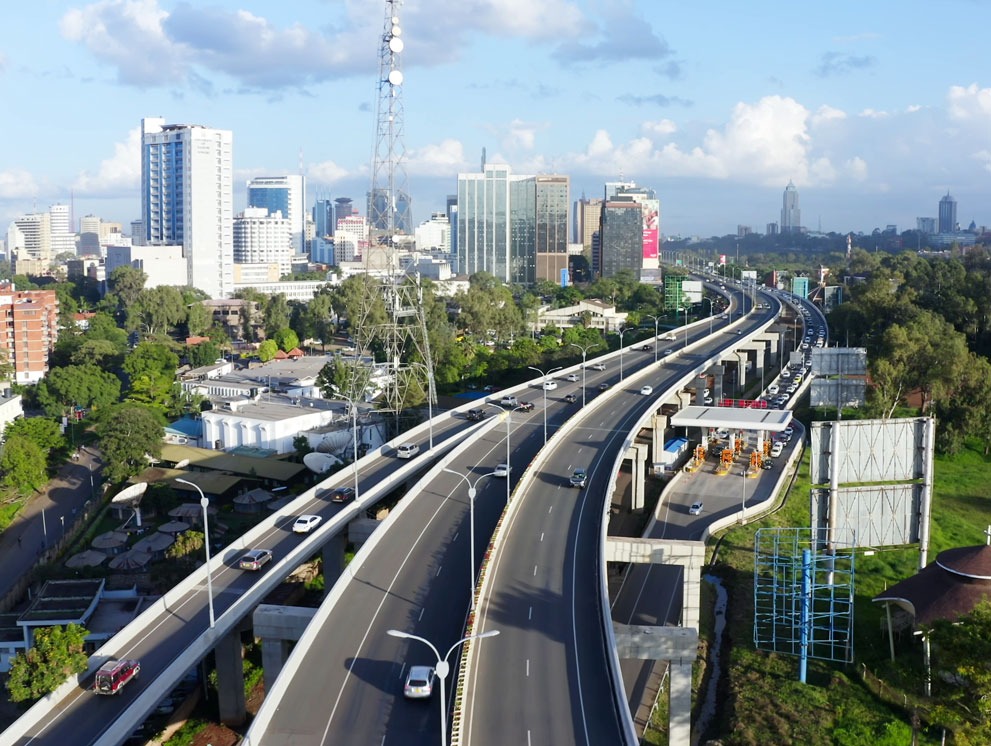
- Urban rail, commuter systems and non-motorised transport are integrated into city planning frameworks to support efficient movement of people while reducing congestion and emissions.
- Transport investments are aligned with land use planning and economic zoning, supporting urban densification, commercial development and transit-oriented growth.
Payment Discipline and Project Continuity
Infrastructure delivery is reinforced through restoration of payment discipline across public works, addressing a long-standing constraint on contractor confidence and project execution.
- Settlement of all pending bills for certified works and accrued interest in the Ministry of Roads up to thirty one December twenty twenty four totals approximately one hundred and twenty three billion Kenya shillings.
- Payment clearance has unlocked or accelerated eight hundred and seventy five road contracts since April twenty twenty five, enabling resumption of stalled works and mobilisation of contractors nationwide.
- Restoration of payment discipline supports employment, supply chain stability and continuity of infrastructure activity across counties.
Infrastructure Delivery as a National System
The sectoral deployment framework positions infrastructure delivery as a continuous national system rather than a series of isolated projects.
- Financing, planning, construction and operation are aligned under a unified delivery logic supported by national funds and policy frameworks.
- Infrastructure investments are linked to measurable economic outcomes including productivity gains, trade expansion, energy reliability and food security.
- The approach reinforces Kenya’s long-term development trajectory by anchoring infrastructure delivery within a stable financing and governance environment.
PART V
Governance Discipline, Delivery Assurance and National Value Protection
- Governance Architecture Anchoring National Delivery
- The financing architecture approved by Cabinet is structured to reinforce national discipline in project selection, capital deployment and value preservation. Governance is embedded through clear separation between policy direction, institutional ownership and professional execution, ensuring that infrastructure financing operates within defined national priorities while remaining insulated from operational interference.
- Board oversight frameworks are designed to align investment decisions with long term national development objectives across transport, energy, water, logistics and productive sectors. Governance controls are anchored in formal accountability structures that require justification of capital allocation decisions, performance reporting and adherence to approved investment mandates.
- Executive management responsibility is consolidated under competitively appointed leadership with defined fiduciary obligations. This structure supports consistent decision making, reduces fragmentation across implementing agencies and strengthens accountability for outcomes across the full investment lifecycle.
- Ring Fencing of Public Value and Asset Recycling Discipline
- Privatisation proceeds are ring fenced exclusively for reinvestment into public infrastructure assets. This discipline ensures that asset monetisation translates directly into productive national capital formation rather than short term fiscal absorption.
- Asset recycling frameworks enable Kenya to unlock value from mature public assets while retaining strategic control over national infrastructure. Proceeds are redirected into new capacity across roads, rail, ports, energy generation and water systems, reinforcing a cycle of renewal rather than depletion.
- Capital recycling reduces pressure on debt accumulation by converting existing public value into future productive capacity. This approach strengthens balance sheet resilience and supports sustainable financing of long horizon projects.
- Contractor Confidence, Payment Discipline and Delivery Momentum
- The settlement of certified works and accrued interest obligations restores credibility within the infrastructure delivery ecosystem. Payment of outstanding bills eliminates a key constraint that previously slowed project execution and strained contractor liquidity.
- The clearance of KSh one hundred and twenty three billion in pending obligations unlocks active work sites and accelerates resumption across hundreds of stalled or slowed road contracts. This directly translates into employment continuity, supply chain activation and renewed contractor participation.
- Predictable payment discipline improves pricing efficiency in future procurements by reducing risk premiums. Contractors price work based on delivery certainty rather than delayed compensation risk, supporting better value for public expenditure.
- Integration of Financing, Planning and Execution Systems
- Financing mechanisms are aligned with national planning instruments to ensure that capital mobilisation translates into sequenced project execution. This integration links funding availability with readiness of designs, approvals and implementation capacity.
- Project pipelines are structured to prioritise readiness and economic impact. Sequencing frameworks ensure that capital deployment follows feasibility, appraisal and approval stages rather than ad hoc political or administrative pressure.
- Integration across financing, planning and execution reduces fragmentation that historically contributed to stalled projects. This alignment strengthens delivery timelines and supports coordinated expansion across interconnected infrastructure networks.
- Transparency, Accountability and Public Interest Safeguards
- Governance frameworks embed transparency requirements across investment decisions, project selection and performance reporting. Oversight mechanisms enable scrutiny by relevant institutions while maintaining operational efficiency.
- Accountability systems are designed to track both financial performance and delivery outcomes. This dual focus ensures that infrastructure investments are assessed based on completion, functionality and long term value rather than expenditure alone.
- Public interest safeguards are embedded through adherence to constitutional principles on public finance, intergenerational equity and prudent management of national resources. These safeguards anchor the financing architecture within Kenya’s broader governance framework.
- Long Term National Value Preservation
- Infrastructure investments financed through the approved architecture are structured to generate enduring economic returns through improved productivity, connectivity and service delivery. This focus reinforces national competitiveness and supports inclusive economic participation.
- Long horizon financing supports infrastructure assets whose benefits accrue over decades, aligning investment timelines with national development trajectories rather than short term fiscal cycles.
- Value preservation frameworks ensure that assets financed today remain functional, maintained and productive for future generations, reinforcing Kenya’s long term economic resilience and institutional credibility.
