
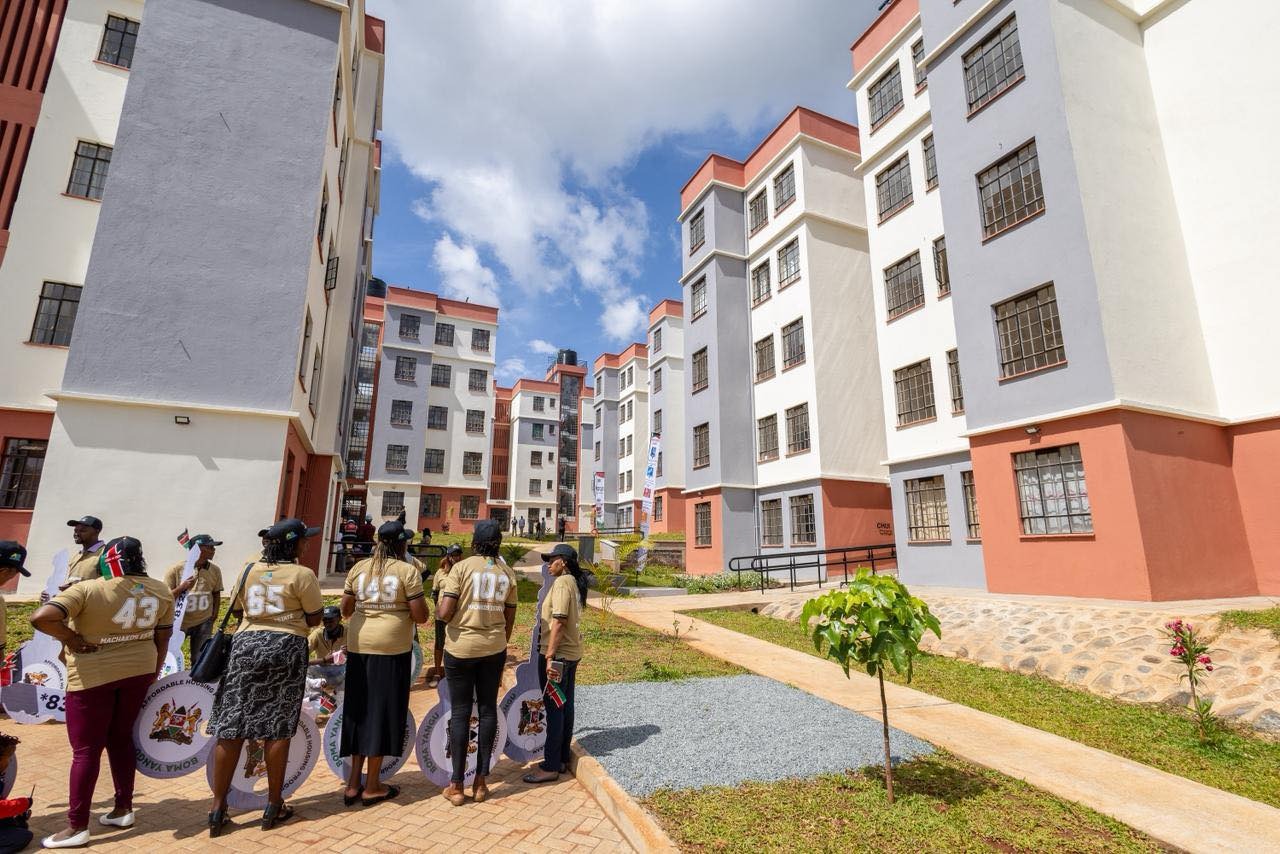
PART I
POLICY CENTRALITY, DELIVERY CONTEXT, AND EXECUTION FRAMEWORK
Central Position of the Affordable Housing Program in the Ruto Administration
From the first day of the administration of President William Samoei Ruto, the Affordable Housing Program AHP was deliberately positioned at the centre of national governance and delivery. Housing was identified at transition into office as a strategic national priority with direct economic, social, and urban implications. The administration assessed housing as a cross-cutting intervention capable of driving employment creation, stabilising urban growth, strengthening household security, and anchoring long-term productivity.
This centrality was institutionalised immediately. AHP was embedded within the Bottom Up Economic Transformation Agenda and integrated into Cabinet priorities, national planning instruments, and fiscal policy architecture. Housing delivery was treated as productive national infrastructure requiring sustained political ownership, predictable financing, and coordinated execution across levels of government. Presidential stewardship established a clear accountability line, anchoring affordable housing within delivery performance rather than policy declaration.
This positioning is reflected in measurable policy actions
- Continuous inclusion of AHP in successive Budget Policy Statements and annual national budgets, ensuring fiscal continuity rather than one-off allocations.
- Cabinet-level tracking of housing delivery milestones alongside infrastructure, food security, and digital transformation priorities.
- Direct presidential ownership of housing outcomes, reinforcing execution discipline and delivery focus across implementing institutions.
Delivery Context Inherited at the Point of Transition
At the point of administrative transition, affordable housing delivery existed largely as policy intent supported by limited pilot execution. While the concept of affordable housing had entered national discourse, delivery outcomes remained narrow in scale and uneven in execution. The incoming administration therefore inherited a housing agenda defined by ambition without a delivery system capable of operating at national scale.
The inherited delivery baseline was defined by the following measurable conditions
- Fewer than 2,000 affordable housing units had been completed and handed over nationwide, representing minimal contribution to a national deficit measured in millions.
- Geographic coverage was restricted to a small number of pilot sites, limiting national visibility and impact across counties and urban centres.
- Financing arrangements lacked a stable, multi-year structure, resulting in stop-start construction cycles misaligned with housing development timelines.
- Land readiness was inconsistent, with unresolved tenure issues and limited pre-servicing of sites before contractor mobilisation.
- Trunk infrastructure integration was weak, with housing delivery often disconnected from roads, water, sewerage, drainage, and power systems.
- No unified national delivery framework existed, leaving coordination between national and county governments fragmented and reactive.
This baseline informed the administration’s decision to restructure affordable housing into a fully operational national program capable of sustained execution.
Structural Housing Demand and National Imperative
Kenya’s housing challenge is structural, cumulative, and empirically defined through national planning data. Demand pressures arise from demographic expansion, urbanisation, and prolonged undersupply of affordable formal housing.
National housing indicators shaping program scale
- An estimated housing deficit of approximately 2,000,000 units, reflecting decades of undersupply across urban and peri-urban areas.
- Annual incremental demand of roughly 200,000 units, driven by household formation, migration to urban centres, and demographic growth.
- Urban population growth exceeding 4% per annum, intensifying pressure on land, infrastructure, and existing housing stock.
- More than 55% of urban residents living in informal or inadequately serviced settlements, characterised by insecure tenure, limited sanitation, and elevated health and safety risks.
These indicators necessitated a housing response designed for continuity, scale, and nationwide reach rather than fragmented or pilot-based intervention.
Execution Reforms Introduced Under the Current Administration
To ensure the Affordable Housing Program would not stall at intent or pilot level, the administration introduced deliberate execution reforms at inception, addressing historical failure points directly.
Key structural reforms underpinning delivery
- Financing certainty and continuity, achieved through a structured housing financing framework aligned to multi-year construction schedules, reducing exposure to annual budget volatility and enabling uninterrupted site activity.
- Land readiness and infrastructure sequencing, with housing delivery conditioned on prior land identification, tenure resolution, and alignment with roads, water, sewerage, drainage, and power before construction commencement.
- Centralised execution discipline, established through a unified national delivery framework coordinating the State Department for Housing, the National Treasury, county governments, and implementing agencies under standardised pipelines and milestone monitoring.
- Mandatory integration of social infrastructure, ensuring that housing estates are delivered together with health facilities, schools, security installations, fire and emergency services, and organised commercial spaces.
- Formal beneficiary governance systems, operationalised through structured registration, verification, and allocation processes to strengthen transparency, reduce disputes, and align delivery with verified demand.
These reforms converted affordable housing into a resilient national delivery system capable of operating concurrently across multiple counties.
Scale of Delivery and Economic Outcomes
Under this execution framework, the Affordable Housing Program has progressed into sustained nationwide delivery with measurable outputs and economic effects.
Current national delivery and impact indicators
- Approximately 240,000 housing units under development nationwide, spanning site servicing, foundations, superstructures, finishes, and phased handovers.
- More than 200 active project sites distributed across all 47 counties, covering metropolitan areas, secondary towns, and county urban centres.
- Cumulative employment of approximately 480,000 jobs generated, encompassing artisans, technicians, supervisors, engineers, transport operators, and professional consultants, with high youth participation.
- Extensive secondary employment across value chains, including cement and steel manufacturing, aggregates supply, transport and logistics, equipment hire, catering, and site services.
- Construction sector contribution of about 7 percent to GDP, reinforced through predictable housing delivery pipelines anchored in public policy rather than ad hoc projects.
At household level, delivery outcomes include secure tenure, planned access to water and sanitation, organised drainage and waste management, improved residential safety, and greater household stability supporting education and health access.
PART II
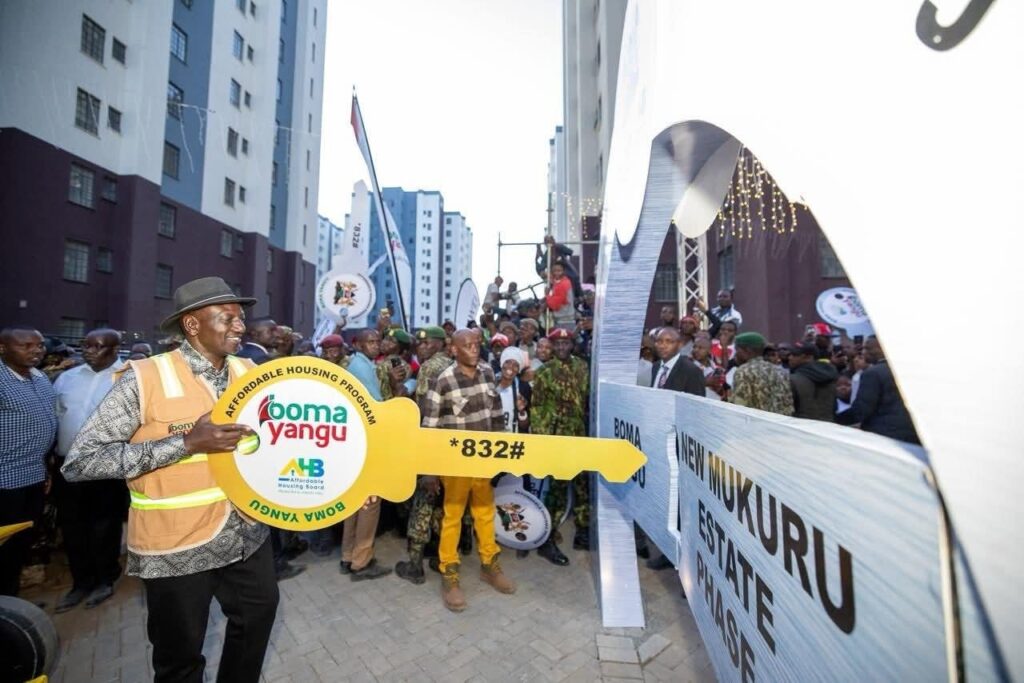
MUKURU AFFORDABLE HOUSING PROJECT
PHASE I AND PHASE II DELIVERY PROFILE
Mukuru as a Priority Urban Renewal Zone
Mukuru has historically represented one of Nairobi’s most densely populated informal settlements, characterised by insecure tenure, limited sanitation coverage, high exposure to fire and flooding risk, and constrained access to health, education, and security services. For decades, Mukuru featured prominently in urban policy discussions without sustained delivery due to land complexity, infrastructure deficits, and social sensitivity associated with large-scale redevelopment.
Under the Affordable Housing Program AHP, Mukuru was designated as a priority urban renewal zone to demonstrate that informal settlement transformation can be executed at scale while preserving community continuity. The intervention was structured to integrate housing delivery with land regularisation, trunk infrastructure provision, and social facility development, ensuring that residential construction proceeded within a complete urban system rather than as isolated housing blocks.
Phase I: Establishing Delivery, Systems, and Community Anchoring
Mukuru Phase I constituted the initial execution phase of AHP within the Mukuru redevelopment footprint. Its primary purpose was to operationalise delivery systems, validate construction standards, and establish community acceptance in a dense urban environment.
Phase I delivery scope and outcomes
- Phase I delivered completed and occupied affordable housing units that formed the first formal residential clusters within Mukuru, replacing informal structures constructed from temporary materials with permanent, regulated buildings compliant with national standards.
- Each unit was delivered with internal sanitation facilities, metered electricity, and planned access to water and waste management systems, addressing long-standing public health and safety challenges within the settlement.
- Beneficiary selection prioritised households drawn from within Mukuru, ensuring that redevelopment did not sever social networks and that long-term residents directly benefited from the intervention.
- Construction activities under Phase I generated sustained employment for local artisans, technicians, and youth, embedding income generation within the community and strengthening local acceptance of the project.
- Phase I served as an operational learning platform, generating data on cost control, contractor coordination, site logistics, beneficiary engagement, and service integration that informed design refinement and scale-up under Phase II.
Through these outcomes, Phase I converted Mukuru from a policy discussion into an active delivery site under the national housing agenda.
Phase II: Scale Expansion and High-Density Housing Delivery
Mukuru Phase II represented a substantial scale-up of affordable housing delivery, implemented as a multi-cluster intervention designed to accommodate high-density urban living while maintaining service adequacy.
Phase II housing delivery profile
- Phase II delivered a total of 7,920 affordable housing units, completed and handed over for occupation within Nairobi’s urban core.
- The Riara cluster, comprising 5,000 units, was developed as a high-density residential zone incorporating vertical housing typologies aligned with land availability and urban planning requirements.
- The Muriguini cluster, comprising 2,920 units, expanded housing availability while maintaining consistent design standards, service access, and affordability thresholds under AHP.
- Housing typologies include studio, one-bedroom, and two-bedroom units, calibrated to household size distribution and income profiles targeted under the program.
- All units were delivered fully finished, with internal fittings, metered utilities, structured circulation spaces, and immediate readiness for occupation, eliminating post-handover informal modifications.
The completion and handover of Phase II marked one of the largest single-site affordable housing deliveries undertaken within Nairobi.
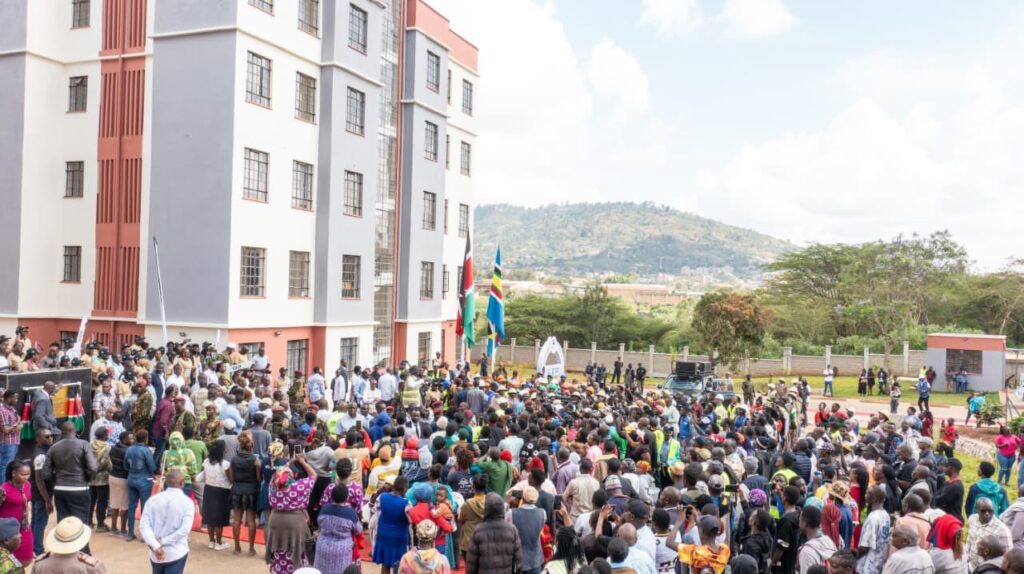
Social Infrastructure and Public Services Integration
A defining feature of Mukuru Phases I and II has been the deliberate integration of housing delivery with social infrastructure and public services. Residential development was executed alongside facilities required to support daily life, safety, and economic activity.
Public facilities delivered within the Mukuru redevelopment area
- The New Mukuru Level IV Hospital provides inpatient and outpatient services, emergency care, maternity services, diagnostic capacity, and referral pathways, significantly expanding access to healthcare for Mukuru residents and neighbouring communities.
- The New Mukuru Fire Station introduces permanent firefighting and rescue capacity within a high-density settlement previously exposed to frequent fire incidents, improving response times and disaster preparedness.
- The Mukuru Police Station strengthens public safety through enhanced law enforcement presence, community policing, and crime prevention coverage.
- The New Mukuru Primary School and Pre-School expand access to formal education, reducing travel distances for children and supporting higher school attendance rates.
- Mukuru Mall provides organised commercial space for retail, services, and small enterprises, supporting livelihoods, formalising economic activity, and generating sustained foot traffic within the estate.
These facilities were commissioned in coordination with housing handovers, ensuring that residents accessed essential services from the point of occupation.
Employment Creation and Local Economic Effects
Housing construction and service delivery under Mukuru Phases I and II generated significant employment and economic activity within Nairobi.
Employment and economic outcomes
- Construction works created thousands of direct jobs across masonry, steel fixing, plumbing, electrical works, finishes, supervision, transport, and site management, sustaining income flows over extended construction periods.
- A substantial proportion of workers were sourced from Mukuru and surrounding neighbourhoods, reinforcing local economic participation and reducing social resistance to redevelopment.
- Secondary economic activity expanded through demand for building materials, transport services, food vending, equipment hire, security, and site support services.
- Post-occupation commercial activity within Mukuru Mall and surrounding precincts has supported micro and small enterprises, contributing to continuous local economic circulation.
These outcomes align housing delivery with employment and livelihoods objectives under AHP.
Household Welfare and Urban Transformation Outcomes
The transition from informal shelter to formal housing under Mukuru Phases I and II has delivered measurable improvements in household welfare and urban order.
Household-level and neighbourhood outcomes
- Secure tenure under formal allocation and ownership frameworks has reduced exposure to eviction and strengthened household stability.
- Planned access to water supply, sanitation, drainage, and solid waste management has improved public health conditions and reduced environmental risk.
- Regulated building standards, combined with fire and policing services, have enhanced residential safety in a previously high-risk area.
- Stable housing environments have supported improved school attendance, healthcare access, and structured household financial planning.
For resident households, Mukuru’s redevelopment represents a permanent transition to planned urban living conditions.
PART III
NATIONAL REPLICATION PIPELINE
REGION-BY-REGION PROJECT PORTFOLIO
National delivery context and on-site execution reality
The Affordable Housing Program has transitioned decisively into physical delivery across the country, with a wide spread of projects under active construction. Contractors are on site, superstructures are rising, services are being laid, and phased handovers are being scheduled across metropolitan cores, commuter belts, county capitals, and regional towns. This Part details projects currently being built, with emphasis on site scale, construction scope, and delivery logic, while retaining clarity on unit numbers and execution depth.
NAIROBI METROPOLITAN REGION
The Nairobi Metropolitan Region remains the core execution zone for AHP, combining large-scale informal settlement redevelopment and inner-city estate regeneration. Delivery here is characterised by high-density vertical construction, complex service integration, and phased occupation strategies.
- New Mukuru Housing Estate
Implemented as a multi-phase integrated redevelopment combining affordable housing with health facilities, schools, police stations, fire and emergency services, internal road networks, water, sewerage, and organised commercial zones. Phase II delivered 7,920 units, comprising 5,000 units at Riara and 2,920 units at Muriguini, with additional phases under construction and mobilisation. Construction activities include multi-storey blocks, internal estate roads, drainage, power distribution, and community facilities, positioning Mukuru as the largest executed AHP site and the central national reference for large-scale informal settlement transformation.
- Meteorological Site Social Housing, Mukuru
Under active construction as part of the wider Mukuru redevelopment footprint, with a planned capacity of 13,076 units delivered through multiple vertical blocks. On-site works include reinforced concrete superstructures, lift cores, internal services, and estate infrastructure. The project expands the Mukuru housing envelope while maintaining alignment with the integrated services framework.
- Kibera Soweto East Zone B
Under active construction delivering 4,054 units, with sequential block construction and phased rehousing underway. The project involves demolition of old structures, erection of high-rise residential blocks, installation of internal utilities, and development of shared social spaces to support orderly transition and continuity for existing residents.
- Starehe Social Housing Redevelopment
Under construction delivering 2,000 units through high-density inner-city redevelopment. Works include demolition of ageing estates, construction of vertical blocks, parking, utilities, and estate services designed to optimise limited urban land while expanding formal housing supply.
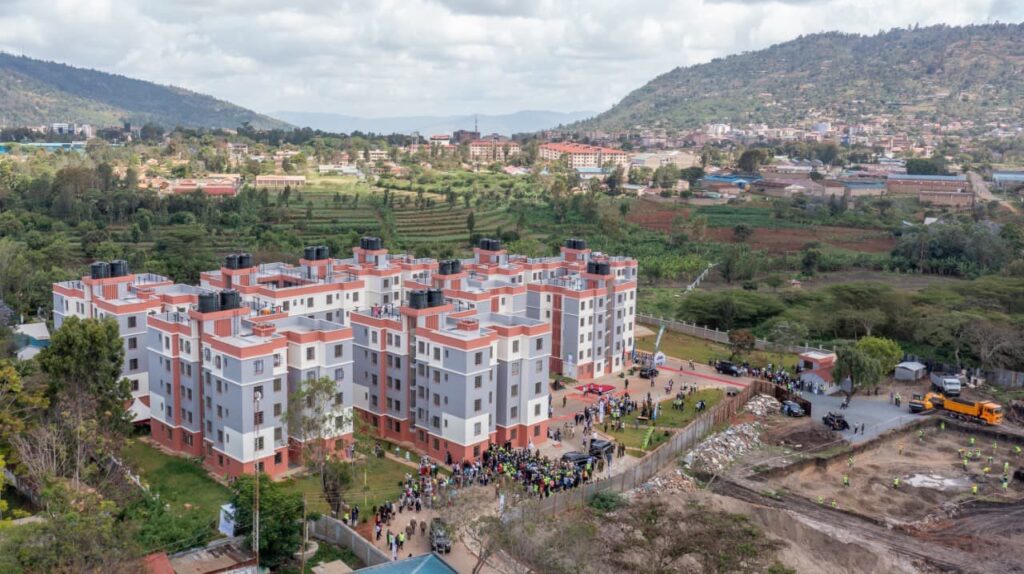
NAIROBI COMMUTER BELT AND CENTRAL REGION
This corridor represents one of the most active construction zones under AHP, absorbing metropolitan spillover and commuter demand. Sites here are visibly advanced, with multiple contractors operating concurrently.
- Ruiru Affordable Housing Project, Kiambu County
Under active construction delivering over 1,400 units across multiple blocks. The site features foundation works, rising superstructures, roofing, internal finishes, and estate infrastructure including access roads, drainage, water, sewerage, and power connections. Ruiru functions as a flagship commuter-belt project, demonstrating high-volume delivery outside the Nairobi core.
- UTI Estate Thika Affordable Housing Project
Under construction delivering 360 units, with vertical blocks rising and internal estate works progressing. The project supports structured housing supply within Thika Municipality and is integrated with existing road and service networks.
- Limuru Tigoni Affordable Housing Project
Under active construction delivering 975 units, with multiple blocks under different construction stages. The project supports commuter settlement along the Nairobi–Naivasha corridor and includes internal roads, drainage, and service infrastructure.
- Nyeri Ruringu Affordable Housing Project
Under construction delivering 480 units, involving vertical block construction, internal utilities, and estate servicing. The project supports densification of the county capital and structured residential growth.
- Kerugoya and Sagana Affordable Housing Projects, Kirinyaga County
Under active construction and advanced mobilisation delivering over 3,800 units across multiple sites. Works include large-scale block construction, internal road networks, drainage systems, and service installations, representing one of the strongest active construction footprints in Central Kenya.
EASTERN REGION AND NAIROBI EXPANSION CORRIDOR
The Eastern corridor combines commuter-belt expansion and county capital delivery, with several sites under full construction.
- Mavoko Affordable Housing Project, Machakos County
Under active construction delivering 5,360 units, with extensive on-site activity including superstructure works, internal roads, drainage, water and sewer networks, and power distribution. The scale of the site, number of contractors, and phased execution make Mavoko one of the largest active AHP construction sites outside Nairobi.
- Athi River Affordable Housing Sites
Under construction across multiple parcels delivering thousands of units, aligned to industrial corridor employment. Works include vertical residential blocks, estate services, and integration with trunk infrastructure supporting long-term urban expansion.
- Embu Affordable Housing Projects
Under construction across Majimbo B, Blue Valley, Spring Valley, and Kimathi Estate delivering over 1,900 units. Construction activities include multi-storey residential blocks, internal estate roads, drainage, and service installation supporting county town expansion.
RIFT VALLEY REGION
The Rift Valley exhibits broad active construction across county capitals and regional towns, reflecting geographic spread and delivery depth.
- Nakuru Municipal Affordable Housing Projects
Under active construction across multiple sites delivering several thousand units, with works including vertical blocks, internal roads, drainage, water, sewerage, and phased estate completion supporting urban renewal within the county capital.
- Elburgon Affordable Housing Project
Under construction delivering hundreds of units, involving residential block construction and estate servicing to support structured growth in a regional town.
- Eldoret Kimumu, Pioneer, and West Area Projects, Uasin Gishu County
Under active construction delivering over 5,000 units across multiple sites. The projects include large-scale block construction, estate infrastructure, and service integration aligned to Eldoret’s role as a regional economic hub.
LAKE REGION
The Lake Region has transitioned firmly into large-scale construction, with multiple counties hosting live sites and visible progress.
- Kisumu City Affordable Housing Projects
Under active construction across Lumumba and other urban sites delivering over 2,500 units. Works include high-rise residential blocks, internal roads, drainage, and utilities supporting lakeside urban renewal.
- Migori County Affordable Housing Projects
Under construction across Migori, Awendo, and Kehancha delivering over 2,000 units, with multiple contractors executing phased works across county towns.
- Kisii Affordable Housing Projects
Under active construction across Bobasi, Kitutu South, and Milimani delivering over 5,000 units, with dense vertical development and internal estate infrastructure underway.
- Nyamira Affordable Housing Projects
Under construction across Manga and West Mugirango delivering over 3,000 units, supporting county town densification.
COASTAL REGION
The Coast combines flagship construction in Mombasa and distributed county sites.
- Buxton Point Housing Project, Mombasa
Under active construction and phased occupation delivering 2,150 units, integrating residential blocks, commercial spaces, internal roads, and public amenities within the city core.
- Tudor and Jomvu Social Housing Projects, Mombasa
Under mobilisation and early construction delivering 5,000 units combined, expanding high-density housing supply through structured redevelopment.
National execution signal
Across all regions, the Affordable Housing Program is visibly under construction, with live sites, contractors, and materials present from Ruiru and Mavoko to Kisumu, Nakuru, Eldoret, and Kisii. The scale, geographic spread, and depth of construction confirm AHP as a nationwide delivery program anchored in physical output, sustained execution, and measurable progress.
CONCLUSION
NATIONAL DELIVERY POSITION AND FORWARD OUTLOOK
The Affordable Housing Program has entered a sustained phase of national execution, defined by continuous construction activity across metropolitan centres, commuter belts, county capitals, and regional towns. Across the country, contractors are on site, superstructures are rising, services are being installed, and phased occupation is progressing. The program is therefore evidenced through physical output, site activity, and measurable delivery rather than policy intent.
From a governance and delivery standpoint, AHP operates through a coordinated national architecture that aligns land mobilisation, financing structures, procurement controls, and standardised design frameworks. This architecture provides predictability in execution, supports contractor performance, and enables multiple projects to advance concurrently across different regions and readiness levels. The result is a delivery system that sustains momentum while accommodating local conditions and infrastructure sequencing.
In spatial terms, the program demonstrates broad geographic distribution. High-density urban renewal projects anchor delivery within major cities, while a wide spread of projects in commuter zones, county headquarters, and regional towns ensures national inclusion. This structure supports labour mobility, planned urban growth, and expansion of formal housing supply in areas experiencing population pressure and economic activity.
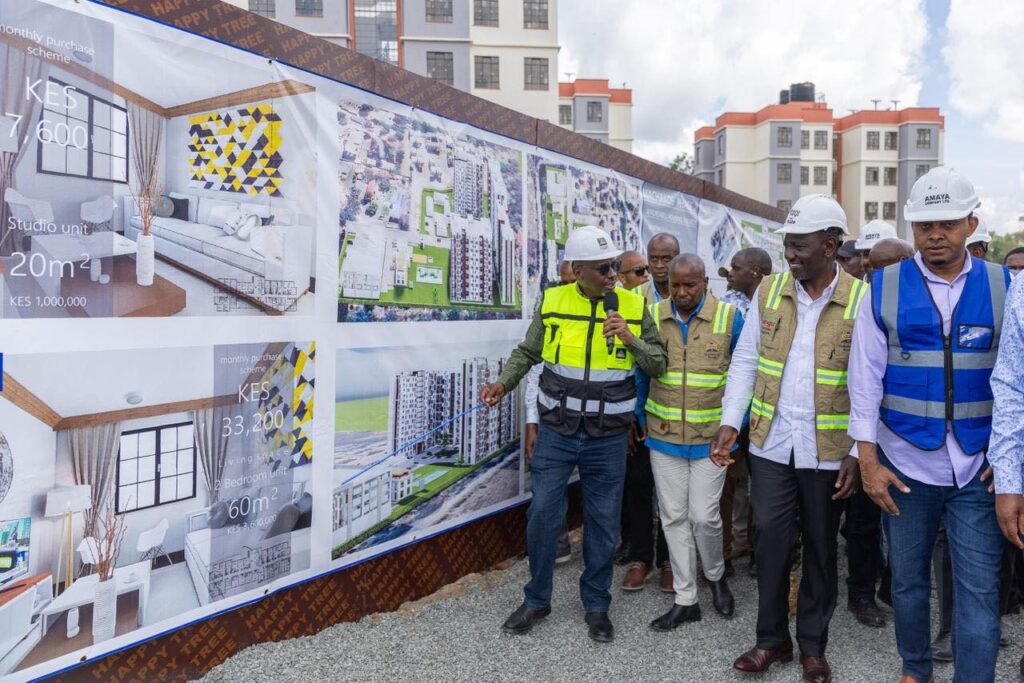
From an economic perspective, the Affordable Housing Program functions as a continuous construction and employment platform. Ongoing works generate skilled and semi-skilled jobs, stimulate local supply chains, and reinforce the construction sector as a stable contributor to economic activity. Housing delivery is integrated with supporting infrastructure and services, strengthening the link between residential development and functional urban environments.
Taken together, the Affordable Housing Program stands as an operational national development intervention with visible construction, quantified outputs, and an active pipeline. It is embedded within the country’s development framework, structured for continuity, and positioned to sustain delivery over successive phases. The evidence across regions confirms that AHP is executing as designed, with tangible outcomes shaping Kenya’s urban and housing landscape.
