
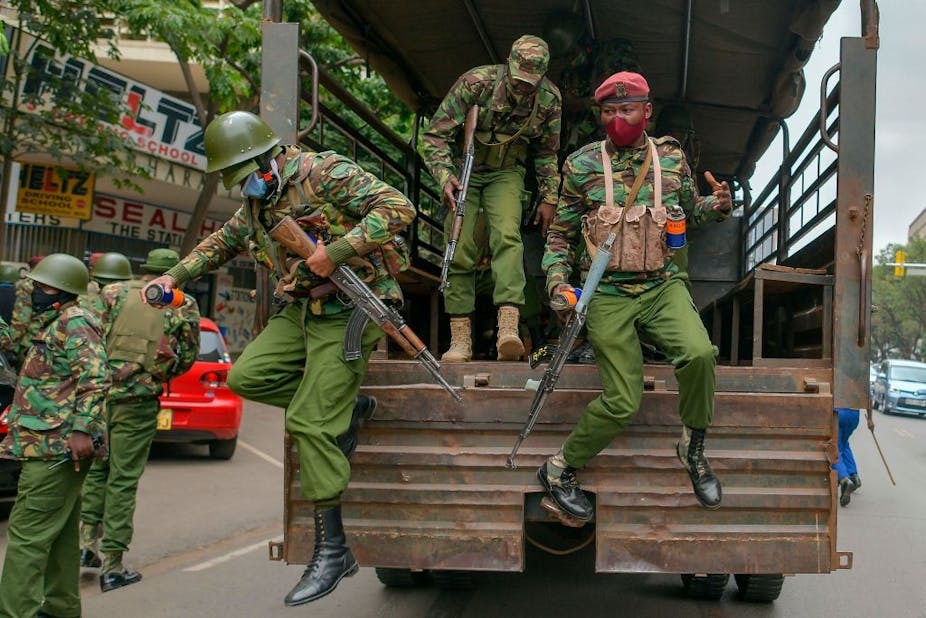
Security is the cornerstone of any nation’s development, providing the necessary foundation for political stability, economic prosperity, and social cohesion. A safe and secure country fosters investor confidence, facilitates business growth, and enhances the ease of doing business, all of which are essential for Kenya’s Bottom-Up Economic Transformation Agenda (BETA).
Under the leadership of President William Ruto, the Kenya Kwanza administration recognizes that economic transformation cannot be realized without a secure environment. The government has therefore made security sector reforms a top priority, ensuring that law enforcement agencies are modernized, well-equipped, and adequately resourced to effectively combat national security threats such as terrorism, banditry, organized crime, cybercrime, and urban crime.
The Cabinet Secretary for Interior and National Administration, Hon. Onesimus Kipchumba Murkomen, and Principal Secretary for Internal Security, Dr. Raymond Omollo, have been at the forefront of these reforms, ensuring the implementation of comprehensive strategies to modernize the National Police Service (NPS) and enhance community security, intelligence-led policing, and law enforcement efficiency.
CS Murkomen’s leadership in the Interior Ministry has focused on strengthening security institutions, investing in advanced policing equipment, and fostering collaboration between law enforcement agencies and the public. Meanwhile, PS Omollo has spearheaded community policing initiatives, intelligence-driven crime prevention, and digital security strategies that align with the Bottom-Up Economic Transformation Agenda (BETA) by ensuring that all Kenyans, regardless of their economic status or geographic location, benefit from a safer and more secure environment.
Aligning Security with the Bottom-Up Economic Transformation Agenda (BETA)
The Bottom-Up Economic Transformation Agenda (BETA) is designed to empower grassroots communities, support small businesses, and create opportunities for every Kenyan. Security plays a pivotal role in achieving this vision, as economic activities cannot thrive in an environment of lawlessness, crime, and instability.
How Security Supports BETA Objectives:
- Enhancing Investment and Trade
- A well-secured business environment attracts both domestic and foreign investors, leading to job creation and economic expansion.
- Secure transport and trade routes facilitate smooth movement of goods across counties and borders.
- Securing Agricultural and Rural Economies
- Insecurity in agricultural regions, particularly in the North Rift and arid areas, has hindered food production and distribution.
- Enhanced security ensures that farmers can cultivate land without fear of banditry and cattle rustling, directly contributing to food security.
- Infrastructure Protection
- With major investments in roads, railways, ports, and energy infrastructure, securing these assets is vital for economic growth.
- CS Murkomen has prioritized securing transport corridors and economic zones, ensuring that roads, railway lines, and airports are protected from criminal activities.
- Job Creation Through Security Investments
- Expanding the police force, investing in cybersecurity, and deploying surveillance technologies create new employment opportunities, especially for youths in intelligence, forensic science, and ICT-related security fields.
- Digital Economy and Cybersecurity
- As Kenya accelerates its transition to a digital economy, protecting businesses and individuals from cybercrime, fraud, and data breaches is critical.
- PS Omollo’s cybersecurity initiatives are ensuring that Kenya’s online banking, digital trading platforms, and government e-services are secure.
Chapter 1: Kenya Kwanza’s Commitment to Security Reforms
1.1 Security Sector Reforms in Kenya
Security reforms are critical in ensuring effective law enforcement, national stability, and economic development. The Kenya Kwanza administration has adopted a holistic approach to security sector transformation, ensuring that law enforcement agencies are well-equipped, professional, and accountable to address Kenya’s evolving security challenges.
Recognizing that security is a key enabler of economic growth, the government has introduced wide-ranging policy changes to strengthen law enforcement institutions, improve police welfare, and enhance operational efficiency. These reforms aim to:
- Strengthen the capacity of the National Police Service (NPS) by modernizing equipment, improving infrastructure, and increasing personnel.
- Enhance police welfare and working conditions to ensure officers are motivated and committed to their duties.
- Promote intelligence-led policing by integrating technology, forensic science, and data-driven crime prevention strategies.
- Improve coordination between law enforcement agencies to foster inter-agency collaboration and streamline security operations.
These policy changes align with President William Ruto’s Bottom-Up Economic Transformation Agenda (BETA), which recognizes security as a key pillar for attracting investment, creating employment, and ensuring sustainable development.
1.1.1 Enhancing Police Welfare and Working Conditions
A motivated and well-supported police force is essential for effective law enforcement. For years, low morale, poor working conditions, and inadequate welfare programs have affected police efficiency, leading to corruption, absenteeism, and low public confidence in law enforcement.
To address these challenges, the Kenya Kwanza government has prioritized police welfare reforms, ensuring that officers are well-compensated, properly housed, and supported with adequate medical coverage.
Key Police Welfare Initiatives
A well-supported and motivated police force is crucial for effective law enforcement and national security. Recognizing the challenges officers face, the Kenya Kwanza administration has implemented several comprehensive welfare initiatives aimed at improving working conditions, enhancing morale, and ensuring the well-being of police officers. These reforms address housing, healthcare, compensation, and mental health support, ensuring that officers can perform their duties effectively while enjoying a better quality of life.
- Comprehensive Medical Insurance
The nature of police work exposes officers to injuries, health risks, and psychological trauma, making access to quality healthcare a critical aspect of their welfare. Recognizing this, the Kenya Kwanza administration has expanded police medical insurance coverage under the Social Health Authority (SHA) through Taifa Care, ensuring officers and their families receive adequate and affordable healthcare services.
Key Medical Insurance Benefits for Police Officers
- Comprehensive Coverage for Both In-Patient and Out-Patient Needs
- Officers and their families are now covered for routine medical care, emergency treatments, surgeries, and specialized care.
- The scheme ensures that police officers can access prompt and efficient medical services without financial strain.
- Specialized Treatment and Counseling Services for High-Risk Officers
- Officers involved in high-risk operations, such as anti-terrorism and counter-banditry missions, now have access to specialized medical treatment and trauma counseling.
- Psychological support and post-traumatic stress disorder (PTSD) counseling services have been integrated into the medical scheme to support officers dealing with work-related stress.
- Partnerships with Leading Medical Institutions
- The government has partnered with top-tier hospitals and specialized medical centers to provide fast-tracked treatment and rehabilitation for officers who sustain injuries in the line of duty.
- Officers with long-term medical conditions or disabilities resulting from service-related incidents receive priority care and long-term medical assistance.
Impact of the Taifa Care Medical Scheme for Police Officers
The SHA’s Taifa Care program has significantly improved healthcare access for police officers, ensuring:
- Reduced financial burden on officers and their families by covering medical costs.
- Quicker response to medical emergencies, ensuring officers get timely treatment and rehabilitation.
- Improved physical and mental well-being, allowing officers to focus on their duties without the added stress of medical expenses.
By prioritizing the health and well-being of law enforcement officers, the Kenya Kwanza administration is enhancing police morale, improving service delivery, and ensuring a stronger, healthier, and more effective police force.
- Improved Housing Facilities
For years, police officers in Kenya have faced poor housing conditions, with many living in overcrowded, dilapidated, or makeshift houses far from their duty stations. This has affected their morale and response times in case of emergencies. The government has taken significant steps to improve housing for officers by:
- Constructing modern police housing units equipped with essential amenities, ensuring officers live in decent conditions close to their workstations.
- Eliminating the need for long commutes, allowing officers to respond swiftly to emergencies and ensuring round-the-clock security coverage.
- Implementing a police home ownership scheme, allowing officers to own affordable homes under government-backed financing models. This initiative provides officers with low-interest mortgage plans and subsidized housing costs, enabling them to invest in their future and live comfortably with their families.
By improving housing conditions, the government is enhancing officers’ dignity, strengthening their commitment to duty, and ensuring they operate in a stress-free environment.
- Competitive Salaries and Timely Promotions
For many years, police officers have struggled with low wages, salary delays, and an unfair promotion system, leading to low morale and increased corruption within the force. To address this, the Kenya Kwanza administration has introduced salary adjustments and career advancement reforms that ensure officers are fairly compensated and rewarded based on merit.
- Police salaries have been reviewed, ensuring that officers earn fair wages that reflect their work conditions, risk exposure, and cost of living. These adjustments have curbed bribery and corruption, as officers no longer feel the financial pressure to engage in unethical practices.
- The promotion process has been restructured to be transparent and merit-based, ensuring that officers advance in their careers based on competence, experience, and integrity. Previously, police promotions were marred by favoritism and unfair selection processes, which demoralized officers. The new system guarantees that hardworking and dedicated officers receive timely promotions.
- Performance-based evaluations have been introduced, ensuring that officers who demonstrate excellence in service delivery are recognized and rewarded.
These salary and promotion reforms are boosting officers’ morale, motivating them to work harder, and reducing corruption, ultimately leading to a more professional and dedicated police force.
- Mental Health and Psychological Support for Officers
Police officers often face high-stress situations, including violent crime scenes, terrorist attacks, and banditry operations. This exposure to trauma, grief, and life-threatening situations can lead to post-traumatic stress disorder (PTSD), depression, and anxiety. For years, mental health challenges in the police force were ignored, leading to increased cases of suicide, substance abuse, and misconduct among officers.
The Kenya Kwanza administration has prioritized mental health support, recognizing that psychologically healthy officers perform better and make rational decisions in law enforcement. Key measures include:
- Mental health awareness programs to educate officers on recognizing stress, trauma, and mental health disorders.
- Specialized counseling centers established in police stations to offer psychological support to officers dealing with PTSD and other mental health challenges.
- Access to professional therapists and trauma counselors, ensuring that officers receive the necessary mental health care and guidance.
- Peer-support networks within the police force, allowing officers to seek emotional support from colleagues and share experiences in a safe space.
By prioritizing officers’ mental health, the government is ensuring a balanced and emotionally stable police force, leading to better decision-making, reduced stress-related misconduct, and improved overall well-being.
- Strengthening Leadership and Accountability
Strong leadership and accountability are crucial in ensuring an efficient, professional, and trusted police force. For years, Kenya’s security sector has been affected by corruption, mismanagement, and abuse of power, leading to inefficiencies in crime control and declining public trust in law enforcement. The Kenya Kwanza administration has taken bold steps to reform police leadership, ensuring competence, professionalism, and integrity at all levels of law enforcement.
- Appointment of Competent Security Professionals
To improve leadership in the police service, the government has:
- Appointed seasoned security professionals with extensive experience in law enforcement, intelligence, and security management to lead key agencies.
- Introduced performance-based evaluations, ensuring that senior police officers deliver measurable results in reducing crime, maintaining public order, and enhancing community relations.
- Implemented strict vetting processes to ensure that only officers with a clean record, strong leadership skills, and a commitment to professionalism are appointed to leadership positions.
These reforms are eliminating inefficiencies and fostering a results-driven police leadership structure.
- Implementation of Police Oversight Mechanisms
To promote transparency and accountability, the Kenya Kwanza administration has strengthened police oversight mechanisms to ensure that officers operate within the law and respect citizens’ rights.
- The Independent Policing Oversight Authority (IPOA) has been empowered to investigate cases of police misconduct, ensuring officers are held accountable for their actions.
- Public complaints handling systems have been introduced, allowing citizens to report cases of police misconduct anonymously through digital platforms.
- Stronger internal disciplinary procedures have been established, ensuring that officers who engage in corruption, excessive force, or human rights violations are swiftly investigated and punished.
These measures are restoring public confidence in law enforcement and ensuring that officers uphold high ethical standards.
- Strengthening Ethics and Anti-Corruption Measures
The Kenya Kwanza administration has intensified efforts to eliminate corruption in the police force by:
- Rolling out mandatory anti-corruption training programs for police officers, ensuring they understand the importance of integrity and professional ethics.
- Partnering with the Ethics and Anti-Corruption Commission (EACC) to investigate police corruption cases, ensuring that officers found engaging in bribery, extortion, or abuse of office face legal consequences.
- Encouraging a culture of integrity by rewarding officers who demonstrate ethical leadership and professionalism.
These reforms are significantly reducing corruption in the police force, improving efficiency in service delivery, and enhancing the reputation of law enforcement agencies.
- Promotion of Community-Police Relations
The government recognizes that strong police-community relations are essential for effective policing. When citizens trust the police, they are more likely to cooperate, share intelligence, and report crime. To improve public engagement, the government has:
- Revamped the Nyumba Kumi initiative and community policing programs, encouraging citizens to participate in neighborhood security.
- Launched public engagement forums, where police officers interact with communities to listen to concerns, educate residents on security matters, and build mutual trust.
- Established digital crime-reporting platforms, allowing citizens to report crimes anonymously and seek assistance from law enforcement.
By strengthening police-community relations, Kenya is fostering a people-centered policing approach, making it easier to prevent crime, resolve conflicts, and ensure public safety.
These comprehensive police welfare and leadership reforms are transforming Kenya’s police service into a professional, accountable, and people-friendly institution, ensuring effective security and public trust in law enforcement.
1.1.3 Decentralization of Security Operations
Security challenges vary significantly across different regions in Kenya, requiring region-specific interventions rather than a one-size-fits-all approach. While urban centers face rising cases of violent crime, cybercrime, and drug trafficking, rural and border areas are plagued by cattle rustling, banditry, and cross-border smuggling. Recognizing this, the Kenya Kwanza government has decentralized security operations, ensuring that law enforcement resources, personnel, and intelligence-gathering mechanisms are tailored to the unique security threats of each region.
This strategic approach to regionalized security enforcement enhances efficiency, responsiveness, and crime prevention, allowing law enforcement agencies to be proactive rather than reactive. The decentralization of security operations aligns with the Kenya Kwanza administration’s commitment to ensuring equitable security coverage across all regions, fostering a safer environment for economic growth, social stability, and national development.
Key Decentralization Initiatives
- Deployment of Anti-Banditry Police Units in the North Rift
The North Rift region, covering Baringo, Turkana, West Pokot, Elgeyo Marakwet, and Samburu, has experienced persistent insecurity due to banditry, cattle rustling, and inter-communal conflicts. These challenges have resulted in loss of lives, displacement of thousands of residents, and destruction of property. Additionally, the continued violence has disrupted agricultural activities, trade, and investment, leading to economic stagnation in the affected areas.
Banditry and cattle rustling have historically been fueled by competition over scarce resources, ethnic rivalries, and the proliferation of illegal firearms. The North Rift’s rough terrain and inadequate security infrastructure have allowed criminal gangs to operate with impunity, launching raids on villages and stealing livestock. These attacks not only cause economic losses but also fuel retaliatory violence, worsening the security situation.
To address this growing crisis, the Kenya Kwanza administration has deployed specialized Anti-Banditry Police Units (ABPUs) and enhanced security operations in the region. These units are working in coordination with the Kenya Defence Forces (KDF), National Police Service (NPS), National Police Reservists (NPR), and local community leaders to neutralize bandit networks, improve law enforcement response, and restore long-term stability in the North Rift.
Key Measures in Combating Banditry and Cattle Rustling
The government has developed a multi-faceted security strategy to combat banditry and cattle rustling. This strategy focuses on:
- Permanent deployment of Anti-Banditry Police Units (ABPUs) in high-risk areas to deter criminal activities.
- Use of modern security equipment and surveillance technology to track and eliminate bandit operations.
- Strengthening intelligence-sharing and coordination among security agencies to improve crime prevention.
- Implementing community-led peacebuilding and reconciliation programs to address the root causes of conflict.
- Economic empowerment initiatives to reduce reliance on cattle rustling as a source of income.
Deployment of Specialized Anti-Banditry Police Units (ABPUs)
The Kenya Kwanza government has permanently stationed ABPUs in major banditry-prone areas, ensuring continuous security operations. Unlike past approaches, where security agencies would conduct temporary crackdowns and then withdraw, the current strategy involves maintaining a long-term security presence in volatile areas.
- Permanent security camps have been set up in areas such as Kapedo, Lokori, Chesegon, and Mukutani, ensuring that security officers are always on the ground to respond swiftly to attacks.
- Additional police officers have been deployed, strengthening law enforcement and reducing response time in case of attacks.
- Officers receive specialized training in counter-insurgency tactics, intelligence gathering, ambush response, and night operations to improve their effectiveness in the field.
- Recruitment of National Police Reservists (NPR) from local communities has been expanded to enhance intelligence-sharing and build trust between law enforcement and residents.
The presence of well-trained and well-equipped officers in bandit-prone areas has significantly improved security, deterring criminals and disrupting their operations.
Use of Modern Equipment and Tactical Support
To counter the advanced tactics used by armed bandits, the government has invested in modern security equipment and tactical support tools to enhance law enforcement operations.
- Deployment of armored vehicles (APCs) allows officers to safely move through high-risk areas without being exposed to gunfire from criminals.
- Aerial surveillance using drones and helicopters provides real-time intelligence, enabling security forces to track bandit hideouts and monitor livestock movement.
- Crime-mapping technology helps security agencies analyze past attack patterns, predict future threats, and plan preemptive operations against criminal gangs.
- Enhanced communication tools improve coordination between the National Police Service (NPS), Kenya Defence Forces (KDF), and National Intelligence Service (NIS), ensuring faster response to security threats.
The adoption of these technologies has significantly improved law enforcement efficiency, helping officers cover larger areas, conduct intelligence-led operations, and respond rapidly to security incidents.
Strengthening Intelligence and Inter-Agency Coordination
Crime prevention in the North Rift requires strong intelligence networks and seamless coordination between security agencies. The Kenya Kwanza administration has improved intelligence-sharing mechanisms, ensuring that different law enforcement units work together effectively.
- Increased cooperation between security agencies, including the National Police Service (NPS), Kenya Defence Forces (KDF), and National Intelligence Service (NIS), has improved information-sharing on criminal networks.
- Creation of a centralized crime database allows security forces to track repeat offenders, suspected bandit groups, and criminal activities across different regions.
- Expansion of informant networks and community intelligence-gathering ensures that security officers receive real-time reports from local residents.
With better coordination and intelligence, security forces can now anticipate attacks, conduct targeted operations, and eliminate bandit groups before they strike.
Implementation of Community-Led Conflict Resolution Programs
The government acknowledges that military interventions alone cannot bring lasting peace. Addressing the underlying causes of banditry is key to ensuring long-term stability. This is why the Kenya Kwanza administration has implemented community-led peacebuilding programs to foster reconciliation among warring communities.
- Strengthening the Nyumba Kumi initiative to encourage locals to actively participate in crime prevention by reporting suspicious activities to authorities.
- Organizing peace dialogues that bring together:
- Tribal elders and religious leaders to mediate conflicts.
- Local administrators and security officers to develop conflict resolution strategies.
- Women and youth representatives to promote peacebuilding efforts.
- Holding cross-border peace meetings with neighboring countries such as Uganda and Ethiopia to reduce inter-community violence over grazing land and resources.
- Encouraging voluntary disarmament through amnesty programs, where individuals surrender illegal firearms in exchange for government support and vocational training.
These initiatives have helped reduce ethnic tensions, prevent retaliatory attacks, and promote peaceful coexistence among communities in the North Rift.
Economic Empowerment to Reduce Banditry
The government recognizes that poverty and economic hardship are key drivers of banditry. Many young men join criminal groups due to lack of job opportunities and alternative means of livelihood. To address this issue, the Kenya Kwanza administration has launched economic empowerment programs targeting at-risk youth and communities.
- Establishment of vocational training centers, equipping youth with skills in:
- Carpentry
- Mechanics
- Masonry
- Welding
- Livestock insurance schemes to reduce the economic impact of cattle losses and discourage cattle rustling as a survival tactic.
- Expansion of infrastructure projects, including:
- Improved road networks to facilitate security patrols and economic activities.
- Construction of schools and health centers to enhance access to essential services.
- Water supply projects to reduce conflicts over scarce resources among pastoralist communities.
By improving economic opportunities, the government aims to reduce dependency on criminal activities, giving young people a chance to pursue legal and sustainable means of earning a livelihood.
Impact of These Interventions
The Kenya Kwanza administration’s intensified anti-banditry operations have already had a significant impact on security in the North Rift. Key achievements include:
- Reduction in large-scale bandit attacks due to continuous police presence and improved intelligence networks.
- Increased recovery of stolen livestock, preventing economic losses for pastoralist communities.
- Better cooperation between security agencies and local communities, leading to quicker arrests and dismantling of criminal networks.
- Stabilization of economic activities, as businesses, farming, and livestock trade gradually resume in formerly insecure areas.
- Higher enrollment of youth in vocational training programs, reducing their involvement in banditry and criminal activities.
The government remains committed to strengthening security, promoting peace, and empowering communities in the North Rift. Through sustained security operations, improved intelligence, and economic development programs, Kenya is making significant strides toward lasting stability and prosperity in previously volatile areas.
Chapter 2: Strengthening Border Security
Kenya’s strategic geographical positioning makes it a regional hub for trade, commerce, and connectivity, linking East and Central Africa. However, its porous borders and weak surveillance mechanisms have historically been exploited by criminal syndicates engaged in:
- Illegal arms trade, fueling conflicts in the region.
- Human trafficking and smuggling of persons into and out of the country.
- Drug smuggling, using Kenya as a transit point for illicit narcotics bound for international markets.
- Cross-border terrorism, particularly from Al-Shabaab militants infiltrating Kenya from Somalia.
These security vulnerabilities pose a significant threat to national stability, economic progress, and public safety. To mitigate these risks, the Kenya Kwanza administration has introduced comprehensive border security reforms, focusing on:
Key Initiatives for Strengthening Border Security:
- Deployment of Border Security Forces and Surveillance Technology
The government has deployed specialized border security forces equipped with state-of-the-art technology to enhance monitoring and prevent illegal activities along Kenya’s borders, particularly in:
- Kenya-Somalia Border: A hotspot for terrorist infiltration, illicit trade, and illegal migration.
- Kenya-Ethiopia Border: A critical point for arms smuggling and organized criminal networks.
- Kenya-South Sudan Border: Known for cross-border cattle rustling and illegal firearms trade.
- Kenya-Uganda Border: A crucial checkpoint for smuggling of contraband goods and human trafficking.
To ensure effective surveillance and monitoring, the government has invested in:
- Aerial drone surveillance to monitor remote and difficult-to-access border regions.
- Thermal imaging cameras and motion detectors to track movements in border areas, particularly at night.
- Smart fencing technology, which integrates sensor-based alarms and real-time monitoring systems.
- Strengthening Cargo and Port Security to Combat Smuggling
Kenya’s ports of entry, particularly the Port of Mombasa, Jomo Kenyatta International Airport (JKIA), and land border checkpoints, serve as critical entry points for goods, people, and international trade. However, criminal syndicates have used these points for smuggling illegal goods, money laundering, and trafficking illicit drugs.
To enhance cargo and port security, the government is:
- Deploying K9 units at border crossings, ports, and airports to detect contraband, explosives, and narcotics.
- Installing X-ray cargo scanning systems at key customs checkpoints to detect hidden illegal goods.
- Enhancing inter-agency collaboration between the Kenya Revenue Authority (KRA), Kenya Ports Authority (KPA), and security agencies to improve screening, inspections, and intelligence-sharing.
- Automating customs clearance processes to improve tracking of goods and eliminate corruption in cargo clearance.
- Strengthening Border Patrols and Counter-Terrorism Efforts
The Kenya-Somalia border has been particularly vulnerable to terrorist infiltration by Al-Shabaab militants. In response, the Kenya Kwanza administration has introduced:
- Increased deployment of Border Police Units (BPU) to high-risk areas.
- Advanced biometric entry-exit screening systems at border crossings.
- Collaboration with regional security agencies, including the African Union Mission in Somalia (ATMIS), to prevent terrorism.
These strategic border security measures enhance Kenya’s national defense, promote safe trade and travel, and prevent criminal activities that threaten national stability.
Chapter 3: Strengthening Law Enforcement Capabilities for Public Safety
3.1 Police Training and Capacity Building
A professional and well-trained police force is the backbone of an effective security system, ensuring that officers are equipped with the skills, knowledge, and tools required to protect citizens, uphold the rule of law, and combat crime in a dynamic environment. As Kenya faces increasingly sophisticated security challenges, including terrorism, cybercrime, transnational organized crime, and violent extremism, the Kenya Kwanza administration has made police training and capacity building a top priority to enhance law enforcement efficiency and operational readiness.
The government has adopted a multi-faceted approach to police training, ensuring that officers receive specialized, modern, and practical training to handle diverse security situations, from counter-terrorism and urban crime to forensic investigations and cybercrime detection.
Key Training and Capacity-Building Initiatives:
- Counter-Terrorism and Urban Warfare Training
Kenya has faced persistent threats from terrorism, particularly from Al-Shabaab militants operating along the Kenya-Somalia border and urban sleeper cells that have carried out high-profile terrorist attacks in Nairobi, Garissa, and Mombasa.
To counter these threats, the government has introduced specialized training in counter-terrorism and urban warfare, focusing on:
- Advanced Tactical Training: Specialized units such as the Recce Squad, Anti-Terrorism Police Unit (ATPU), and Kenya Defence Forces (KDF) are trained in:
- Urban hostage rescue operations to neutralize threats in crowded areas.
- Explosive Ordnance Disposal (EOD) techniques to counter bomb threats.
- Covert surveillance and intelligence operations to detect terror cells before they strike.
- International Cooperation and Capacity Building:
- Collaboration with the U.S., U.K., Israel, and regional security agencies to receive advanced training in anti-terrorism tactics, drone surveillance, and high-tech counter-intelligence techniques.
- Joint military and police exercises to enhance rapid response capabilities.
- Simulation-Based Training:
- Establishment of specialized counter-terrorism training centers where officers undergo live drills in real-world urban combat scenarios.
- Use of virtual reality (VR) training simulations to prepare officers for hostage situations and emergency evacuations.
- Cybercrime Investigation and Digital Forensics Training
With Kenya’s increasing dependence on digital platforms for financial transactions, e-commerce, and communication, cybercrime has emerged as a major security challenge, including:
- Financial fraud and identity theft targeting online banking users.
- Hacking and data breaches in government and private institutions.
- Online radicalization and extremist recruitment of Kenyan youth.
To combat cyber-related threats, the government has:
- Expanded the Kenya Cybercrime Unit, training officers in:
- Dark web investigations to track illicit online activities.
- Social media monitoring to detect and counter online radicalization.
- Blockchain forensics to investigate cryptocurrency-related financial crimes.
- Established Digital Forensics Laboratories to support:
- Data recovery and forensic analysis of seized digital devices.
- Real-time cyber threat monitoring and rapid response.
- Engaged with Global Cybersecurity Partners: Kenya has signed agreements with INTERPOL, Europol, and the African Cyber Security Initiative (ACSI) to share expertise and track international cybercriminals.
- Human Rights and Ethical Policing Training
Modern policing must be firm but fair, ensuring public safety without infringing on fundamental rights. In response to past concerns about police brutality, excessive force, and corruption, Kenya Kwanza has:
- Integrated human rights education into all police training programs.
- Developed police accountability frameworks, ensuring that all officers:
- Understand the limits of their authority under Kenyan and international law.
- Are trained in de-escalation techniques to handle volatile situations peacefully.
- Are subject to independent oversight, strengthening public confidence in the police force.
These capacity-building efforts are creating a police force that is professional, efficient, and aligned with international best practices in law enforcement.
3.2 Combating Emerging Security Threats
Kenya’s security landscape is constantly evolving, requiring dynamic and proactive strategies to address emerging threats such as:
- Cybercrime and online fraud.
- Cross-border smuggling, drug trafficking, and human trafficking.
- Radicalization and violent extremism.
- Transnational organized crime networks.
The Kenya Kwanza administration has implemented several strategic interventions to counter these threats effectively.
- Enhancing Cybersecurity and Digital Forensics
- AI-driven threat detection systems have been deployed to track cybercriminal activities in real-time.
- Creation of a National Cybersecurity Incident Response Team (CIRT) to handle:
- Data breaches and hacking incidents.
- Online financial fraud and identity theft cases.
- Strengthening Border Security to Prevent Smuggling and Terrorist Infiltration
Kenya shares borders with Somalia, Ethiopia, South Sudan, and Uganda, making it a key transit route for:
- Illegal arms trade and human trafficking.
- Drug smuggling.
- Terrorist movements between Somalia and Kenya.
To address these challenges, the government has:
- Deployed advanced border surveillance technology, including:
- Drones and satellite imaging to monitor remote border crossings.
- Biometric entry-exit tracking systems to enhance identity verification.
- Increased inter-agency collaboration between the Kenya Revenue Authority (KRA), Kenya Defence Forces (KDF), and National Intelligence Service (NIS) to intercept illicit goods and prevent cross-border crimes.
- Intelligence-Led Policing for Organized Crime and Drug Trafficking
- Creation of Special Task Forces to target:
- Drug cartels operating in Mombasa and Nairobi.
- Human trafficking networks exploiting vulnerable individuals.
- Illicit financial networks funding organized crime.
Through enhanced intelligence sharing, law enforcement agencies are proactively dismantling criminal syndicates before they can cause harm.
3.2 Combating Emerging Security Threats
Kenya’s security landscape is constantly evolving, requiring dynamic and proactive strategies to address emerging threats. Traditional policing methods alone are no longer sufficient in combating the rise of cybercrime, transnational organized crime, and violent extremism. The Kenya Kwanza administration has therefore adopted multi-sectoral, intelligence-led, and technology-driven interventions to mitigate and neutralize these threats before they escalate.
The government has prioritized investments in digital forensics, cybersecurity, border security, and intelligence-sharing mechanisms, ensuring that law enforcement agencies remain one step ahead of criminal networks. These efforts align with the broader national security strategy of creating a safer environment for economic development, trade, and investment.
Key Emerging Security Threats:
- . Cybercrime and Online Fraud
Kenya’s rapid digital transformation has led to an increase in cybersecurity vulnerabilities, as criminals exploit the growing use of e-commerce, digital banking, and mobile transactions to conduct fraud, hacking, and identity theft. Additionally, the rise of social media and encrypted communication channels has created new avenues for radicalization, misinformation, and financial crimes.
- Cross-Border Smuggling, Drug Trafficking, and Human Trafficking
Kenya’s geographical positioning as a gateway to East and Central Africa has made it a key transit route for illicit goods, human trafficking networks, and illegal weapons smuggling. Criminal syndicates exploit porous borders, weak security infrastructure, and corruption to smuggle drugs, weapons, and trafficked persons across regional boundaries.
- Radicalization and Violent Extremism
The continued threat of extremism from Al-Shabaab and other radical elements poses a significant challenge to Kenya’s security. Extremist groups actively recruit youth through social media, mosques, and informal learning institutions, using ideological persuasion, financial incentives, and false promises to radicalize individuals.
- Transnational Organized Crime Networks
Criminal organizations operate across multiple countries, engaging in drug trafficking, illegal wildlife trade, money laundering, and terrorism financing. These networks are well-funded and often have connections to corrupt officials and global criminal enterprises, making them difficult to dismantle.
To address these threats, the Kenya Kwanza administration has implemented several strategic interventions that combine technology, intelligence-sharing, and inter-agency collaboration to enhance national security.
- Enhancing Cybersecurity and Digital Forensics
As cyber threats become more sophisticated and globally interconnected, Kenya has taken significant steps to strengthen its cybersecurity infrastructure and equip law enforcement agencies with advanced forensic capabilities.
Key Initiatives in Cybersecurity and Digital Forensics:
- AI-Driven Threat Detection Systems:
- Deployment of artificial intelligence (AI) and machine learning-based monitoring tools to detect unusual online activity, data breaches, and hacking attempts in real-time.
- Enhanced cyber surveillance across government networks, financial institutions, and corporate databases to prevent unauthorized intrusions.
- Creation of a National Cybersecurity Incident Response Team (CIRT):
- This specialized task force is responsible for monitoring, analyzing, and responding to cybersecurity threats targeting individuals, businesses, and government agencies.
- The CIRT collaborates with global cybersecurity organizations such as Interpol, Europol, and the African Cyber Security Initiative (ACSI) to track cross-border digital crimes.
- Strengthening Online Fraud Prevention Mechanisms:
- The government has established dedicated cybercrime units to investigate digital identity theft, financial fraud, phishing schemes, and fake online transactions.
- Cyber-awareness campaigns have been launched to educate the public on safe online practices, secure banking, and fraud prevention measures.
By integrating cybersecurity into national security, Kenya is building resilience against cyber threats, ensuring that criminals do not exploit digital vulnerabilities to defraud citizens or destabilize economic institutions.
- Strengthening Border Security to Prevent Smuggling and Terrorist Infiltration
Kenya shares borders with Somalia, Ethiopia, South Sudan, and Uganda, making it a strategic transit route for trade as well as a potential gateway for illegal activities such as smuggling, arms trafficking, and terrorism. Criminal syndicates often take advantage of weak border enforcement, vast unmonitored terrains, and corruption to smuggle contraband, narcotics, and illicit firearms into and out of the country.
To enhance border security and protect national sovereignty, the government has implemented modern surveillance technologies and increased inter-agency coordination to secure key entry points.
Key Initiatives in Border Security:
- Deployment of Advanced Border Surveillance Technology:
- Aerial surveillance using drones and satellite imaging to monitor remote and unguarded border regions.
- Real-time sensor-based border monitoring systems that alert security agencies about unauthorized crossings.
- Biometric Entry-Exit Tracking Systems:
- Digital identification and biometric verification of all persons entering or exiting Kenya.
- Integration of biometric databases with Interpol and international security agencies to track wanted criminals, human traffickers, and terrorism suspects.
- Strengthening Inter-Agency Coordination for Border Control:
- The Kenya Defence Forces (KDF), National Intelligence Service (NIS), Directorate of Criminal Investigations (DCI), and Kenya Revenue Authority (KRA) are now working collaboratively to:
- Enhance cargo screening at ports and airports to prevent smuggling.
- Monitor money laundering and illicit financial transactions linked to cross-border crimes.
By securing Kenya’s borders with advanced technology and stricter enforcement, the government is disrupting smuggling networks and preventing terrorism financing, ensuring national security and economic stability.
- Intelligence-Led Policing for Organized Crime and Drug Trafficking
Organized crime syndicates have long exploited weak security networks to run drug cartels, human trafficking rings, and financial fraud schemes. To combat these networks, the Kenya Kwanza administration has invested in intelligence-driven policing that focuses on tracking, infiltrating, and dismantling organized crime groups.
Key Strategies for Intelligence-Led Policing:
- Creation of Special Task Forces to Target Organized Crime:
- Specialized crime units have been deployed in Mombasa, Nairobi, and Kisumu to dismantle drug trafficking networks.
- Anti-human trafficking squads have been established to rescue victims and prosecute traffickers.
- Financial crime intelligence units have been strengthened to trace illicit financial flows, money laundering operations, and cryptocurrency fraud.
- Use of Advanced Intelligence Analysis for Crime Prevention:
- Crime mapping technologies to predict high-risk areas for drug peddling and organized crime activities.
- Deployment of undercover operatives to infiltrate and dismantle criminal organizations.
- International Collaboration to Combat Transnational Crime:
- Kenya has strengthened partnerships with Interpol, UNODC, and regional security agencies to share intelligence on drug cartels, wildlife traffickers, and organized criminals operating across borders.
- Joint international law enforcement operations to seize illicit drugs, arrest fugitive criminals, and disrupt trafficking networks.
By integrating intelligence-driven strategies into policing, Kenya is disrupting organized crime networks before they can expand, ensuring a safer society and a crime-free economy.
3.3 Community Policing and Public Engagement
Security is not solely the responsibility of law enforcement agencies—it requires active public participation. A strong partnership between the police and the community enhances intelligence gathering, crime prevention, and fosters trust between citizens and law enforcement agencies. The Kenya Kwanza administration recognizes that security is a shared responsibility and has prioritized community policing as a key pillar in national security. This approach ensures that citizens are actively involved in crime prevention efforts, neighborhood surveillance, and collaboration with the police to maintain law and order.
Through community policing and public engagement, the government aims to:
- Increase citizen participation in crime prevention to create safer neighborhoods.
- Encourage timely crime reporting through digital platforms and direct interaction with law enforcement.
- Bridge the gap between the police and the public, improving trust and reducing cases of police brutality or misuse of power.
- Strengthen local security mechanisms that allow communities to protect their own environments.
Recognizing the diverse security challenges across Kenya, the Kenya Kwanza administration has introduced several community engagement initiatives that bring law enforcement officers and the public together in a coordinated and proactive manner.
Key Community Policing and Public Engagement Initiatives
- . Strengthening the Nyumba Kumi Initiative
The Nyumba Kumi (Ten Houses) initiative was first introduced as a grassroots approach to crime prevention, where neighbors actively monitor their surroundings and collaborate with security agencies. However, in recent years, its effectiveness had declined due to lack of proper coordination, low public participation, and minimal engagement by security agencies.
To revitalize Nyumba Kumi, the Kenya Kwanza administration has introduced a structured framework to enhance its effectiveness, ensuring smoother collaboration between law enforcement officers and local communities.
Key Strategies for Strengthening Nyumba Kumi:
- Regular Community-Police Engagement Forums:
- The government has initiated bi-monthly town hall meetings and local security forums, where residents can directly interact with police commanders, share security concerns, and offer suggestions on crime prevention.
- These public dialogues foster mutual trust and improve the responsiveness of law enforcement agencies.
- Integration of Local Leaders, Religious Groups, and Youth Organizations into Community Policing Programs:
- The Kenya Kwanza government is working closely with chiefs, village elders, religious leaders, and youth groups to encourage collective crime prevention efforts.
- This initiative ensures that local leaders act as security ambassadors, bridging the gap between law enforcement officers and grassroots communities.
- Village Elders Now Remunerated for Their Role in Security
- Recognizing the critical role that village elders play in community security, the Kenya Kwanza administration has introduced a remuneration package for village elders to appreciate and formalize their contribution to public safety.
- This move ensures that village elders remain actively engaged in intelligence gathering, dispute resolution, and security coordination efforts.
- The government has also provided structured training for village elders to equip them with skills on crime reporting, mediation, and community safety initiatives.
- Community-Based Surveillance Programs:
- Residents are encouraged to form neighborhood watch groups to monitor and report suspicious activities.
- The government has facilitated specialized training sessions for volunteers on how to conduct surveillance, report crimes effectively, and ensure personal safety while engaging in community policing.
By revitalizing Nyumba Kumi, the Kenya Kwanza administration is promoting a proactive approach to crime prevention, where law enforcement agencies and communities work hand-in-hand to maintain peace and security.
- Digital Crime-Reporting Platforms for Faster Responses
The use of modern technology in crime reporting has revolutionized public engagement in security matters. Recognizing the need for real-time communication between citizens and the police, the Kenya Kwanza government has implemented digital solutions to enhance the efficiency of crime reporting and law enforcement response times.
Key Digital Crime-Reporting Innovations:
- A 24/7 Digital Police Emergency Response Platform:
- The government has introduced a mobile application and an SMS-based crime reporting system that allows citizens to report incidents instantly.
- This real-time response mechanism ensures that law enforcement officers can be dispatched quickly to crime scenes, reducing delays in handling security threats.
- Anonymous Tip-Off Systems for Citizens to Report Crime Without Fear of Victimization:
- Fear of retaliation often discourages witnesses from reporting criminal activities.
- The government has introduced anonymous reporting channels, including toll-free hotlines, encrypted mobile applications, and online reporting platforms, enabling citizens to provide crime-related information without exposing their identities.
- Integration of Digital Case Tracking Systems:
- Victims of crime can now follow up on reported cases through an online portal, reducing bureaucracy and ensuring accountability in law enforcement investigations.
- The digital system ensures transparency, preventing the manipulation or mishandling of criminal cases.
These technological innovations are enhancing citizen engagement in security matters, encouraging timely reporting of crimes, and ensuring swift police responses to incidents.
- Community Security Forums for Public Awareness
Public awareness and education are essential components of crime prevention. Many security threats can be mitigated through proper awareness campaigns, ensuring that citizens understand how to protect themselves, identify suspicious activities, and cooperate with law enforcement agencies.
To strengthen public awareness, the Kenya Kwanza administration has established regular security forums to educate citizens on crime prevention strategies and emerging security threats.
Key Public Awareness Initiatives:
- Crime Prevention Strategies and Personal Safety Measures:
- The government is conducting nationwide security awareness programs focused on:
- Personal safety tips for urban and rural residents.
- Preventing home burglaries, carjackings, and street crimes.
- How to react during emergencies such as robberies or terrorist attacks.
- These forums include demonstrations by security experts, equipping citizens with practical self-defense techniques and emergency response strategies.
- Online Safety Measures to Prevent Cyber Fraud and Identity Theft:
- With the rise of digital transactions and online banking, cyber fraud cases have increased.
- The government is educating citizens on digital security by providing guidelines on:
- How to detect and avoid financial scams.
- Protecting personal information online from identity theft and hacking.
- Ensuring cybersecurity compliance in online businesses and financial transactions.
- Countering Radicalization and Violent Extremism Among Youths:
- Radicalization remains a serious security concern, particularly among young people vulnerable to extremist recruitment.
- The government is working with religious institutions, community leaders, and security experts to:
- Identify early warning signs of radicalization in schools and communities.
- Encourage youth engagement in economic and mentorship programs to prevent them from being recruited into extremist networks.
- Promote positive online engagement by monitoring digital platforms where extremist propaganda is spread.
These community security forums are fostering a culture of public vigilance, active crime prevention, and increased cooperation between law enforcement agencies and citizens.
Enhancing Public Trust in Law Enforcement
A major objective of community policing and public engagement is to restore and strengthen public trust in law enforcement agencies. The Kenya Kwanza administration recognizes the importance of transparency, accountability, and professionalism in policing, and has implemented measures to:
- Improve police-community relations through frequent public engagement forums.
- Reduce cases of police misconduct by enforcing strict disciplinary measures against officers who engage in corruption, brutality, or abuse of power.
- Ensure fairness in law enforcement by promoting impartiality, professionalism, and respect for human rights among officers.
Through these efforts, the Kenya Kwanza administration is building a security system that is trusted, efficient, and inclusive, ensuring that law enforcement agencies and the public work together to maintain law and order.
Conclusion
The Kenya Kwanza government’s investment in modern policing equipment and security reforms is revolutionizing Kenya’s law enforcement sector. By enhancing police training, intelligence networks, and officer welfare, Kenya is creating a more responsive and technology-driven police force.
Key Takeaways:
- Advanced policing equipment is improving crime response times and officer safety.
- Kenya Kwanza’s security sector reforms are enhancing efficiency and accountability.
- Public engagement in security is increasing trust between law enforcement and communities.
A secure Kenya is a prosperous Kenya. With continued investment in security infrastructure and modern policing, Kenya is positioning itself as a regional leader in law enforcement and crime prevention.
